
Cooking With Lavender Before It Starts Tasting Soapy
A little goes further than you think. A little too much tastes like soap.
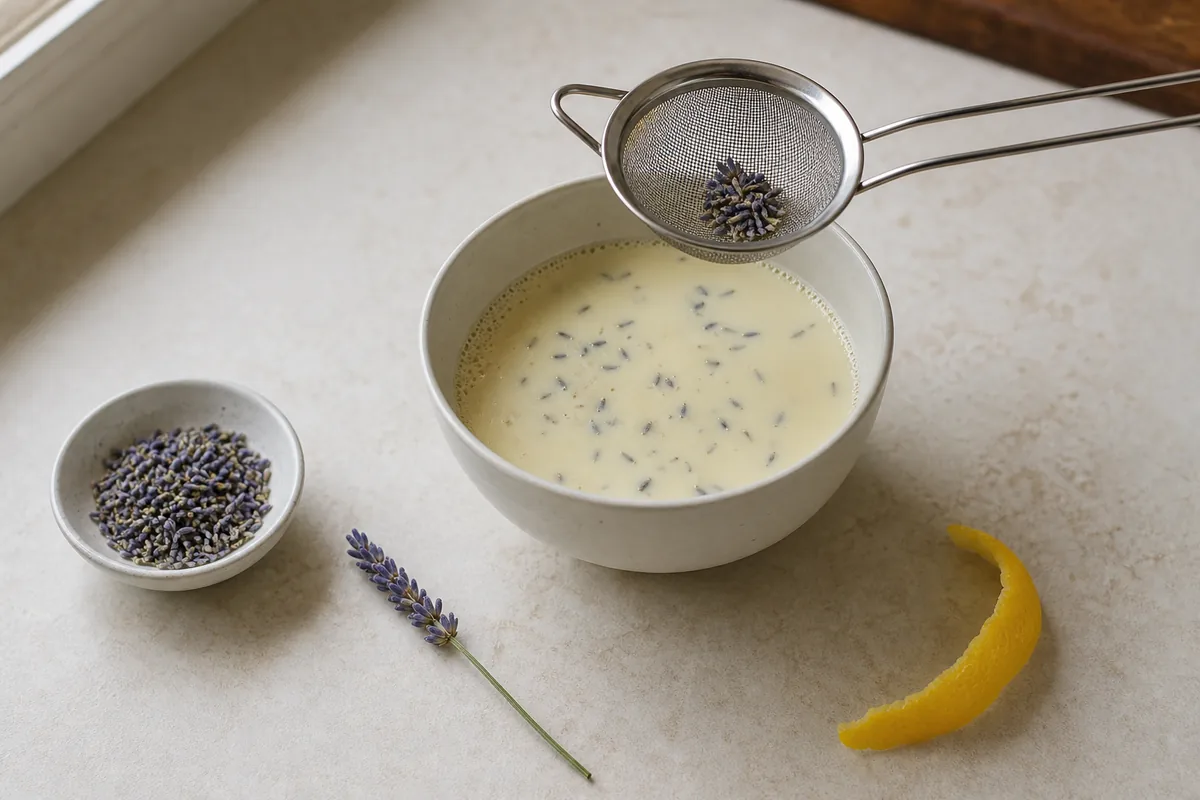
Culinary lavender tastes floral, lightly citrusy, and herbal when you choose food-grade English lavender and use it sparingly. The practical challenge is its narrow dose window, because one extra pinch can push cream, cake, or syrup from gently floral to unmistakably soapy.
What does lavender taste like in cooking?
Culinary lavender should taste floral, lightly citrusy, and herbal. It should suggest a fresh flower stem with a trace of rosemary, not a candle or perfume.
Food-grade buds and a restrained dose are what create that difference. Let lavender dominate the food and the same floral character starts to read as soap.
The aroma comes from a mixture of compounds, not one chemical. Linalool and linalyl acetate supply most of its soft floral character, while camphor and 1,8-cineole pull the other way, toward eucalyptus, resin, and medicine.
The ratio between those two groups is what separates a pleasant bud from a harsh one.
A 2019 cultivar study in Industrial Crops and Products found that true lavender oil is typically rich in linalool and linalyl acetate, while lavandin carries more camphor and 1,8-cineole. Exact composition still shifts with cultivar, climate, and harvest year, which is why a species name tells you more than flower color alone.
That same chemistry explains why whole buds taste different from lavender extract or essential oil.
Buds release their small mixture gradually, so you can taste and stop. A concentrated extract delivers everything at once.
Essential oil is not a spoon-for-spoon substitute for dried flowers, and it belongs in food only when a product is explicitly sold and dosed for that use.
Lavender is easier to control in cream, butter, honey, or syrup than as loose ground buds in a dry batter. Many of its aromatic compounds dissolve poorly in water but move readily into fat and alcohol.
The practical lesson from spice solubility is simple. Steep whole buds, taste the liquid, then strain before the flavor turns forceful.
Fresh buds taste greener and softer. Dried buds are more concentrated by volume, so equal spoonfuls never give equal results.
Form, variety, dose, and contact time are four separate controls. Treat them that way and lavender becomes far less unpredictable.
- Form: Whole buds release slowly so you can taste and stop, while extract delivers everything at once.
- Variety: True lavender leans on linalool and linalyl acetate, lavandin carries more camphor and cineole.
- Dose: Restraint is what keeps the floral note from turning into a candle.
- Contact time: Steep, taste the liquid, then strain before the flavor turns forceful.
Why does lavender taste like soap?
Lavender tastes soapy when its floral aroma grows too concentrated, and a sharper species or a long cooking time pushes it in the same direction.
Smell association matters too. Lavender appears in soaps and detergents so often that an intense food aroma can trigger that memory before the dish even tastes bitter.
Start with 1/4 teaspoon of dried buds per cup of cream or per standard cake batter. That amount is usually enough to make lavender clear without taking over.
Doubling the dose does not make the same flavor twice as clear. It can bury vanilla, fruit, butter, and salt until the diner notices only lavender.
Species comes next. Lavandin, written botanically as Lavandula x intermedia, is grown widely because it produces large flower spikes and a high oil yield.
Its aroma runs more penetrating and camphoraceous than Lavandula angustifolia.
Lavandin is not automatically unsafe or inedible. It is simply harder to use well, and it rarely gives the soft flavor people expect from a jar labeled culinary lavender.
Long, aggressive heating flattens lavender's lighter aroma. A warm infusion, a low oven, or the end of a sauce gives you more control.
The general rules for when to add spices matter more here because the useful dose is so small. Give whole buds enough warmth to release their aroma, then stop the extraction.
Taste again once the dilution has mixed fully, and if the food still smells like a scented product, fold it into one component of a larger dish rather than trying to mask it.
A strong lavender syrup can be blended down into plain syrup. An overflavored cake can become a trifle with unscented cream and fruit.
Does the variety of lavender matter for cooking?
Choose food-grade Lavandula angustifolia as your default for cooking. UC Cooperative Extension recommends this English or true lavender, and common cultivars include Munstead and Hidcote.
Its aroma tends to be sweeter and less camphoraceous than lavandin or Spanish lavender.
The chemistry gives you a useful benchmark.
The European Pharmacopoeia specification for true lavender oil caps camphor at about 1.2 percent, while ISO 8902 lists roughly 6 to 8.5 percent camphor for Grosso lavandin oil. Those figures describe standardized oils rather than every bag of buds, but they show why the species choice changes the flavor so noticeably.
| Buying question | English lavender | Lavandin | Spanish lavender |
|---|---|---|---|
| Botanical name | Lavandula angustifolia | Lavandula x intermedia | Lavandula stoechas |
| Typical aroma | Soft floral, herbal, lightly sweet | Strong floral, eucalyptus-like, camphoraceous | Sharp, resinous, often camphoraceous |
| Best kitchen role | Baking, cream, syrup, honey, gentle savory dishes | Very restrained use when identified and food-grade | Usually grown as an ornamental rather than sold as a culinary herb |
| Common visual cue | Compact narrow flower spikes | Longer stems and larger, fuller spikes | Showy bracts that resemble small rabbit ears |
| What to verify | Species, food-grade handling, no ornamental pesticide treatment | Species and intended food use | Product must be specifically sold for food |
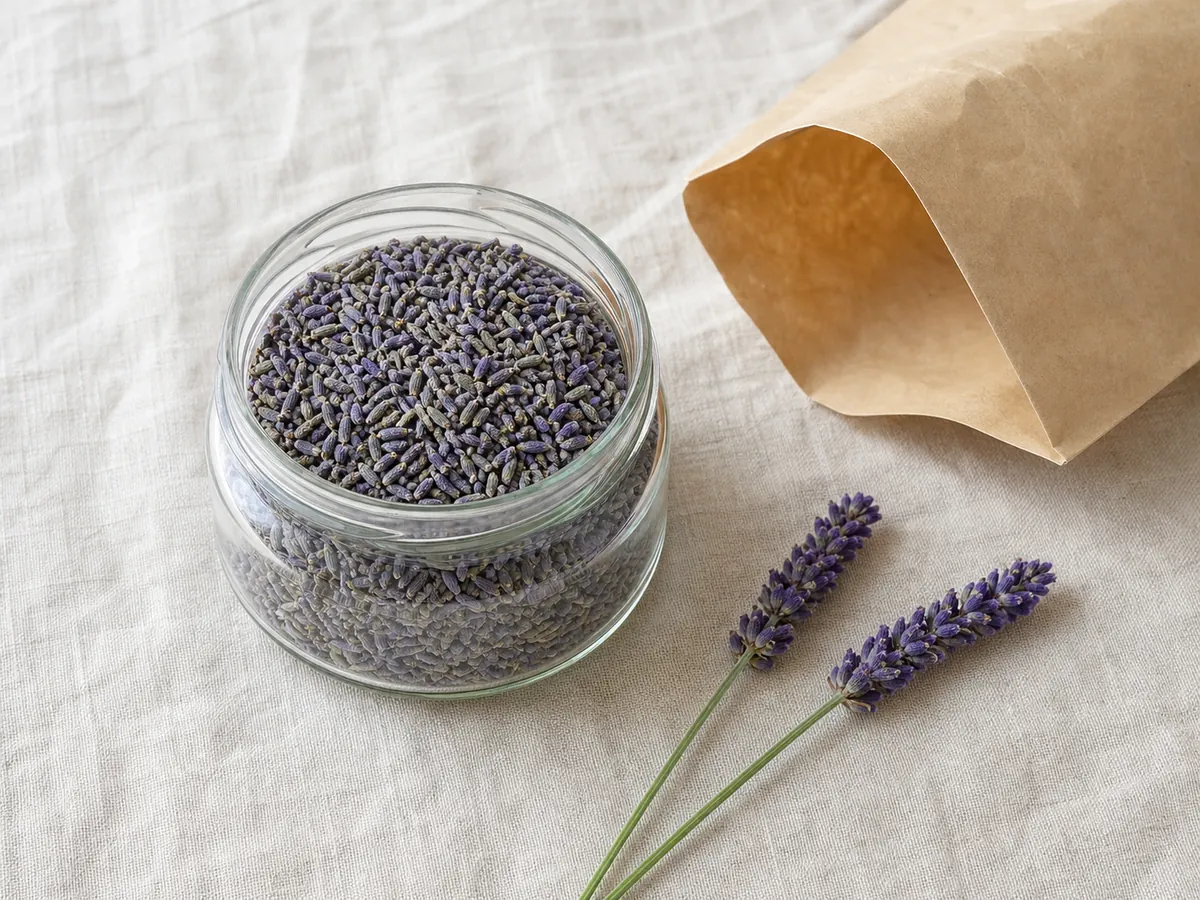
A culinary label should identify the species or cultivar, and it should make clear that the flowers were grown and handled for food.
A craft bag may hold clean-looking buds but say nothing about pesticide use, storage, or contamination. Do not cook with flowers from a florist, a roadside planting, or an unidentified garden plant.
Color is a weak buying test. Dried English lavender can fade from purple to gray-blue, and some perfectly usable cultivars are pale to begin with.
Smell is more helpful.
Crush one bud between your fingers. That first note tells you more than the label does.
A clean floral and herbal aroma is promising. A hard menthol or mothball note tells you the ingredient will need extreme restraint, whatever the package calls it.
This is the practical boundary between culinary lavender and the broader group of floral aromatic spices. Lavender needs a botanical identity and a food-use assurance before appearance or fragrance can guide the recipe.
What goes well with lavender in cooking?
Lavender works best where another ingredient gives its floral note a clear frame. Fat spreads it, fruit lends acidity, honey echoes it, and savory herbs keep it from tasting like perfume.
A dish built on only sugar and lavender has almost no protection from excess.
- Cream and custard: Steep 1/4 teaspoon dried buds per cup of warm cream for 5 minutes, taste, then strain for panna cotta, ice cream, or pastry cream.
- Stone fruit: Add a small pinch to peaches, plums, or apricots with lemon so the fruit stays in front.
- Honey and syrup: Infuse whole buds briefly, then strain. Use the finished syrup by the teaspoon rather than adding loose flowers to each drink.
- Lamb and duck: Combine a pinch with rosemary, garlic, salt, and black pepper. Keep lavender behind the meat and browned aromatics.
- Shortbread and cake: Grind a small measured amount with sugar so the buds disperse instead of forming bitter pockets.
- Tea and lemonade: Make a separate light infusion and blend it into the finished drink until the aroma is clear but not perfumed.
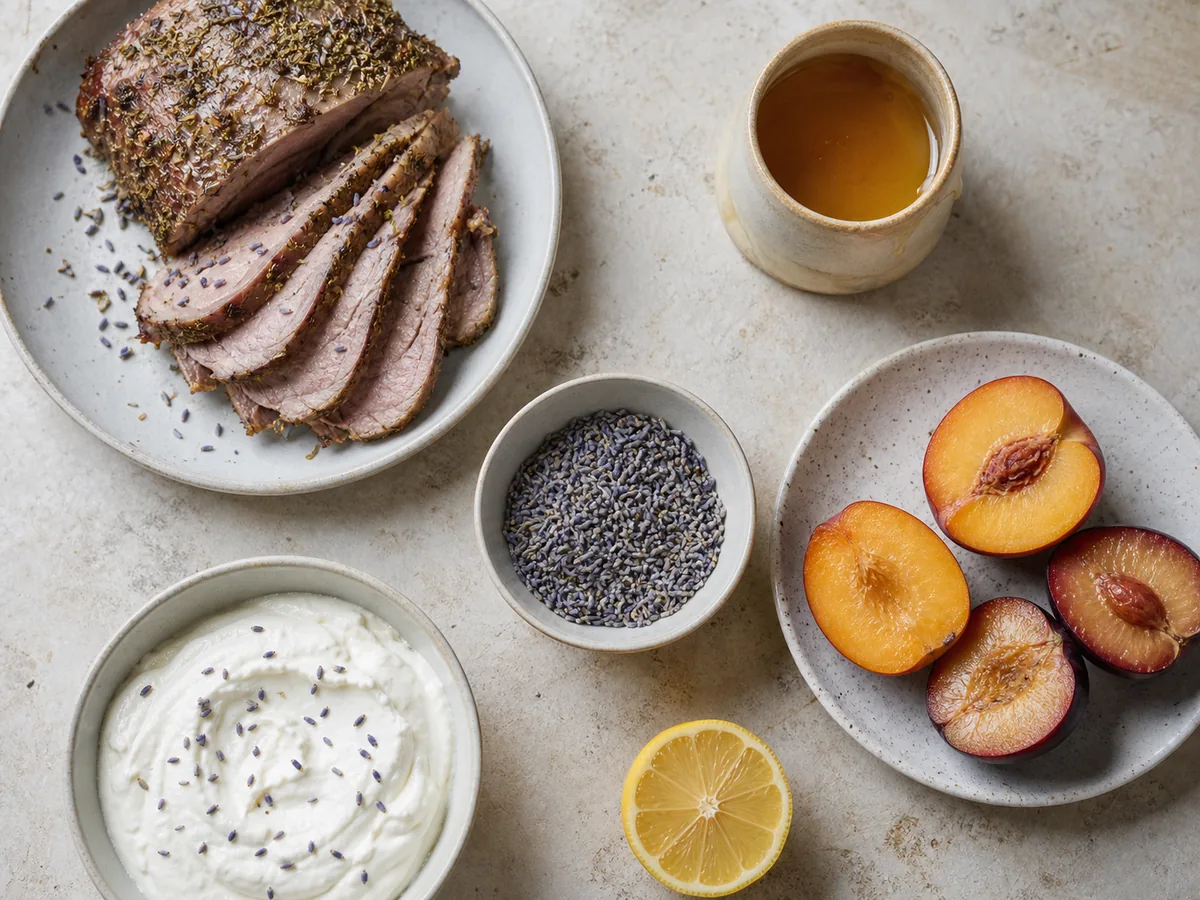
Lavender appears in some commercial and North American versions of Herbes de Provence, though it is not mandatory in every Provencal blend. When you add it to thyme, savory, and rosemary, use far less lavender than the other herbs, so the mix smells herbal first and floral second.
In sweet cooking, vanilla makes lavender feel rounder while lemon keeps it sharp and recognizable.
Cardamom can work as well, but both cardamom and lavender are strongly aromatic, so let one lead. Two equal floral notes tend to make a custard taste crowded.
For savory food, rosemary and black pepper give lavender a firmer edge. Pepper contributes bite without a second floral note, and rosemary connects lavender to roast meat and vegetables.
This pairing logic matters more than any long compatibility list. The base ingredient should still be the first thing you taste.
How much lavender should you use?
Start below the amount you think the dish can hold. Cream, lemonade, and lamb each carry aroma differently, so there is no universal soapy threshold.
A conservative dose gives you a repeatable baseline, and tasting decides where to stop.
- Single glass or two servings: Start with one small pinch of dried buds in an infusion, then strain.
- One cup of cream, milk, syrup, or honey: Start with 1/4 teaspoon dried buds and taste after 3 to 5 minutes.
- Standard cake, shortbread, or custard batch: Start with 1/4 teaspoon dried buds. Use up to 1/2 teaspoon only when lavender is meant to be the lead flavor.
- One pound of lamb or duck: Start with 1/4 teaspoon dried buds mixed through the full marinade or herb rub.
- Fresh in place of dried: Use about three times the volume, provided the recipe calls for the buds rather than a sprig.
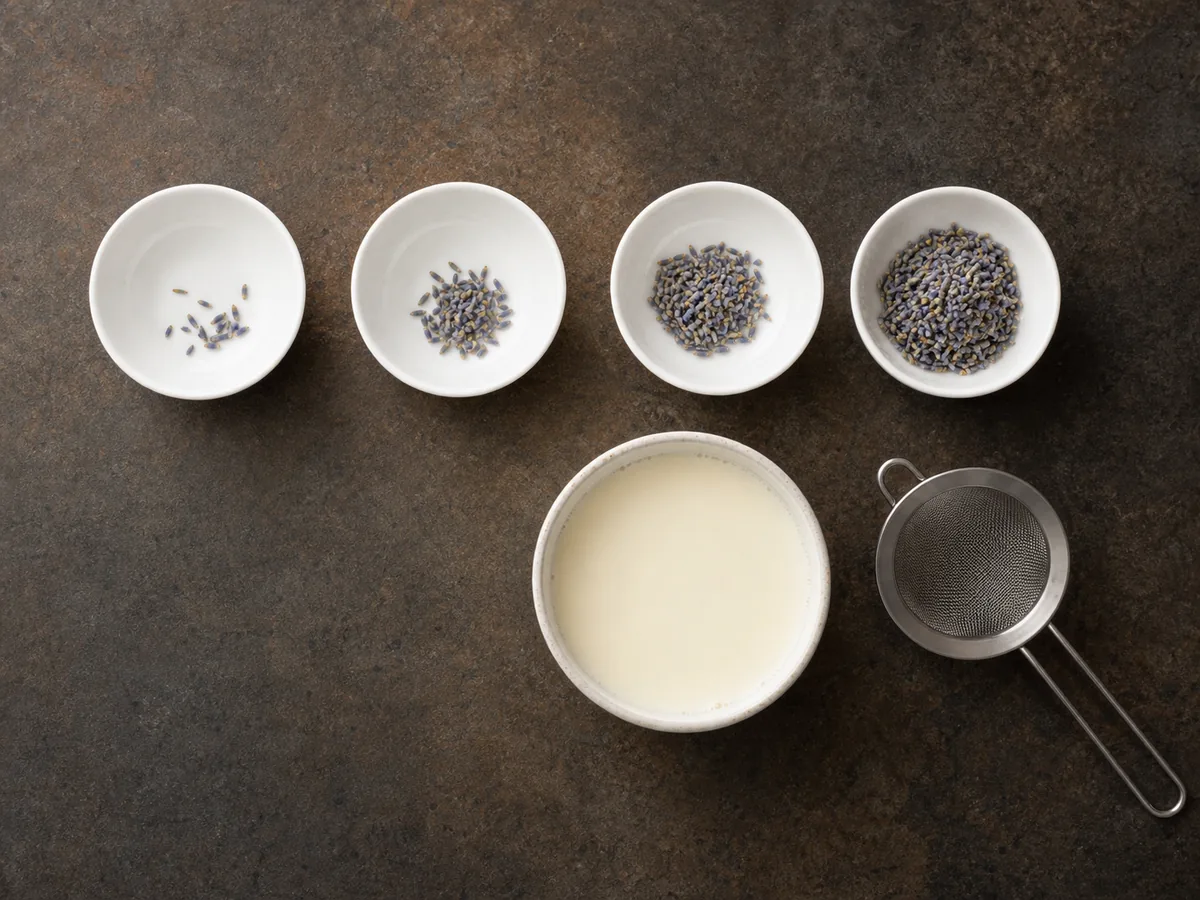
Contact time can matter as much as the spoon. A quarter teaspoon steeped for 15 minutes may taste stronger than a half teaspoon pulled after 2 minutes.
Warm the base without boiling it, then taste at short intervals and strain as soon as the lavender becomes clearly identifiable.
Ground lavender takes that control away, because the particles stay in the food. If a cookie or cake recipe calls for grinding the buds, measure before grinding and mix them into the sugar.
Never scoop a fluffy mound of ground lavender after processing, since its volume is much harder to compare with whole buds.
The most common measurement error is missing the word fresh or dried. Health Canada gives the general herb conversion of one part dried to three parts fresh, and lavender follows that starting ratio.
Species and harvest strength still shift the result. If the recipe does not name the form, begin with the dried quantity, because it is the smaller dose.
A baking spice mixture can hide small changes better than a plain custard, since cinnamon, vanilla, butter, and browned flour share the aroma. A clear drink exposes every extra bud.
In spiced tea, brew the lavender separately when you can, then blend it into the tea so you control both extraction times.
Does it matter whether lavender is fresh or dried?
Fresh lavender tastes greener and slightly softer. Dried lavender is more concentrated, easier to measure, and available all year.
Neither form fixes a poor species choice. Confirm that fresh garden flowers are identified as food-suitable Lavandula angustifolia before you pick them.
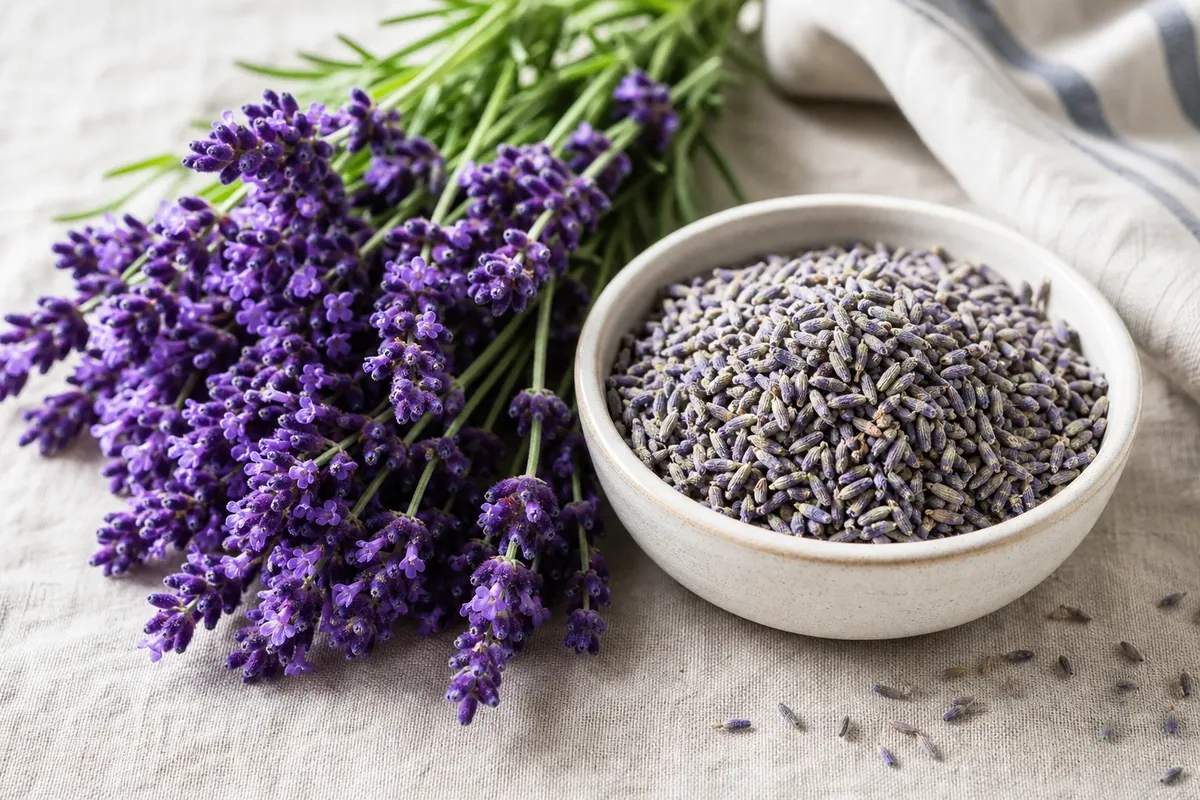
Use roughly three parts fresh buds to one part dried by volume. The site's herb conversion chart gives the same general relationship.
Apply that ratio to buds, not whole stems. Strip the flowers before measuring so a teaspoon means the same thing in both forms.
Fresh buds suit cold butter, fruit, salad dressing, and a garnish that will be eaten. Dried buds suit baking and controlled infusions, because they are consistent and easy to strain.
In either form, taste one bud before committing the batch.
A gentle floral flavor is useful evidence. A piercing camphor note means you should choose another product rather than try to bury it under sugar.
What can you substitute for lavender?
No single substitute reproduces lavender's floral, citrusy, and herbal sides at once.
Replace the job lavender was doing, not its name. A savory rub needs an herb, a custard needs a soft aromatic note, and lemonade often needs only citrus brightness.
| Substitute | Starting ratio | Best use | Main tradeoff |
|---|---|---|---|
| Dried rosemary | Use half the lavender amount | Lamb, duck, roast vegetables, herb rubs | More resinous and less floral |
| Dried thyme | Use the same amount | Savory sauces, vegetables, poultry | Herbal but not floral |
| Green cardamom | Use 1 lightly crushed pod per cup of liquid | Custard, cream, cake, syrup | Warmer and spicier than lavender |
| Lemon zest | Use 1/2 teaspoon per 1/4 teaspoon lavender | Cake, shortbread, syrup, lemonade | Bright but not floral |
| Food-grade rose petals | Start with twice the volume | Cream, syrup, fruit, delicate cakes | Sweeter and less herbal |
| Crushed juniper berries | Use 2 berries per pound | Game, duck, strongly savory marinades | Piney and resinous with no floral softness |
For a savory dish, dried thyme is the safest neutral replacement. Rosemary sits closer to lavender's resinous side, but use less because it can dominate a rub.
Two lightly crushed juniper berries can work with game or duck when the recipe wants a woodland aroma rather than a floral one.
For desserts, green cardamom supplies a clean aromatic lift in cream and cake, though the flavor changes direction. Lemon zest is the better choice when lavender only supported citrus in the first place.
If lavender names the dessert, such as lavender shortbread, omitting it is more honest than pretending another flower is identical.
Keep any replacement small and taste the base before adding more. Stop once the missing aromatic lift returns, or the substitute can recreate the very overuse problem you were avoiding.