
How Do You Cook With Juniper Berries Without Bitterness?
How to crush, count, and time this piney spice so it supports the food instead of taking over
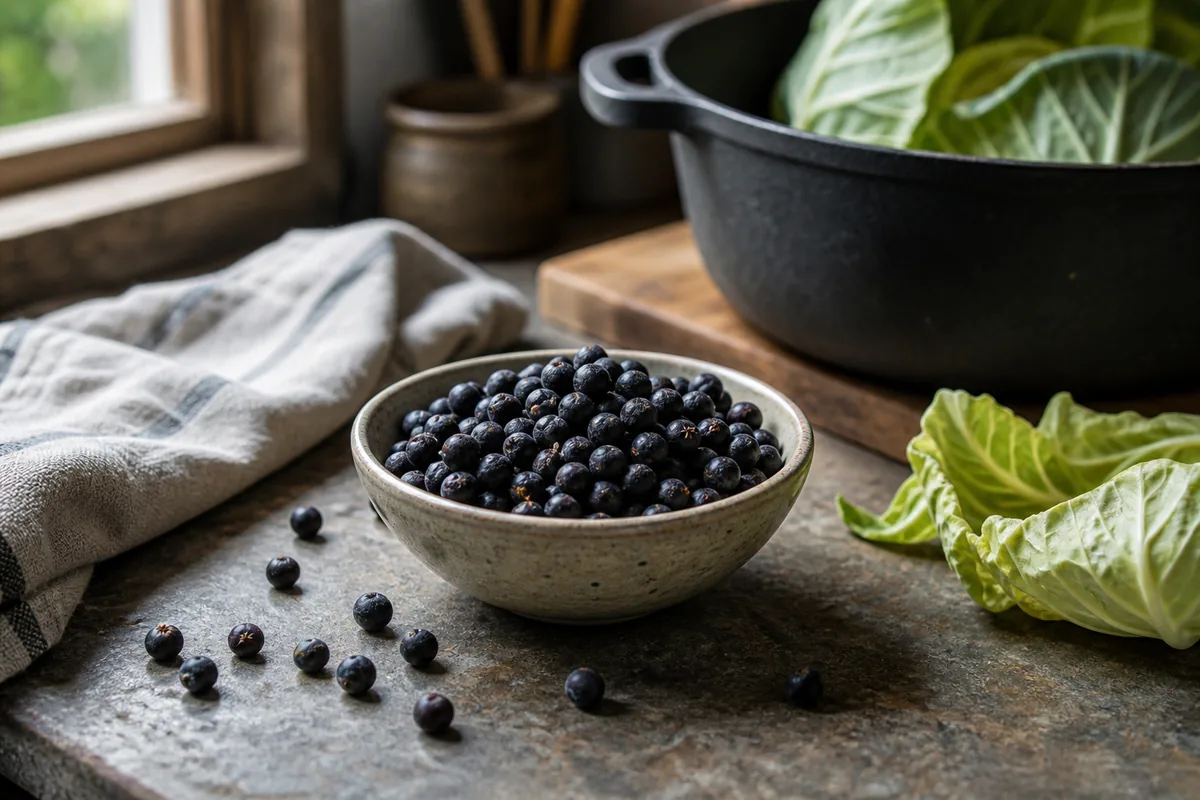
Juniper berries give gin its defining piney aroma, but food needs a much smaller dose. Start with a few lightly crushed berries, match the count to the recipe and cooking time, then taste before adding more.
What do juniper berries taste like?
Juniper berries taste piney, citrusy, peppery, and faintly bitter.
The aroma is dry and forest-like, with none of the juicy sweetness that the word berry might suggest.
Gin is the easiest reference because juniper supplies its defining flavor. European rules for gin even require the finished spirit to taste predominantly of juniper, although coriander, citrus peel, and other botanicals can add their own notes.
Food seasoned with juniper should not taste like a glass of gin. Alcohol extracts and carries aroma differently, while a stew, sauce, or rub surrounds the spice with salt, fat, browned meat, vegetables, and acid.
The ingredient is also unusual botanically. Each so-called berry is a fleshy cone with hard seeds inside, which explains the firm texture and the need to crush it before a short cooking time.
The European Medicines Agency lists alpha-pinene, beta-pinene, myrcene, sabinene, limonene, and terpinen-4-ol among the volatile compounds in Juniperus communis cones. Those compounds help explain the mix of pine, citrus peel, pepper, and resin, but one molecule does not define the whole flavor.
The same report notes considerable variation among commercial oils. One jar can therefore smell brighter or more resinous than another, even when both contain the same culinary species.
Crush one berry between your fingers before cooking. A useful batch should smell clearly aromatic within seconds, while a flat or dusty berry will contribute much less than a fresh one.
That quick test matters more than color alone. Dried berries can range from dark purple to brownish black, and surface bloom does not tell you how much aroma remains inside.
- Pine first: Resinous and sharp, the note gin is built on.
- Then citrus: A bright edge that keeps it from reading as purely woody.
- Underneath: Black pepper warmth and a faint bitterness that grows with quantity.
- Not gin: Gin tastes of juniper, but juniper does not taste of gin.
Do you need to crush juniper berries before cooking?
Lightly crush juniper berries for most recipes.
Breaking the outer cone exposes the aromatic interior and gives the cooking liquid, fat, or marinade more surface to contact.
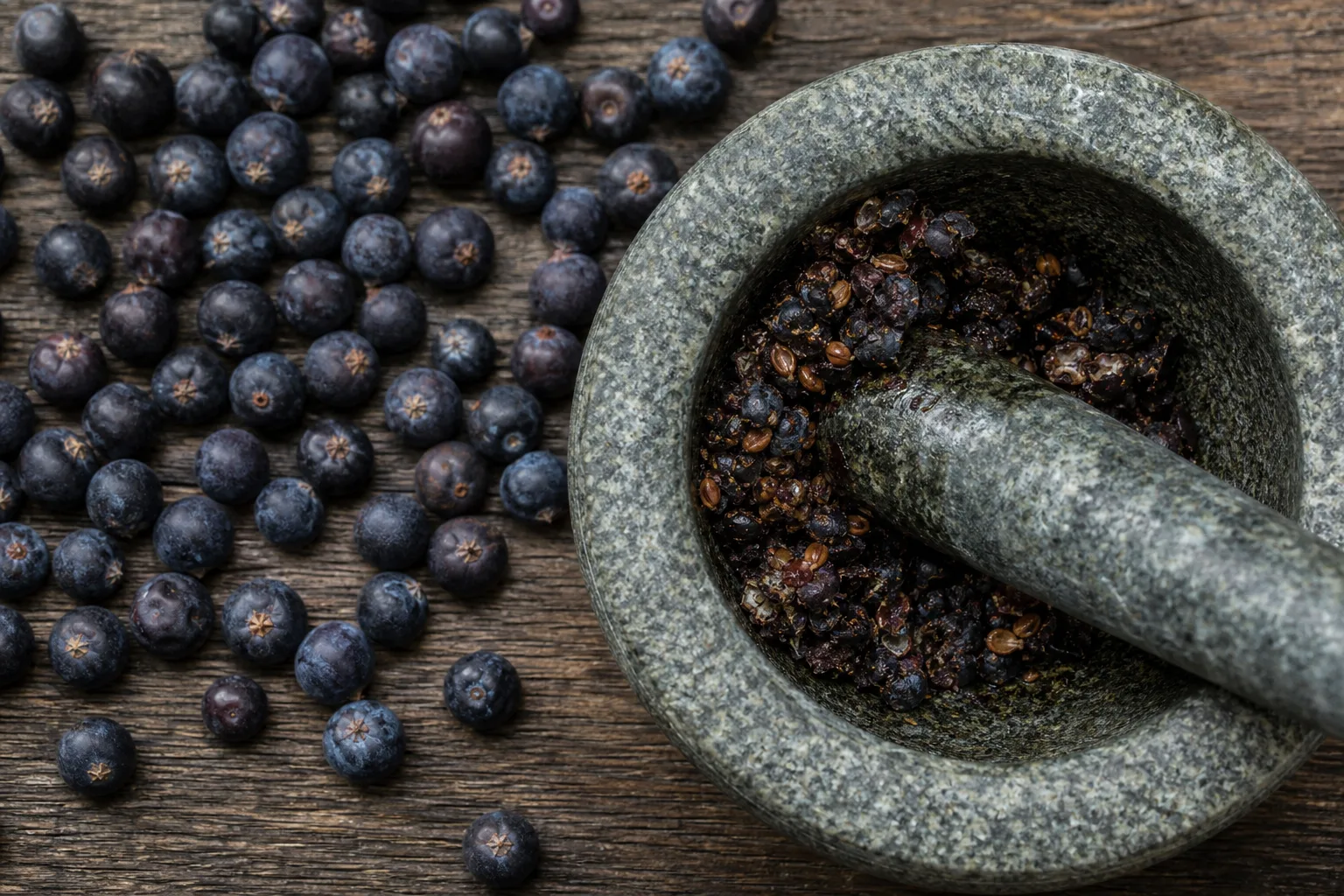
For a stew or braise, press each berry under the flat of a chef's knife or tap it once in a mortar. You want a visible split, not a fine powder.
Those larger pieces release flavor steadily and remain easy to remove. Put them in a tea infuser or a small cheesecloth bundle when the finished liquid cannot be strained.
A coarse grind makes sense for a meat rub because the spice must work during a shorter cook. Mix it immediately with salt and the other seasonings so the resinous pieces spread across the full surface rather than forming bitter pockets.
Fine powder is the least forgiving form.
It releases aroma quickly, stays in the food, and makes the amount harder to judge by sight.
The difference follows the same principle behind choosing whole or ground spices. More broken surface produces faster extraction, which helps a quick preparation and can overwhelm a long one.
Whole berries still work in a slow braise, but their effect will be gentler and less predictable. When a recipe specifies crushed berries, adding them whole may leave the dish flatter than intended.
Timing matters after crushing.
The guidance on when to add spices applies sharply here because a ground berry added early can keep extracting through the entire cook.
Use a mortar when possible. A blade grinder works, but juniper oil can cling to the chamber and perfume the next batch, so wipe it thoroughly before grinding a milder spice.
How many juniper berries should you use?
There is no universal berry count that suits every dish.
Published recipes vary because berry size, freshness, degree of crushing, food weight, serving count, and cooking time all change the result.
Good Food recipes illustrate that range. One quick venison recipe uses two crushed berries with 400 grams of meat, another uses six berries for two steaks, and a roast recipe uses twelve berries across two racks serving six.
Those quantities are evidence of context, not a scale to copy blindly. The twelve-berry recipe spreads juniper across much more meat and combines it with oil, thyme, stock, fruit, and a long cooking process.
For an improvised dish, begin at the low end and taste before adding more.
A fresh jar can make the same count smell much stronger than berries that have sat open for two years.
- - For a quick sauce serving two, begin with 2 lightly crushed berries.
- - For a rub on 500 grams of meat, begin with 3 to 4 coarsely crushed berries.
- - For a stew or braise serving four to six, begin with 4 to 6 lightly crushed berries.
- - For cabbage or sauerkraut, follow the tested recipe when possible because acidity and cooking time vary widely.
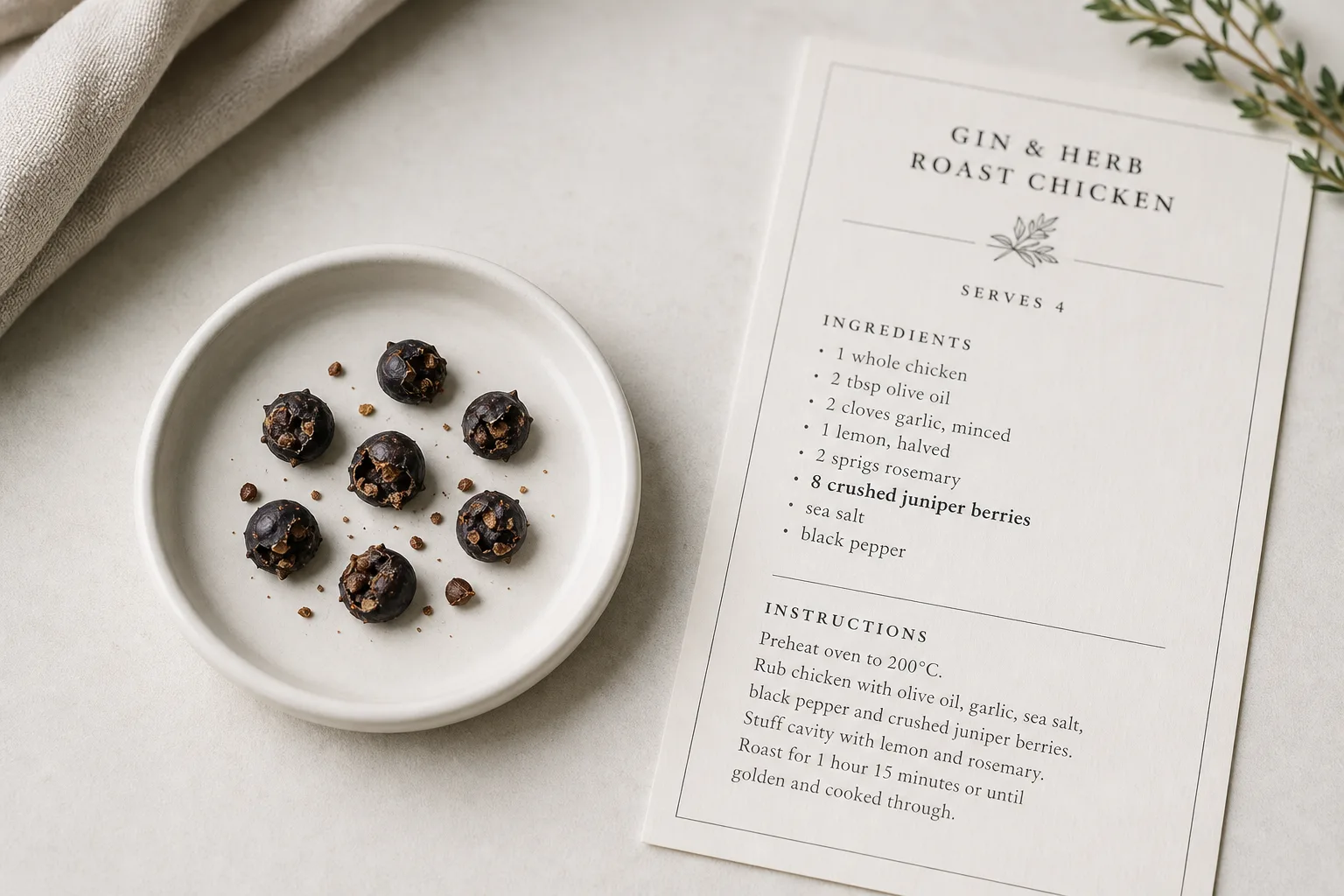
Count before crushing.
Measuring ground juniper by the spoon hides differences in berry size and makes a small second addition harder to control.
Extraction time is the next control. Four finely ground berries cooked for two hours can taste more forceful than six lightly cracked berries removed after twenty minutes.
The surrounding ingredients matter too. Salt sharpens perception, tart fruit makes the citrus side more noticeable, and a rich sauce spreads the aroma across more fat and liquid.
Taste the sauce or braising liquid halfway through its cooking time. If the juniper is already clear, remove any loose pieces and let the rest of the dish finish without another addition.
Why do juniper berries turn bitter?
Juniper becomes harsh when too much aromatic material reaches the food. Excess berry count can cause that problem, but grinding too finely or leaving cracked berries in the pot too long can produce the same result.
The bitter finish often lingers after the pine aroma fades. This is why adding more liquid at the end may soften the first smell while leaving the aftertaste obvious.
Ground fragments are especially difficult to correct because they remain suspended in the sauce. A coarse crack gives you the option to strain the spice as soon as the flavor reaches the right level.
Scorching creates a different kind of bitterness.
Do not fry dry juniper powder alone in a hot pan, and keep it mixed with oil, moist aromatics, or the meat rub if it meets direct heat.
A cream sauce can often absorb a small mistake after dilution. A clear wine reduction has less room because every resinous note remains exposed.
For the next batch, change one variable.
Use fewer berries, crack them less, or remove them earlier, then keep the other two controls the same so you know what fixed the result.
What dishes use juniper berries?
Juniper is best known with venison, wild boar, hare, and pheasant. Its dry pine and citrus character gives rich game a fresh aromatic edge without adding chile heat or baking-spice sweetness.
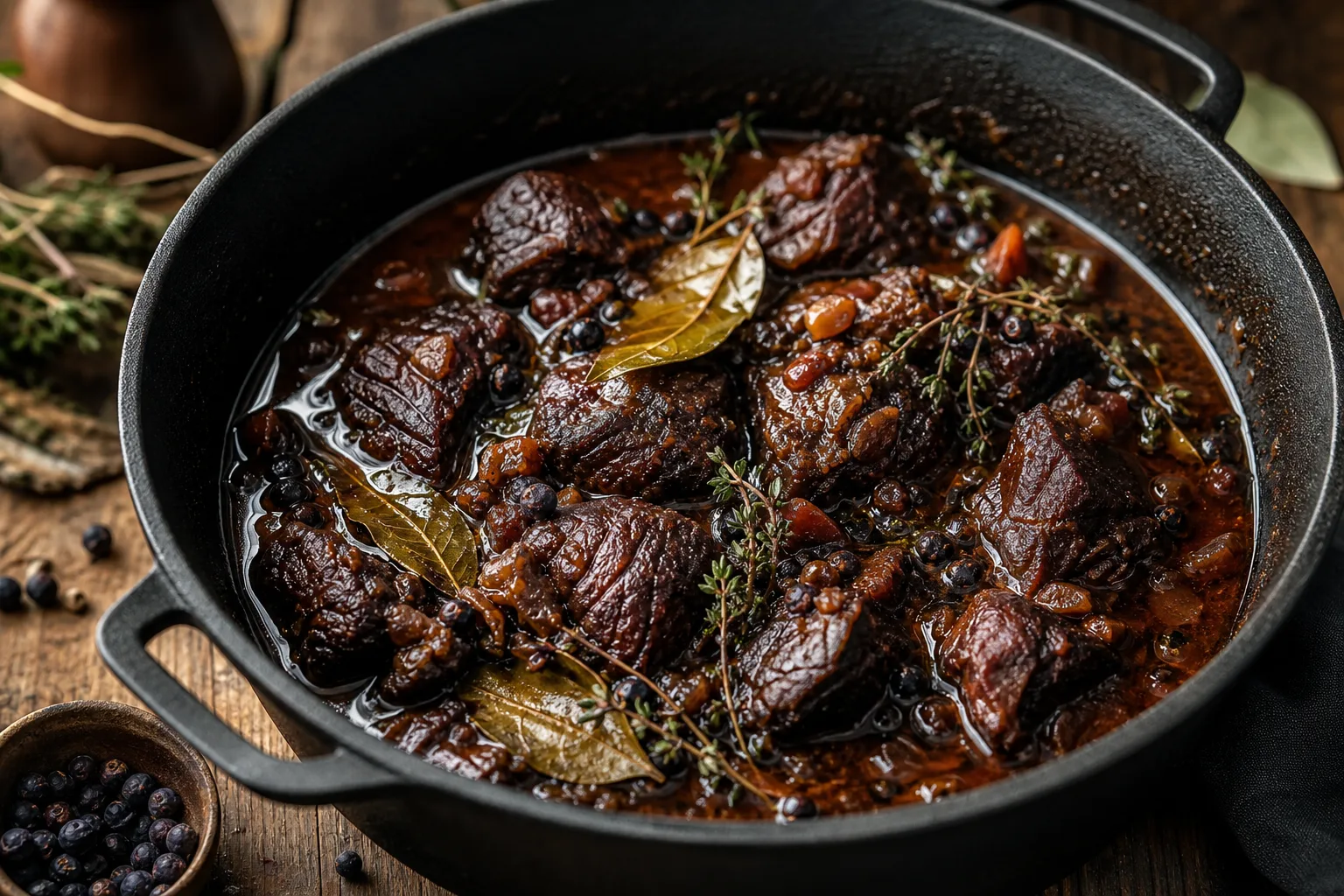
Venison recipes often place juniper beside rosemary, thyme, blackberry, plum, or sloe gin. The herb repeats its forest-like side, while fruit supplies acidity and sweetness that keep the sauce from tasting dry.
Use rosemary sprigs as a supporting herb rather than an equal second lead.
Both ingredients can dominate a rub, so reduce the rosemary when the juniper needs to remain recognizable.
Pork and duck are equally practical places to use the jar. Try a few cracked berries in a pork shoulder braise, duck sauce, pâté seasoning, or a salt cure where the spice has enough meat and fat around it.
Freshly ground black pepper adds bite without copying juniper's aroma. The pair works well in a roast crust because pepper supplies immediate sharpness and juniper leaves a slower piney finish.
Cabbage and sauerkraut show another side of the spice. Here juniper sits with bay, caraway, wine, and smoked pork, giving fermented acidity a dry aromatic counterpoint.
Juniper can also join a pickling spice mixture for cucumbers, onions, or beets. Keep it to one supporting note because mustard seed, coriander, peppercorn, and bay still need room.
With fish, use a smaller dose than you would for game.
Two cracked berries can season a gravlax cure or an oily fish marinade, especially beside fresh dill and citrus peel.
Earthy vegetables such as beetroot, celeriac, mushrooms, and roast carrots can carry juniper when butter or oil is present. A spoonful of tart berry sauce makes the combination easier to balance.
The broader floral and aromatic spice family contains other strong ingredients, but juniper behaves more like a dry evergreen herb than a flower. Pair it with food that has enough depth to hold that character.
Use spice solubility as a practical guide. Juniper aroma spreads through alcohol and fat, while a plain watery broth can leave the same dose feeling sharper and less integrated.
Can you eat juniper berries, and are all species safe?
Buy berries labeled for culinary use and identified as Juniperus communis.
The European Medicines Agency defines juniper fruit as the dried berry-like cones of that species.
The cooked pieces are not treated like blueberries. Their hard seeds and fibrous cone tissue remain coarse, so most braises and sauces use them as removable aromatics.
Finely ground juniper in a rub is eaten with the crust. Keep the grind coarse and the dose restrained so no single bite contains a dense pocket of resinous powder.
Do not pick berries from an ornamental shrub or wild plant based on color, smell, or a phone app. University Extension guidance advises against eating unidentified wild juniper, and a short online description cannot confirm a safe species.
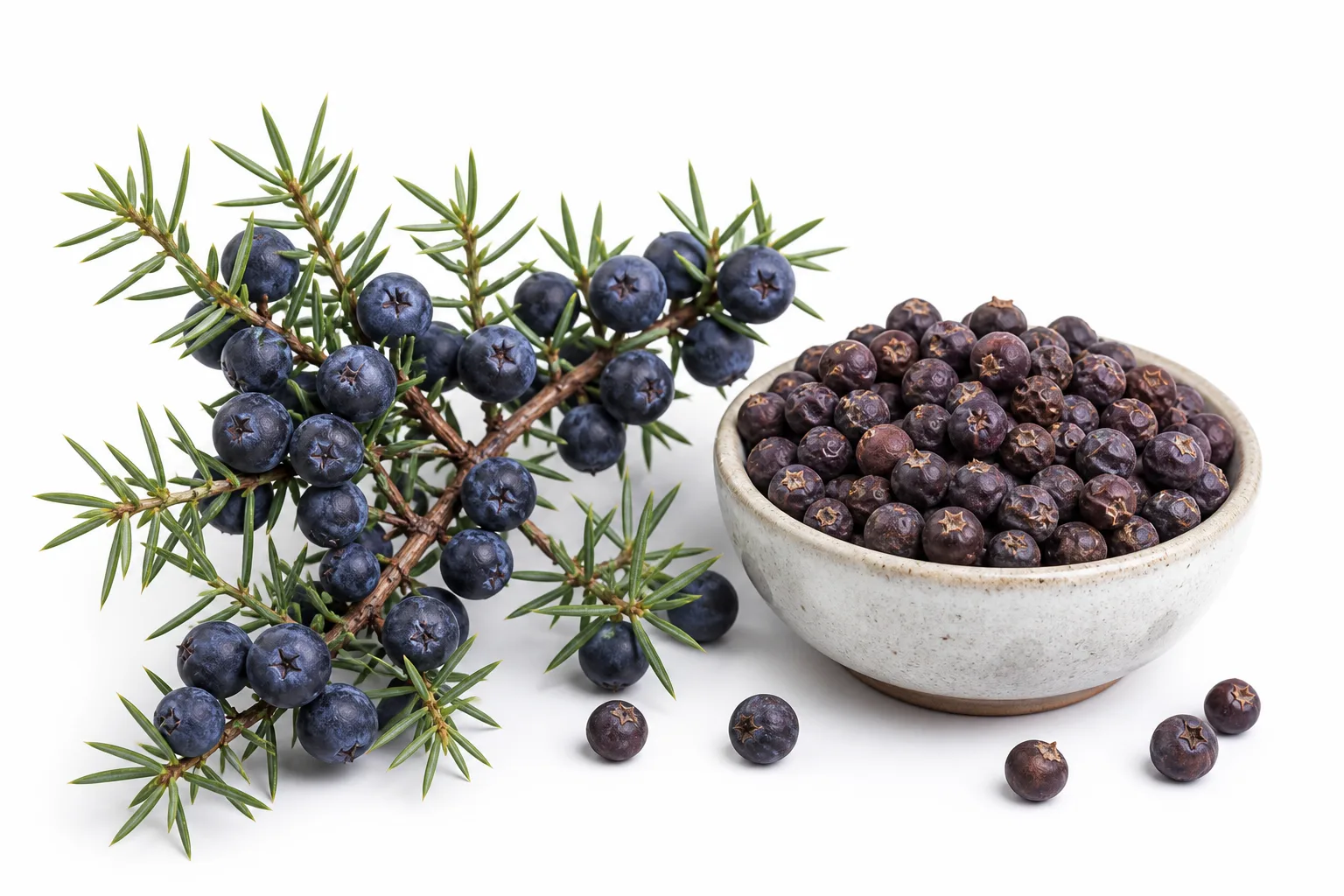
Dried culinary berries are the normal pantry form and the form most recipes assume. Fresh ripe cones can be more aromatic, but their strength varies and they are rarely sold through ordinary spice retailers.
Choose whole dried berries over preground powder.
Whole stock keeps its aroma longer, lets you smell each batch before use, and gives you control over how finely it is crushed.
Store the jar tightly closed away from heat and sunlight. The site's guide to storing spices explains why whole aromatic spices last better when their volatile oils remain protected until cooking.
Replace the berries when several crushed pieces smell dusty or nearly blank. A stronger dose of tired stock adds woody bitterness more readily than the bright aroma you were trying to recover.
How do you buy and store juniper berries?
Buy whole dried berries and expect them to look slightly shrivelled. A plump glossy berry is either fresh or oiled, and neither keeps well in a cupboard.
Squeeze one between finger and thumb before you commit.
A good dried berry gives a little rather than crumbling to dust, and the skin should release a clear pine smell as it breaks. A berry that crumbles has nothing left in it.
Color tells you less than most people expect.
Deep blue-black with a dusty bloom is ideal, but berries fade toward brown with age without losing all their aroma, so trust the smell over the shade.
Keep them airtight, cool, and dark, the same as any whole spice. Whole juniper holds usable aroma for one to two years, which is shorter than a peppercorn because the resin oxidises rather than simply fading.
Buy the smallest quantity a shop will sell.
A recipe uses four to eight berries and most cooks reach for them a few times a year, so a large bag is a slow way to own stale juniper.
| Check | Good | Worrying |
|---|---|---|
| Feel | Gives slightly under pressure | Crumbles to dust |
| Smell when broken | Clear pine and citrus | Faint, dusty, or sour |
| Color | Blue-black with a dusty bloom | Uniformly brown and dull |
| How much to buy | The smallest bag sold | A large bag for a spice used a few times a year |
What can you substitute for juniper berries?
No pantry ingredient reproduces juniper completely.
Choose a substitute according to whether the dish needs an evergreen herb, citrus lift, a bitter seed note, or direct juniper flavor.
For venison, pork, duck, and mushrooms, use a small rosemary sprig with a strip of lemon or orange zest. Rosemary covers the piney herbal direction, while the zest supplies brightness that rosemary lacks.
For sauerkraut or braised cabbage, caraway is a better fit. It tastes earthy and anise-like rather than piney, yet it gives fermented cabbage a similarly assertive aromatic point.
Dry gin supplies actual juniper flavor in a sauce or braise. Add one tablespoon during deglazing, let the alcohol cook down, then taste before adding a second spoon.
Gin changes the liquid balance and may contain coriander, citrus peel, or other botanicals. It is useful in a sauce, but it cannot replace dry berries in a rub.
| Substitute | Conservative starting amount | Best use | Main tradeoff |
|---|---|---|---|
| Rosemary and citrus zest | 1 small sprig and 1 strip for 4 to 6 berries | Game, pork, mushrooms, roast vegetables | Herbal and bright but less resinous |
| Caraway seeds | 1/4 teaspoon for 4 to 6 berries | Sauerkraut and braised cabbage | Earthy and anise-like rather than piney |
| Dry gin | 1 tablespoon for 4 to 6 berries | Pan sauce, stew, and braise | Adds liquid, alcohol, and other botanicals |
Ground allspice and fennel seeds can add complexity, but neither is a direct replacement. Use them only when their warm or anise-like character already belongs in the recipe.
The general method for spice substitutions applies here. Identify the missing job, choose one replacement, and taste before layering in a second aromatic ingredient.
Omitting juniper is better than forcing an unrelated spice into a delicate dish.
A venison sauce can accept rosemary and citrus, while a simple fish cure may be cleaner with dill and pepper alone.