
Chipotle Is a Smoked Jalapeño, and the Form Changes the Dish
Choose the smoked chile form before measuring because powder, whole peppers, and adobo change more than heat.
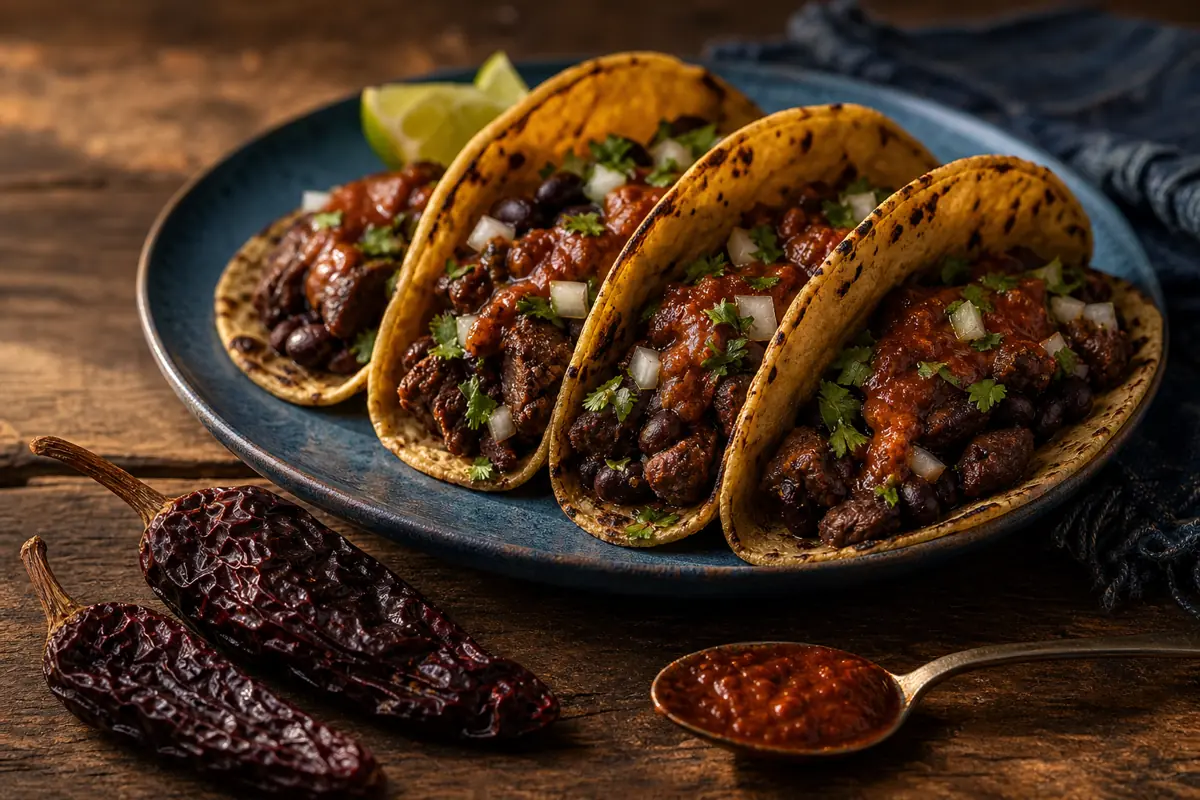
Chipotle is usually a ripe red jalapeño preserved through smoking and drying, and dark morita tastes fruitier and stays flexible while tan meco is drier and more smoke-forward. Whole dried chiles build sauce body, powder adds dry smoke fast, and canned chipotle in adobo also adds tomato, vinegar, salt, and moisture. Start small because smoke can dominate before the heat feels excessive.
What is a chipotle pepper, and is it just a smoked jalapeño?
A chipotle pepper is usually a ripe red jalapeño that has been smoked and dried. It is a preserved form of the familiar fresh chile, not a separate fresh variety.
Jalapeños destined for chipotle stay on the plant until they ripen from green to red. That extra ripening develops more fruit and sweetness before the smoke enters.
Slow smoking removes moisture while depositing wood-smoke aromas. Drying also concentrates the chile solids, so a gram of chipotle tastes denser than a gram of fresh jalapeño.
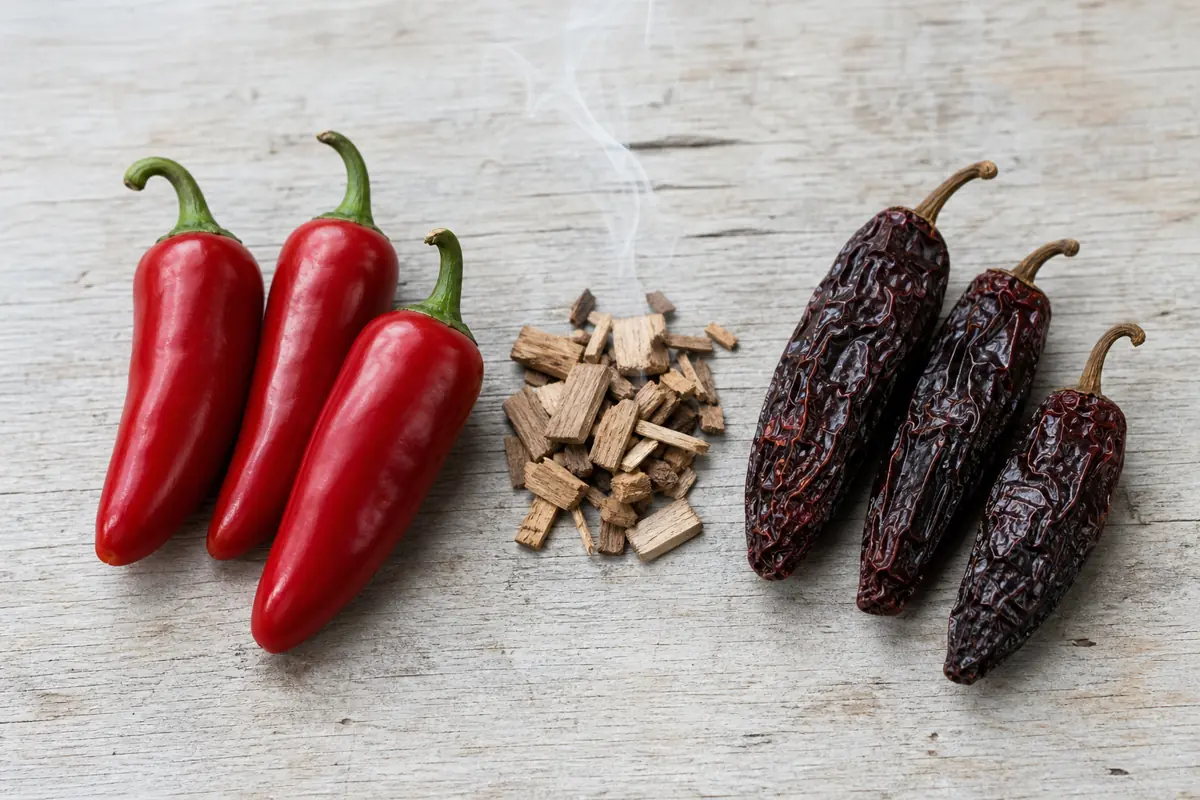
- Fresh pepper: Ripe red jalapeño
- Process: Smoke and slow drying
- Finished chile: Dark, wrinkled chipotle
The word chipotle comes from a Nahuatl term for smoked chile. Mexican cooks have used smoke to preserve ripe peppers long after the fresh harvest.
| Stage | Appearance | Flavor | Cooking behavior |
|---|---|---|---|
| Green jalapeño | Firm, green, and juicy | Grassy, bright, fresh heat | Works raw or quickly cooked |
| Red jalapeño | Ripe, red, and juicy | Sweeter and fruitier | Base pepper for most chipotle |
| Chipotle | Wrinkled, smoked, and dried | Smoky, earthy, fruity heat | Needs rehydration, grinding, or sauce |
Smoking changes the chile more than it changes the capsaicin range. The final ingredient keeps jalapeño-level heat but gains smoke, dried fruit, earth, and a chewy skin.
Stores sell chipotle whole, crushed, powdered, canned in adobo, or blended into hot sauce.
Those forms share a pepper source but are not equal spoon for spoon.
What does chipotle taste like, and how hot is it?
Chipotle tastes of wood smoke, dried red fruit, earth, and mild sweetness. Morita can suggest raisins or berries, while meco leans toward nuts and a dry fire.
Most chipotle falls around 2,500 to 8,000 Scoville heat units. That is the broad jalapeño range, though individual peppers and products vary.
Smoke does not create capsaicin, but dehydration concentrates every bite. A teaspoon of powder can therefore feel stronger than an equal volume of chopped fresh jalapeño.
The white inner ribs hold much of the chile's capsaicin heat. Seeds collect capsaicin from nearby tissue and add texture, so removing both can soften and smooth a sauce.
| Chile | Typical heat | Flavor direction | Best swap reason |
|---|---|---|---|
| Ancho | Mild | Raisin, cocoa, little smoke | Fruit without much heat |
| Guajillo | Mild to medium | Berry, tea, clean chile | Color and fruit |
| Chipotle | Medium | Smoke, earth, ripe fruit | Smoke plus jalapeño heat |
| Cayenne | Hot | Clean sharp heat | Heat without more smoke |
If smoke is balanced but heat is low, add ground cayenne instead of more chipotle.
If heat is right but smoke is heavy, enlarge the unseasoned base.
Chipotle morita or meco: which should you choose?
Choose chipotle morita for dark fruit, moderate smoke, and a softer leathery texture. Morita means little mulberry, a reference to its small purple-red appearance.
Morita is smoked for less time and retains more moisture than meco.
It bends rather than snaps and blends into salsa, adobo, beans, and quick sauces.
Choose chipotle meco for deeper smoke, earth, and a drier structure. Meco is larger, tan to gray-brown, and often looks dusty or cigar-like.
The longer-smoked meco stands up to beef, braises, birria-style sauces, and fillings.
Its dry skin needs a patient soak before blending.
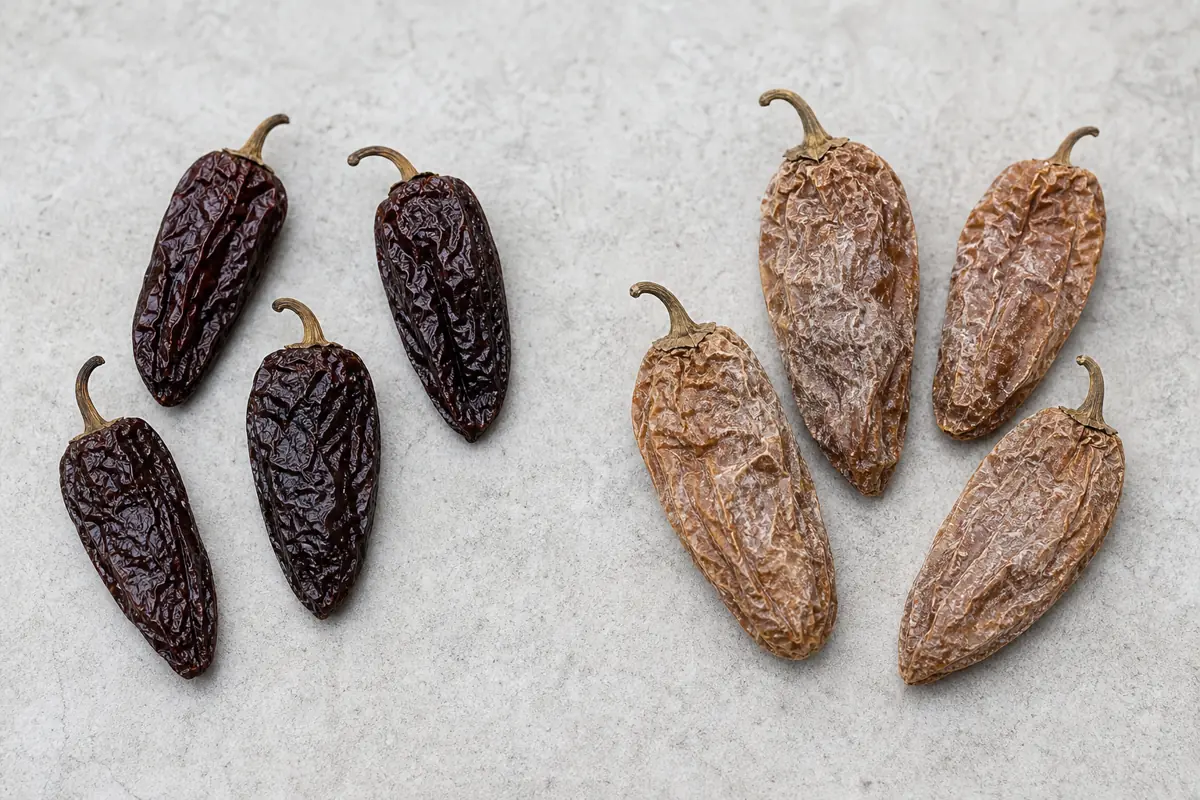
- Morita color: Dark red to burgundy
- Morita texture: Smaller and more pliable
- Meco cue: Wider, tan, and drier
| Cue | Morita | Meco |
|---|---|---|
| Color | Dark red to purple-brown | Tan to gray-brown |
| Texture | Wrinkled and flexible | Dry, stiff, and leathery |
| Flavor | Fruity with rounded smoke | Earthy with heavier smoke |
| Common use | Adobo, salsa, beans, quick sauce | Braise, rich sauce, stuffing |
| Heat | Jalapeño range | Similar broad range |
Color does not signal a better or worse chipotle. It reflects ripeness, smoking time, drying, and style, so judge the chile by the dish.
Canned chipotles in adobo commonly use morita.
A package labeled only chipotle may need a visual check before you know which style it contains.
Dried, powdered, or canned in adobo: which chipotle form fits?
Choose whole dried chipotle when a sauce needs chile body and a controlled soaking liquid. The softened flesh thickens salsa, beans, soup, and braising sauce.
Choose chipotle powder when the dish needs dry smoke without extra liquid or tomato. It disperses through rubs, roasted vegetables, ground meat, and dry seasoning.
Crushed chipotle flakes give visible specks and uneven bursts.
They work in table seasoning, finishing blends, and rustic sauces where texture is welcome.
Canned chipotle in adobo gives a softened chile plus a seasoned sauce. The adobo commonly brings tomato, vinegar, salt, sugar, garlic, and spices.
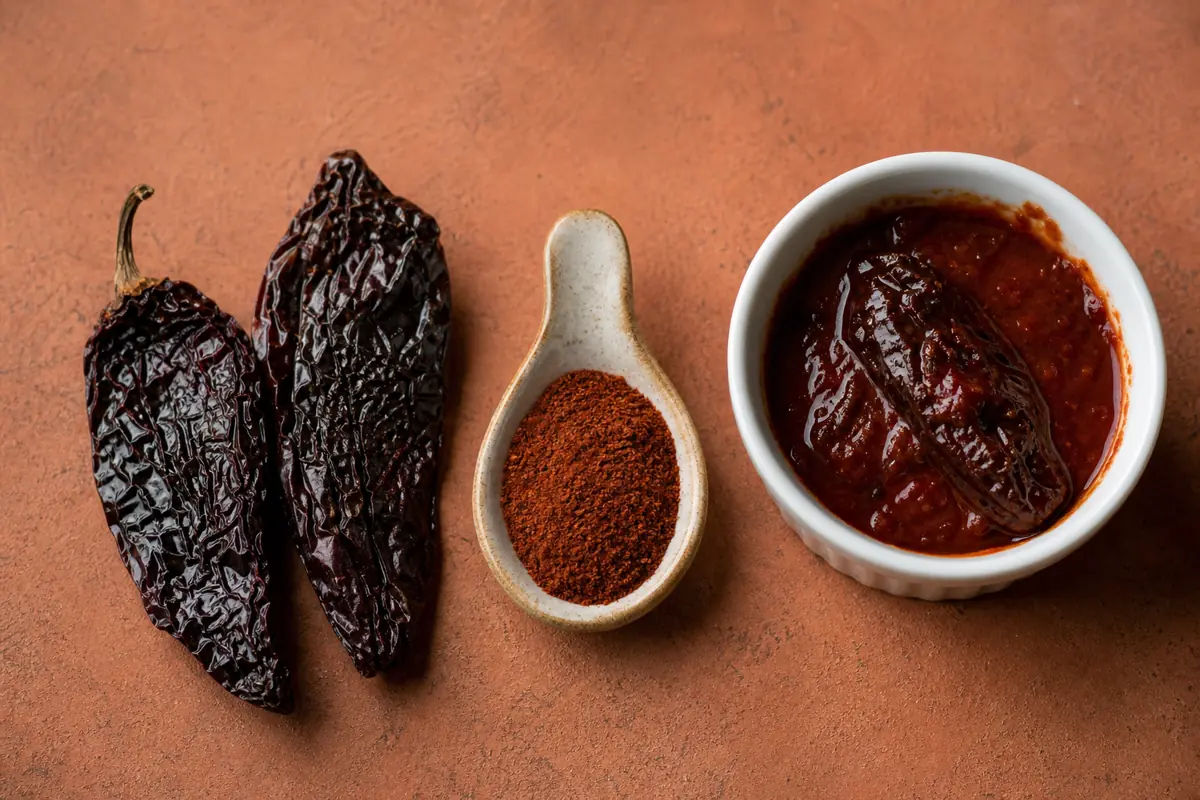
- Whole dried: Chile flesh and smoke
- Powder: Fast, dry dispersion
- Canned adobo: Soft chile plus tangy sauce
A canned pepper therefore changes acidity, salt, moisture, and sweetness along with smoke.
Taste the sauce separately before adding the recipe's full salt or acid.
| Form | Adds | Best use | Watch for |
|---|---|---|---|
| Whole dried | Chile flesh and smoke | Salsa, beans, braise | Soaking and blending time |
| Powder | Dry smoke and even heat | Rub, roasted food, quick sauce | Fast scorching |
| Flakes | Smoke with visible texture | Finishing blend and rustic sauce | Uneven hot bites |
| Pepper in adobo | Soft chile, smoke, acid, salt | Marinade, sauce, beans, mayo | Extra liquid and seasoning |
| Adobo sauce alone | Tangy smoky liquid | Small adjustment and dressing | Less chile body |
The whole versus ground choice changes both volume and texture. Adobo carries additional sauce ingredients, so none of these forms converts blindly.
How do you toast, seed, and rehydrate dried chipotle?
Wipe dried chipotle with a barely damp towel and check the folds for grit.
Remove the hard stem before the chile enters a pan or blender.
Split the chile when you want to remove seeds and pale ribs. Keep them for fuller heat, or discard them for a smoother and gentler puree.
Use a careful dry chile toast for only a few seconds per side.
Stop when the smoke and fruit aromas rise.
Black spots, harsh smoke, or a cough-inducing smell mean the chile is scorching. Burned chipotle turns bitter and cannot be repaired by soaking.
Cover toasted chiles with hot water and weigh them down with a small plate.
Soak until flexible, usually 15 to 25 minutes.
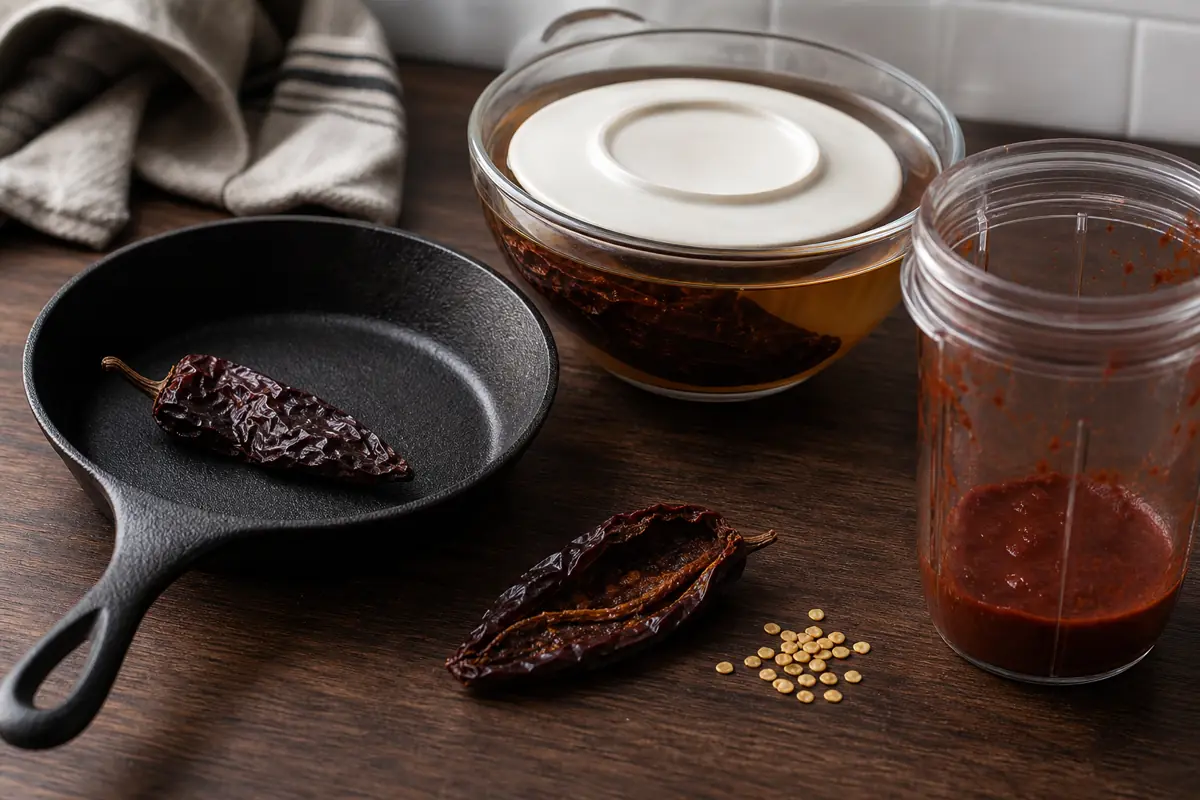
- Prepare: Stem and open the chile
- Soften: Toast briefly, then submerge
- Finish: Blend the drained flesh
- Clean: Wipe the wrinkled skin and remove the stem.
- Open: Remove seeds and ribs when less heat or smoother texture matters.
- Toast: Use seconds, not minutes, and stop at the first strong aroma.
- Soak: Hold below hot water until the skin bends easily.
- Blend: Add clean liquid gradually until the puree moves.
Taste the soaking water before adding it to a sauce. Use clean-tasting liquid for extra smoke, but discard water that tastes bitter or ashy.
Blend the softened chile with stock, water, tomato, or the recipe liquid.
Strain only when a very smooth sauce matters, since the skin can remain coarse.
How do you use chipotle without letting smoke take over?
Use early spice timing for chipotle puree in beans, soup, or braising sauce. Long cooking rounds the fruit but keeps the smoke.
Give chipotle powder a brief oil bloom before adding liquid. Ten to twenty seconds is enough because fine powder scorches quickly.
Use minced chipotle in adobo for marinades, taco fillings, shredded meat, barbecue sauce, and stewed vegetables.
Account for the sauce's vinegar and salt.
Sweet potato, corn, squash, tomato, and beans can carry chipotle without disappearing. Beef, pork, and dark chicken meat also stand up to its smoke.
For mayonnaise, yogurt sauce, dressing, or salsa, blend a small amount of adobo first. Cold mixtures do not soften the smoke through cooking.
| Dish path | Form | Timing | Why |
|---|---|---|---|
| Beans or braise | Rehydrated puree | Early | Distributes through long cooking |
| Roasted vegetables | Powder with oil | Before roasting | Coats the surface evenly |
| Fast pan sauce | Powder or adobo | Briefly before liquid | Releases aroma without burning |
| Marinade | Minced adobo pepper | Before cooking | Adds smoke, acid, and salt |
| Cold sauce | Adobo sauce or puree | Blend in small amounts | No heat step will soften excess |
A delicate white fish or fresh herb sauce needs restraint because heavy smoke can flatten its aroma.
Start with adobo sauce alone before adding pepper flesh.
When chipotle overwhelms a pot, add more unseasoned food, broth, tomato, beans, or dairy.
Sugar can round bitterness but should not become the only repair.
How much chipotle should you use, and what can substitute?
Use a level teaspoon measurement and start four servings with one-half teaspoon of chipotle powder. Add another quarter teaspoon only after it hydrates.
For canned chipotle, begin with half a minced pepper plus one teaspoon of adobo sauce. Larger peppers and brands can vary sharply in heat.
One rehydrated morita can start a medium pot of beans or sauce. Meco may bring heavier smoke, so begin with half when the dish is delicate.
| Need | Starting point | Adjustment |
|---|---|---|
| Dry seasoning for 4 servings | 1/2 teaspoon powder | Increase by 1/4 teaspoon |
| Sauce or beans for 4 servings | 1/2 canned pepper plus 1 teaspoon adobo | Add sauce and flesh separately |
| Whole dried chile | 1 morita or 1/2 smoky meco | Blend, taste, then add more |
| Smoke without equal heat | Smoked paprika | Add cayenne separately if needed |
| Heat and fruit without smoke | Guajillo plus cayenne | Expect a cleaner chile flavor |
A substitution by function uses smoked paprika for smoke, but it lacks chipotle's ripe fruit and texture.
Add cayenne separately when heat is missing.
For a milder fruity sauce, ancho or guajillo can replace chile body. A drop of liquid smoke is easy to overuse and may taste artificial.
How do you buy and store chipotle, including leftover adobo?
A trusted online spice shop should show whether it sells morita or meco.
Buy morita that feels leathery and flexible, with clean smoke.
Meco is naturally stiff, tan, and dry, so flexibility is not its freshness test. Look for intact skin, clear smoke, and no mold inside the folds.
Follow dry spice storage and keep whole chipotle and powder in separate airtight containers. Protect both from light, heat, and stove steam.
Move opened chipotles in adobo out of the metal can and into a clean sealed container. Refrigerate the amount planned for the next few meals.
For longer storage, blend the remaining peppers with their sauce. Freeze the puree in one-tablespoon portions, then transfer the firm pieces to an airtight bag.
- Dried morita: Dark, smoky, and leathery without damp spots.
- Dried meco: Tan and stiff with a clean dry-smoke aroma.
- Powder: Seal tightly and replace it when smoke and fruit fade.
- Opened adobo: Leave the can, cover the peppers, and refrigerate promptly.
- Extra adobo: Puree and freeze in measured spoonfuls.
Label frozen portions with the amount and date. A measured spoonful can move straight into hot beans, sauce, or soup without thawing the whole supply.