
Clove Substitutes for Sweet and Savory Cooking
Match strength and physical form before choosing the warm spice that goes into the dish.
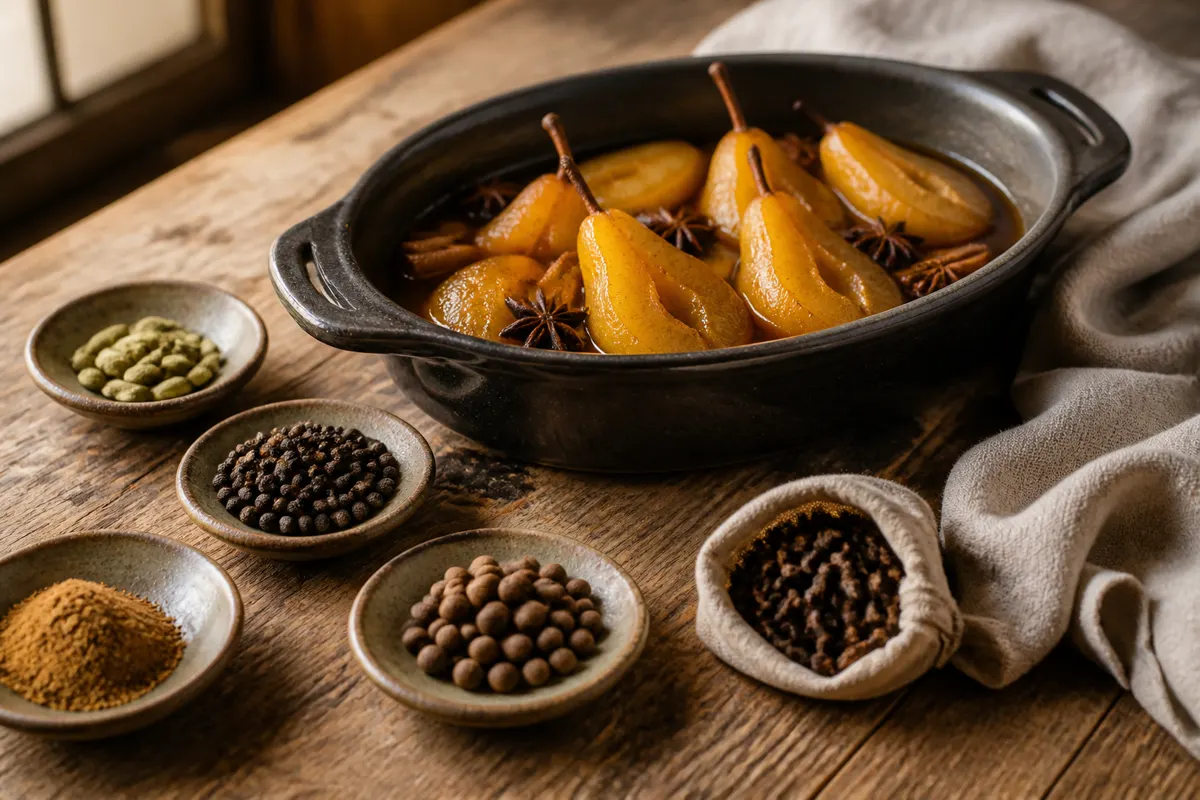
Allspice is the best general clove substitute. Use one-half teaspoon ground allspice for each teaspoon of ground clove, or place two allspice berries in a sachet for each whole clove and remove them once the liquid tastes balanced. Start lower in a dry bake or meat rub because clove-like warmth concentrates when little liquid is available.
Five Clove Substitutes Ranked by Strength
Cloves are unusually concentrated. Their woody sweetness, peppery pungency, and lingering numbing sensation can support fruit, pastry, pickles, drinks, and browned meat, but excess quickly tastes medicinal.
A useful replacement does not need to copy every note. It needs the right strength, form, and cooking behavior for the recipe.
| Number | Substitute | Starting ratio | Best use | Main drift |
|---|---|---|---|---|
| 1 | Allspice | 1/2 tsp per 1 tsp ground clove | Baking, fruit, braises, pickling liquid | Rounder and less numbing |
| 2 | Cinnamon | 1/2 tsp per 1 tsp ground clove | Baking, poached fruit, drinks | Sweeter and woodier |
| 3 | Nutmeg | 1/4 tsp per 1 tsp ground clove | Custard, cream sauce, squash | Nuttier and softer |
| 4 | Cardamom | 1/4 tsp per 1 tsp ground clove | Tea, fruit, baking, rice pudding | Brighter and floral |
| 5 | Star anise | 1 small point for 2 to 3 whole cloves | Poaching liquid, stock, braise | Licorice-led |
The table assumes pure spices with no sugar or salt. Whole-spice conversions belong in a removable sachet rather than loose in food where a diner may bite them.
Freshness changes the useful amount.
A newly grated nutmeg or freshly opened cardamom jar can smell much stronger than an old ground clove jar, so compare both aromas before trusting volume alone. Use the lower ratio when the replacement reaches your nose first from the same distance.
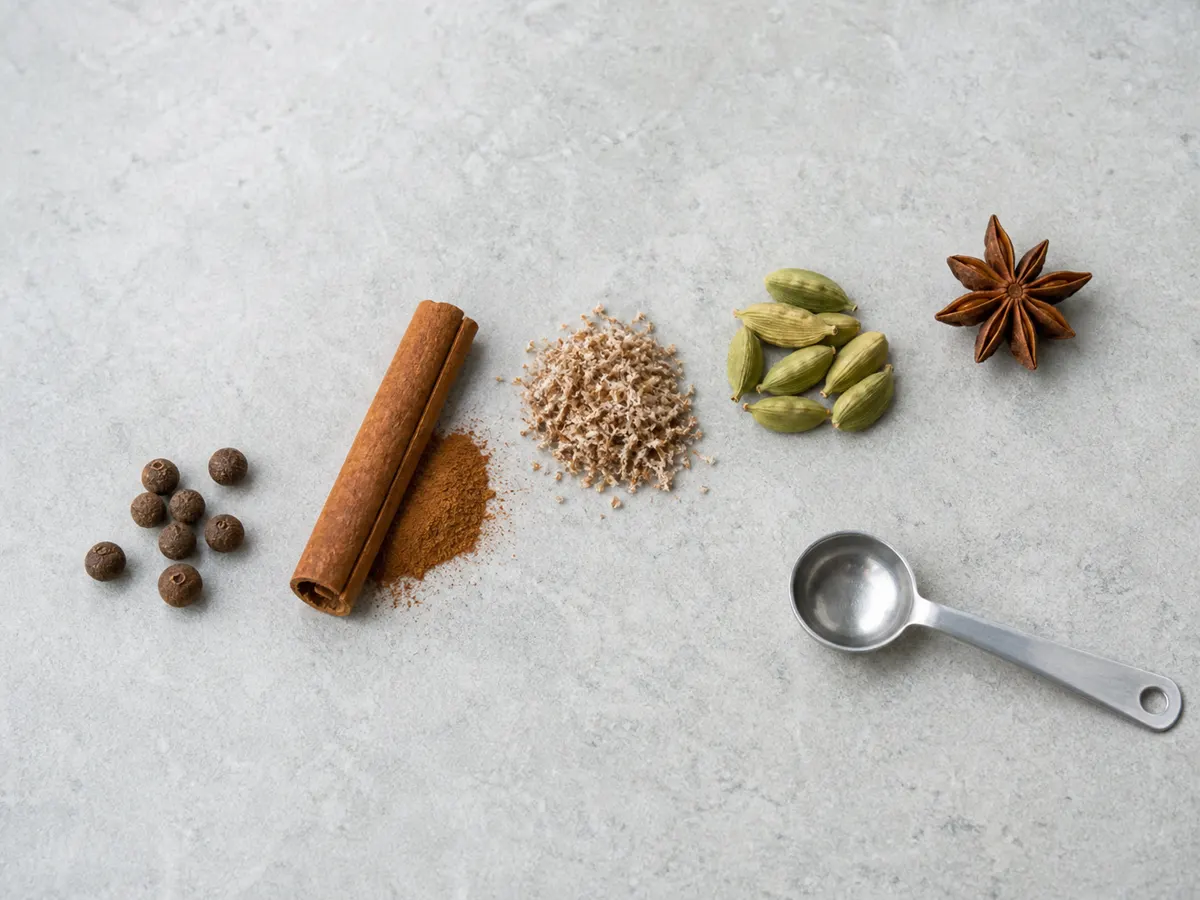
- Closest broad match: Allspice combines peppery berry warmth with familiar baking notes.
- Sweetest direction: Cinnamon emphasizes bark sweetness rather than numbness.
- Softest direction: Nutmeg rounds a creamy or starchy base.
- Brightest direction: Cardamom moves fruit and tea toward citrus and flowers.
- Whole-spice option: Star anise must remain contained and removable.
1. Allspice
Use one-half teaspoon ground allspice for each teaspoon of ground clove. Its single berry can suggest clove, cinnamon, nutmeg, and black pepper, which makes it the most flexible one-ingredient replacement.
- Starting ratio
- 1/2 teaspoon ground allspice per 1 teaspoon ground clove
- Whole-spice ratio
- 2 allspice berries in a sachet per 1 whole clove
- Best for
- spice cake, poached fruit, braises, and pickling liquid
- Main tradeoff
- rounder berry warmth with less numbing pungency
- Adjust
- stop at half volume in a dry mixture before increasing
Allspice works especially well when clove is one supporting note among several. In gingerbread or a dark braise, the food already has enough molasses, browning, or meat flavor to carry its rounder finish.
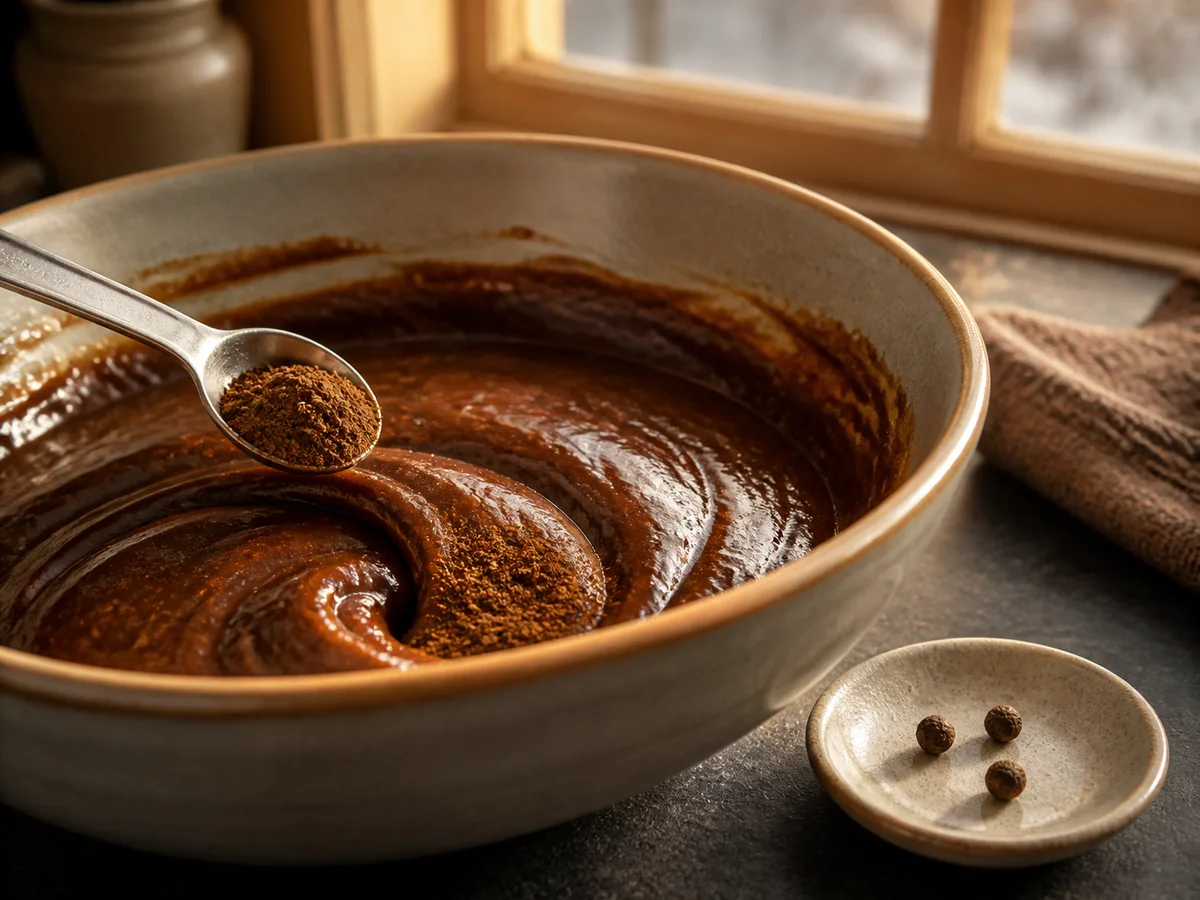
- Half measure: Begin with half as much ground allspice as ground clove.
- Dark batter: Molasses and browning give the softer spice a strong base.
- Whole berries: Confirm that allspice comes from one berry rather than a mixed blend.
- Even dispersion: Stir the measured powder through before deciding whether more is needed.
The substitution is less exact in a clove-forward syrup because allspice does not leave the same cooling numbness on the tongue.
For pickling liquid, contain the berries and taste after five minutes of gentle simmering. Remove them as soon as the aroma moves from background warmth to an identifiable allspice note.
2. Cinnamon
Begin with one-half teaspoon cinnamon for each teaspoon of ground clove in cakes, cookies, poached pears, mulled drinks, and tomato-rich savory dishes. Cinnamon is sweeter and less pungent, so equal volume often makes the food taste flatly woody rather than more clove-like.
- Starting ratio
- 1/2 teaspoon per 1 teaspoon ground clove
- Whole-spice ratio
- 1 small piece of cinnamon stick for 2 to 3 whole cloves
- Best for
- baking, poached fruit, drinks, and tomato braises
- Main tradeoff
- sweeter bark aroma without clove's numbing finish
- Adjust
- remove stick cinnamon early from a reducing liquid
In baking, cinnamon spreads easily through flour and fat. It gives warmth without the sharp point that clove contributes, which can be an advantage in a mild apple or pear filling.
Poaching liquid keeps extracting from a stick as it cools.
Remove the stick when the fruit is tender instead of leaving it in the storage syrup overnight. A balanced warm aroma can become woody by the next day.
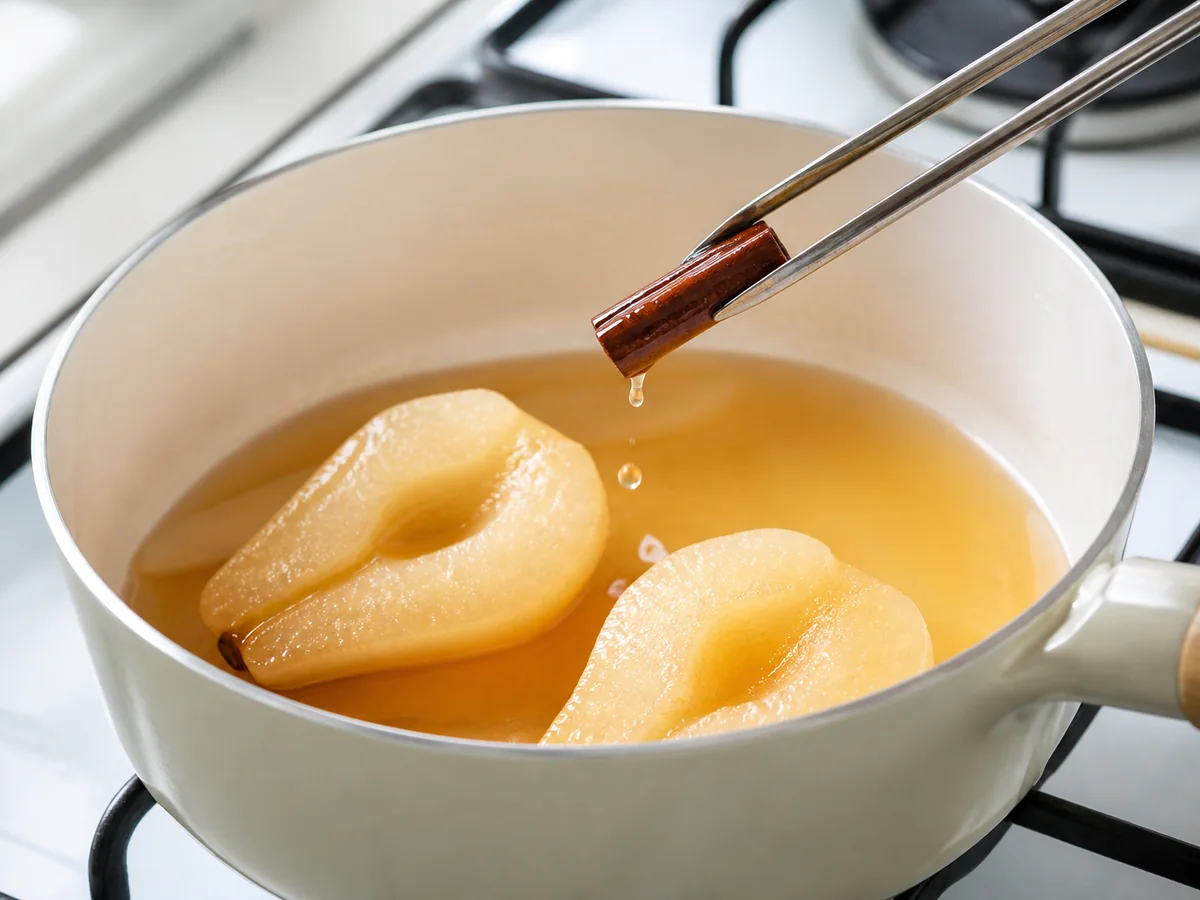
- Short stick: A small piece replaces several whole cloves without flooding the syrup.
- Tender pears: Use doneness as the first removal cue.
- Dripping syrup: Let excess liquid return to the pan before discarding the stick.
- No overnight steep: Cooling syrup continues pulling woody flavor from cinnamon.
Savory tomato sauce can carry a small cinnamon correction because acidity and cooked onion keep the sweetness in context. Pale stock or cream sauce exposes it more directly and usually needs another option.
Do not increase cinnamon to chase the missing numbness. More bark cannot create clove's pungency, and the extra sweetness may change the identity of the dish.
3. Nutmeg
Freshly grated nutmeg is vivid, so use one-quarter teaspoon for each teaspoon of ground clove in custard, cream sauce, squash, dough, or a milk-based drink.
- Starting ratio
- 1/4 teaspoon per 1 teaspoon ground clove
- Best for
- custard, cream sauce, squash, dough, and milk drinks
- Main tradeoff
- nutty warmth with a softer top note
- Texture
- grate finely so the spice disperses without gritty flecks
- Adjust
- stop when nutmeg becomes identifiable by name
Nutmeg belongs where the carrier is creamy, fatty, or starchy. Those foods hold its rounded aroma and make the missing clove edge less conspicuous.
A dark pickle or meat braise usually needs more peppery structure than nutmeg offers. Adding enough to make it noticeable only moves the food toward a different warm-spice profile.
Grate over a separate saucer before measuring.
That small step prevents a heavy stroke of the grater from falling directly into a custard that cannot be diluted easily.
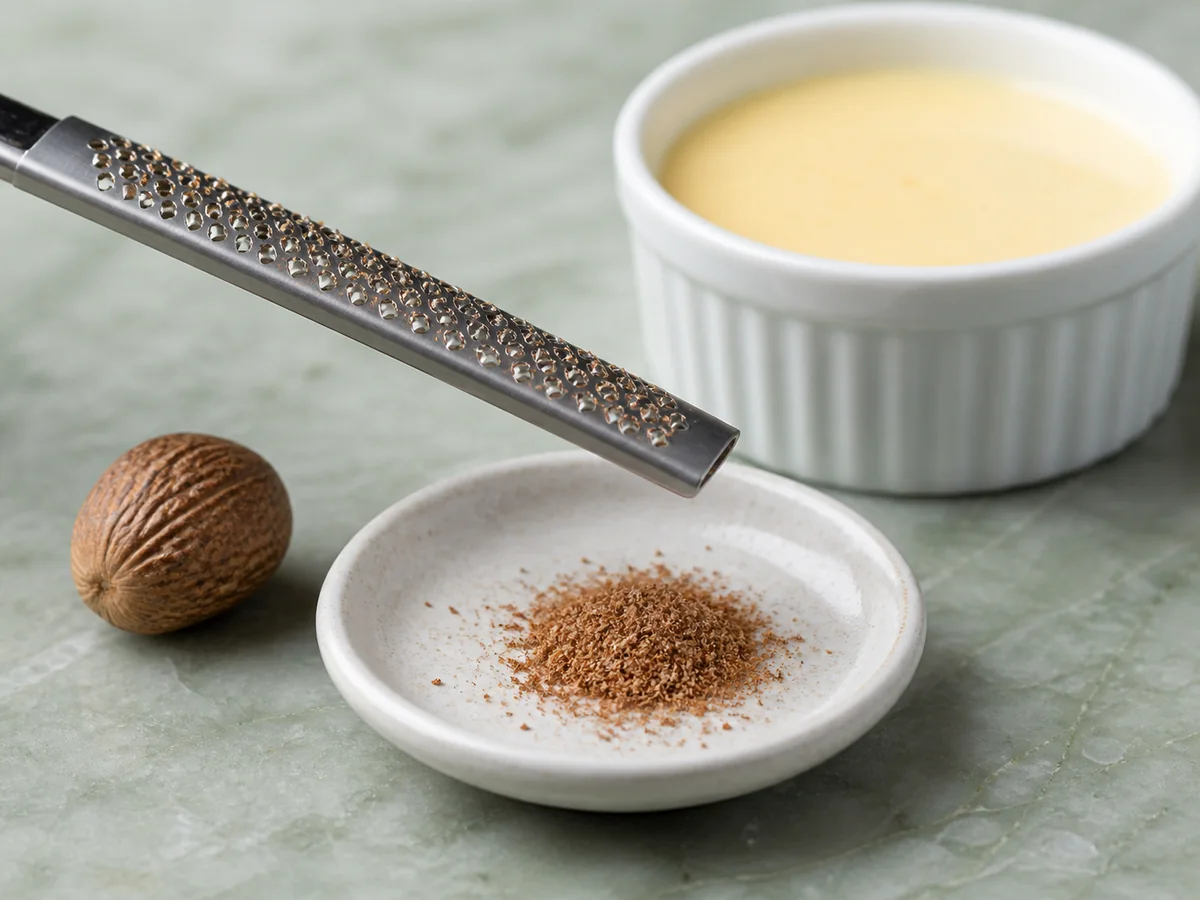
- Whole nutmeg: Grate only what the recipe needs for a fresher aroma.
- Fine grater: Small particles disperse without leaving gritty flecks.
- Separate saucer: An accidental heavy stroke stays out of the custard.
- Plain custard: Add the measured spice only after checking the amount.
4. Cardamom
Start with one-quarter teaspoon ground cardamom for each teaspoon of ground clove in fruit desserts, tea, rice pudding, and fragrant dough. Cardamom is not a dark clove imitation, but a small dose can replace aromatic lift when warmth matters more than exact flavor.
- Starting ratio
- 1/4 teaspoon per 1 teaspoon ground clove
- Whole-spice ratio
- 1 lightly cracked green pod for 2 whole cloves in an infusion
- Best for
- fruit, tea, rice pudding, and fragrant baking
- Main tradeoff
- brighter citrus-floral aroma instead of woody pungency
- Adjust
- keep the dose lower in savory food
The shift is clearest in a dark meat dish, where green cardamom can smell perfumed against browned onion. Use allspice or a contained cinnamon piece there unless the recipe already points toward cardamom.
In pear compote or tea, brightness can be useful rather than distracting.
Use green cardamom here. Black cardamom carries smoke and camphor that can overwhelm fruit, tea, and mild dairy.
Crack a whole pod just enough to expose the seeds, then keep it in a strainer or sachet. Loose seeds are easy to miss and unpleasant to bite in a smooth pudding.
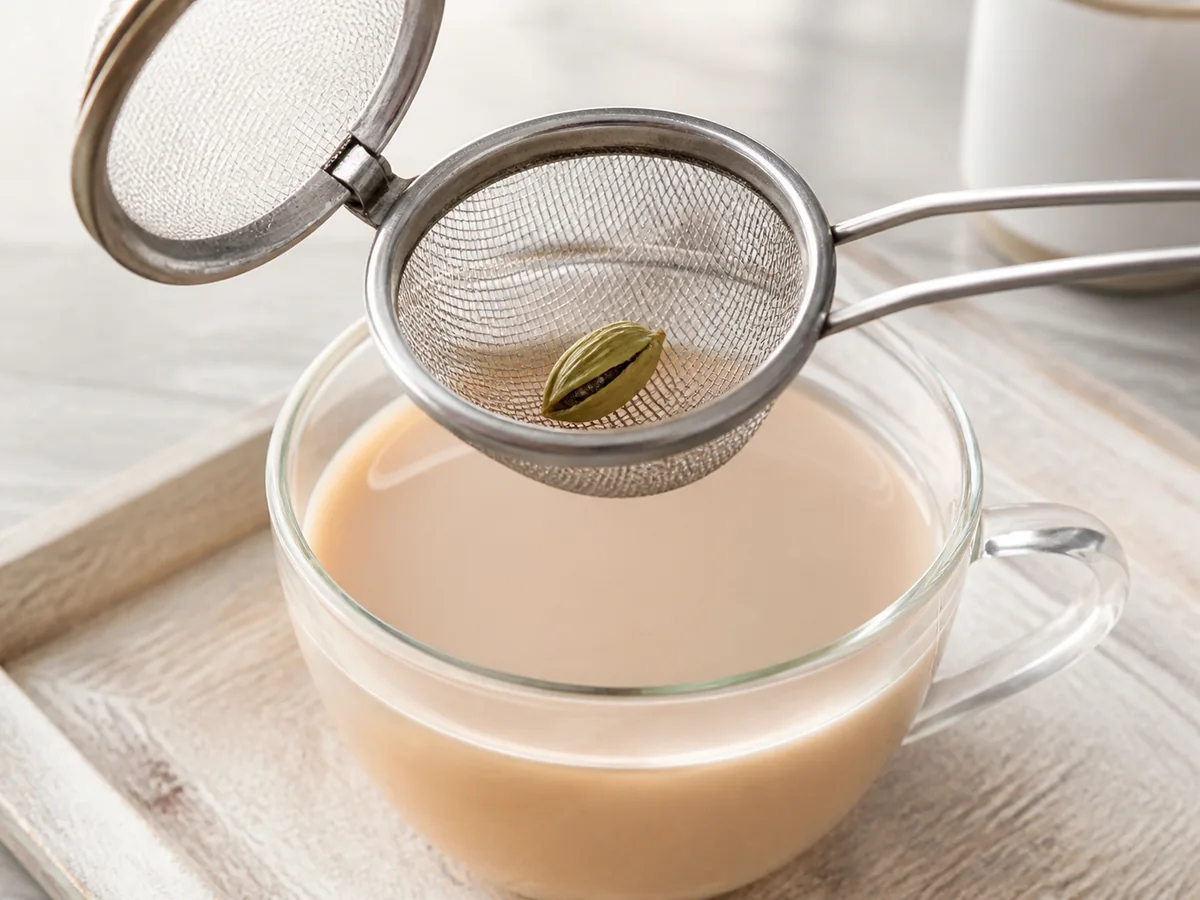
- One green pod: A restrained amount replaces two whole cloves in an infusion.
- Light crack: The split shell lets aroma escape without scattering seeds.
- Fine strainer: Containment prevents an unpleasant bite in a smooth drink.
- Milk tea: A creamy base softens cardamom's brighter floral direction.
5. Star Anise
Use one small point from a star anise pod for every two to three whole cloves in poaching liquid, mulled drink, stock, or a long braise, and never use a full star as though it were one clove.
- Starting ratio
- 1 small point for 2 to 3 whole cloves
- Best for
- poaching liquid, mulled drinks, stock, and braises
- Main tradeoff
- strong licorice aroma rather than clove
- Form
- keep whole pieces in a sachet or tea strainer
- Adjust
- taste early and remove before the licorice note leads
Star anise solves an extraction problem more than a flavor-matching problem. It is whole, strong, and removable, so it can stand in for cloves when a recipe needs a contained aromatic during simmering.
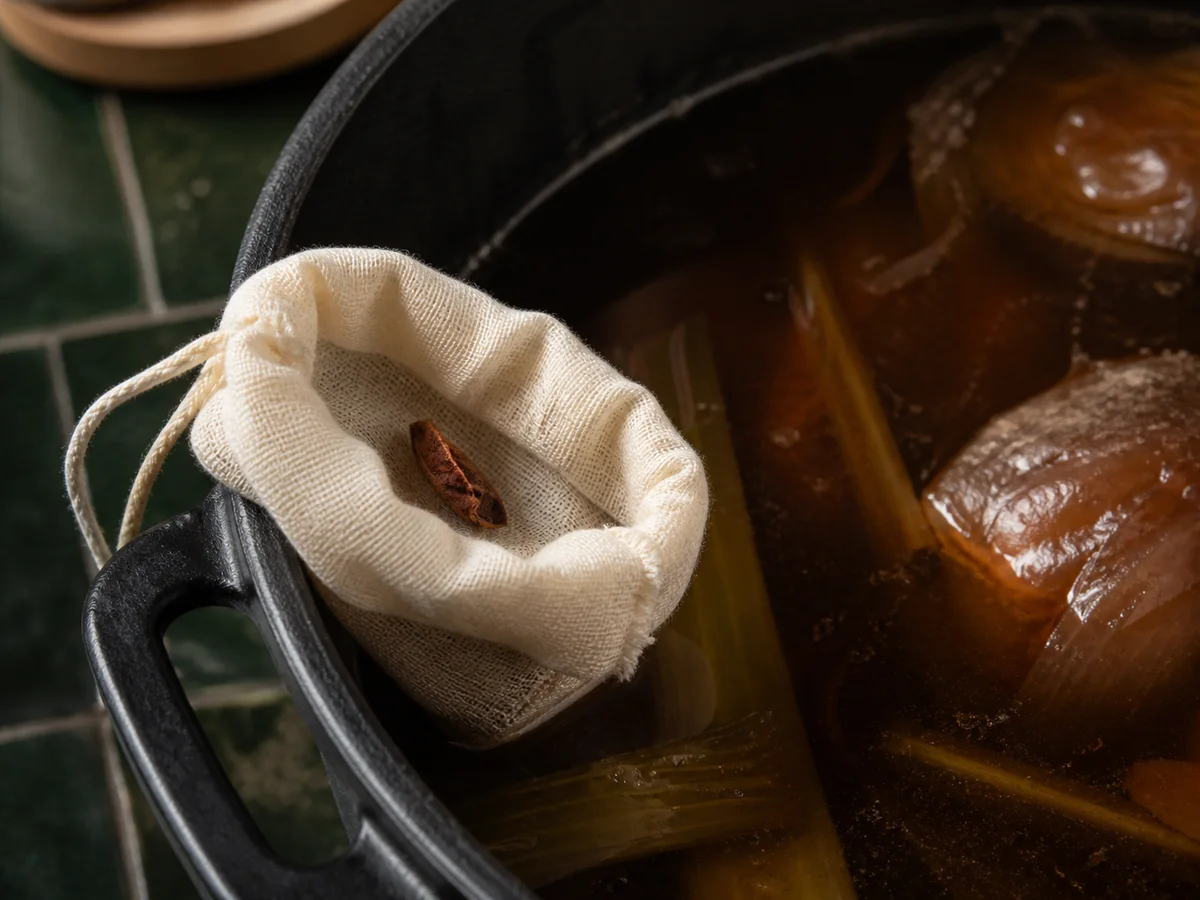
- One point: Use a fragment rather than an entire star.
- Muslin sachet: The strong spice remains easy to retrieve.
- Dark stock: Browning and reduction can support the changed aromatic direction.
- Early tasting: Check after five minutes and remove before reducing further.
The licorice direction is unmistakable.
That direction can fit pear syrup, a dark stock, or a spiced drink, but it changes a plain apple pie more than allspice or cinnamon would. Choose it because the liquid welcomes anise, not because both spices look small and dark.
Taste the liquid after five minutes, then at short intervals. Remove the piece before reducing the liquid further because evaporation strengthens what remains.
Count one intact point before filling the sachet. Loose fragments can hide a larger dose than the shape suggests.
Never grind star anise into a teaspoon-for-teaspoon replacement. Powder removes the control that makes this option useful.
Whole and Ground Spices Extract Differently
One whole clove is not a fixed fraction of a teaspoon of ground clove. Grinding exposes far more surface area, spreads the spice through every bite, and makes removal impossible.
Whole spices release flavor gradually and can be contained.
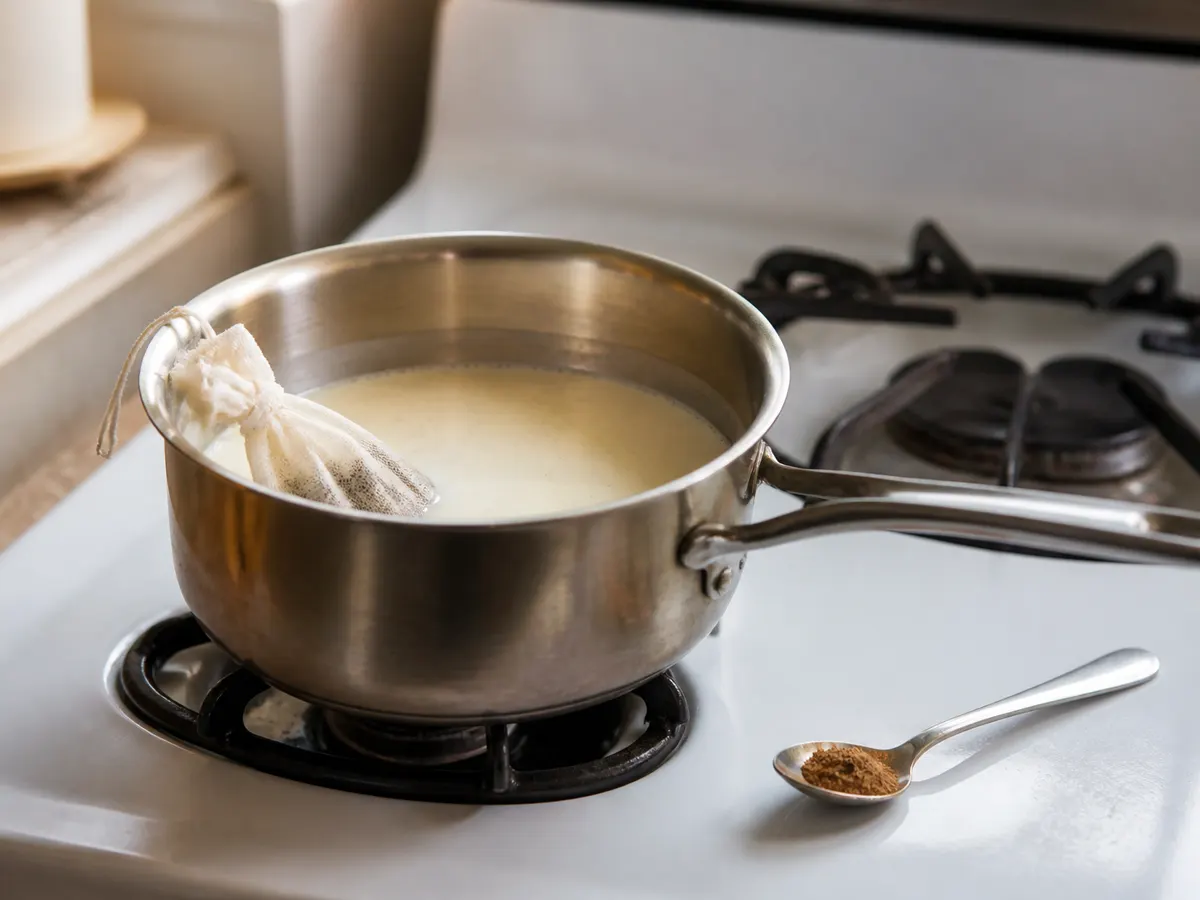
- Whole form: Slower extraction gives you time to taste and remove.
- Ground form: Fine particles release quickly and remain in the dish.
- Clear liquid: Use a sachet when floating fragments would be distracting.
- Fatty base: Expect aromatic spice to linger after the first taste.
Milk, wine, and cooking fat can all carry aromatic compounds, but they do not extract at identical speeds. A warm custard may continue tasting stronger as it rests even after the burner is off.
- Whole substituteBest for stock, syrup, mulled drink, and pickling liquid where it can be removed.
- Ground substituteBest for dough, batter, rub, and thick sauce where even dispersion matters.
Build control into the method rather than trying to rescue excess later.
Large batches deserve a small extraction test.
Infuse the proposed whole-spice amount in one cup of the recipe liquid, remove it at the planned time, and taste that sample cool before multiplying the ratio. This catches an aggressive star anise point or unusually strong allspice berries before they enter a stockpot.
- Place the measured whole substitute in a small spice sachet or fine tea strainer.
- Add it once the liquid is warm but before a hard boil begins.
- Taste after five minutes, then check at shorter intervals as the liquid reduces.
- Remove the sachet when the aroma is slightly quieter than the final target.
- Cool one spoonful and taste again because steam can hide the lingering pungency.
A cooled sample matters with clove-like spices. Heat and steam emphasize sweetness first, while the medicinal or numbing finish becomes clearer after the spoonful cools.
If ground spice has already gone in, dilution is the reliable correction. Add more unseasoned base before adding sugar, acid, or another spice that would complicate the imbalance.
Baking and Poached Fruit Reward Different Swaps
Dough and batter trap ground spice in fat and starch, so the measured amount remains distributed through the finished bake. Poaching syrup keeps extracting from a whole spice until you remove it.
That difference changes both the safest substitute and the tasting moment.
Use allspice at half volume for broad warmth. Cinnamon works when a sweeter profile fits the recipe.
Use a quarter volume of finely grated nutmeg. Avoid coarse fragments that interrupt the smooth texture.
Use a contained cinnamon piece, allspice berries, cardamom pod, or star-anise point and remove it when the fruit is tender.
Use ground allspice for clove-like depth or cinnamon for a gentler result. Taste the raw fruit mixture before baking.
Sugar does not neutralize too much spice. It can make a medicinal filling sweet and medicinal at the same time.
Fat also lengthens aromatic perception.
Butter-rich dough may smell restrained before baking, then release a stronger spice aroma as the fat warms in the oven. Use the lower ratio for a new substitute and judge the first baked tray before changing the rest.
Fruit acidity makes cinnamon seem brighter and allspice seem pepperier. Add the substitute to the fruit, wait five minutes for juice to form, and taste that mixture rather than the dry powder.
For custard, strain after infusion even when the whole spices were contained. Fine fragments can escape a sachet and become more obvious in a smooth base.
Savory Braises Need Restraint
Clove in a savory dish should usually sit behind browned onion, meat, tomato, or pickling acid. When the diner names the clove before the main food, the dose has crossed from structure into flavoring.
Browned fat magnifies warm spices.
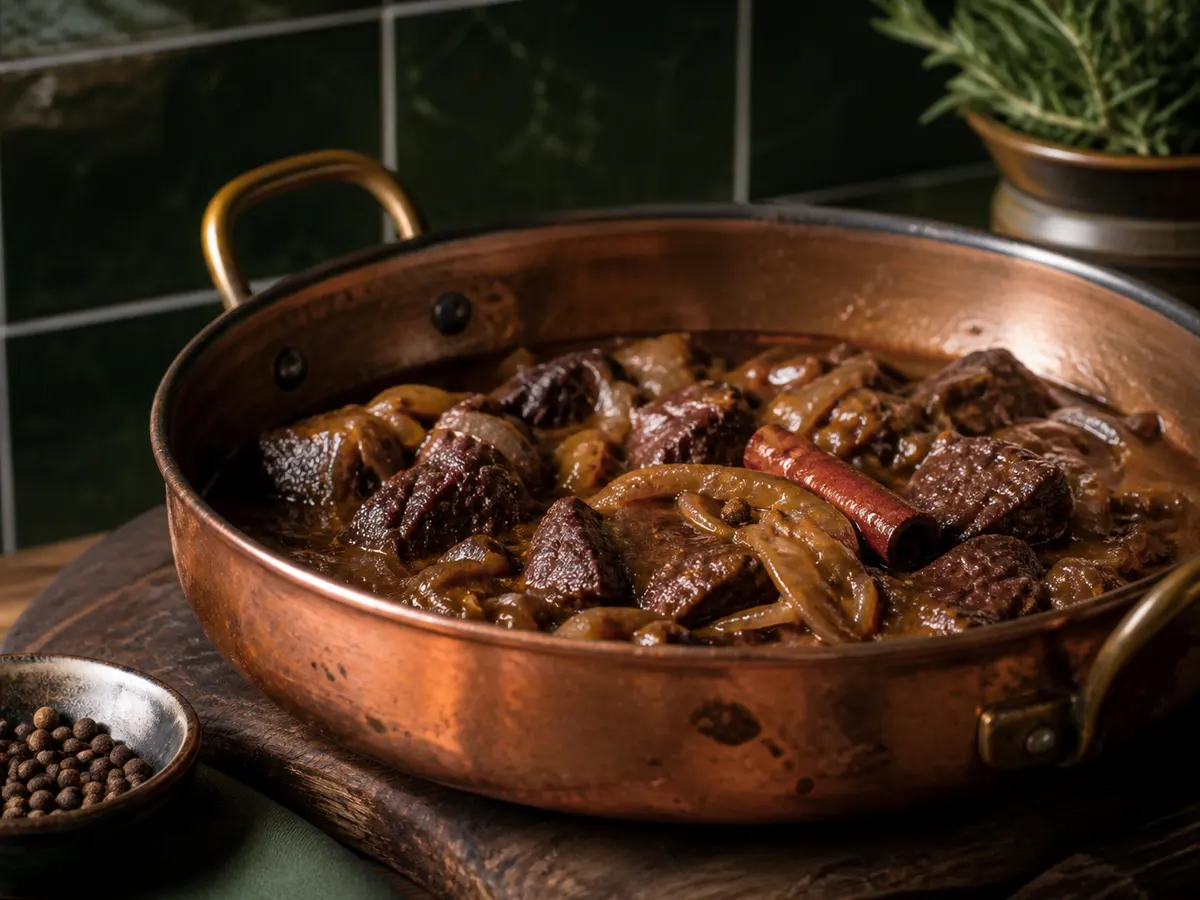
- Allspice: Best broad option for dark meat and onion.
- Cinnamon: Useful when tomato or fruit already belongs in the sauce.
- Star anise: Keep removable and use only when licorice fits the dish.
- Nutmeg: Reserve for creamy or starchy savory bases.
- Sweet driftCinnamon is leading. Dilute the braise before adding more salt or pepper.
- Floral driftCardamom is too exposed for the savory base. Add unseasoned food rather than another warm spice.
- Licorice driftRemove star anise immediately and stop reducing until the balance is checked.
- Medicinal finishThe total warm-spice dose is too high. Split the batch or add more unseasoned liquid and solids.
- Flat warmthThe substitute may need browning or salt correction, not necessarily a larger amount.
Pickling liquid deserves its own caution because acid sharpens aroma and the food continues absorbing flavor during storage. Remove whole substitutes before packing the jar unless the tested formula explicitly keeps them.
Change only the aromatic spice when following a tested preserving formula.
Keep the specified vinegar, water, salt, produce quantity, jar size, and processing method unchanged, since a flavor substitution does not authorize a new preservation ratio. For a quick refrigerator pickle, label the variation and taste after chilling because cold storage makes the spice balance easier to judge.
Taste a braise after the meat and onion have softened.
Early liquid can seem weak because the base is still watery, while later reduction concentrates both salt and spice. A second dose added too soon may become the problem at serving time.
For a dry meat rub, use half of the listed ground ratio and cook one small test piece. Surface spice reaches the tongue directly and does not have a pot of liquid to spread through.
Skip the Substitute When Clove Defines the Recipe
A replacement works best when clove is one background note. It becomes less honest when the recipe is specifically built to show clove's pungency, numbness, or traditional extraction pattern.
Count how many other flavors share the work.
- Check the title: A clove syrup or clove tea needs actual cloves more than a mixed-spice cake does.
- Check the form: A recipe that studs fruit with whole cloves depends on removable pieces and local extraction.
- Check the formula: A tested pickle or preserving recipe should keep its specified spice balance.
- Check the finish: If the numbing clove sensation defines the food, allspice and cinnamon cannot reproduce it.
- Check the cost of waiting: Postpone a showcase dish when the substitute would turn it into a different recipe.
Traditional formulas may also use clove as an identity marker alongside other exact spices. Changing one ingredient can still make good food, but the result should be treated as a variation.
There is no need to force a substitute into every dish.
Use allspice when broad background warmth is enough, choose another direction deliberately when it improves the food, and wait for cloves when their particular finish is the point.