
Does Cinnamon Actually Lower Blood Sugar?
Separate a useful breakfast spice from supplement doses, diabetes treatment, and coumarin risk.
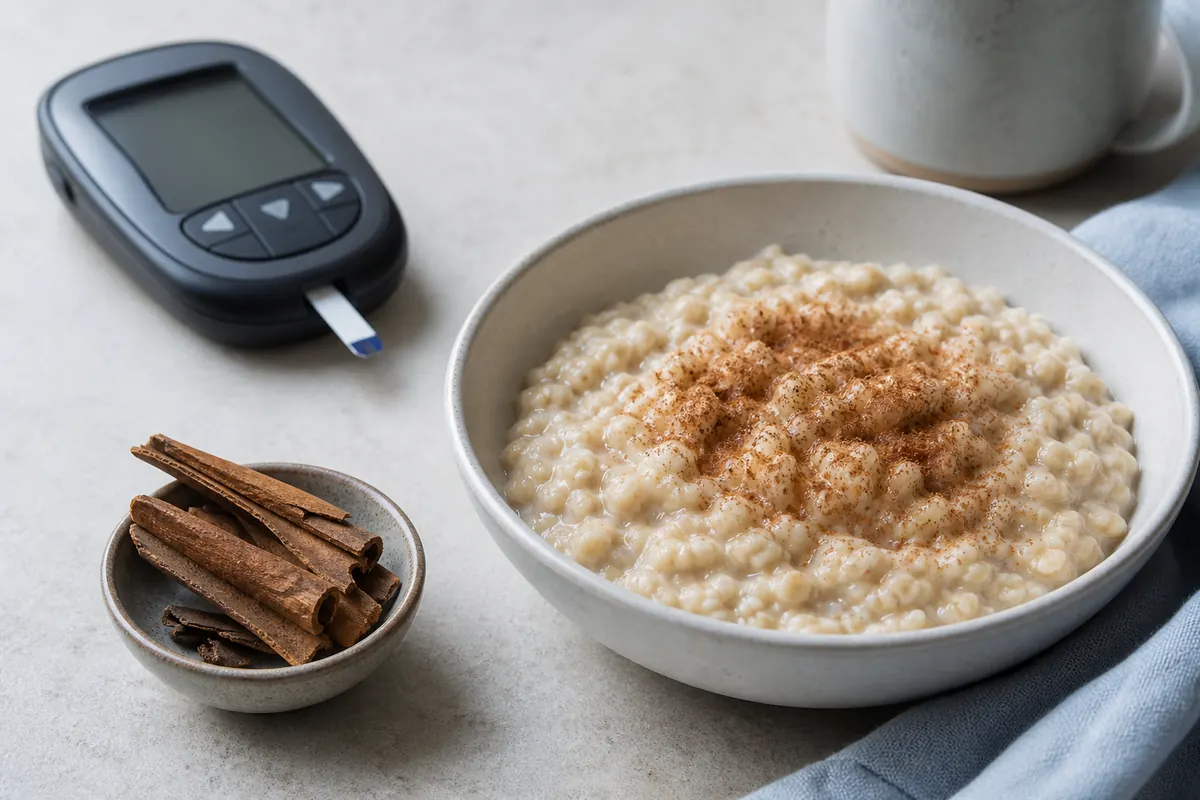
Cinnamon may change fasting glucose in some supplement trials, but inconsistent products and outcomes do not establish a diabetes treatment. Use it for flavor, and discuss concentrated products with a clinician if you take diabetes medicine or have liver disease.
Does cinnamon lower blood sugar? The evidence is mixed
Cinnamon does not have reliable evidence as a diabetes treatment.
Some trials report lower fasting glucose, while others find little or no meaningful change.
The 2024 update from the National Center for Complementary and Integrative Health says research does not clearly support cinnamon for any health condition.
A separate NCCIH evidence review notes possible fasting-glucose improvement in a 2019 analysis. It also stresses variation in dose, duration, and participants.
A 2024 meta-analysis of 24 randomized trials reported improvements in several glucose markers. The pooled result still combined products that were not chemically identical.
An earlier 2013 review of ten trials found lower fasting glucose but no significant A1c change. Heterogeneity was high across nearly every pooled outcome.
That variation matters because cinnamon is not one standardized product. Cassia powder, Ceylon bark, water extracts, and capsules can deliver different compounds.
| Finding | What it may mean | What it does not prove |
|---|---|---|
| Some trials lower fasting glucose | A supplement may affect short-term glucose control | Cinnamon treats diabetes |
| A1c results are inconsistent | Longer-term benefit remains uncertain | A morning dose prevents complications |
| Products differ across trials | Species and extraction may matter | Any grocery-store jar matches a study |
| Food amounts are generally safe | Culinary use is reasonable | More cinnamon is always better |
The cautious answer is useful because it prevents two mistakes. Do not dismiss every result, and do not turn a modest signal into a cure.
A 2012 Cochrane review found insufficient evidence for type 1 or type 2 diabetes. Newer reviews remain mixed rather than decisive.
Fasting glucose and A1c answer different questions
Fasting blood glucose is a single reading after a period without food. It can change with sleep, illness, stress, exercise, and the previous meal.
A1c estimates average glucose exposure over roughly two to three months. It carries different limitations, but it reflects a longer window than one morning test.
A trial can lower fasting glucose without changing A1c. That result may be real, yet too small or too short to alter longer-term control.
The 2013 review estimated a fasting-glucose reduction near 25 mg/dL, yet its confidence interval was wide. The same analysis found no clear A1c benefit.
A 2023 umbrella review estimated a much smaller A1c change of one tenth of a percentage point. That size needs clinical context before it becomes advice.
- Fasting glucose: Useful for a morning snapshot, but sensitive to day-to-day conditions.
- A1c: Useful for a longer trend, but affected by some blood conditions and red-cell turnover.
- After-meal glucose: Shows how a meal was handled, which a fasting test cannot reveal.
- Clinical outcomes: Eye, kidney, nerve, and heart risks matter more than a small isolated number change.
When a headline says cinnamon lowers blood sugar, look for the measured outcome. A fasting change and an A1c change are not interchangeable.
Also check the trial length. An eight-week result cannot establish years of benefit or safety.
Study capsules are not the cinnamon in oatmeal
Most clinical research uses measured powder, extract, or capsules.
The dose often falls between one and six grams daily, not a light food garnish.
One teaspoon of ground cinnamon weighs about two and a half grams, although grind and packing change the amount. A breakfast dusting is much smaller.
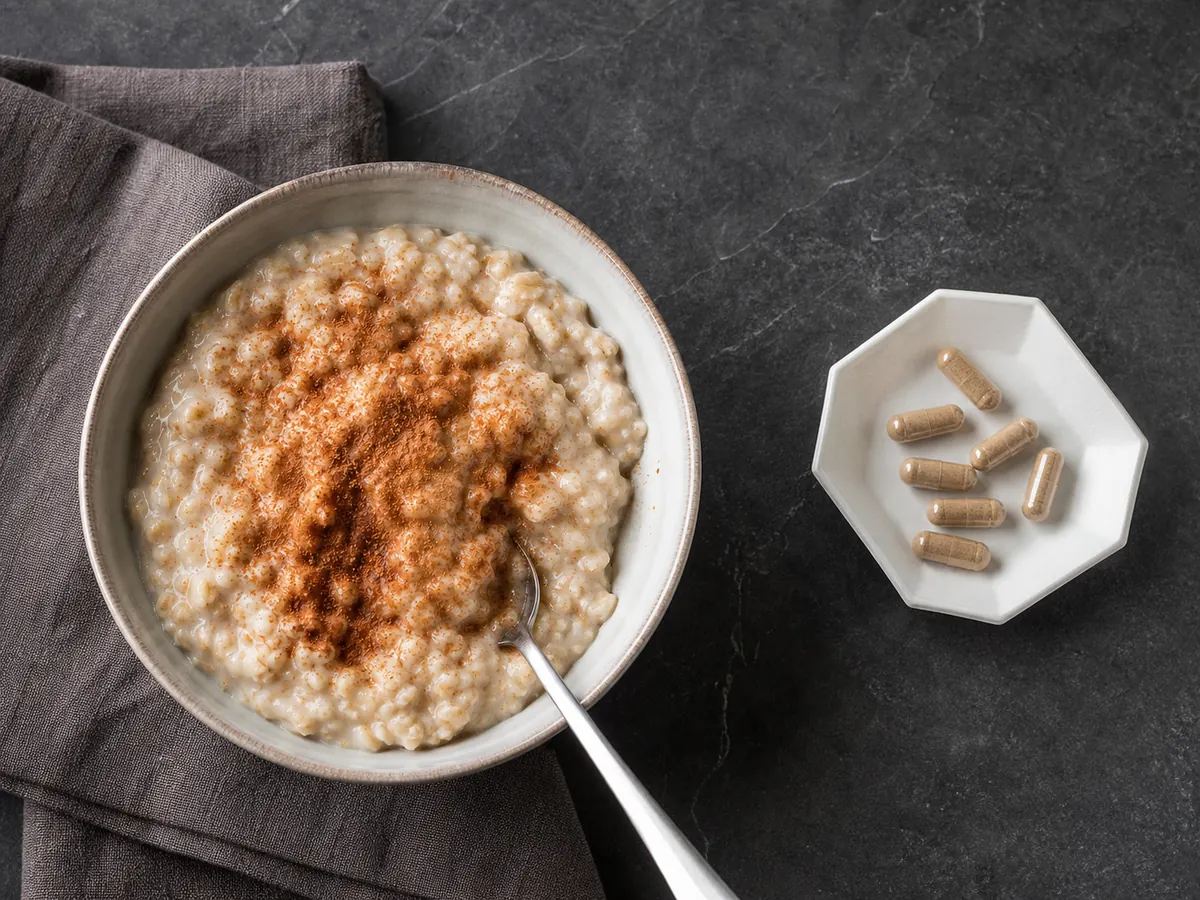
- Food amount: Chosen for aroma, sweetness perception, and the recipe.
- Study amount: Measured daily and repeated for a fixed trial period.
- Extract: May concentrate a different chemical profile than ground bark.
- Unknown species: Makes results harder to compare across products.
Grinding and food extraction behavior affect what reaches the body. So do species, harvest, storage, and whether cinnamon is taken with food.
A recipe cannot reproduce a trial unless the product and dose match. Even then, matching exposure does not guarantee the same result for another person.
Published trials have used amounts from 120 milligrams to six grams daily for four to eighteen weeks. That range is evidence variability, not a dosing menu.
Extracts may standardize water-soluble compounds while leaving other bark chemicals behind. A result from one extract cannot automatically describe ground supermarket cinnamon.
The distinction mirrors other spice evidence. Food can support an eating pattern without acting like a standardized supplement.
A similar boundary appears in black pepper absorption research, where measured compounds cannot be converted into casual grinder turns.
Do not count spoonfuls as medicine. If cinnamon makes oats, fruit, yogurt, or coffee enjoyable without extra sugar, that culinary effect is already useful.
Cassia and Ceylon change the safety question
Cassia cinnamon is common in North American supermarkets and contains more coumarin. Ceylon cinnamon usually contains much less of this compound.
Coumarin can harm the liver in susceptible people when exposure becomes high or prolonged. The amount in cassia varies across products.
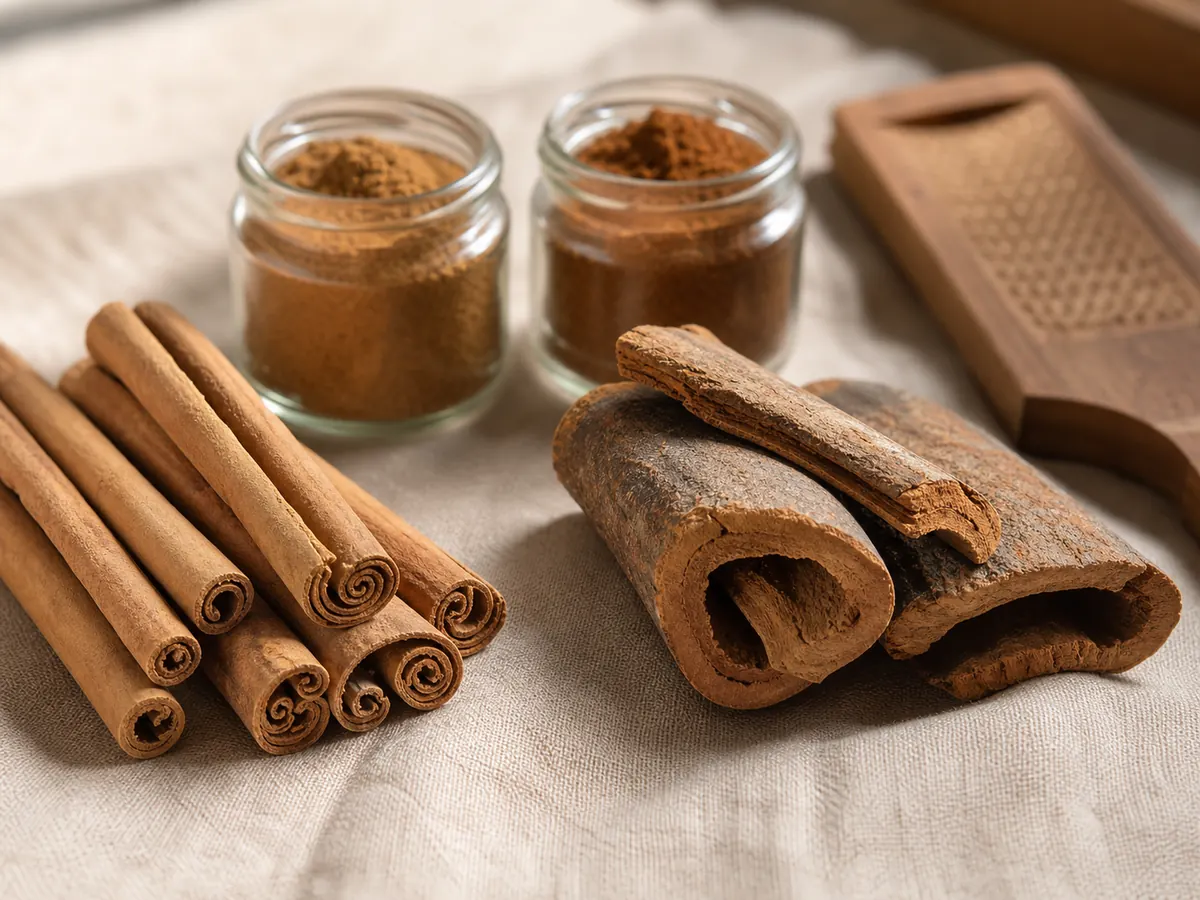
- Ceylon: Thin papery layers and usually very low coumarin.
- Cassia: Thick hard bark and more variable coumarin.
- Ground jars: Species may be missing from the label.
- Long-term use: Species matters more as dose and frequency rise.
Germany's Federal Institute for Risk Assessment uses a tolerable daily intake of one tenth of a milligram per kilogram. Cassia concentration varies enough that a spoon cannot guarantee exposure.
You can often recognize Ceylon by its thin, layered quills. Cassia forms a thick, hard curl and usually tastes hotter and more direct.
Choosing Ceylon lowers one safety concern, but it does not prove stronger blood-sugar benefits. Species selection cannot repair uncertain efficacy.
For ordinary baking or occasional meals, either form can work. For repeated large amounts, product identity deserves more attention.
The broader cinnamon profile explains how cassia and Ceylon behave in cooking. This evidence question stays focused on glucose and safety.
Who should avoid cinnamon experiments?
Do not add concentrated cinnamon to a diabetes plan without discussing it with the clinician who manages your medicine. Combined effects can complicate glucose control.
People with liver disease need extra caution with cassia because of coumarin. Product labels may not state species or coumarin content.
The NCCIH diabetes supplement review warns against replacing treatment with unproven products. It also notes possible unwanted effects when herbal supplements accompany diabetes drugs.
- Diabetes medicine: Extra glucose lowering may increase the risk of a low reading in some treatment plans.
- Liver disease: Repeated cassia exposure may add avoidable coumarin risk.
- Pregnancy or breastfeeding: Food amounts differ from concentrated products, whose safety is less certain.
- Upcoming surgery: Tell the care team about supplements because glucose control and medicine plans may change.
- Allergy or irritation: Cinnamon can cause mouth irritation, digestive symptoms, or skin reactions in some people.
Never swallow dry cinnamon powder. The particles can enter the airway and cause serious lung injury.
A low glucose reading needs the treatment plan supplied by your care team. Cinnamon is not a rescue food for hypoglycemia.
The site's spice safety resources cover the wider rule. Culinary familiarity does not guarantee supplement safety.
Use cinnamon as flavor without turning breakfast into treatment
Cinnamon can make oats, apples, yogurt, coffee, squash, beans, and savory braises taste sweeter without added sugar.
That is a flavor tool.
Aromatic sweetness can make an unsweetened dish feel fuller, but it does not remove carbohydrate. Keep the sensory effect separate from a glucose claim.
Pair it with meals that already contain protein, fiber, and minimally processed carbohydrates. Fresh ginger in savory meals offers another flavor route without copying a supplement.
Start with one eighth to one quarter teaspoon per serving. Add more for taste, not because a study used a higher amount.
Cinnamon burns easily in a dry hot pan. Mix it into moist food or let fat and liquid carry it instead of scorching the powder.
A stale jar gives woody dust without much aroma. Use the aroma and break tests before increasing the amount.
Better whole versus ground storage preserves flavor, not medical potency.
How to read the next cinnamon headline
Start with the population. Results in people with prediabetes, type 2 diabetes, or no diagnosis answer different questions.
Then find the species, product, daily dose, trial length, and outcome. Missing details make a bold headline less useful.
| Question | Stronger signal | Warning sign |
|---|---|---|
| What was tested? | Named species and standardized product | Cinnamon with no form |
| How much? | Daily grams or extract amount | A pinch or serving |
| What changed? | Named fasting glucose or A1c result | Blood sugar improved |
| How long? | Enough time for the stated outcome | No duration |
| Compared with what? | Placebo plus usual care | Before-and-after testimonial |
Check whether the paper reports differences in baseline glucose, medicine use, and diagnosis. Those factors can make one study population unlike another.
Look for absolute changes, not only percentages. A statistically significant result can still be too small to change clinical decisions.

- Product: Identify species, powder, or extract.
- Dose: Find the measured daily amount.
- Outcome: Separate fasting glucose from A1c.
- Duration: Match the time window to the claim.
Finally, check safety reporting and funding. A useful study should describe adverse events and conflicts, even when the result looks promising.
The honest conclusion can remain uncertain. Mixed evidence is a result, not a failure to choose a side.