
Spice Grinders: Which Tool Gives the Flavor You Want?
What each type does to a particle, which spices each one refuses, and what to buy first.
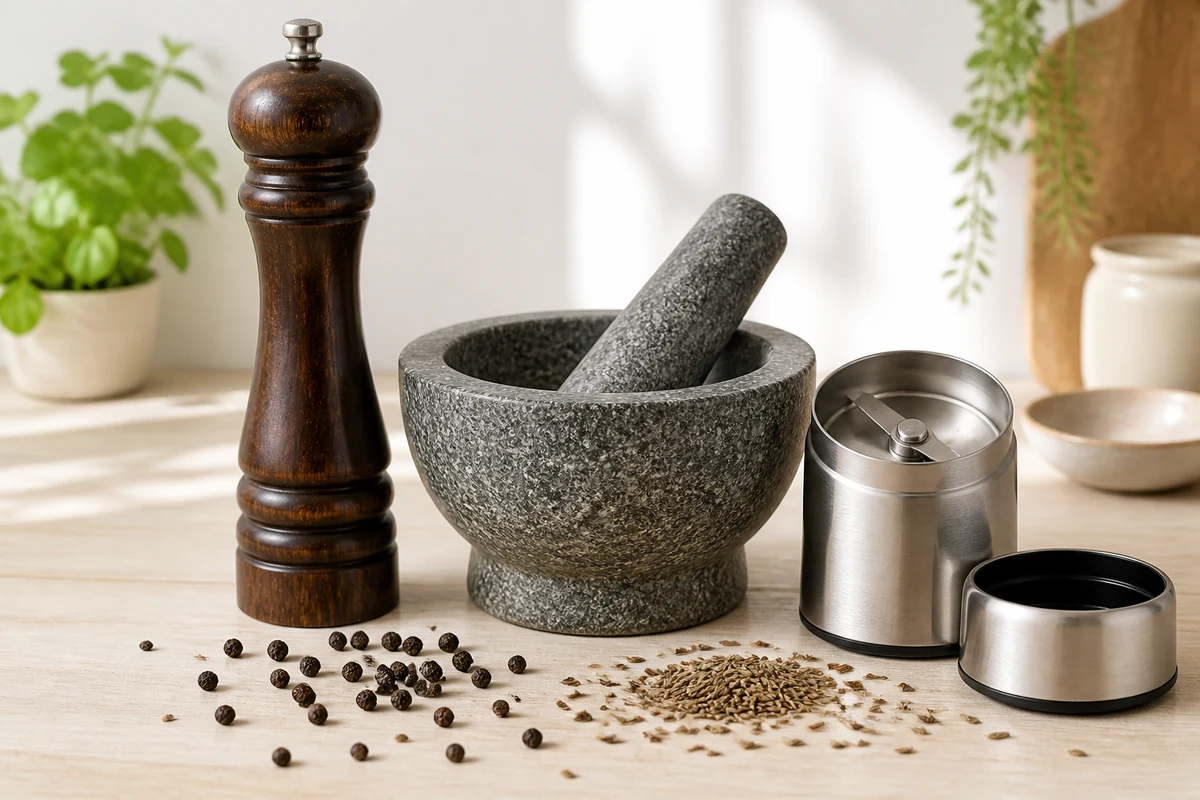
The four kinds of spice grinder do different things to the same seed, and the difference is particle size rather than power. A blade chops unevenly, a burr mill crushes to a uniform grind, and a mortar tears the material open, which is why the same spice tastes different from each.
What does a spice grinder actually do?
Every grinder is solving the same problem, which is getting at the aromatic oils held inside a seed or a piece of bark.
Those oils sit in tiny cells within the plant material, and they only reach your nose once those cells are broken open. Everything else about a grinder follows from how it breaks them.
That is why the machines are not interchangeable. Cutting, crushing and abrading produce different particle sizes and different amounts of heat, and both of those change what you end up tasting.
| Type | How it works | What it produces |
|---|---|---|
| Blade grinder | Chops at high speed | A wide mix of dust and chunks |
| Burr mill | Two surfaces crush and shear | Uniform particles, adjustable |
| Mortar and pestle | Crushes and tears by pressure | Coarse and irregular, with bruised pieces |
| Grater or microplane | Abrades the surface away | Very fine, only for hard whole spices |
Uniformity is the thing to notice in that table. A pile of powder made of identical particles behaves predictably in a pan, while one containing both dust and gravel does two things at once.
When is a blade grinder good enough for spices?
The small electric blade grinder is the one most kitchens end up with, and it is genuinely useful within limits.
It does not grind. It chops, at high speed, and whatever happens to be near the blade gets hit more often than what is stuck in the corner.
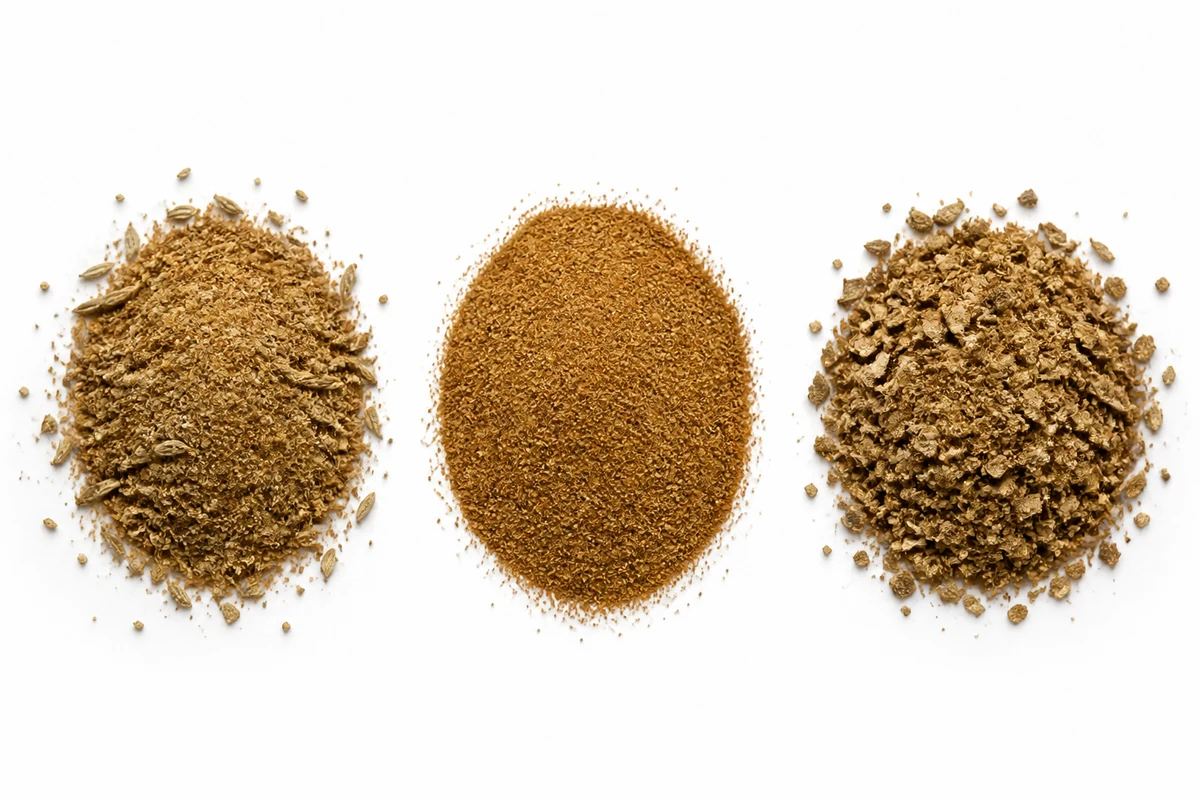
- Blade: Dust and chunks together, the dust scorches first in a pan.
- Burr: Uniform particles, which is what a recipe assumes.
- Mortar: Coarse and bruised, and the most aromatic of the three.
The result is a mixed grind, and in a hot pan that mixture misbehaves. The dust burns while the fragments are still raw.
There is also heat. Friction warms the spice, and the aromatic compounds you were trying to release are volatile.
A long continuous run therefore drives some of them off before the powder ever reaches the dish.
- Pulse in short bursts rather than running it continuously.
- Shake the grinder between pulses to move the corners into the blade.
- Grind small amounts, since a half-full chamber circulates better than a full one.
- Stop while it still feels cool to the hand.
- Sieve the result if the dish depends on an even grind.
Within those limits it is the most versatile thing you can own. Hard seeds, dried chiles, cinnamon quills and whole nutmeg all yield to it, where a pepper mill would jam and a mortar would take ten minutes.
Which spices can a burr mill grind?
A burr mill crushes between two shaped surfaces and delivers a genuinely even grind, adjustable from coarse to fine.
Almost every household already has one, in the form of a pepper mill. What most people do not have is a burr mill that will take anything else.
The mechanism is built around a hard dry corn of a particular size. Peppercorns suit it, coriander and mustard seed will usually work, and anything oily, fibrous or soft will clog it solidly.
| Spice | In a pepper mill | Why |
|---|---|---|
| Black and white peppercorns | Yes, it is the design case | Hard, dry, uniform in size |
| Coriander seed | Usually | Similar size, though it is hollow and can slip |
| Mustard seed | Usually | Small and hard, but it can jam a fine setting |
| Allspice berries | Sometimes | Slightly large for many mills |
| Cumin seed | No | The shape bridges rather than feeding through |
| Cloves | No | Oily enough to gum the burrs |
| Cinnamon or turmeric | No | Bark and root will break the mechanism |
Ceramic burrs are worth paying for over steel in a mill you will use for salt, since salt corrodes steel and a rusted mechanism grinds badly before it fails.
The adjustment collar is the part that matters most in use, and a mill without one is a mill making somebody else's decision about your food, which is covered under grinding.
Why does a mortar and pestle produce a different result?
It is easy to read the mortar as the thing people used before electricity, and that misreads what it does.
A mortar crushes and tears rather than cutting, and that ruptures oil cells in a way a blade does not. It is why a mortar-made spice paste smells stronger than a machine-made one from the same ingredients.
It is also the only one of these that handles wet ingredients. Garlic, ginger, chile and fresh herbs pound into a paste that no dry grinder can produce.
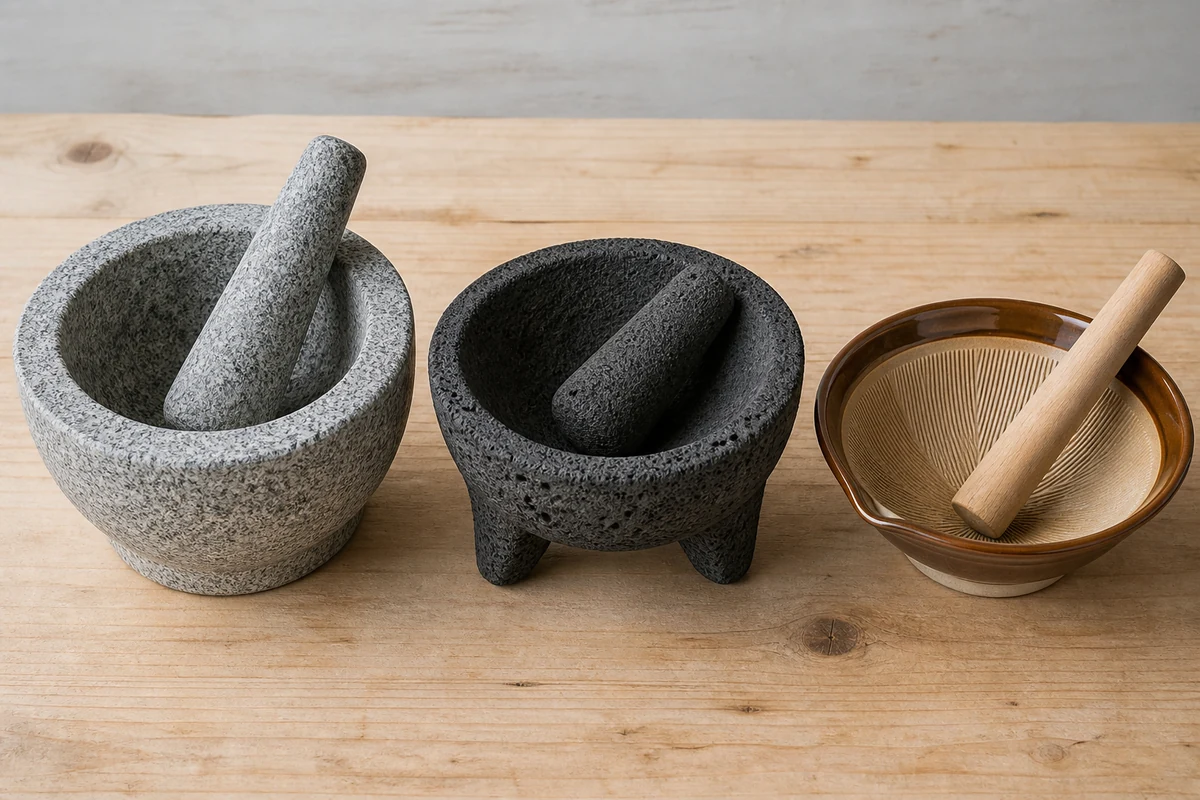
- Granite: Heavy and rough, the best all-rounder for wet pastes.
- Molcajete: Volcanic stone, coarse, and it needs seasoning before first use.
- Suribachi: Ridged ceramic with a wooden pestle, for seeds and nuts.
Weight and roughness are what to buy on. A light polished marble mortar looks handsome and slides the ingredients around instead of gripping them.
Depth matters more than people expect. A shallow wide bowl throws peppercorns across the kitchen, and a deep one with steep sides keeps them where the pestle is.
A mortar disappoints most people because of how they use it, and the correction takes one sentence.
Pounding is only the start. Once the pieces are broken, the work is a pressing and twisting motion with the pestle held against the side of the bowl, grinding material between stone and stone.
Anyone who pounds all the way through gets a bowl of fragments and a sore arm, and concludes that the tool is slow. The twisting motion is what turns fragments into paste.
- Break it firstA few firm strikes to open the seeds or split the garlic.
- Then switchPress the pestle down and rotate, working against the wall of the bowl.
- Add salt for gripA pinch gives the pestle something to bite on with wet ingredients.
- Work in orderHard and dry first, soft and wet afterwards.
- Scrape the sidesBring the escaped material back into the middle as you go.
Order of ingredients is the other half of it. Fibrous lemongrass and hard peppercorns go in before garlic and chile, because once the bowl is wet nothing dry will grind properly in it.
When should you use a grater instead of a grinder?
Grating sits apart from the other three, since it removes material from the surface of something hard rather than reducing the whole piece.
That suits exactly the spices that resist everything else. Whole nutmeg is the obvious one, and dried ginger, dried turmeric root and cinnamon quills can all be handled the same way.
A fine microplane does this well and costs little. The traditional curved nutmeg grater with a compartment in the handle is charming and works no better.
It also earns its drawer space on things that are not spices at all, since the same blade handles citrus zest, hard cheese and raw garlic.
The reason to bother is storage rather than texture. A whole nutmeg holds its aroma for years while the ground version fades within months, so the grater is really a way of buying time.
Which spice grinder should you buy first?
There are two workarounds that cost nothing, and both are better than a jar of stale powder.
A heavy pan makes a serviceable crusher. Put the spices in a folded sheet of paper or a sturdy bag, set it on a board, and lean on it with the base of the pan, rocking rather than hammering.
A rolling pin does the same job with more control, and it is the better option for cracking peppercorns coarsely for a steak.
Neither will give you a fine powder, which is worth saying plainly. They crack and bruise, so use them where a coarse grind is wanted and buy the powder for the dishes that need it.
Most kitchens do not need all four, and the order of usefulness is fairly clear.
| Buy | When | Roughly what to look for |
|---|---|---|
| A pepper mill with an adjustment collar | First, always | Ceramic burrs if it will ever hold salt |
| A heavy granite mortar | Second | Rough interior, deep bowl, a pestle you can grip |
| A blade grinder | Third | Cheap is fine, a second one for coffee is cheaper than regret |
| A microplane or nutmeg grater | Fourth | Only if you use whole nutmeg or dried ginger |
| An electric burr spice mill | Rarely worth it | Expensive, and a mortar covers most of the gap |
The second blade grinder is the one piece of advice worth taking seriously. Coffee and spices share a machine badly, and cumin-flavored coffee is memorable in the wrong way.
If you already own one grinder and use it for both, grinding a spoonful of rice and wiping the chamber out removes most of what remains. It is a mitigation rather than a fix.
Which spice grinders should you avoid?
Some grinders are sold on features that do not survive contact with a kitchen.
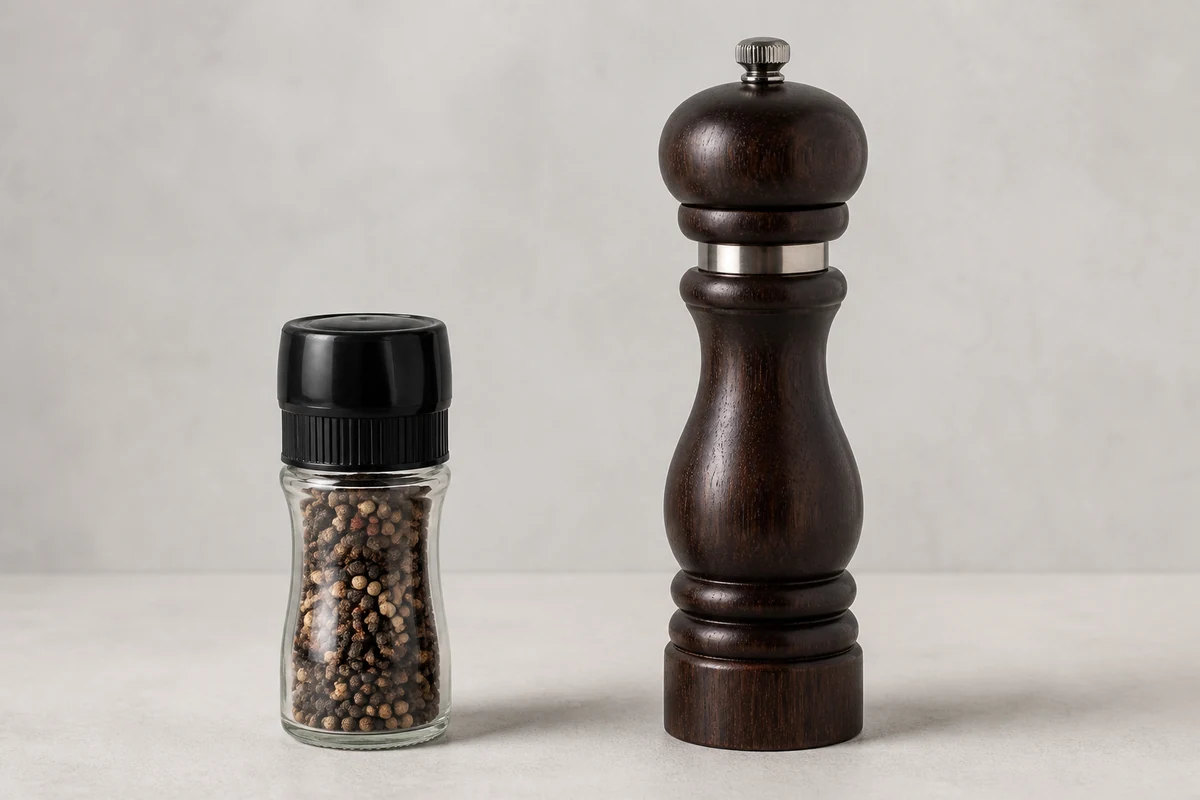
- The disposable: Moulded plastic burrs, no adjustment, thrown away.
- The mill: Metal or ceramic burrs, an adjustment collar, refillable.
- The tell: If the grinder cannot be opened, it was not built to be kept.
Battery grinders are a preference rather than an error, though the lightweight ones tend to be built around the same plastic mechanism. Judge one by whether the burrs are ceramic and whether the grind can be adjusted.
Very large capacity is a false economy for spice. Grinding more than you will use in a fortnight puts the aroma into a storage jar rather than into a dish, and ground spice starts fading the moment it leaves the machine.
How do you clean and maintain a spice grinder?
Grinders fail in predictable ways, and almost all of it is oil and moisture.
Wipe a blade grinder out dry rather than washing it, since the motor housing and the water are close neighbours. A brush and a dry cloth deal with almost everything.
- Never put a blade grinder chamber under a tap unless it detaches completely.
- Empty a pepper mill before it sits unused for months, since old corns absorb moisture.
- Wash a stone mortar with water and a brush, and never with soap.
- Dry a mortar thoroughly, because stored damp stone develops a smell.
- Grind rice through a blade grinder to lift stubborn oily residue.
A new stone mortar needs seasoning before its first real use. Grind a handful of rice to a grey powder, discard it, and repeat until the powder comes out white, which removes the loose grit that would otherwise end up in your food.
Doing that once is the difference between a mortar that lasts a lifetime and one that makes your first three curries taste faintly of the quarry.