
What Is Chimichurri, and Why Should It Stay Chunky?
Control the chop, acid, garlic, and resting time before spooning this uncooked sauce over browned food.
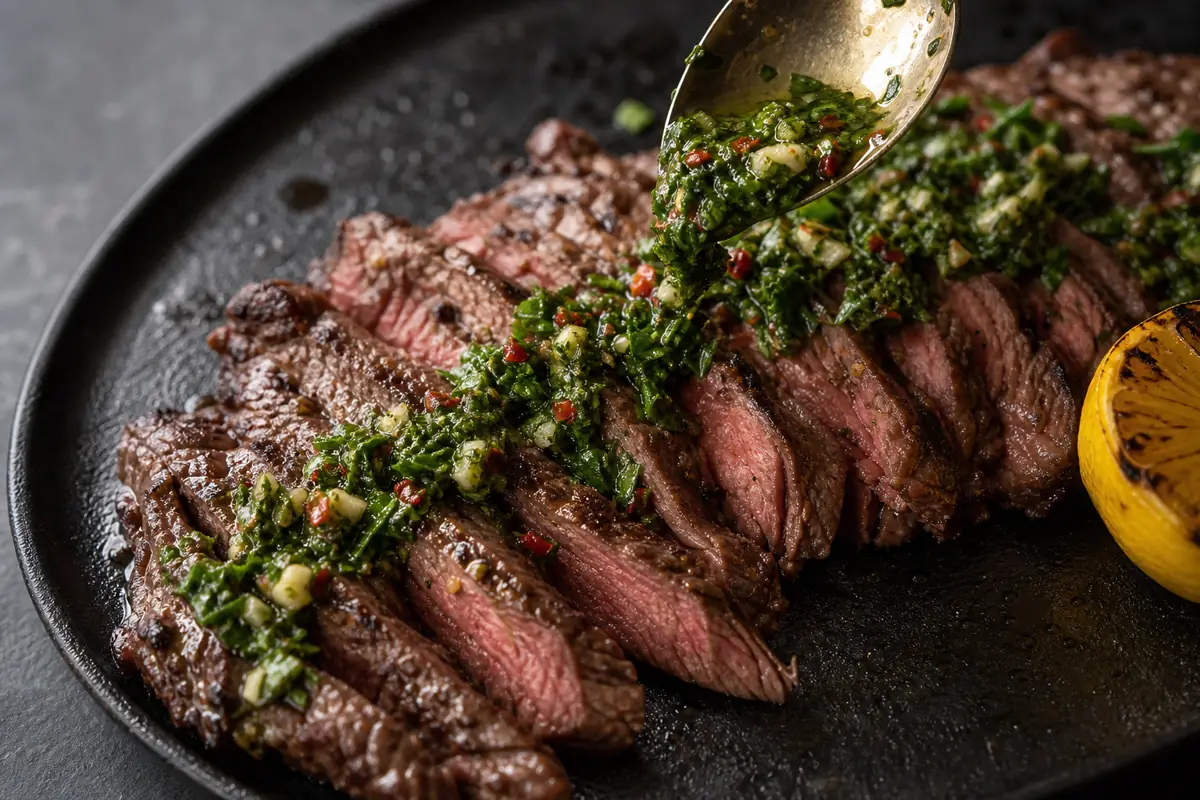
Chimichurri is an uncooked Argentine and Uruguayan sauce built from parsley, oregano, garlic, chile, vinegar, oil, salt, and pepper. Chop it rather than pureeing it, season the vinegar before adding oil, and rest the mixture before serving.
What is chimichurri made of?
Chimichurri sauce combines chopped fresh parsley with oregano, garlic, chile, vinegar, oil, salt, and black pepper.
Flat-leaf parsley supplies the green body and a clean grassy note. Tender leaves and fine stems can stay, but thick stems feel stringy.
Dried oregano leaves bring a concentrated savory aroma that softens after contact with vinegar and water.
Garlic gives pungency, while chile flakes add a restrained heat. Chimichurri should taste lively rather than burn like a hot sauce.
Red wine vinegar is common because its fruit and acidity suit grilled meat. White wine vinegar gives a cleaner, sharper result.
Oil carries the herbs across food and rounds the vinegar. It should surround visible pieces rather than form a thick emulsion.
| Ingredient | Main job | Useful form | Too much creates |
|---|---|---|---|
| Flat-leaf parsley | Fresh green body | Hand-chopped leaves | Wet, grassy bulk |
| Oregano | Savory herbal backbone | Dried leaves or chopped fresh | Dusty bitterness |
| Garlic | Pungent bite | Finely minced | Raw burning heat |
| Chile flakes | Background warmth | Coarse flakes | Distracting chile heat |
| Wine vinegar | Acid and lift | Seasoned before oil | Pickled sharpness |
| Oil | Coating and richness | Stirred in last | Greasy separation |
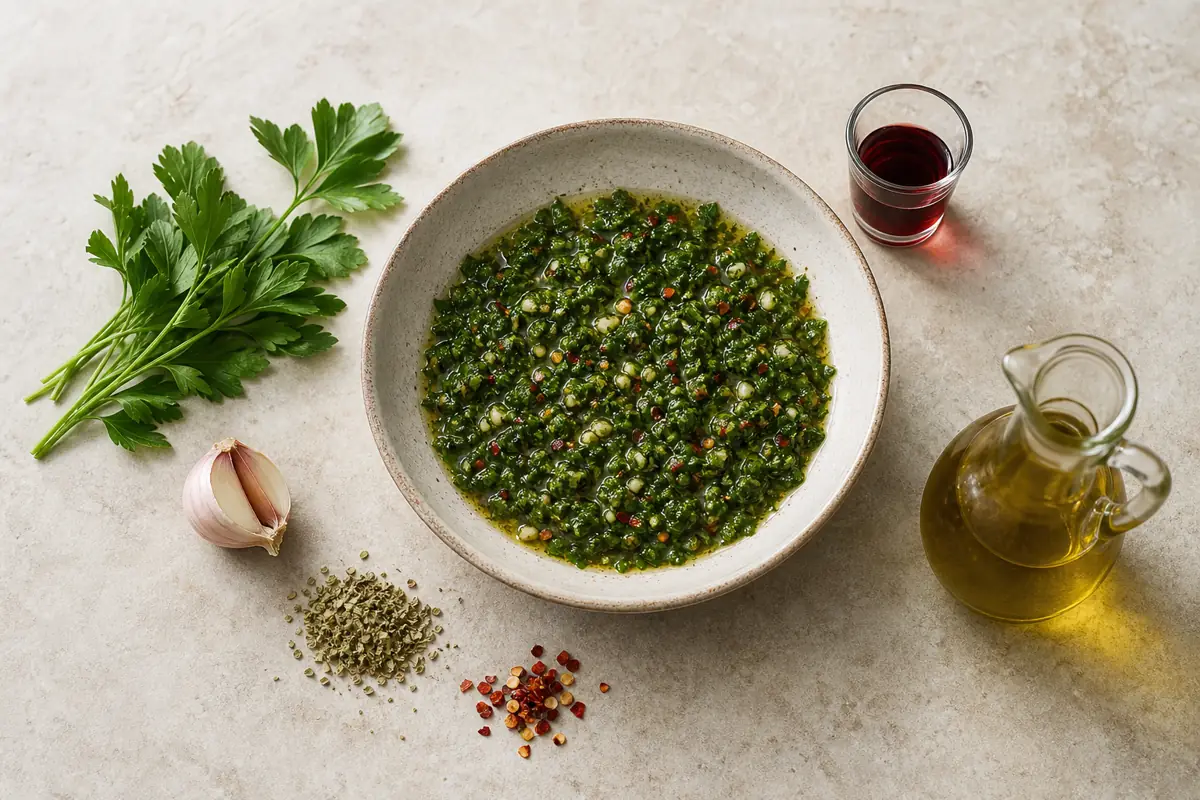
- The herb pieces remain distinct rather than becoming a green cream.
- Vinegar wets the dry seasonings before oil surrounds them.
- Chile and garlic support the parsley instead of replacing its flavor.
Cilantro, shallot, lemon, or other fresh herbs appear in modern versions, but they change the center of the sauce. Add them deliberately.
Should chimichurri be blended or hand-chopped?
Chimichurri should stay chunky enough to show parsley and garlic, so a knife gives the most reliable texture.
Gather dry parsley leaves and slice them in several directions. Stop when the pieces are small enough to cling to a spoon.
Mince garlic separately because large raw chunks create sudden harsh bites. A pinch of salt helps the knife crush it evenly.
A food processor can work with two or three brief pulses. Continuous processing bruises the herbs and turns the sauce into paste.
Add oil after processing whenever possible. High-speed blending can make extra-virgin olive oil taste bitter and overly emulsified.
- Dry the herbs: Water clinging to parsley dilutes the vinegar and shortens the sauce's clean texture.
- Chop in stages: Mince garlic first, then chop parsley so both reach useful but different sizes.
- Pulse briefly: If using a processor, stop while individual leaf pieces remain visible.
- Stir in oil: Use a spoon instead of the blade so the mixture stays loose.
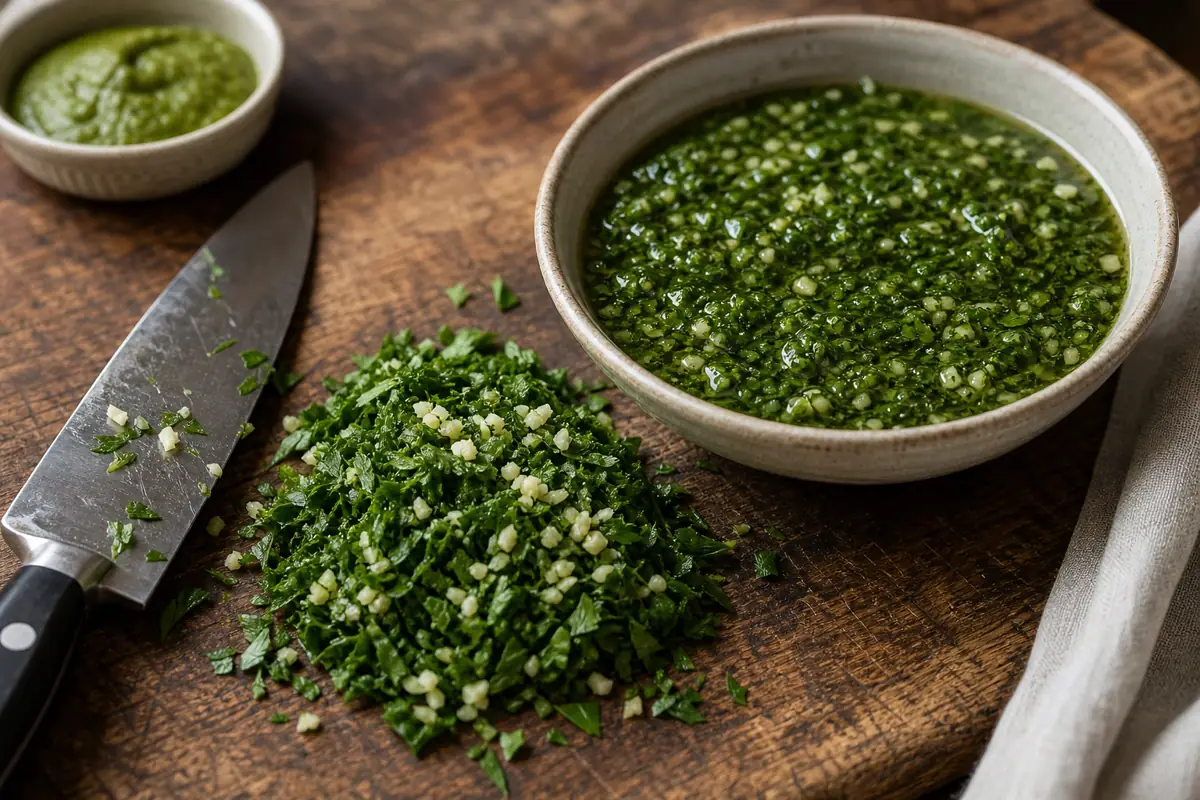
- Parsley remains recognizable after chopping.
- Garlic is finer than the leaves, so no bite carries a raw chunk.
- Oil pools lightly around the herbs rather than binding into mayonnaise.
Let the chopped mixture rest before judging texture. Dried oregano absorbs liquid, and the herbs relax after twenty to thirty minutes.
If a processor made paste, fold it into a fresh hand-chopped batch. More oil alone will only make the puree greasier.
This cold chopped structure differs from a cooked spice paste, where heat softens and concentrates ground ingredients.
Is fresh or dried oregano better in chimichurri?
Dried oregano works especially well in chimichurri because vinegar hydrates the leaves while preserving their concentrated savory flavor.
Rub dried leaves between your fingers before adding them. This exposes aroma without grinding them into bitter dust.
Fresh oregano tastes greener and less concentrated, so use roughly twice the chopped volume and expect a softer result.
Fresh parsley remains the main body in contemporary green chimichurri. Dried parsley gives a flat, papery texture and cannot replace it well.
| Herb form | Starting move | Result | Main caution |
|---|---|---|---|
| Fresh parsley | Chop about one packed cup | Green body and clean bite | Dry leaves before chopping |
| Dried oregano | Use about one tablespoon | Concentrated savory note | Hydrate before serving |
| Fresh oregano | Use about two tablespoons | Greener, softer aroma | Can crowd the parsley |
| Dried parsley | Avoid as the main herb | Weak color and papery texture | Adding more does not restore freshness |
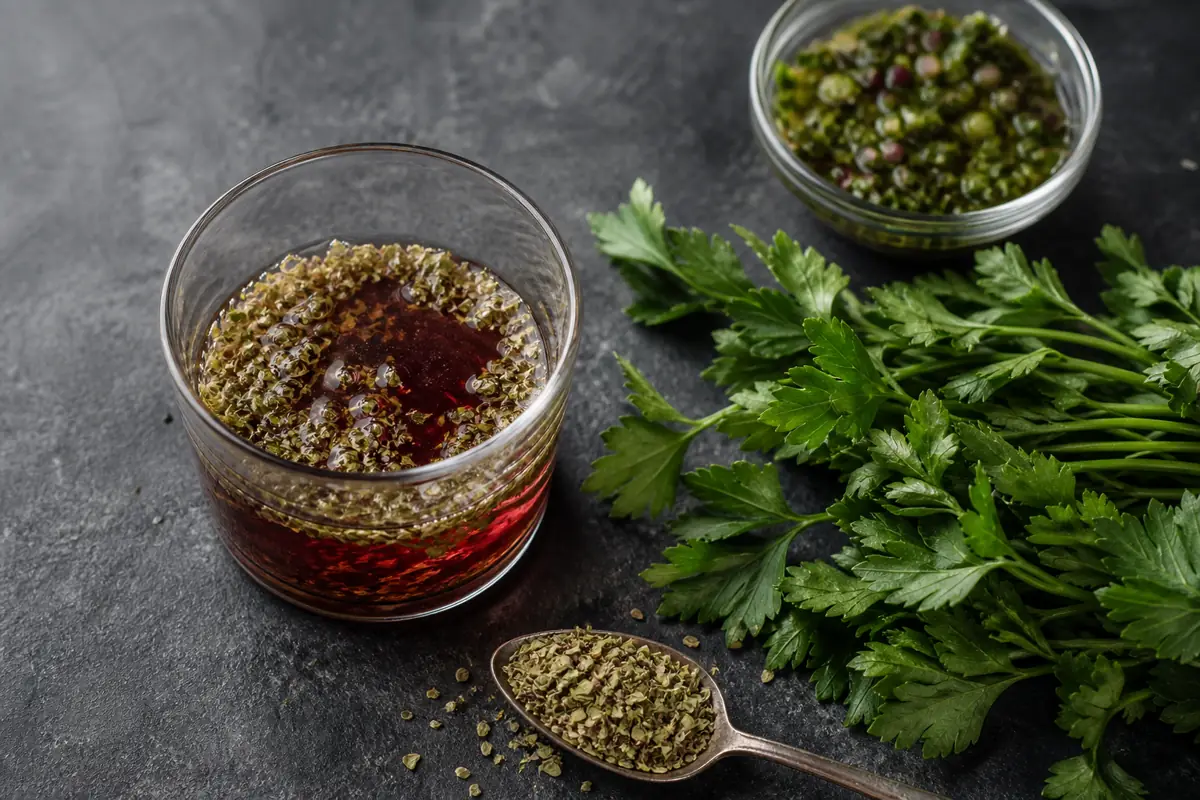
- Hydrated oregano loses its dry, scratchy edge.
- Fresh parsley stays separate until the seasoned liquid is ready.
- Oil enters after hydration because it slows water from reaching dry leaves.
If you add fresh cilantro, replace only part of the parsley. A full swap produces a different citrusy green sauce.
Taste dried oregano before using it. A stale batch smells like dust after crushing and can make the entire bowl seem bitter.
How do you balance oil, vinegar, garlic, and salt?
Start chimichurri with roughly two parts oil to one part vinegar, then adjust after the herbs rest.
Dissolve salt in the vinegar first because salt does not dissolve efficiently in oil. Add oregano, chile, and garlic to that seasoned liquid.
Let raw garlic sit in vinegar for five minutes. Acid softens its hottest edge without removing the savory bite.
Fold in chopped parsley, then stir in oil gradually. The sauce should fall from a spoon while carrying plenty of herbs.
Rest the bowl for twenty to thirty minutes at cool room temperature. Taste it on bread or meat rather than from a bare spoon.
| What you taste | Likely cause | First correction | Wait before retasting |
|---|---|---|---|
| Greasy and dull | Too much oil or too little salt | Add seasoned vinegar by teaspoons | 5 minutes |
| Sharp and pickled | Vinegar dominates | Add oil and a spoon of water | 10 minutes |
| Raw garlic burn | Garlic pieces are large | Add vinegar and rest longer | 15 minutes |
| Flat herbs | Salt or acid is low | Add a pinch of salt, then vinegar | 5 minutes |
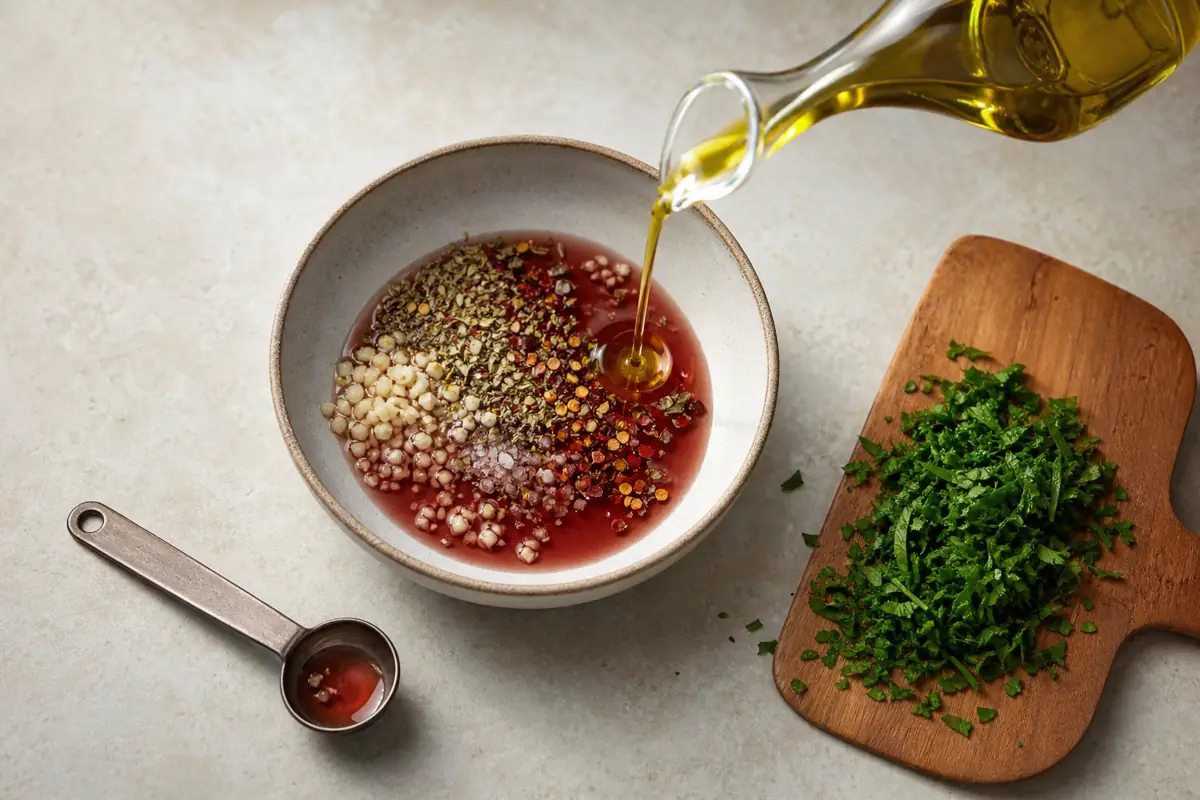
- Salt dissolves in the watery phase rather than floating in oil.
- Acid begins hydrating oregano and mellowing minced garlic.
- Gradual oil addition makes the final consistency easier to control.
A spoon of warm water can soften aggressive vinegar without adding more fat. It also helps dried oregano finish hydrating.
Avoid making sugar the first correction. Proper salt and acid balance, rest, and dilution usually work without making chimichurri sweet.
What foods go well with chimichurri?
Chimichurri cuts through browned, fatty food, which explains its classic place beside grilled beef and sausages.
Spoon it over sliced steak after resting so vinegar brightens the crust without washing away browning during cooking.
Chicken, pork, shrimp, and firm fish benefit from the same acid and garlic, especially when the surface has char.
Roasted potatoes, squash, mushrooms, and cauliflower absorb the seasoned oil while parsley keeps heavy caramelized flavors fresh.
Stir a small amount through warm beans or grains just before serving. Prolonged heat dulls parsley and flattens vinegar.
- Grilled beef: Serve on rested slices so the sauce meets crust, juice, and rendered fat.
- Chicken or fish: Use a lighter spoonful so raw garlic does not cover delicate flesh.
- Roasted vegetables: Toss after roasting to preserve browning and fresh herb aroma.
- Potatoes and grains: Add while warm enough to absorb oil but no longer steaming hard.
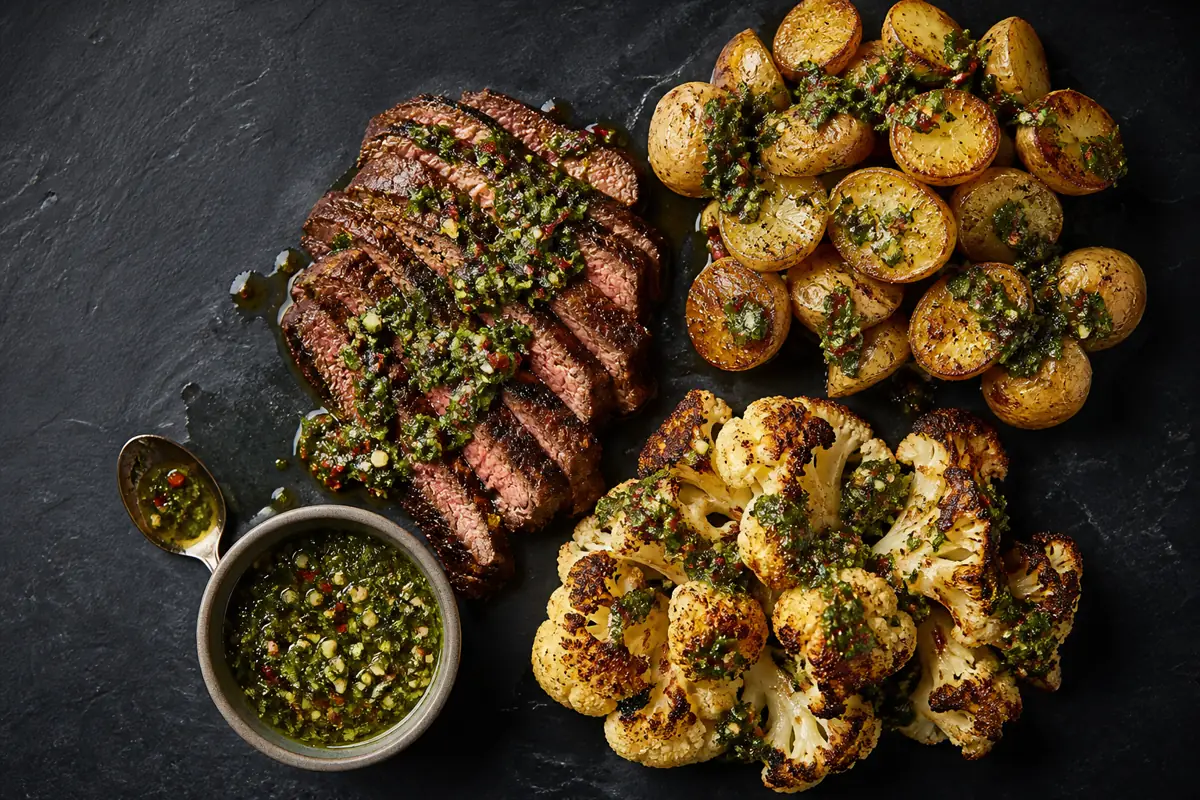
- The sauce enters after the food develops color.
- Oil carries parsley and garlic across dry surfaces.
- Vinegar balances fat and roasted sweetness.
You can use chimichurri as a brief marinade, but set aside a clean serving portion first. Never return raw-meat marinade to the table.
For a smokier direction, a small amount of sweet paprika can color red chimichurri without turning it into barbecue sauce.
Why is chimichurri bitter, greasy, or too sharp?
Chimichurri becomes bitter after aggressive blending, greasy from excess oil, or sharply acidic when vinegar has no salt and water balance.
Bitter olive oil often appears after a long blender run. Stirring oil into chopped herbs avoids that mechanical extraction.
Too much old oregano adds a dry medicinal edge. Replace stale herbs instead of hiding them with more garlic.
A greasy pool needs seasoned vinegar, not another handful of parsley. Add it by teaspoons and let the mixture settle.
For sharp vinegar, add a little oil and warm water, then retest with food. Salt may also round an apparently sour sauce.
| Problem | Cause | Useful repair | Restart when |
|---|---|---|---|
| Bitter green puree | Overprocessed herbs and oil | Fold into fresh chopped parsley | Bitterness dominates every bite |
| Greasy sauce | Oil ratio is too high | Add seasoned vinegar slowly | Oil tastes rancid |
| Raw garlic burn | Large pieces or no rest | Add vinegar and wait | Garlic is spoiled |
| Dusty and flat | Stale oregano or parsley | Replace herbs | The whole bowl smells old |
| Too sharp | Strong vinegar and low dilution | Add oil, water, and salt carefully | The sauce tastes fermented |
Fresh cracked black pepper can restore a dry finishing note, but it will not repair rancid oil or spoiled herbs.
Correct small portions before changing the whole bowl. A measured test protects the remaining sauce from a second imbalance.
How long does chimichurri last, and can you freeze it?
Fresh chimichurri should be refrigerated within two hours and used within a few days because it contains chopped herbs and raw garlic.
Store it in a clean airtight container. Use a clean spoon each time so crumbs and cooked meat juices never enter.
Cold olive oil may turn cloudy or firm without being spoiled. Let the portion warm briefly, then stir before serving.
Freeze extra chimichurri in small containers or ice-cube portions. Small units thaw quickly and prevent repeated warming of the whole batch.
- Refrigerate promptly: Move leftovers into the refrigerator within two hours of preparation or serving.
- Use within days: Fresh herb quality falls quickly even when the oil still looks bright.
- Freeze portions: Leave a little space for expansion and thaw only what one meal needs.
- Discard warning: Mold, bubbling, slime, or a fermented odor means the sauce should not be tasted.
Thawed parsley will feel softer, so frozen chimichurri works best on hot meat, vegetables, beans, or grains.
The normal spice storage rules apply only to the dry oregano and chile. The finished sauce needs refrigeration.
For the freshest table texture, freeze the seasoned base without parsley and fold in newly chopped leaves after thawing.