
What Makes a BBQ Rub Build Bark Without Burning?
Match salt, sugar, grind, and resting time to the meat and the cooker temperature.
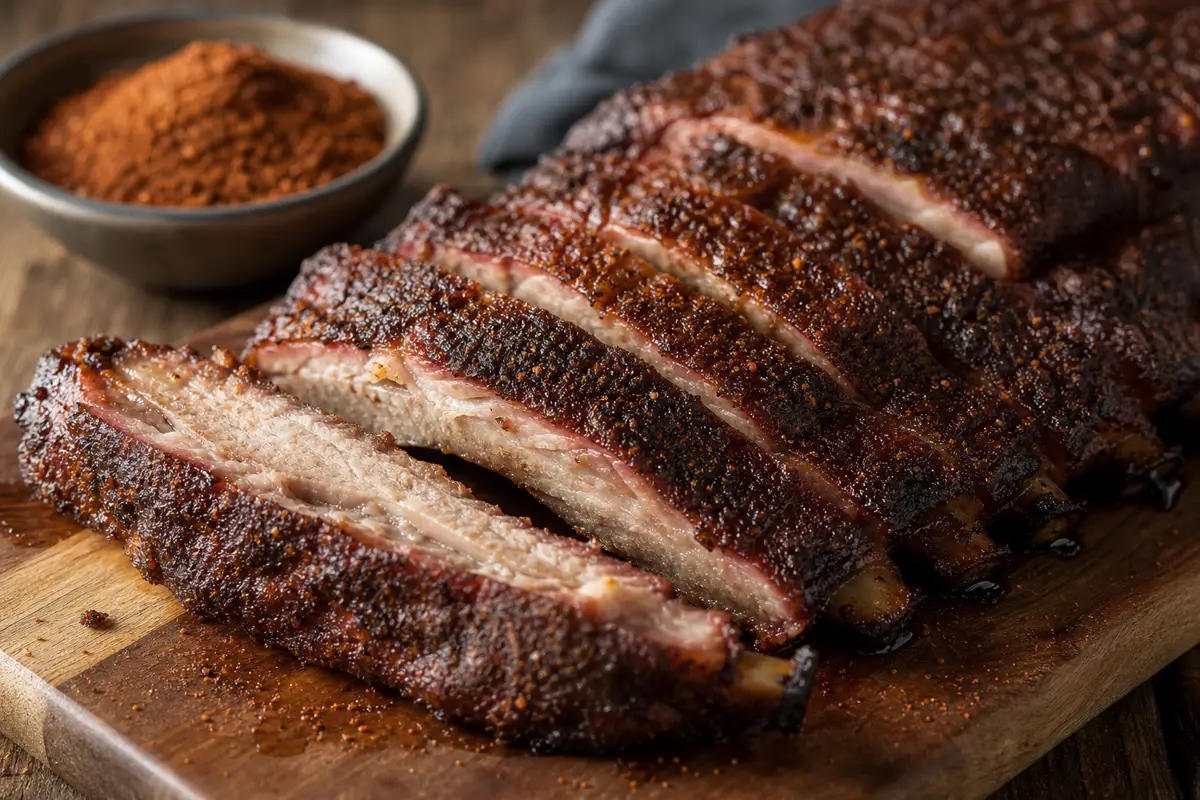
A BBQ rub balances salt, pepper, paprika, aromatics, and optional sugar to season meat and build a textured crust. Keep sugar low for direct grilling, allow more during low smoking heat, and salt by meat weight before applying a salt-free spice layer.
Which BBQ rub can survive your cooking temperature?
Cooking temperature decides whether a rub can carry sugar, fine garlic, and paprika without turning bitter.
The coating still has four jobs. It seasons, colors the surface, carries aroma, and creates texture for smoke and rendered fat to hold.
Salt moves below the surface during a rest. Pepper, paprika, garlic, and sugar stay near the fire, where grind and heat control their fate.
Sweet paprika contributes red-brown color without adding much heat.
Coarse black pepper gives bark a rough structure, while garlic and onion fill the savory middle.
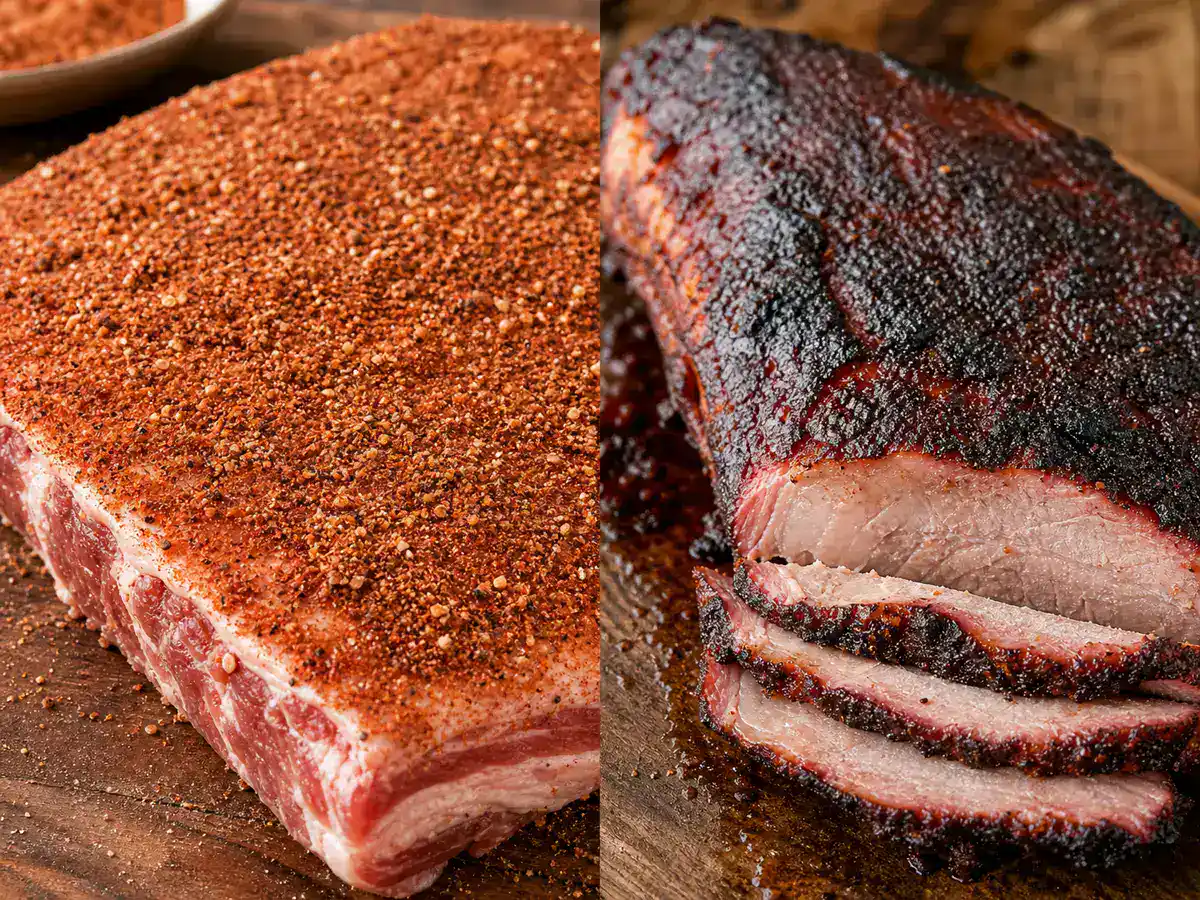
- Seasoning: Salt moves inward during the rest.
- Color: Paprika darkens as the surface dries.
- Texture: Pepper and spice particles give smoke a rough surface to settle on.
- Binding: Rendered fat helps the coating set instead of falling away.
A longer ingredient list does not guarantee better bark. Each ingredient must survive the chosen temperature and cooking time.
Smoke adheres best after the coating becomes tacky. A puddle of binder or meat juice blocks that contact and leaves pale patches.
Rendered fat changes the crust later in the cook. It darkens hydrated spices, while loose powder without fat remains dusty.
Sugar is the first branch in that fire decision.
Brown sugar works well during low-and-slow smoking because it has time to melt, darken, and join the bark.
Direct flame changes that choice. Sugar can turn bitter before a chicken thigh, chop, or steak reaches its safe center.
Keep sweet rubs away from flare-ups and the hottest grate zone. Add a sugary sauce late if the food still needs gloss and sweetness.
| Cooking method | Sugar level | Reason |
|---|---|---|
| Low smoker heat | Moderate | Time supports gradual darkening and bark |
| Indirect grill | Low to moderate | The meat avoids direct flame most of the cook |
| Direct grilling | Low or none | Fast heat can scorch sugar and paprika |
| Reverse sear | None before searing | The final hot finish needs a clean, dry surface |
A black patch that smells acrid is burned sugar, not finished bark. Move the food, lower the heat, and stop adding sweet rub.
Paprika can also taste bitter when scorched. The risk comes from the whole coating, not sugar alone.
Smoked paprika adds smoke before the cooker does. Use less when strong wood or a long smoking time already supplies that flavor.
A honey or molasses binder raises burn risk even when the dry rub contains no sugar. Count every sweet ingredient that faces the heat.
Should salt go in the BBQ rub or on the meat first?
Separating salt from the spice mix lets you season meat by weight and change the surface flavor without changing sodium.
A useful starting range is roughly three-quarters to one percent salt by meat weight. Brined, injected, or enhanced meat needs less.
Salt a thick brisket or pork shoulder several hours ahead. Add the salt-free rub closer to cooking so its aroma stays fresher.
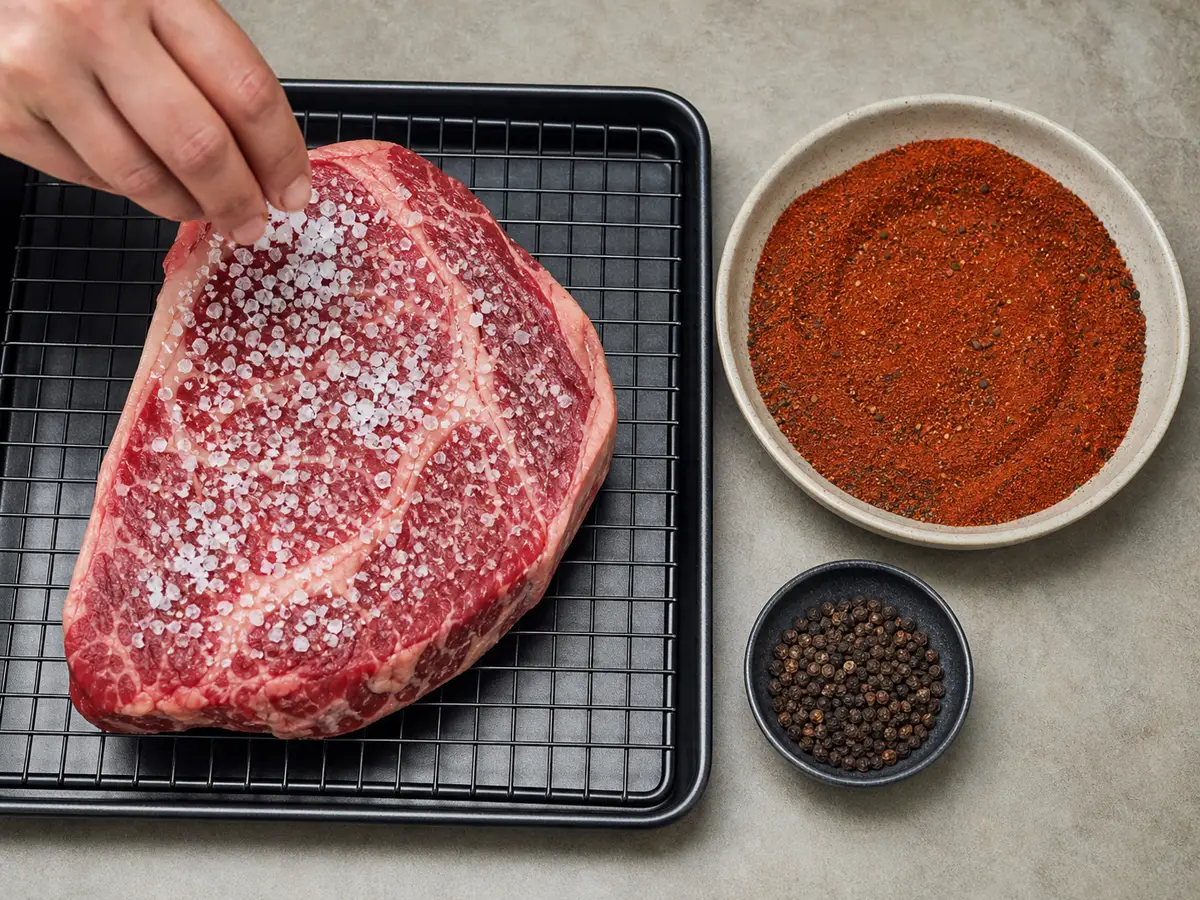
- Thick cuts: Salt several hours or overnight before cooking.
- Thin cuts: A shorter rest limits excessive salt movement.
- Enhanced meat: Read the package for added solution before salting.
If salt already leads the commercial rub, weigh the blend before covering a large cut. A thick red coat can hide too much sodium.
The same logic appears in seasoning label checks. Ingredient order reveals whether a jar behaves like spice or seasoned salt.
For a ten-pound brisket, one percent salt equals about 45 grams. A kitchen scale prevents the thick end from receiving more than the flat.
Dry brining uncovered also helps surface drying. Keep the meat refrigerated on a rack so air can reach its lower side.
What ratio makes a balanced BBQ rub?
Start with paprika and coarse black pepper, then add granulated garlic, onion, and mustard powder for savory structure.
Use granulated aromatics instead of very fine powder for long cooks. The coarser spice form resists clumping and builds a rougher surface.
For a salt-free base, combine four parts paprika, three parts coarse black pepper, two parts granulated garlic, and one part mustard powder.
| Branch | Add to the base | Best fit |
|---|---|---|
| Sweet | 2 to 3 parts brown sugar | Ribs and low-smoked pork |
| Hot | 1/4 to 1/2 part cayenne | Pork shoulder and spicy chicken |
| Earthy | 1 part cumin plus chile powder | Beef and Southwest-style cooks |
| Herbal | 1 part dried thyme or oregano | Chicken and vegetables |
Mix a small batch and taste it on a buttered piece of toast. Raw powder alone exaggerates bitterness and hides how fat will carry it.
Adjust one branch at a time. Changing sweetness, heat, and salt together makes the next cook harder to diagnose.
Use ground cayenne for clean heat rather than increasing every pepper. A quarter part can be obvious after several hours of smoke.
Mustard powder becomes less sharp as it cooks. Its main value in a long rub is savory background, not prepared-mustard tang.
How should rub change for brisket, ribs, pork, or chicken?
Protein choice changes the useful coating before any jar is opened.
- Brisket: Pepper and salt can lead because beef and long smoke support a dry savory crust.
- Ribs: High surface area puts sweetness and salt in every bite, so the coat must stay thin.
- Pork shoulder: Long rendering supports sugar and paprika, but the shredded interior still needs salt below the bark.
- Chicken: Fast-cooking skin traps muddy paste, so use less sugar and a lighter coating near direct heat.
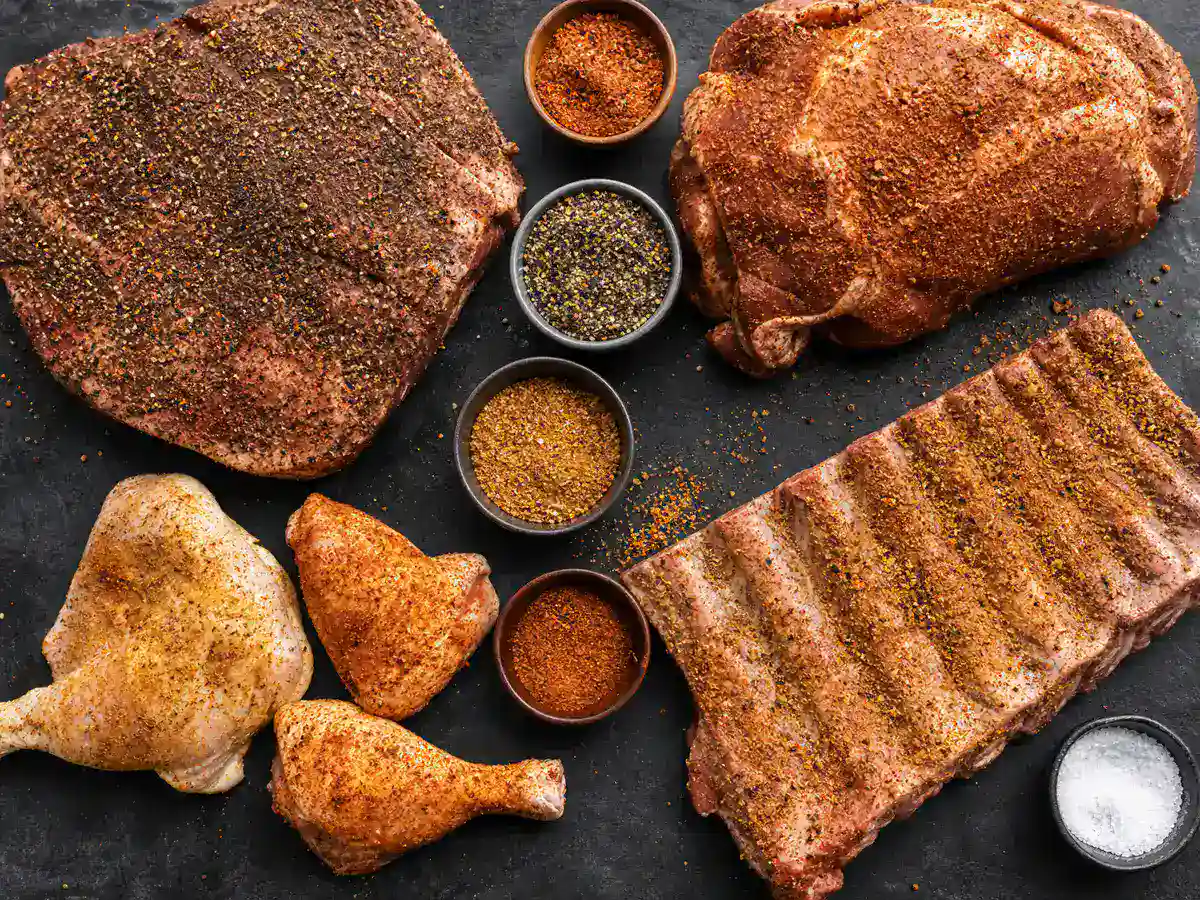
- Brisket: Pepper-led and restrained in sugar.
- Ribs: Sweeter, but applied in a thin even layer.
- Pork shoulder: Built for long rendering and a thick bark.
- Chicken: Fine, light coating with lower burn risk.
Vegetables need another balance. Oil helps the rub adhere, but a dense sugar layer can burn before squash or cauliflower softens.
The meat and fire choose the blend. The phrase BBQ rub on the label does not make one formula universal.
Beef ribs carry pepper like brisket but expose more edges. Season those edges lightly because a corner can collect several times more rub.
Skinless chicken breast dries before a thick crust sets. Use a finer blend and shorter cook rather than copying a pork shoulder coating.
When should you apply BBQ rub?
Pat the meat dry, scatter the rub evenly, and press it into the surface without grinding it into a paste.
A thin coat of mustard or oil can help adhesion, but it should not create a wet layer. Excess binder delays surface drying.
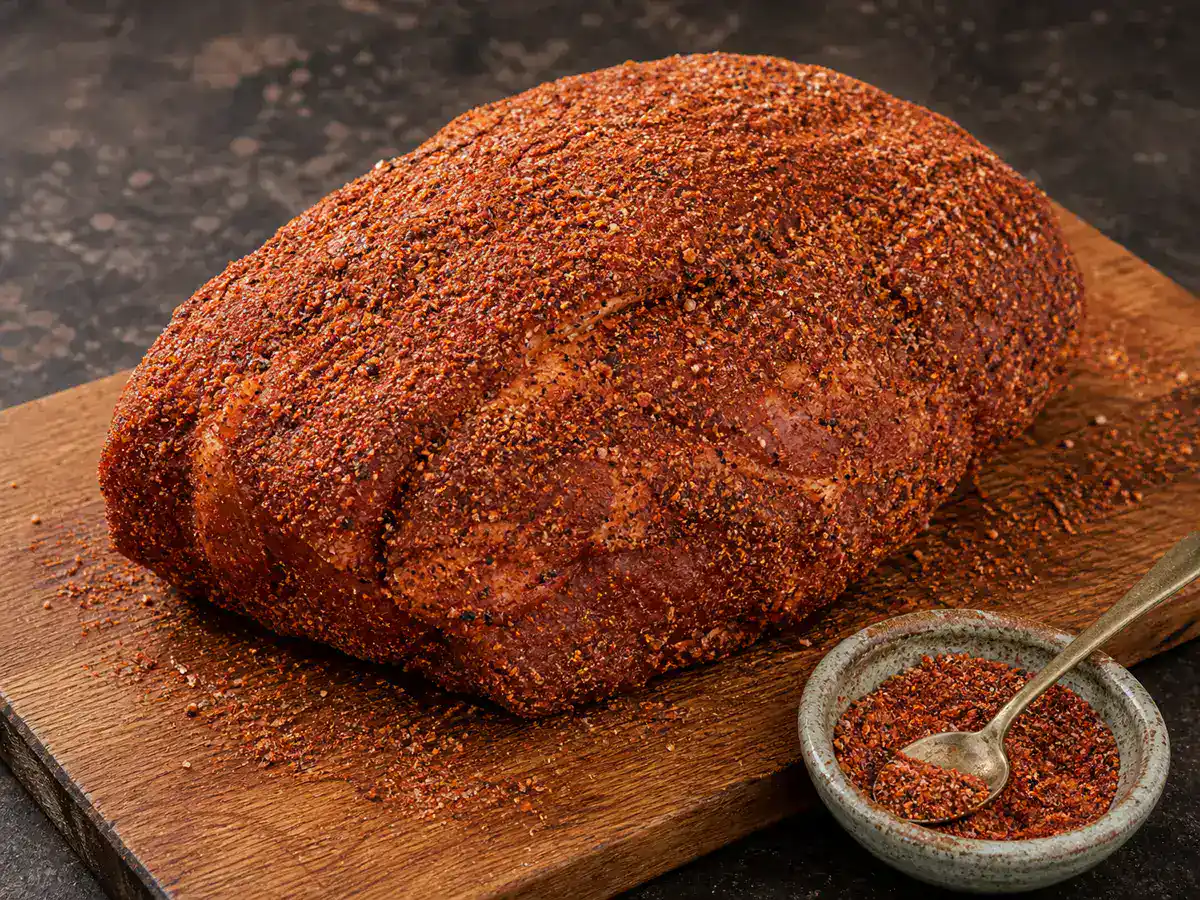
- Ready: Even coverage with a slightly tacky surface.
- Too dry: Powder falls away when the meat is lifted.
- Too wet: Spices smear into a muddy paste.
- Too heavy: Loose ridges remain on top of the meat.
Rest until the coating looks hydrated rather than dusty. Salt and surface moisture usually create that change within 20 to 40 minutes.
Large cuts can rest longer in the refrigerator. Keep them uncovered when food-safety conditions allow so the surface can dry.
Apply the spice layer after an overnight dry brine, not before it. This keeps paprika and garlic from absorbing refrigerator odors or turning pasty.
That sequence follows the same principle as staged spice timing. Salt gets time to travel, while volatile aromatics arrive closer to heat.
Transporting meat to another cooker changes the timing. Carry the salt-brined cut cold, then apply the aromatic rub shortly before it enters the heat.
When bark fails, diagnose moisture before adding more rub
Soft bark usually points to trapped steam, early wrapping, crowded cooking space, or repeated spritzing.
A bitter crust points toward scorched sugar, paprika, or garlic. Move the meat away from direct heat instead of covering bitterness with sauce.
Dusty bark means the spices never hydrated or bonded with rendered fat. The coating may have been too thick or the surface too dry.
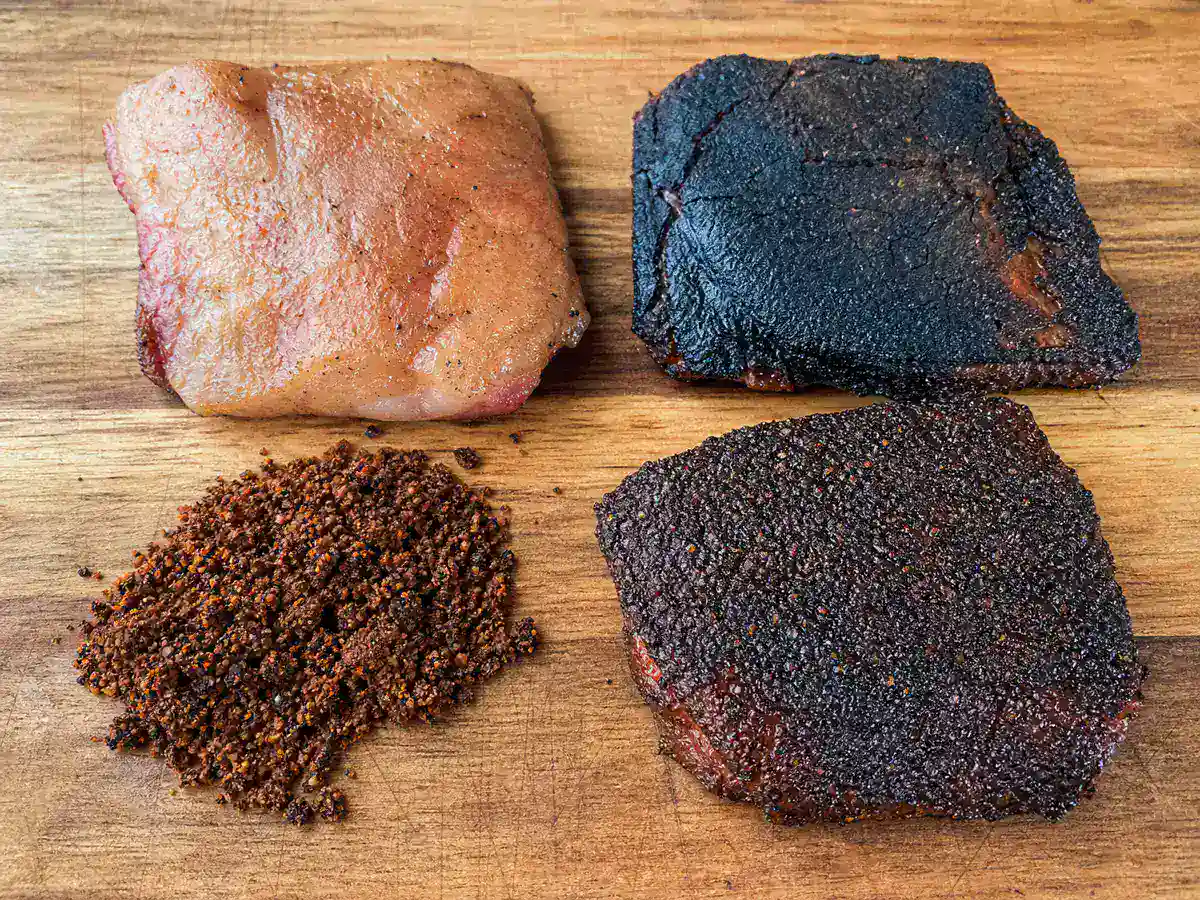
- Soft: Reduce steam and delay wrapping.
- Bitter: Lower direct heat and sugar exposure.
- Dusty: Use a thinner coat and allow hydration.
- Set: The crust feels dry and does not smear.
Do not keep opening the cooker to inspect color. Lost heat and changing humidity can slow the crust you are trying to build.
The flavor correction comes after the process correction. Fix heat or moisture before adding sweetness or acid.
A pale crust can still taste seasoned. Do not chase dark color with more sugar when the cooker humidity or wrapping schedule caused the appearance.
After unwrapping, dry heat can reset a soft surface. Give the meat time before saucing, because sauce traps moisture again.
Protect the bark job when storing or replacing a rub
Store BBQ rub airtight because brown sugar and garlic pull moisture from humid air and form hard clumps.
Make a smaller batch if you grill rarely. Pepper aroma and paprika color fade even when the mixture remains safe.
Cajun seasoning can replace a hot, unsweetened rub, but it may carry more salt and herbs.
The substitute-by-job method exposes whether a replacement lacks sweetness, smoke, coarse pepper, or salt control.
A simple salt, black pepper, paprika, and garlic mix is more honest than a complex substitute that fights the meat.
Store the jar in a cool cabinet and use a dry spoon. Follow the ground spice storage guide when humidity keeps returning.
Write the sugar percentage on the lid. That note prevents a direct-grill cook from using a blend designed for a low smoker.
Discard rub that touched raw meat. Reserve a clean portion before seasoning if you expect to add a fresh dusting later.
- Sieve before use: Hard sugar clumps melt unevenly and leave bitter dark spots.
- Smell the savory base: Replace the batch when sweetness remains but pepper and paprika aroma have disappeared.
- Store one unsweetened base: Sweeten only the cooking portion instead of aging several fire-specific jars.