
Chaat Masala Is a Finishing Spice, So Timing Changes Everything
Understand the first sulfur aroma, then use moisture and timing to reveal its salty, sour, earthy finish.

Chaat masala is a tangy South Asian finishing blend commonly made with amchur, kala namak, cumin, coriander, pepper, and hing. Kala namak smells sulfurous in the jar but softens on moist food, so add the blend near serving time to protect its bright volatile character.
Why does chaat masala smell like eggs when the jar opens?
Kala namak contains sulfur compounds that can smell like cooked eggs when concentrated in a dry jar.
That first aroma is expected in many chaat masalas. It becomes softer after the blend touches fruit juice, yogurt, potato, or chutney.
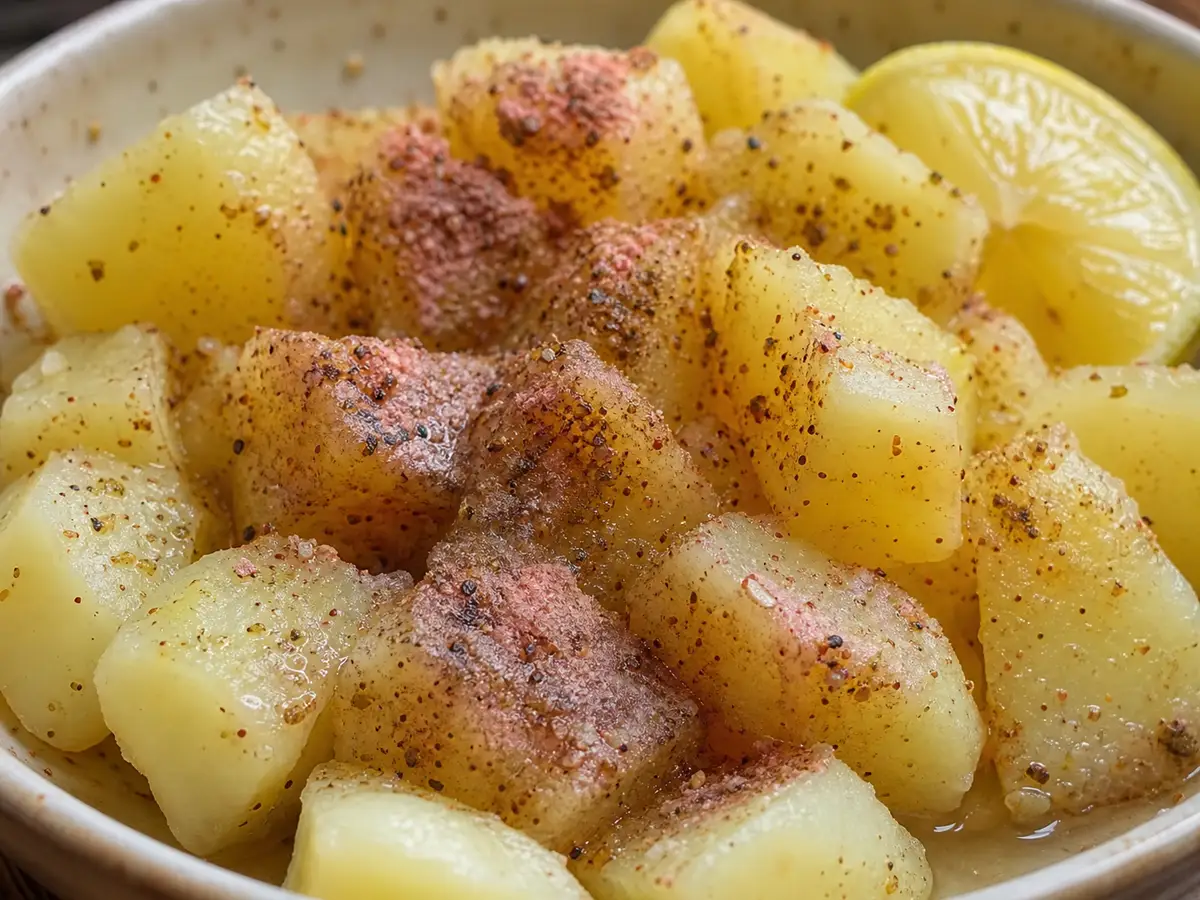
- Normal: A brief egg-like aroma followed by cumin and sour mango.
- Too strong: The sulfur note covers the food after mixing.
- Damaged: A musty or damp smell replaces the sharp mineral aroma.
Do not judge the blend from a deep sniff. Taste a small pinch on cucumber or warm potato before changing the ratio.
If sulfur still dominates, dilute the blend with roasted cumin, coriander, and amchur. Plain table salt will only increase saltiness.
Kala namak aroma also varies by brand and grind. Fine powder dissolves quickly, while coarse crystals can create sudden salty, sulfurous bites.
Warm potato is a better test than dry bread because its steam releases volatile aroma. The starch also shows whether salt feels balanced.
Do not remove black salt after one strong sniff. First lower its share, mix thoroughly, and taste the blend on moist food.
Why does chaat masala use dry mango instead of lemon?
Amchur powder comes from dried unripe mango. It brings a tart, fruity edge while keeping fried or roasted food dry.
That matters on crisp potatoes, papdi, pakora, and roasted chickpeas. Lemon juice brightens them too, but it can soften a crisp surface.
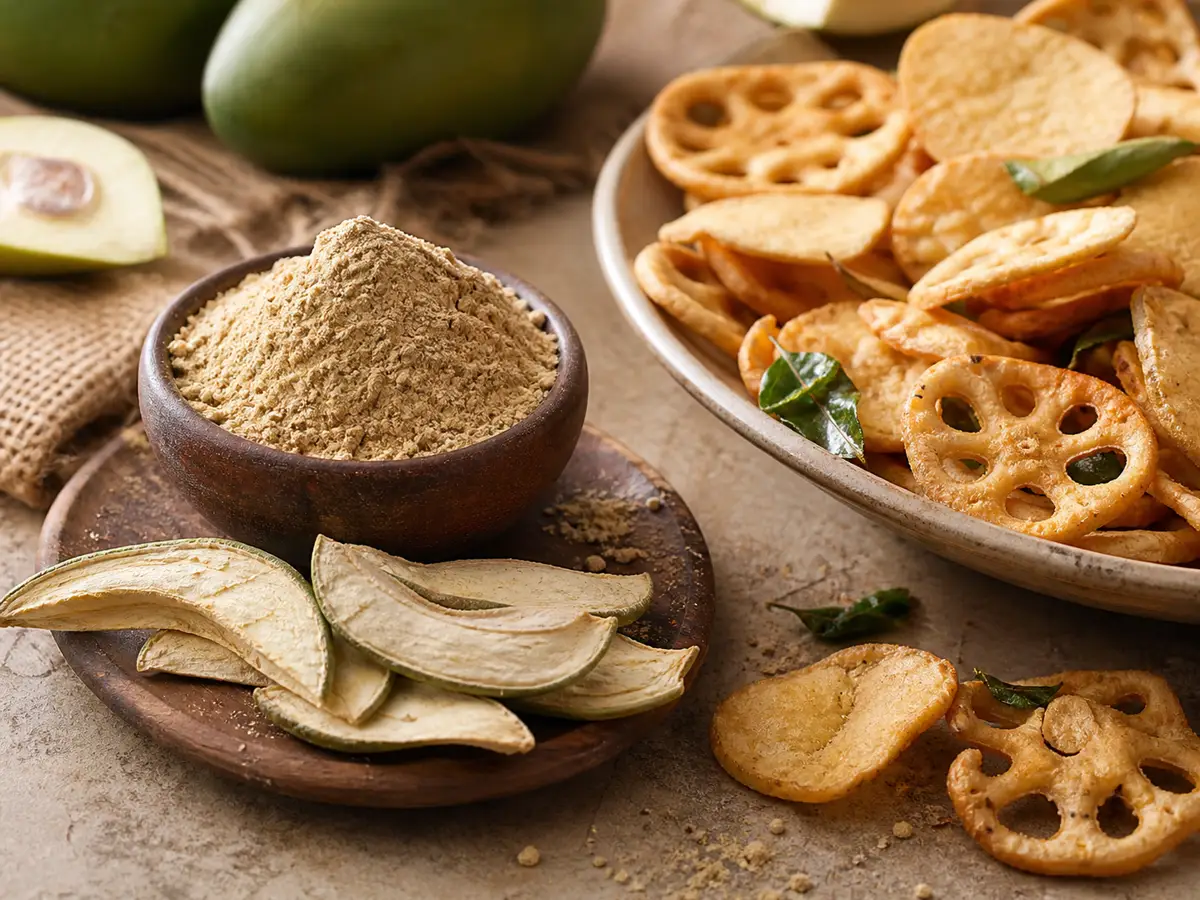
- On fried food: Use amchur for dry sourness.
- In yogurt: Liquid acid is less risky because crispness is not the goal.
- On fruit: Combine a light dusting with the fruit’s own juice.
Citric acid appears in some commercial blends and tastes more direct. Amchur has fruit character and a gentler, longer sourness.
Pomegranate powder can provide another dry acid, though it is fruitier and less sharp. It works best as a partial substitute.
On fried dough, add the powder after oil drains but before the surface cools. Warm residual fat helps the dry acid adhere.
Roasted seeds keep sour salt grounded
Roasted cumin gives chaat masala its earthy, toasted center.
Coriander seed adds a lighter citrus note around that base.
- Black pepper: Adds dry pungency without introducing a chile flavor.
- Ajwain: Brings a concentrated thyme-like edge that needs less space than cumin.
- Dried mint: A small cooling herb note can lighten the finish without defining the blend.
- Hing: Widens the savory sulfur note, but casual measuring makes the whole blend harsh.
| Ingredient | Main effect | Use less when |
|---|---|---|
| Amchur | Dry fruity sourness | The food already has tamarind or lemon |
| Kala namak | Mineral salt and sulfur aroma | The dish smells eggy after mixing |
| Roasted cumin | Earthy toasted depth | The blend tastes muddy |
| Hing | Savory pungency | Its aroma leads every bite |
| Black pepper | Dry bite | Chile or ginger already adds heat |
A balanced blend moves from tangy to earthy to gently pungent. It should not taste like sour salt with brown color.
Toast cumin until it smells nutty, then remove it before it darkens heavily. Burned cumin makes the whole blend seem stale.
Ground black pepper should appear after the sour note, not before it. Fine pepper becomes more assertive on juicy fruit.
Ajwain is especially useful on fried snacks and legumes. Its strong herbal note needs a smaller measure than cumin or coriander.
How do you make a small batch of chaat masala?
Toast two tablespoons cumin seeds and one tablespoon coriander seeds until fragrant. Cool them before grinding to a fine powder.
Mix in two tablespoons amchur and one teaspoon black pepper. Add one teaspoon kala namak, then taste before adding more.
Finish with half a teaspoon ginger powder and a tiny pinch of hing. Optional mint or ajwain should remain in the background.
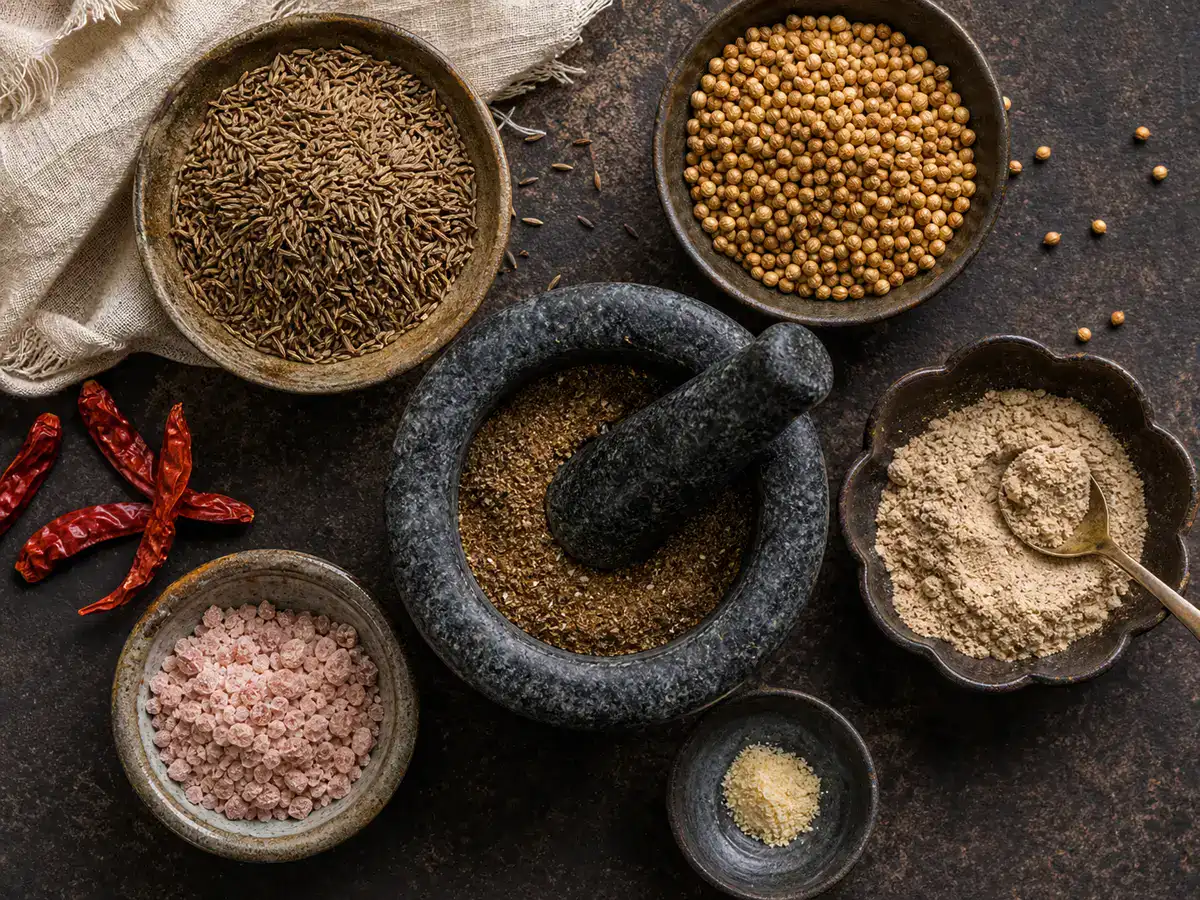
- Toast: Cumin and coriander only.
- Add raw: Amchur, kala namak, pepper, ginger, and hing.
- Test: Sprinkle on one warm potato before scaling.
Regular salt is optional. Keeping it separate makes the blend easier to use with salted chips, yogurt, and packaged snacks.
Record the kala namak amount because brands vary in aroma and saltiness. A measured pinch prevents one new bag from changing the batch.
Sift after grinding to remove coarse seed hulls. The finished grind size decides whether the blend clings or collects at the bowl bottom.
When should you add chaat masala?
Long cooking drives away the sharp sulfur aroma and softens the bright sour edge that defines chaat masala.
Season fried potatoes as soon as they leave the oil. Surface fat helps the powder cling, while the food remains hot enough to release aroma.
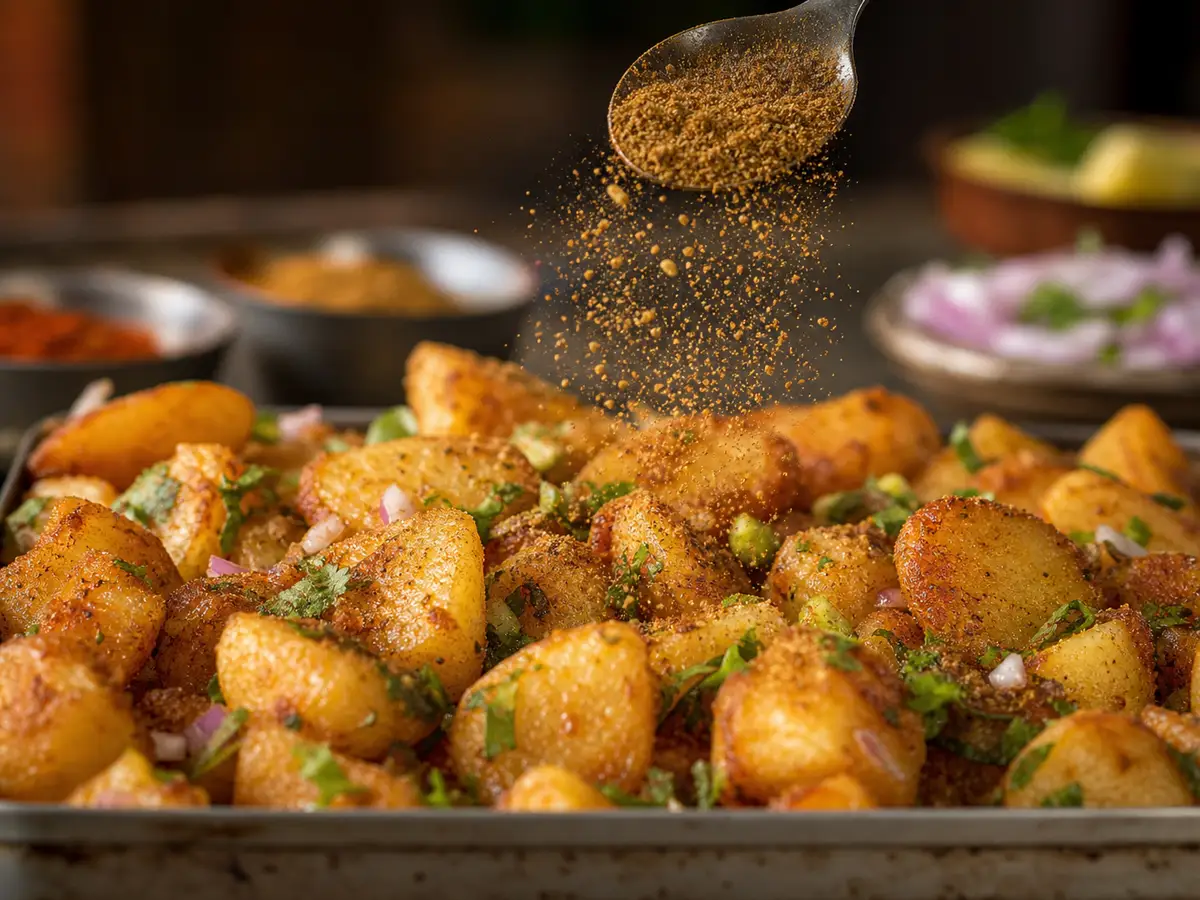
- Fried food: Toss immediately after draining.
- Fruit: Sprinkle just before serving.
- Yogurt chaat: Add some between layers and a little on top.
- Cooked curry: Use only a small finishing pinch if the dish needs lift.
For chaat with chutneys, season in layers. Tamarind already contributes acid, and green chutney may add salt and pungency.
Wait until all wet components join before the final dusting. This prevents sourness and salt from building beyond correction.
The timing of ground spices explains why this blend loses its top aroma during a long simmer.
Steam from hot food helps aroma bloom, but a covered bowl traps condensation. Toss, serve, and avoid holding crisp chaat under a lid.
When building papdi chaat, dust the potato layer lightly before yogurt. Save the final pinch for the chutney and herb surface.
A finishing dose should remain visible in flavor for a few bites. If every component tastes salty, reduce the base salt first.
How much chaat masala should you use?
A bowl of watermelon needs less powder than the same weight of potatoes because juice dissolves and spreads every grain.
Thin cucumber slices expose more surface than large chunks. The same teaspoon will taste saltier and more sulfurous.
| Food | Starting amount | Taste again after |
|---|---|---|
| 2 cups cut fruit | 1/4 teaspoon | Juice coats every piece |
| 1 pound roasted potatoes | 1/2 teaspoon | Oil and steam spread the powder |
| 1 cup plain yogurt | 1/4 teaspoon | A ten-minute rest hydrates the spices |
| 1 glass lemonade | A small pinch | The black salt fully dissolves |
Start below the amount you expect and wait one minute. Kala namak becomes more obvious after moisture dissolves it.
When a dish already contains lemon, tamarind, or salted chutney, use chaat masala for aroma rather than full seasoning. Acid and salt balance is already partly set.
Cold food releases less aroma than warm food. Let refrigerated fruit stand briefly, then season after condensation has stopped forming.
Large potato cubes need seasoning on several cut faces. Toss gently rather than adding more powder to the top layer.
A carbonated drink foams when powder enters quickly. Dissolve the pinch in a spoonful of still liquid before topping with soda.
Moist foods reveal different sides of chaat masala
Different foods reveal how the moisture rule changes the same pinch.
On mango, pineapple, apple, or melon, chaat masala makes sweetness feel brighter through salt and acid.
In lemonade or a yogurt drink, a pinch dissolves completely. The black salt becomes savory and mineral rather than powdery.
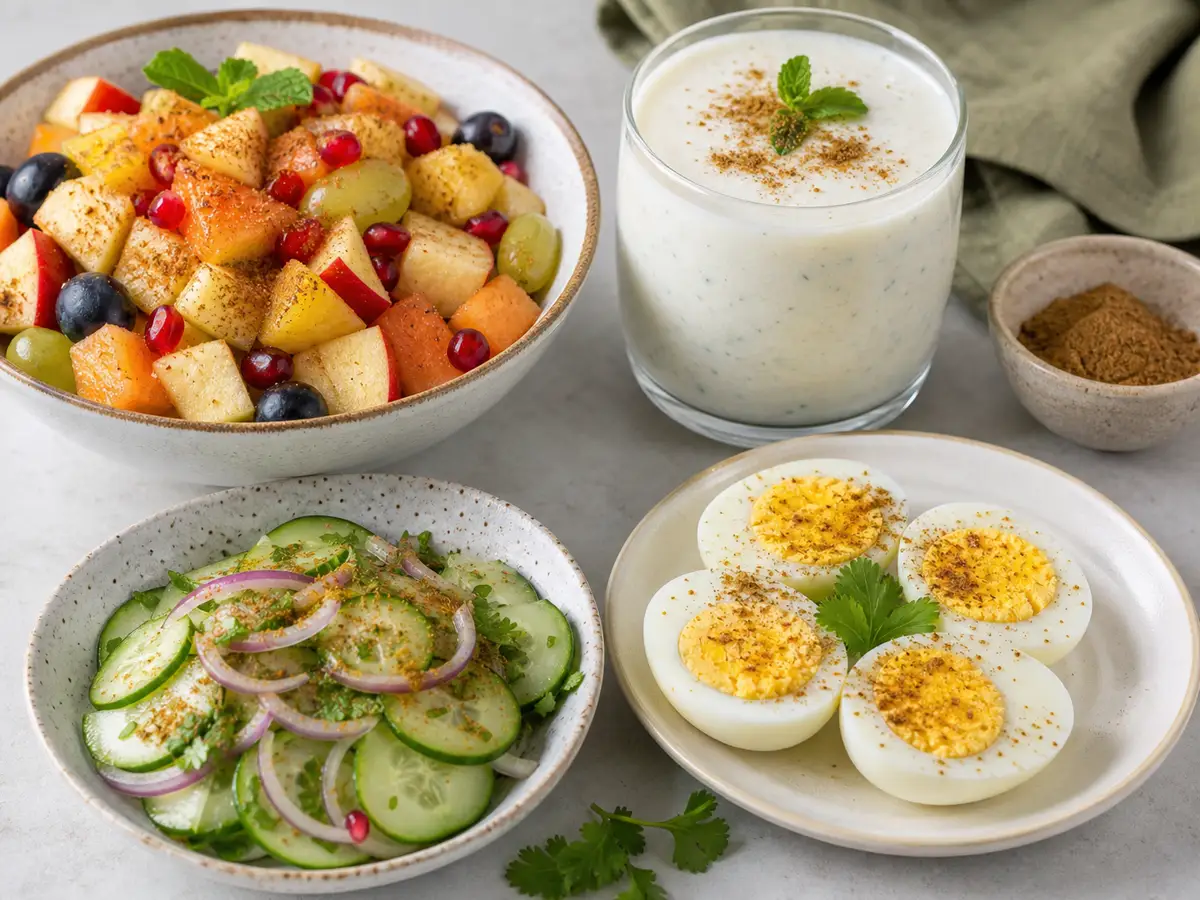
- Fruit: Sourness sharpens sweetness.
- Yogurt: Cumin and black salt become rounder.
- Drinks: Use only a pinch because every grain dissolves.
- Eggs: Expect the sulfur note to feel stronger.
Sprinkle it on boiled eggs only if you enjoy the black salt aroma. Egg and kala namak reinforce each other.
Popcorn and roasted chickpeas need a little oil for adhesion. Grind coarse homemade spice again if it falls to the bottom.
Tomato and cucumber already release water and acid. Add the blend just before serving so salt does not draw out a large puddle.
Yogurt softens black pepper and sulfur notes after a short rest. Retaste before adding more amchur because tang also grows clearer.
On ripe mango, use less amchur and more roasted cumin. The fruit supplies acid while cumin keeps the sweetness from tasting flat.
What can replace chaat masala?
Garam masala cannot replace chaat masala by itself. It supplies toasted aroma but lacks dry acid and kala namak.
Mix roasted cumin with amchur or a small amount of citric acid, black pepper, and kala namak. Add a tiny hing pinch if available.
Without kala namak, use regular salt and accept that the mineral sulfur note will be missing. Lemon can replace sourness on non-crisp foods.
Use the substitution-by-job guide to separate sourness, salt, sulfur aroma, and toasted spice. One pantry powder rarely replaces all four.
Small sealed packs protect the volatile finish
Store the blend airtight and away from steam. The black salt aroma and roasted cumin fade before the powder looks spoiled.
Replace a jar that smells musty or shows damp clumps. A clean but muted batch can still season cooked foods before you open a fresh jar.
Buy a small sealed packet from a shop with steady turnover. Black salt can stay pungent while roasted cumin and coriander fade.
Follow the ground spice storage method and keep the jar away from stove steam. Use a dry spoon, not wet fingertips.
Date homemade blends and taste them on potato after three months. Color is a weak freshness cue for brown powders.
Keep extra kala namak and amchur separate. You can correct a fading batch without making every future dish saltier or more sour.