
What's Tandoori Masala? The Blend Is Only Half of It
The jar supplies color and spice; the yogurt and the heat supply everything else.
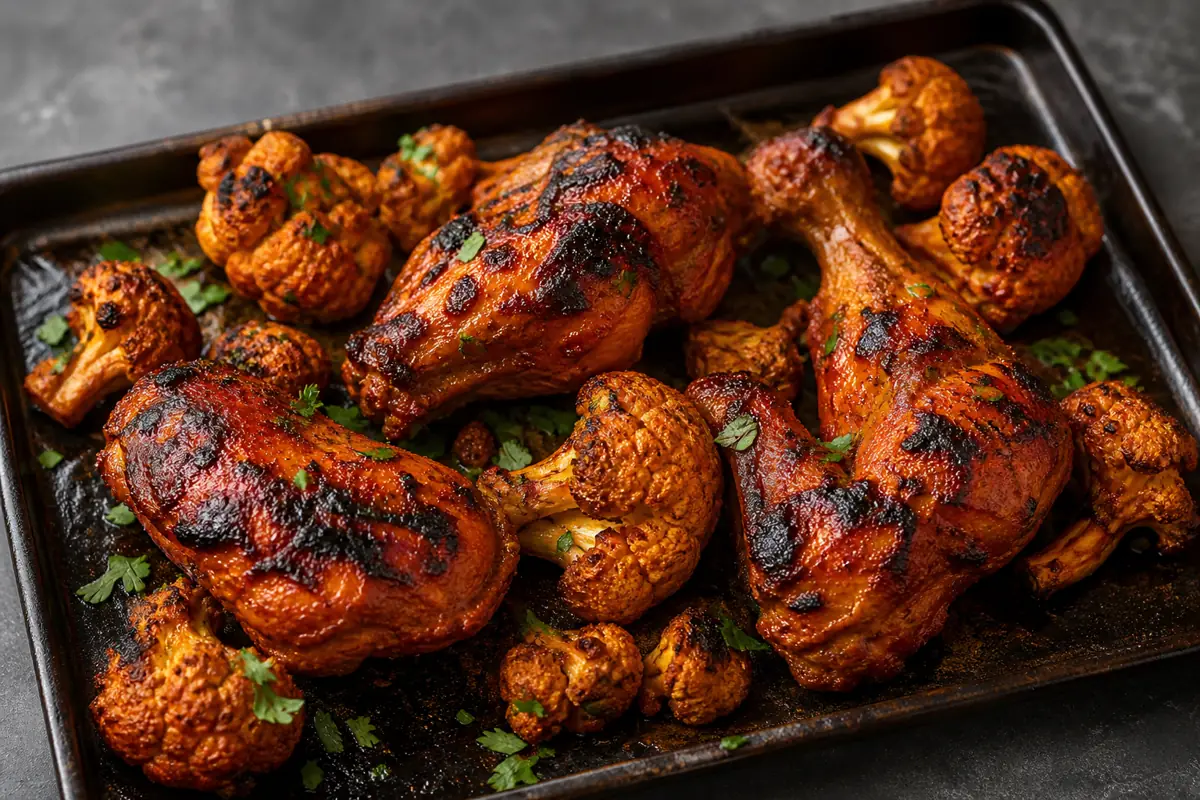
A jar of tandoori masala is the spice layer in a method rather than the method itself. Color and seasoning come from the blend. Everything else comes from a two-stage yogurt marinade and a great deal of heat, which is why a better jar so rarely fixes a disappointing result.
What's in tandoori masala?
The blend is named after an oven rather than a dish, and that single fact explains most of what is in the jar as well as why the proportions look the way they do. A tandoor runs far hotter than a domestic oven reaches, commonly cited around 900°F or 480°C, and everything in the mixture was chosen to survive that and to coat meat rather than to season a pot.
| Component | What it contributes | Why it is in a marinade blend |
|---|---|---|
| Coriander seed | The bulk of the body, citrus-edged and mild | It can be used generously without dominating, which suits a thick coating |
| Ground cumin | Savory depth underneath the coriander | It survives high heat better than most aromatics |
| Kashmiri chile | Deep red color and very little heat | It is the color ingredient first and the chile second |
| Ginger and garlic | Savory bite and the marinade's working edge | Both tenderize as well as flavor, which a dry blend cannot do alone |
| Fenugreek leaf | The faintly bitter, maple-like note at the back | It is the single flavor most people cannot name and would miss immediately |
| Garam masala spices | Warmth from cassia, clove and cardamom | A small amount, added for aroma rather than for the body of the blend |
| Amchur or citric acid | A dry sourness that lifts the whole coating | Acid also helps the yogurt do its work on the surface of the meat |
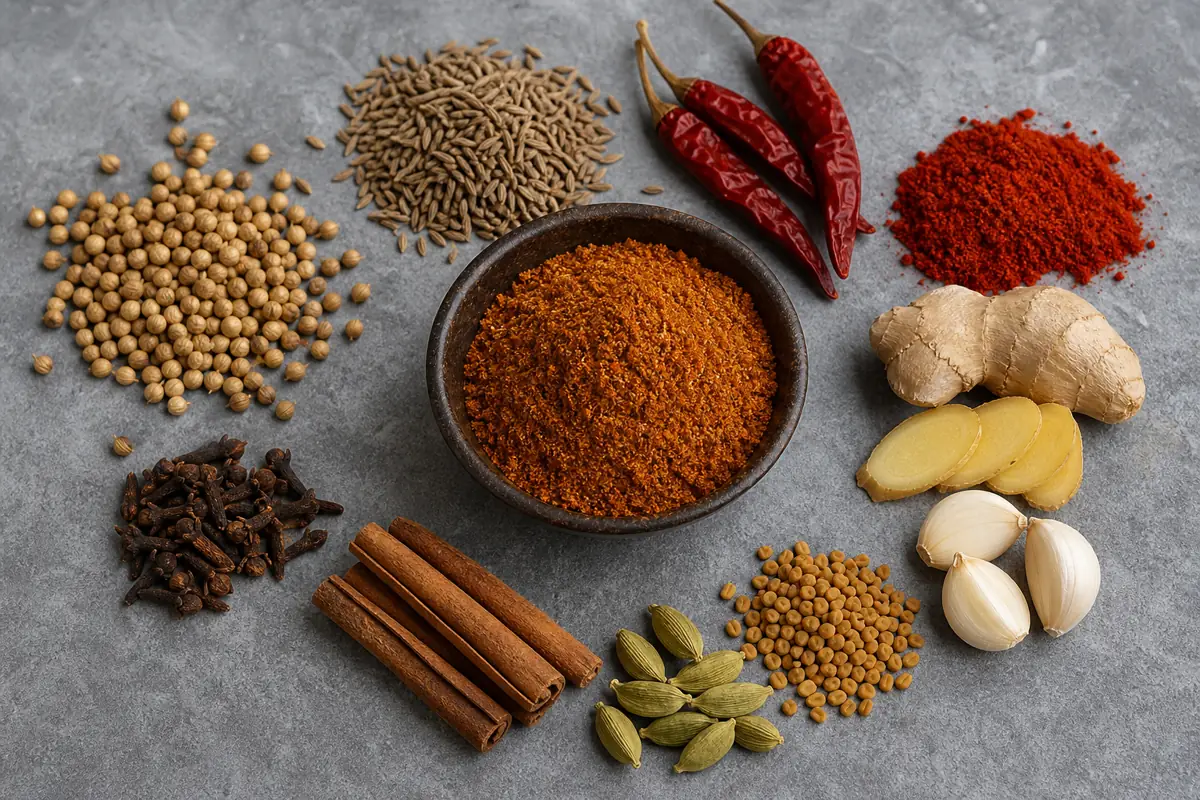
Fenugreek leaf is the one worth buying separately if a blend does not list it.
Kasuri methi, as it is usually sold, is dried fenugreek leaf rather than the seed, and it is milder and more aromatic than the seed. Crushing a pinch between your palms into the marinade is the single change that makes a homemade version taste like a restaurant one. Nothing else in the blend has that effect at that quantity.
Why is tandoori masala red?
Three different things produce that color, and they are not interchangeable. Only one of them is a spice.
- Kashmiri chileThe traditional answer, a chile bred for pigment rather than heat, whose capsanthin gives a deep orange-red at a mild Scoville level
- RatanjotAlkanet root, oil-soluble rather than water-soluble, steeped in hot oil and strained so the colored oil goes into the dish
- Added food coloringWhat produces the uniform neon red of many restaurant plates and some commercial jars, usually declared as a colorant on the label
The practical difference is what arrives alongside the color. A chile-derived red is deep and slightly uneven, and it brings fruit and mild warmth with it. A dyed red is flat, even, and carries nothing at all.
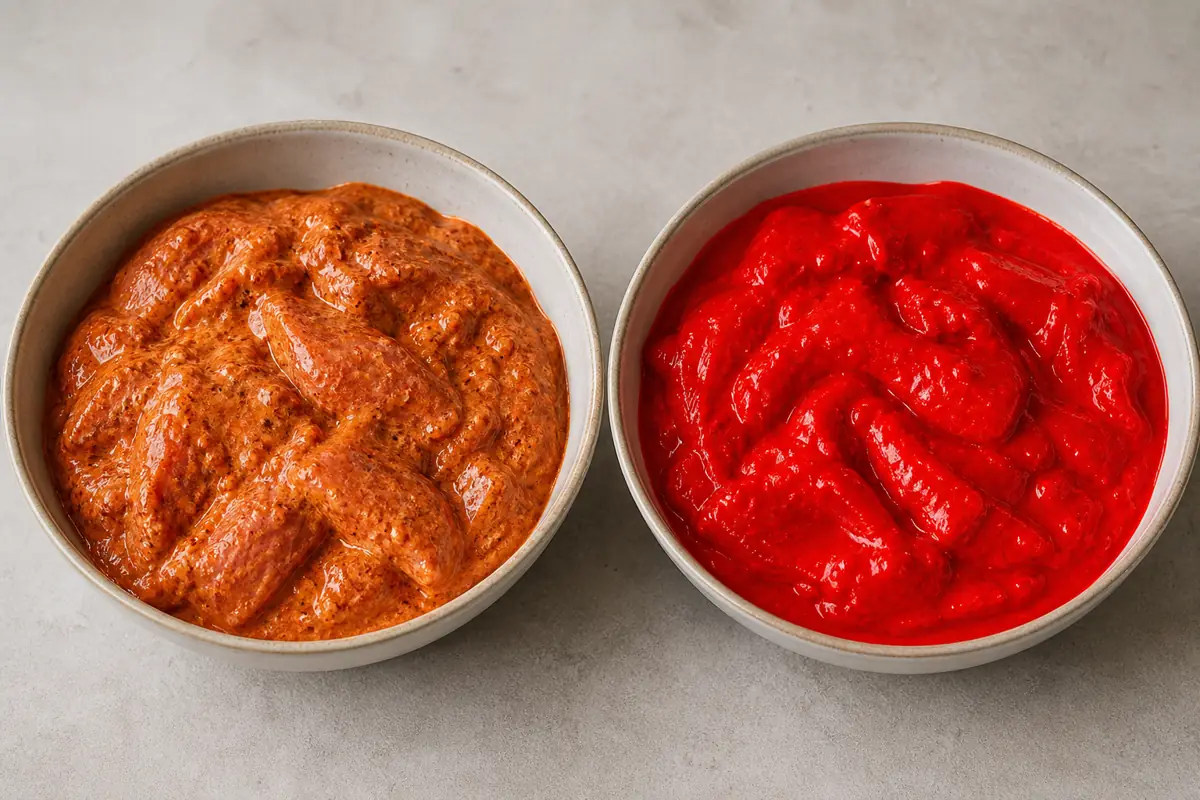
A jar that lists a colorant is not a worse jar for every purpose, but it is worth knowing which one you have before judging the heat. Blends that get their red from dye often carry ordinary hot chile underneath it, so the color tells you nothing about how much the dish will burn.
How does the yogurt marinade actually work?
In two stages, and skipping the first is the most common reason a homemade version disappoints.
- Salt and acid firstScore the meat, rub it with salt and lemon juice, and leave it fifteen to thirty minutes so the surface firms and draws moisture out
- Pat it genuinely dryWhatever liquid the first stage pulled out has to leave, because a wet surface is what a coating slides off
- Thick yogurt secondStrained or Greek-style, never thin, mixed with the masala, oil, and more ginger and garlic
- Coat and restFour to six hours for chicken, overnight for larger pieces, with the bowl covered in the fridge
- Scrape, do not rinseTake off the excess so the coating is thin enough to char rather than steam under its own moisture
The acid stage does two jobs at once. It seasons below the surface where the yogurt cannot reach, and it firms the outside so the second coat has something to grip.
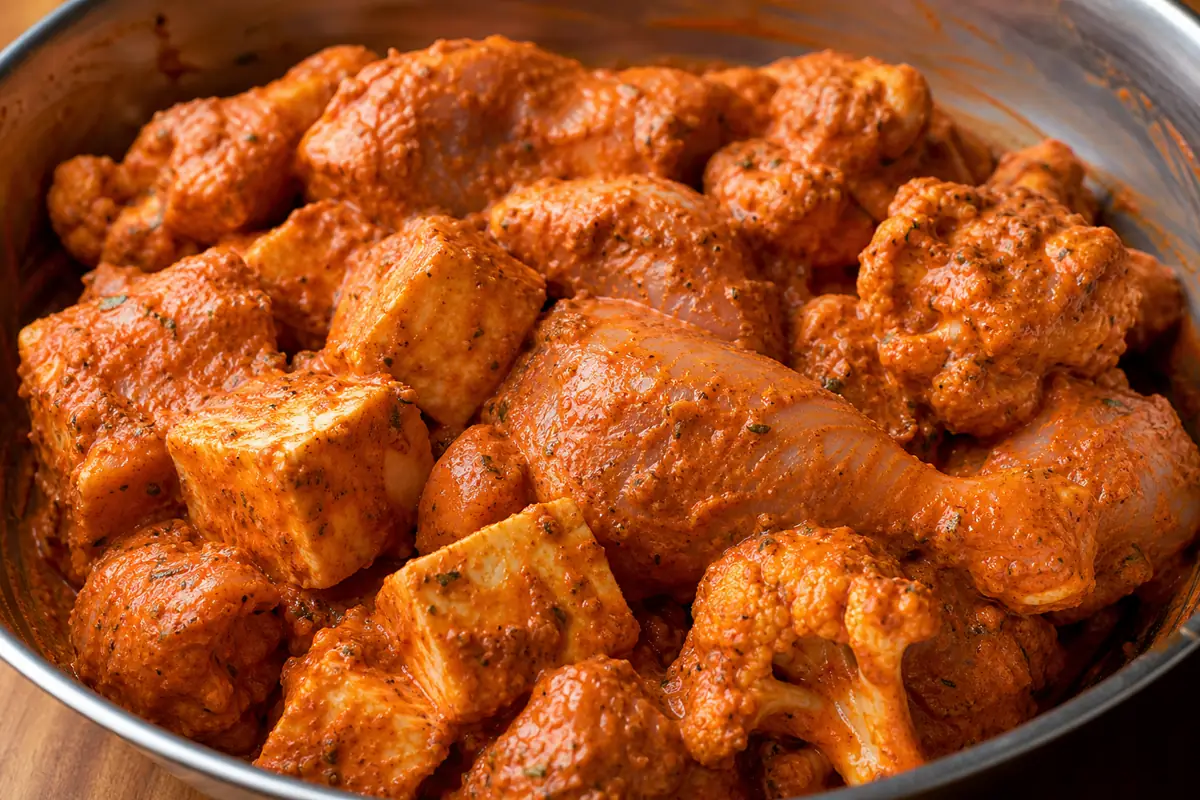
Oil in the marinade matters more than it looks. The pigments and aromatics in the blend are fat-soluble, so oil carries the color and the spice onto the meat and keeps the coating from drying into a crust that flakes away.
Why does the coating slide off?
Almost always moisture, and almost always the meat's rather than the marinade's.
The second cause is crowding.
Pieces packed against each other trap steam, the coating rehydrates, and what should have charred slides into the tray instead. Leaving a thumb's width between pieces does more than any adjustment to the marinade.
A wire rack fixes the rest. Air underneath the meat lets the underside dry at the same rate as the top, and the drips fall away rather than pooling into a braise underneath.
How do you get char without a tandoor?
By accepting that no domestic oven will reach tandoor temperature, and then getting the browning from a source of heat that does not also have to cook the meat through at the same time.
The closest single substitute, with the rack high and the oven preheated for a full fifteen minutes
475°F or 245°C, or as high as the oven goes, with the rack lifting the meat clear of its own drips
Sear the coated surface in a smoking pan for the char, then finish through in the oven
The most faithful, because the drips hitting the coals give back some of the smoke a tandoor supplies
A restaurant trick that works at home, passed quickly over an already-cooked piece
The dhungar method, a lit coal in a small bowl set in the covered dish with a spoon of ghee on it
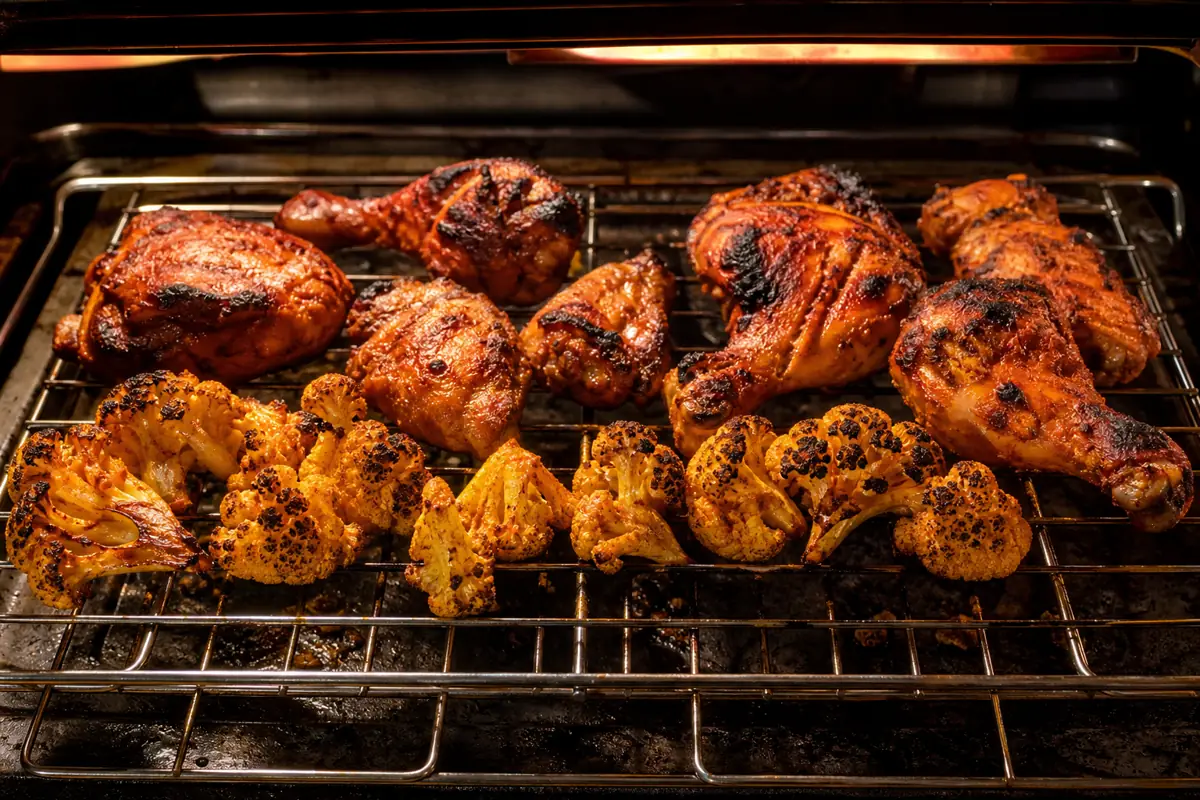
The thing a tandoor does that none of these fully replaces is cooking from all sides at once. That is why home versions need turning and why the piece dries out if it is left long enough to char evenly without help.
Smaller pieces are the practical answer. Thighs, wings, paneer and cauliflower florets all reach char before they dry out, where a whole chicken will not. The companion cauliflower method works through that in a finished dish.
How is it different from garam masala?
They sit at opposite ends of a dish and overlap on a handful of spices. That is exactly the kind of resemblance that causes substitution mistakes, because the shared ingredients suggest a shared purpose they do not have.
- The recipe says to marinateTandoori masala, which is built to sit on a surface in yogurt
- The recipe says to finish or garnishGaram masala, which is an aroma added at the end
- The dish should come out redTandoori masala, since garam masala carries no color ingredient at all
- The dish should not change colorGaram masala, which leaves whatever color the base already had
- You want heat as well as colorNeither reliably; chile powder is a separate decision from both
- The recipe just says masalaCheck the stage it goes in at, because that separates the two more reliably than the ingredient list
Garam masala has no chile and no color ingredient in its classic form, and it is measured in quarter teaspoons at the end of cooking. Tandoori masala is measured in tablespoons and goes on at the start.
Using garam masala in a tandoori marinade gives a pale, aromatic result that is perfectly pleasant and is not tandoori.
Going the other way is worse. A tablespoon of chile-heavy marinade blend stirred into a finished korma overwhelms everything the korma was built on, and no amount of cream brings it back.
How do you mix your own?
The case for mixing it is the chile. Commercial blends decide your color and your heat together, and separating those two decisions is most of what a homemade version buys you.
| Ingredient | Amount | Why that amount |
|---|---|---|
| Ground coriander | 3 tbsp | The body of the blend, and the reason it can be used by the tablespoon |
| Kashmiri chile powder | 3 tbsp | Equal to the coriander, because the color needs volume rather than intensity |
| Ground cumin | 2 tbsp | Savory depth that holds up through a long marinade |
| Garlic powder | 1 tbsp | Savory body, on top of the fresh garlic that goes in the yogurt |
| Ginger powder | 1 tbsp | Warmth and bite, again alongside fresh ginger rather than instead of it |
| Kasuri methi | 1 tbsp, crushed | The back note that makes the blend recognizable |
| Garam masala | 2 tsp | Warm aroma in a supporting quantity, not as the base |
| Amchur | 2 tsp | Dry sourness, which lemon in the marinade then reinforces |
| Cayenne | 1/2 tsp, to taste | The actual heat, kept separate from the color |
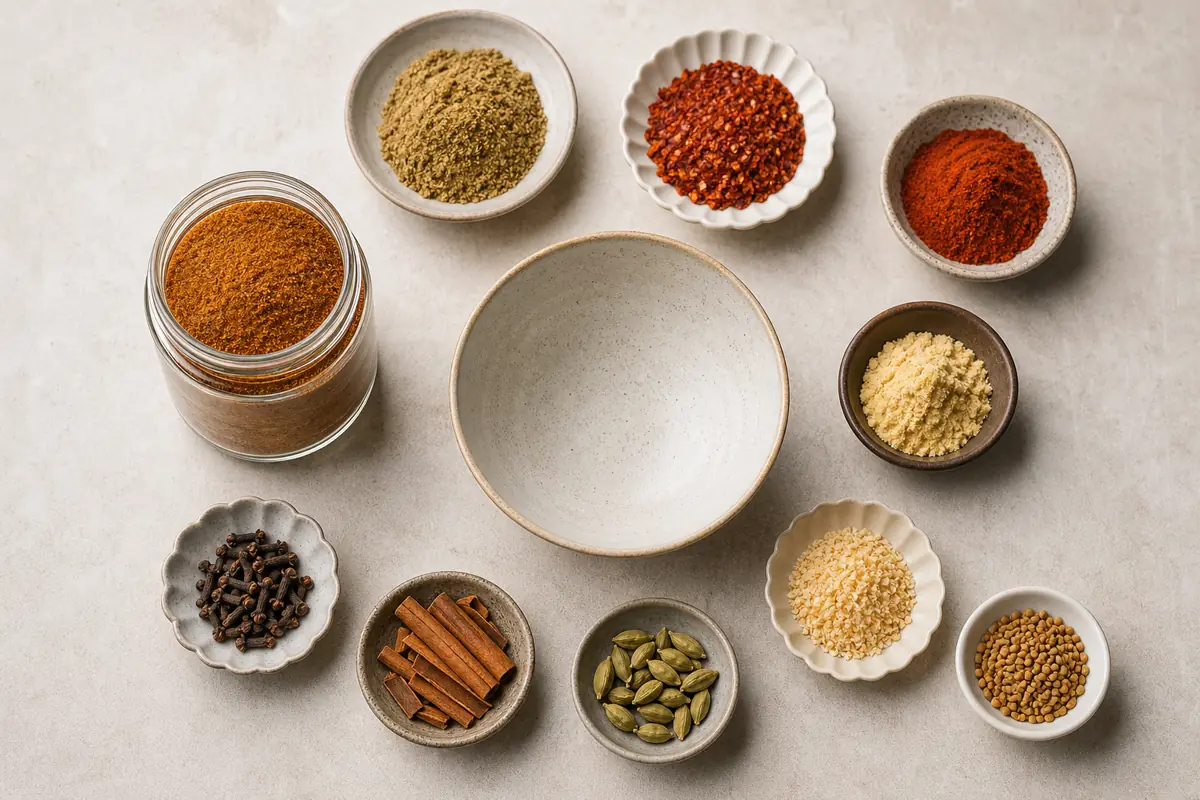
Toasting is optional here in a way it is not for a finishing blend. The marinade sits for hours and then meets ferocious heat, so raw ground spice has plenty of time to open up. Over-toasted spice turns bitter under a broiler faster than it ever would in a pot.
Make it in useful quantity, because a tandoori marinade takes tablespoons where a finishing blend takes teaspoons. A batch this size covers three or four meals rather than a season.
What can you use instead of tandoori masala?
Rebuilding beats substituting here, because two of the components are doing jobs that no other jar on an ordinary spice shelf covers at all.
- Kashmiri chile, coriander, cumin and kasuri methiThe honest rebuild, and the only route that gets both the color and the back note
- Sweet paprika with a little cayenneCovers the color and lets you set the heat, but leaves the fenugreek gap wide open
- Curry powder with extra paprikaWorkable in a pinch, though turmeric pushes the color orange and adds a note tandoori does not have
- Garam masala with chile addedAromatic and warm but structurally wrong, since it was built for the end of cooking
- Berbere or harissaToo hot and too differently spiced, and both will read as another cuisine entirely
Sweet paprika is the most useful single stand-in for the color, because it is the other common spice bred for pigment over heat. It brings less fruit than Kashmiri chile and no bitterness at all.
The gap nothing fills is the fenugreek leaf. Nothing else on an ordinary shelf has that slightly bitter, maple-adjacent smell, and a marinade without it tastes clean and correct and somehow not like tandoori. Where the dish has to be closer than that, the tandoori masala substitutes work through the options by what is being cooked.
How long does a jar stay good?
Better than most blends, and for a reason worth knowing.
Coriander and chile powder are both relatively stable, and they are also the two largest components. The body of the blend therefore outlasts the parts that fade. What goes first is the garam masala fraction and the kasuri methi, which means an old jar loses its aroma and its back note while keeping its color and its bulk.
That pattern makes it easy to keep using a jar that has quietly stopped earning its place.
A crushed pinch of fresh kasuri methi and a half teaspoon of garam masala restore most of what went missing. That is a good deal cheaper than replacing a jar whose bulk is still perfectly good.
Heat and light do the usual damage, so the same rules apply as to any ground spice: airtight, dark, and a dry spoon each time. Nothing here is unusual enough to need its own shelf in an Indian pantry.