
Tandoori Cauliflower Recipe with Charred Edges
Use a thick yogurt coating and evenly sized florets so high heat can char the ridges before the centers turn soft.
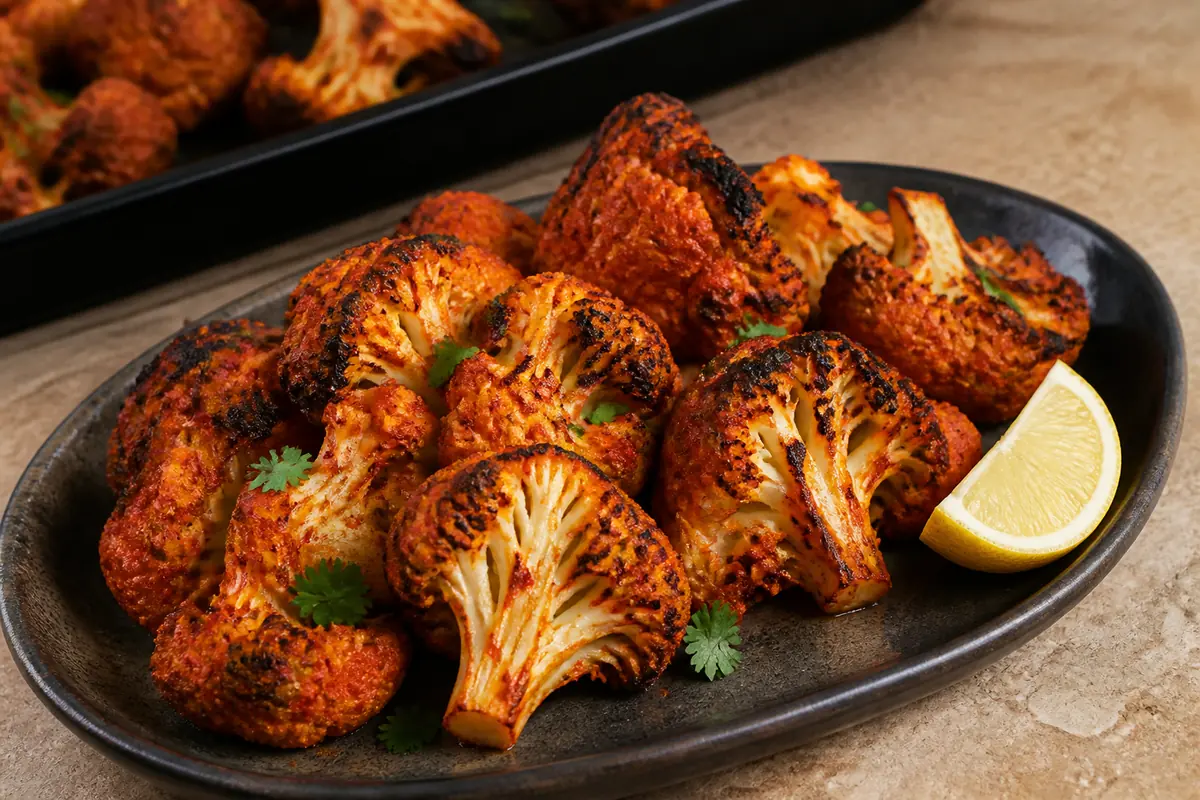
Tandoori cauliflower needs a marinade that clings and enough oven heat to darken the exposed ridges. A thin coating steams while a thick, even coating chars.
Ingredients
- 1 large cauliflower, cut into 2-inch florets
- 3/4 cup thick plain Greek yogurt
- 2 tablespoons tandoori masala
- 1 tablespoon lemon juice
- 1 tablespoon neutral oil
- 2 garlic cloves, finely grated
- 1 teaspoon finely grated ginger
- 3/4 teaspoon kosher salt
Method
- Heat the oven and pan Heat the oven to 450°F or 230°C with a heavy sheet pan inside. Dry the cauliflower thoroughly.
- Mix the marinade Whisk yogurt, tandoori masala, lemon, oil, garlic, ginger, and salt until smooth.
- Coat the florets Coat florets in a thin even layer. The marinade should cling without pooling in the bowl.
- Start cut-side down Arrange on the hot pan with cut sides down and open space between florets. Roast for 18 minutes.
- Finish to char Turn and roast for 8 to 12 minutes more until tips are charred and a skewer enters the stems with light resistance.
- Serve uncovered Serve uncovered with lemon at the table.
Build tandoori-style heat in a home oven
Tandoori-style cauliflower borrows the yogurt-spice coating and fast surface browning associated with tandoori cooking.
A home oven does not reproduce the radiant intensity or smoky environment of a clay tandoor, so the useful target is charred ridges with a tender stem.
Set a rack in the upper third only if the tray will still sit several inches below the broiler.
The roasting stage needs steady heat, while the broiler is a short finishing tool.
Use a heavy bare sheet pan rather than a glass dish.
Metal heats quickly and releases moisture around the cut faces, while high broiler heat can be unsafe for some glass bakeware.
Cut for one shared cooking time
Cut the cauliflower into florets about two inches wide, then split thick stems lengthwise. The goal is a broad cut face for browning and a stem no thicker than the surrounding crown can cook through.
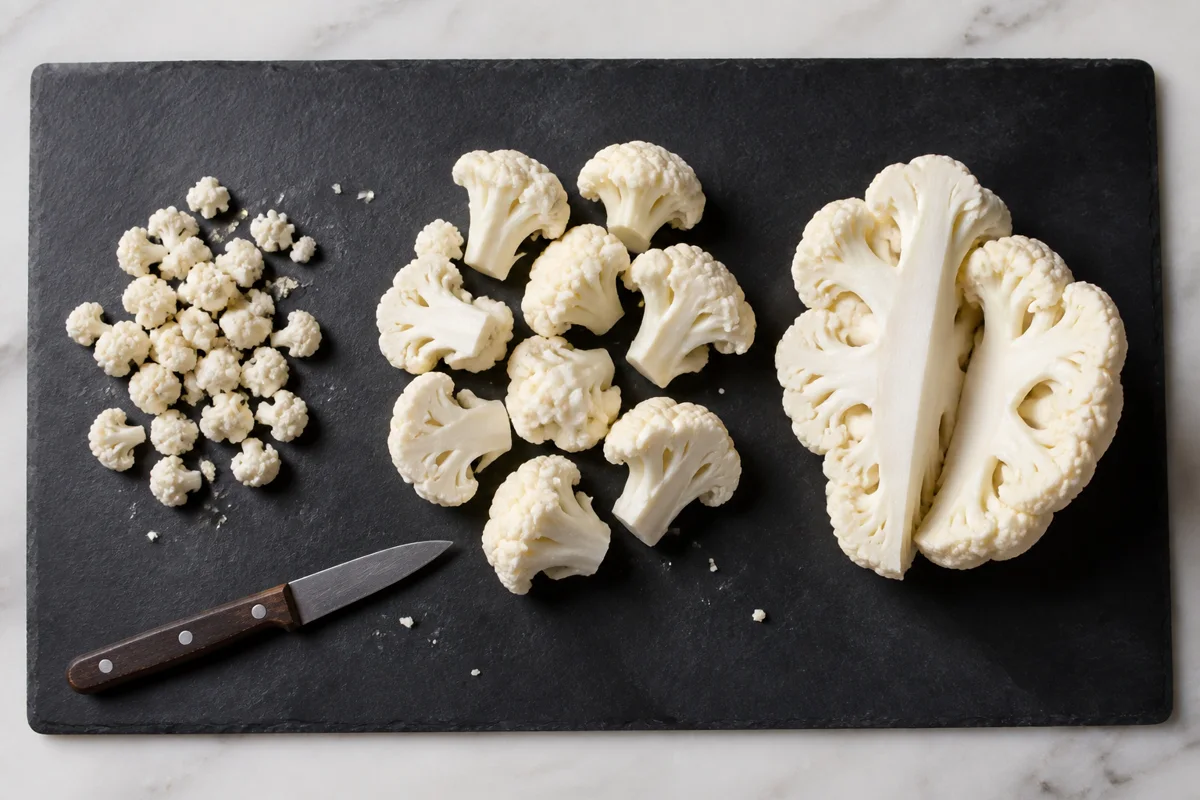
- Tiny buds: Save them or add them later because they blacken first.
- Two-inch florets: Give open ridges and manageable stems.
- Large core-heavy pieces: Split lengthwise before marinating.
Keep loose crumbs and tiny buds off the tray at the beginning.
They carry more coating per gram and can burn before the useful florets become tender.
Wash before cutting when possible, then dry every branch and cut surface. Water hidden inside the crown thins the yogurt exactly where you need the coating to hold.
Whole cauliflower makes a dramatic centerpiece but follows a different cooking problem.
It usually needs pre-cooking or a longer lower-heat stage, so do not substitute a whole head for these florets on the same timing.
Make the marinade cling rather than pool
Whisk thick plain Greek yogurt with tandoori masala, lemon, oil, garlic, ginger, and salt. The finished marinade should coat a spoon without running back into the bowl like dressing.
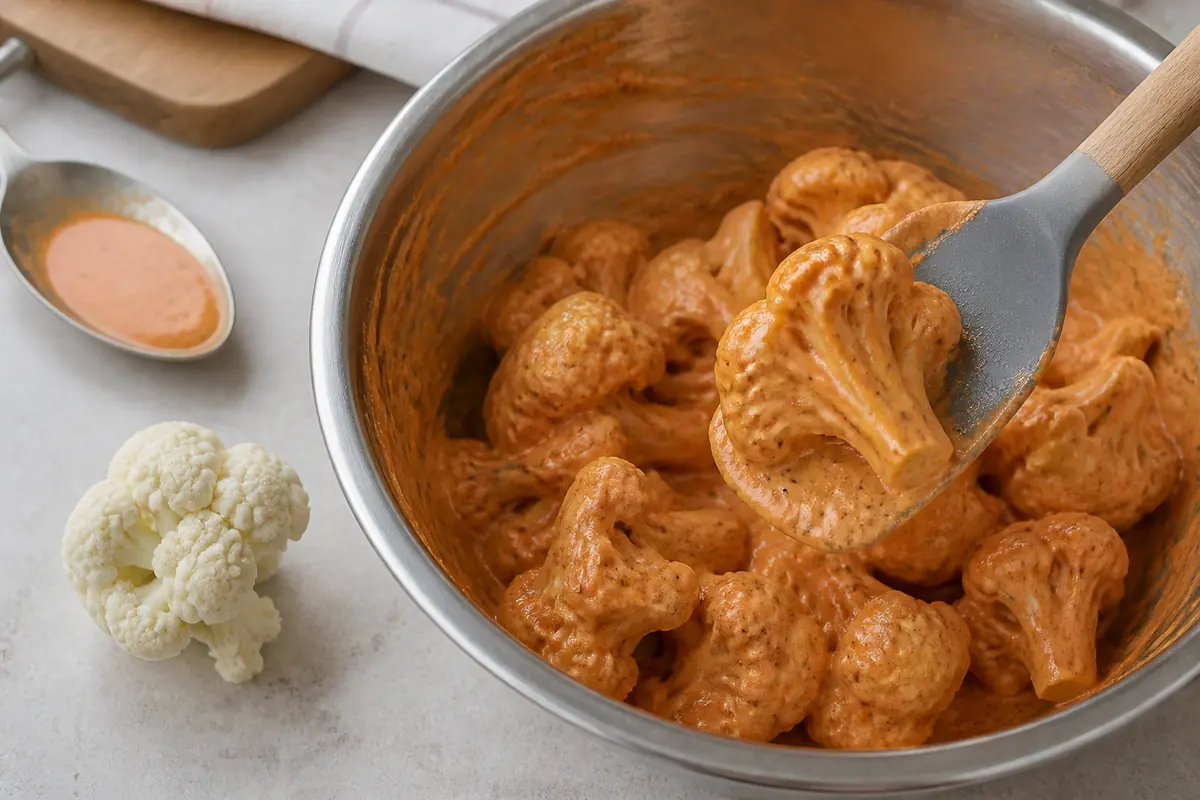
- Correct coating: Visible ridges and no puddle.
- Dry floret: Yogurt stays in place.
- Too thin: Marinade runs to the bottom of the bowl.
If the coating slides off, first dry the florets again. Add one tablespoon yogurt only when the cauliflower is dry and the mixture itself remains loose.
Heavy blobs insulate the surface and taste pasty after roasting. Loosen them with one teaspoon water or lemon juice, then toss until the natural floret texture is visible again.
The tandoori masala substitute guide helps when the blend is missing, but keep the replacement unsalted until you taste the full marinade. Fresh ginger and garlic supply moisture as well as aroma, so finely grate them rather than adding large wet pieces.
For a dairy-free version, use a thick unsweetened plant yogurt that does not pour from the spoon.
Coconut-heavy yogurt changes the flavor and can brown faster, while thin almond yogurt may need draining before use.
Coat the cauliflower shortly before roasting. Thirty minutes in the refrigerator is reasonable, but an overnight acidic soak softens the surface and draws out water without carrying seasoning into the dense stem.
Roast for contact first and char second
Preheat the sheet pan in a 450°F or 230°C oven. Arrange the florets cut-side down with at least a finger of open space between pieces so the coating meets hot metal rather than pooled steam.
Roast without moving them for 18 minutes. Turning too early tears the setting yogurt layer away from the cut face.
Continue for 8 to 12 minutes after turning. The cauliflower is ready for the broiler only when a skewer enters the thick stem with light resistance.
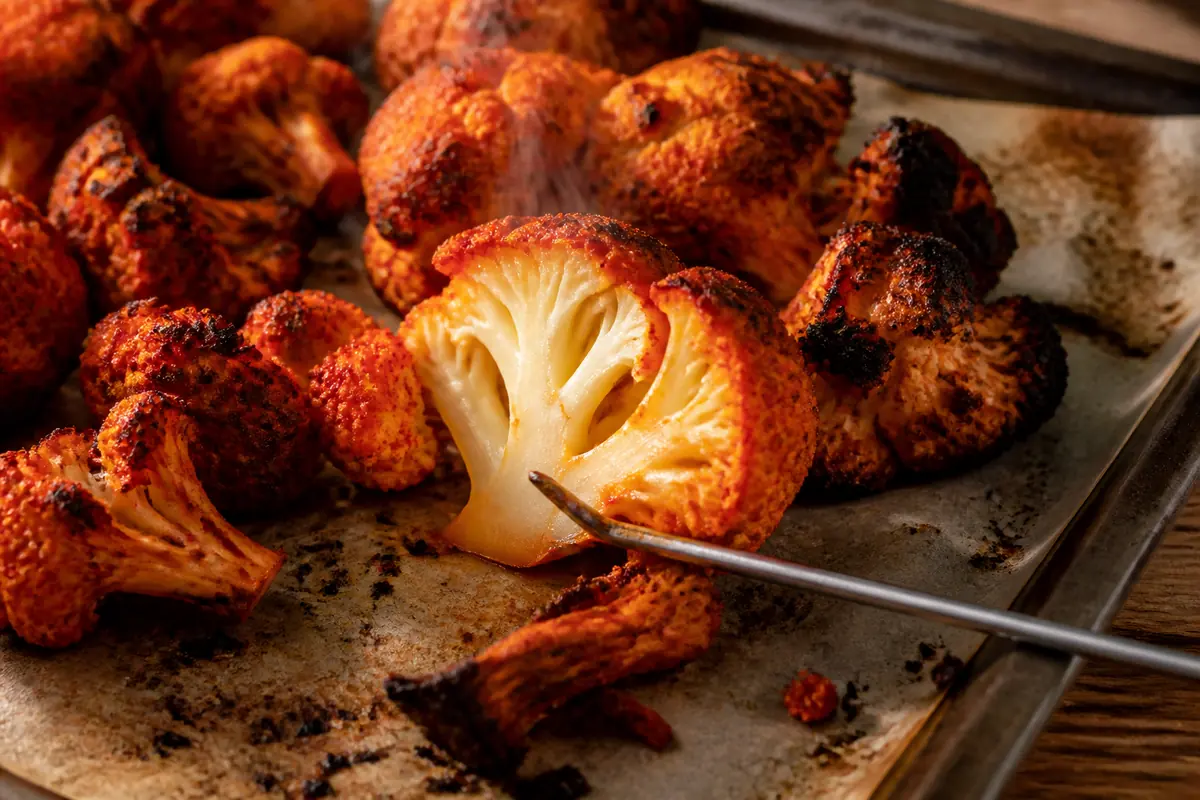
- Char: Localized on tips and cut faces.
- Center: Tender ivory stem, not raw and chalky.
- Coating: Dry and attached, not wet yogurt.
Broil for one or two minutes only when more color is needed. Stay at the oven because spice-coated tips can move from dark brown to black while the tray is still under the element.
A black exterior with a hard stem means the broiler arrived too early. A soft pale floret usually means crowding, a cold pan, or a marinade thinned by surface water.
Serve the char where it can stay dry
Move the florets to a platter instead of covering the hot tray.
Trapped steam softens the coating within minutes, so add lemon and any cool sauce at the table rather than pouring them across every piece in advance.
Serve as a side with rice and dal, tuck smaller florets into warm naan, or build a wrap with onion and a thick yogurt sauce. Those uses change the plate, but the roast endpoint stays the same.
Cool leftovers and refrigerate them within two hours. Keep them for three to four days in a shallow sealed container.
Leftovers lose some crust in the refrigerator. Reheat them uncovered at 425°F or 220°C until the edges feel dry and the centers are hot.
A microwave warms the stem but softens the entire coating. Use it only when speed matters more than restoring the char.