
Which Kashmiri Chili Powder Substitute Keeps the Color Mild?
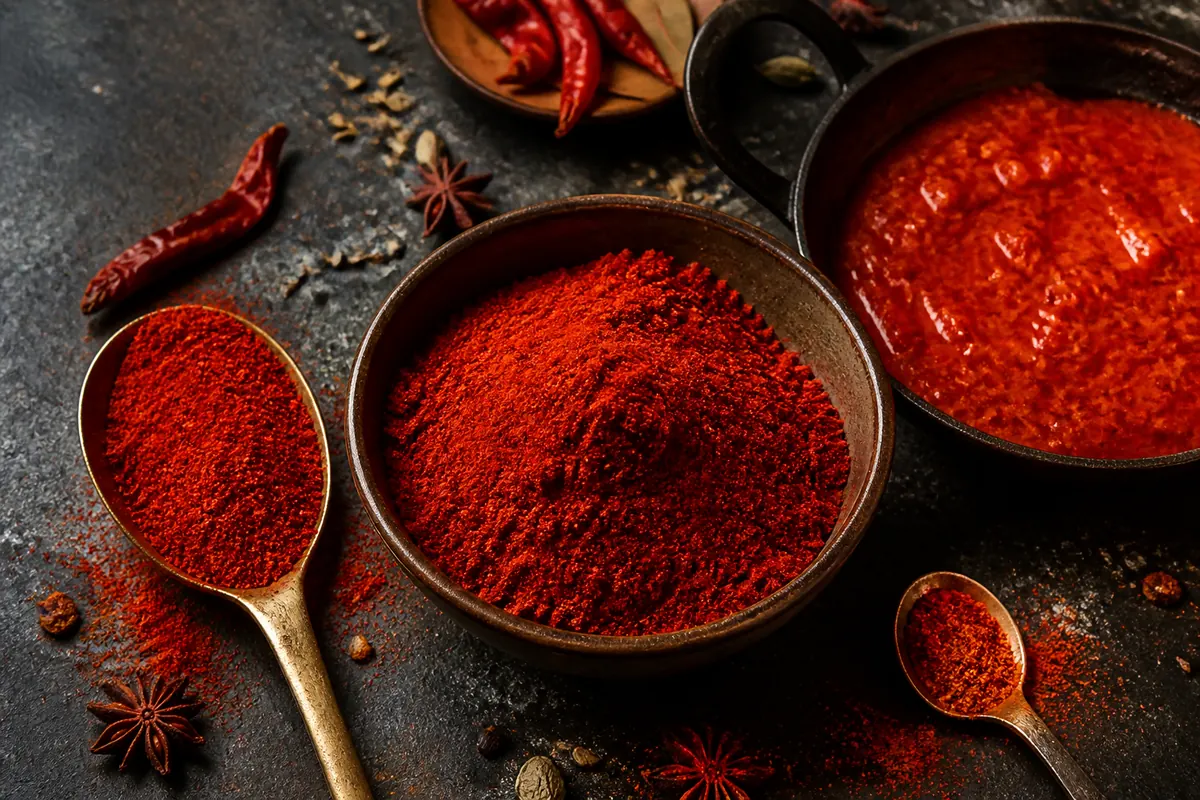
Kashmiri Chili Powder Does Two Jobs at Once
The closest Kashmiri chili powder substitute is 3/4 teaspoon sweet paprika mixed with 1/8 teaspoon cayenne for each teaspoon the recipe requests. Paprika supplies most of the red color, while the small cayenne measure restores gentle warmth without turning the dish sharply hot.
Start below a full teaspoon because the cayenne in your jar may be much hotter than the missing powder.
Kashmiri chili powder is valued for deep red color and restrained heat in curries, marinades, braises, and grilled food. A useful replacement must protect both qualities instead of matching only the fact that the ingredient is a red chile powder.
- Red color
- Kashmiri chili can color a sauce or yogurt marinade strongly without requiring a large hot-chile dose.
- Gentle warmth
- The heat should support ginger, garlic, and other spices rather than dominate them.
- Fruity chile flavor
- A mild dried-chile note belongs behind the color and warmth.
- No added smoke
- Smoke is a deliberate variation, not a neutral part of the original powder.
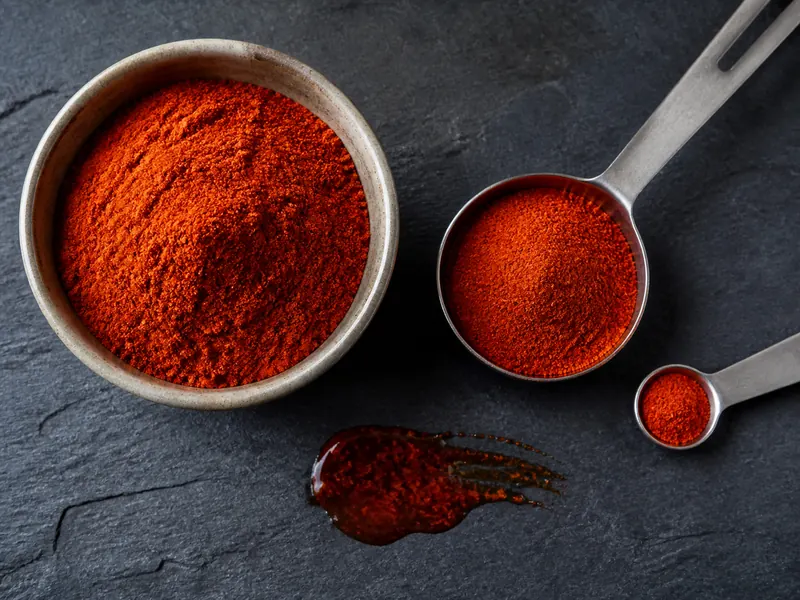
- Deep red bowl: The target combines strong color with moderate heat.
- Large spoon: Paprika supplies most of the color in the reconstruction.
- Tiny spoon: Cayenne needs separate, cautious dosing.
Red color does not reveal heat level. Two powders can look equally bright in the jar and behave very differently once capsaicin reaches the tongue.
The product label matters as much as the color. A jar labeled Kashmiri mirch may be mild, while a generic red chili powder can be considerably hotter and an American chili powder blend may contain cumin, garlic, oregano, and salt.
Those added seasonings change the whole masala base.
Fat also changes what you see in the pan because chile pigments disperse through oil. A substitute that looks dusty on a spoon can turn the sauce red after a brief gentle bloom, so judge the cooked base before adding more powder.
Choose by the food in front of you. Paprika and cayenne suit dishes where control matters, ancho fits darker braises that welcome dried-fruit depth, and smoked paprika belongs only where smoke improves the result.
Three Substitutes with Different Color and Heat Tradeoffs
The starting amounts below replace one teaspoon Kashmiri chili powder. Treat them as small test batches because paprika, cayenne, ancho, and smoked paprika vary by brand, age, and grind.
Cook a spoonful of sauce or one coated piece before seasoning the full dish.
| Number | Substitute | Starting amount | Best use | Main change |
|---|---|---|---|---|
| 1 | Sweet paprika and cayenne | 3/4 tsp sweet paprika + 1/8 tsp cayenne | Curries, yogurt marinades, butter chicken, red sauces | Closest control of color and heat |
| 2 | Ancho chile powder | 3/4 tsp | Lamb, beans, tomato braises, grilled meat | Darker color and dried-fruit depth |
| 3 | Smoked paprika and cayenne | 3/4 tsp smoked paprika + small cayenne pinch | Roasted vegetables, potatoes, grilled chicken | Noticeable smoke |
1. Sweet Paprika and Cayenne
Mix 3/4 teaspoon sweet paprika with 1/8 teaspoon cayenne for each teaspoon Kashmiri chili powder. Use only a small pinch of cayenne when cooking for heat-sensitive diners, then increase it after a cooked taste.
This pair is the most controllable pantry answer.
Sweet paprika provides a broad red base with little heat, while cayenne handles heat in a separate measure. That division lets you deepen the color without making every adjustment hotter.
- Measure the colorPut three parts sweet paprika in a small bowl.
- Add heat cautiouslyMix in no more than one small part cayenne, or begin with a pinch.
- Test in the cooking mediumStir a small amount into warm oil, sauce, or yogurt rather than judging dry powder alone.
- Cook one sampleTaste a spoonful of sauce or one coated piece after heat has distributed.
- Correct one qualityAdd paprika for more red color or cayenne for more heat, but do not raise both automatically.
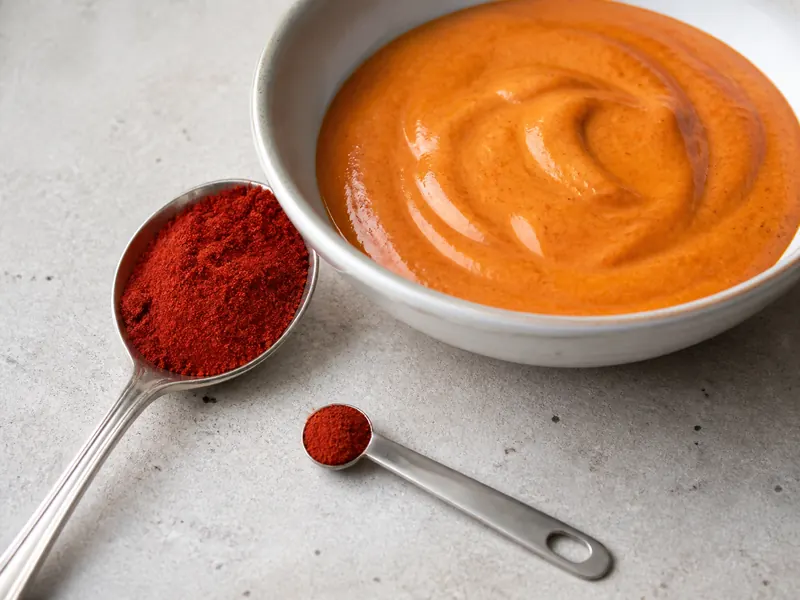
- Large red spoon: Sweet paprika carries most of the visual work.
- Small hot spoon: Cayenne restores warmth by the pinch.
- Pale yogurt: The light base makes color development easy to judge.
The blend suits tandoori-style yogurt marinades, butter chicken, rogan josh-style sauce, paneer, cauliflower, and any curry where a red-orange appearance matters. Oil, yogurt fat, or ghee distributes the pigment more evenly than water alone.
Do not substitute hot paprika without tasting it first.
Hot paprika can already contain enough heat for the dish, and adding the planned cayenne may overshoot. Smell and taste the jar, begin with 3/4 teaspoon, and reserve cayenne until the food has cooked.
If the sauce is red enough but too mild, add cayenne by the smallest pinch you can control.
If the heat is right but the sauce remains pale, bloom another 1/4 teaspoon sweet paprika in a little warm oil and stir that colored oil into the dish. Adding dry powder at the table leaves a dusty texture.
The mixture cannot reproduce every fruity note of Kashmiri chili. It succeeds because the cook can protect the two main jobs without importing smoke, cumin, or extra salt.
2. Ancho Chile Powder
Use 3/4 teaspoon ancho chile powder for one teaspoon Kashmiri chili powder.
Ancho is a dried poblano chile with a broad, mild-to-moderate warmth and a darker fruit character. Its flavor can suggest raisin, plum, or earth, which works in a braise but changes a bright cream sauce.
The color also leans brown-red rather than the clearer red-orange produced by a vivid Kashmiri powder.
Dark sauce and long cooking support ancho's fruit and earth.
The chile adds body without demanding a sharp heat level.
Tomato can carry the darker red color and mild sweetness.
Use paprika and cayenne when bright red-orange color is important.
Ancho may make the sauce look muddy and taste heavier.
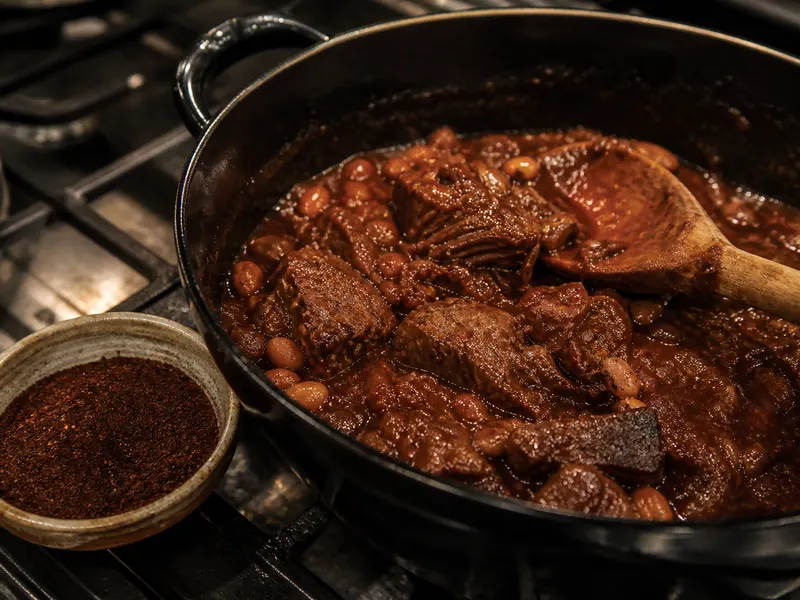
- Brown-red powder: Ancho colors the dish more darkly than paprika.
- Slow braise: Long cooking integrates its dried-fruit note.
- Wooden spoon: Stir the powder through fat before the liquid fully enters.
Ancho is the easiest one-powder replacement in lamb, beef, beans, tomato gravy, or grilled meat. Begin below the requested amount because some jars taste sweeter or hotter than others.
For a brighter result, combine 1/2 teaspoon ancho with 1/4 teaspoon sweet paprika.
That mixture keeps ancho's rounded chile flavor but moves the color away from brown. Add cayenne only after tasting because the dish may already have green chile, black pepper, or another source of heat.
Ancho powder is less suitable when the recipe depends on a clean, vivid red coating. Tandoori-style yogurt, a pale coconut sauce, or a cream-heavy curry shows its darker hue immediately.
Do not compensate with red food coloring when the real problem is the substitute choice.
A paprika-led blend gives more control when color is the central job, while ancho earns its place when the dish can accept a different dried-chile character.
3. Smoked Paprika with a Cayenne Pinch
Combine 3/4 teaspoon smoked paprika with a small cayenne pinch for each teaspoon Kashmiri chili powder. Reserve this choice for food where smoke makes sense, such as roasted cauliflower, potatoes, grilled chicken, or a dry rub.
Smoked paprika gives strong red color, but its smoke persists after the powder blooms and the dish simmers. A small amount can suggest live fire, while a full spoonful can redirect a delicate curry.
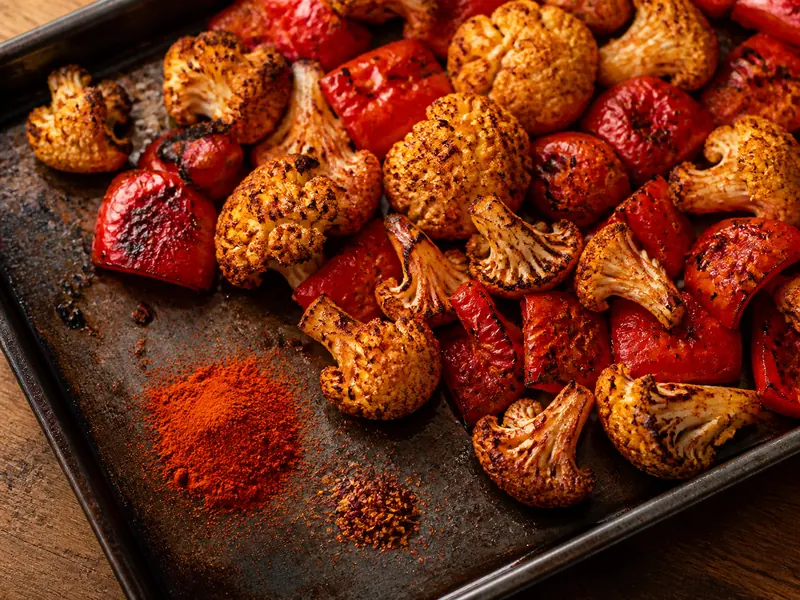
- Dark tray: High-heat roasting already creates browned flavors.
- Red coating: Smoked paprika supplies pigment across the vegetable surface.
- Tiny cayenne pinch: Extra heat remains a separate decision.
This option works well on foods that will brown at the edges.
Mix the powder with oil before coating the food so the red color spreads in a thin layer. Dry piles of paprika can scorch on exposed ridges and turn bitter before a dense vegetable cooks through.
Start with half sweet paprika and half smoked paprika when you want less smoke.
That blended base preserves the red color while lowering the chance that smoke becomes the first aroma. Add a cayenne pinch after the paprika ratio is settled.
Smoked paprika is a poor fit for rogan josh-style sauce when you want the chile color without barbecue character. It can also obscure saffron, cardamom, or delicate dairy aromas.
Use it as a deliberate variation and name the tradeoff before choosing it.
Bloom the Color Gently and Correct Heat Separately
Ground red chile needs fat and controlled heat to show its color evenly.
Warm oil or ghee disperses the pigment across the masala base, but a dry hot pan can scorch fine powder quickly. The useful cue is glossy red oil with a familiar chile aroma, not smoke or a brown crust.
Lower the heat before the powder enters.
- Prepare liquid firstKeep a spoonful of water, tomato, or other recipe liquid beside the stove.
- Lower the burnerMove the pan to gentle heat once the onions, ginger, or garlic are ready.
- Add the substituteStir the powder through the fat so no dry mound sits against the metal.
- Watch the oilLet the color spread, then add the prepared liquid before the aroma turns acrid.
- Judge after simmeringTaste once the powder has hydrated and heat has moved through the sauce.
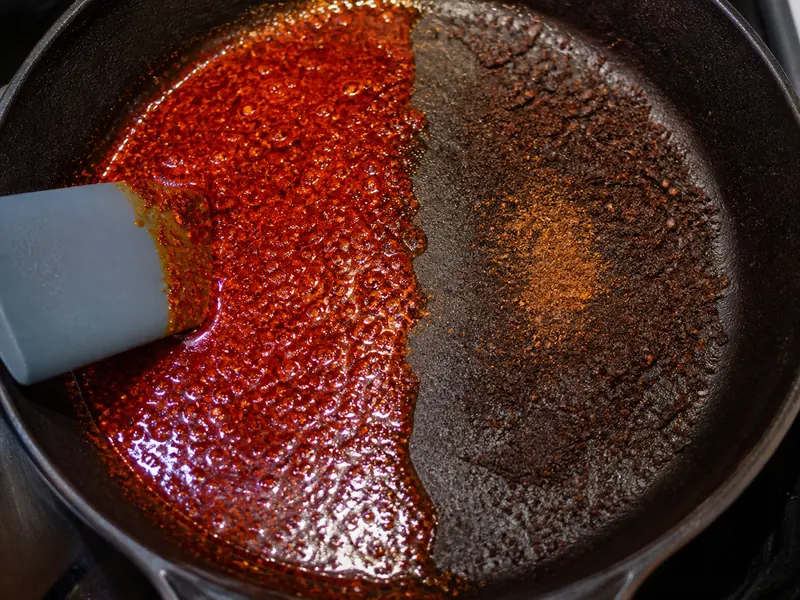
- Glossy red oil: Fat has dispersed the pigment through the base.
- Moving spatula: Constant stirring prevents a fine powder mound from burning.
- Brown patch: Scorched spice needs replacement rather than concealment.
If the powder darkens immediately, pull the pan from the burner and add the waiting liquid. A badly burnt patch cannot be repaired with sugar, acid, or another spoonful of spice.
Discard a fully scorched base and restart.
Correct pale color with more sweet paprika rather than more cayenne. Bloom the extra paprika separately in a teaspoon of oil when the main sauce is already wet, then stir it in and reassess after a minute.
Excess heat needs dilution, not more red powder.
Increase the unsalted sauce, yogurt, coconut milk, tomato, lentils, or other main ingredient that belongs in the recipe. Fat can spread chile warmth and dairy can soften the experience, but neither removes capsaicin from the pot.
A sauce that is both pale and hot needs paprika only after dilution.
Read the full recipe before rebuilding the missing teaspoon. If cayenne, fresh green chile, or another hot pepper already appears, begin with sweet paprika alone and let the existing ingredient supply the heat.
Treat paprika already listed in the recipe as part of the color replacement.
For example, a marinade that already contains one teaspoon paprika and then asks for one teaspoon Kashmiri chili powder may need only a cautious cayenne pinch, not another full paprika measure. This prevents a thick layer of dry powder from collecting in yogurt or oil.
A dry rub needs the same accounting because fine powders occupy the meat surface.
Mix the adjusted substitute with salt and oil before coating the whole batch, then cook one small piece. That sample reveals both heat and color more accurately than raw powder on your finger.
The cooking base changes the visual result as well. White yogurt shows red pigment immediately, tomato can hide it until the sauce reduces, and browned onion can push a bright powder toward brick red.
Do not chase a specific shade while the food is still concentrated or undercooked. Tomatoes, browned onions, dairy, and reduction all change the final color.
Read the Label Before Using Any Red Powder
The words chili powder do not identify one universal ingredient. In many American groceries, chili powder is a seasoning blend that can contain ground chile, cumin, garlic, oregano, and salt.
That jar will change an Indian curry beyond color and heat.
- Pure chile named on the label | Ancho, cayenne, or another named pepper is easier to calibrate.
- Sweet paprika | Use as the color base when the label does not mention smoke or heat.
- Smoked paprika | Reserve for food that can accept a persistent smoky aroma.
- Chili powder blend | Expect cumin, garlic, oregano, salt, or other seasonings and do not treat it as pure chile.
- Old faded powder | Replace it when the aroma is dusty and the red color has turned brown, since a larger dose adds bulk without restoring freshness.
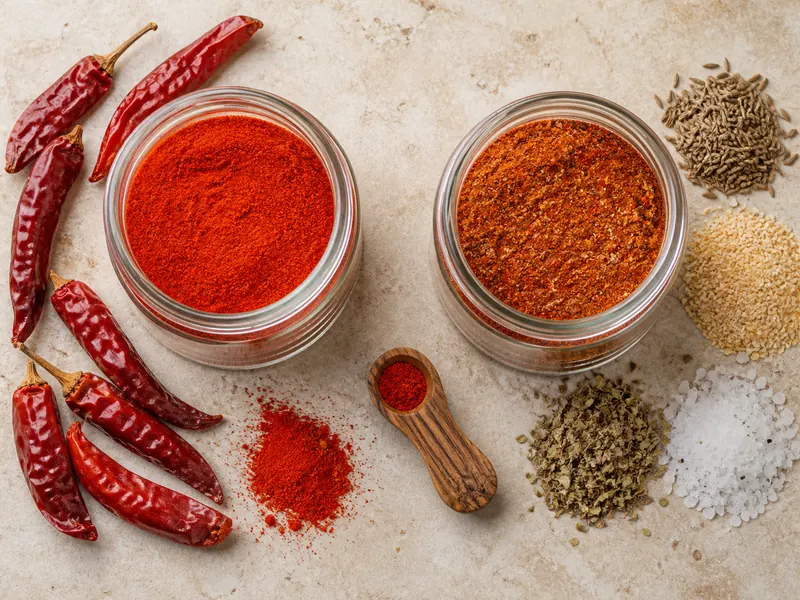
- Dried red chiles: A named pure powder begins with one pepper source.
- Uniform red jar: Consistent particles make color and heat easier to calibrate.
- Mixed jar: Cumin, garlic, oregano, and salt change more than chile warmth.
Check salt before adding a prepared blend to a marinade.
A salted chili powder can make the food oversalted before its color reaches the shade you expected. Keep the recipe's salt separate until a cooked sample shows what the blend contributed.
Ingredient order gives the fastest warning. A pure powder normally names one chile or says ground red pepper, while a seasoning blend lists several spices and may place salt near the beginning.
The word powder alone does not settle the question.
A jar sold as chili seasoning can bring cumin and oregano into a cream sauce, and a package sold as red chilli powder in another market may contain a single much hotter pepper. Test unfamiliar products at one-quarter of the requested amount before assuming the regional labels match.
Color additives need attention too. A powder that lists added dye may color strongly without telling you how much chile flavor or heat the spoon contributes, so the cooked taste must lead the next adjustment.
Freshness changes the decision too. A recently opened sweet paprika often colors food more effectively than an old specialty powder that has sat beside heat and light.
Store red powders tightly closed in a cool, dark cupboard.
Buy an amount you can use while the powder still smells distinctly of chile rather than cardboard. Freezing a large bag in several airtight portions can reduce repeated exposure to warm, humid kitchen air.
Omission is cleaner when the recipe asks for only a small color accent and every available powder is very hot, smoky, stale, or heavily seasoned.
The curry may look paler, but it can keep the intended balance of ginger, garlic, whole spices, dairy, or tomato. A mismatched spoonful can change both aroma and seasoning more than the missing color would have mattered.
When you do substitute, decide which quality needs correction before adding anything. Use paprika for color, cayenne for heat, ancho for a darker fruity direction, and smoked paprika only when smoke genuinely suits the dish.