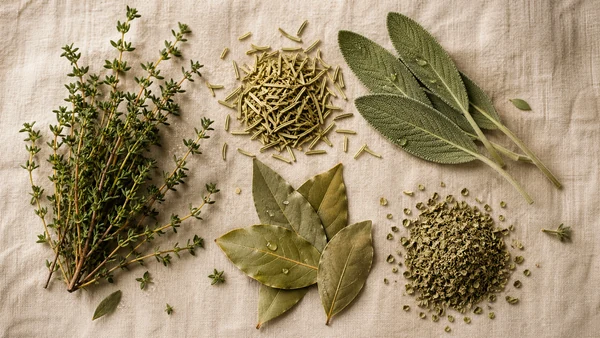
Fresh or Dried Herbs: What Actually Changes?
Use the 3-to-1 conversion as a start, then decide by herb type and dish timing.
Use about 1 teaspoon dried leafy herb for 1 tablespoon chopped fresh herb as a starting point. Fresh herbs work best raw, late, or when leaf texture matters, while dried herbs work best early in soups, stews, sauces, and rubs. Tender herbs lose more identity when dried than woody herbs, so basil and cilantro need different handling from oregano, rosemary, and thyme.
The fresh-to-dried herb rule
Fresh versus dried herbs starts with a simple ratio. Use 1 teaspoon dried herb for 1 tablespoon chopped fresh herb.
That ratio belongs inside the dish, not blind math. The recipe decides whether the swap works.
For recipe math, fresh and dried herb conversion is a starting point. Taste before doubling down.
If the herb is the main ingredient, a ratio cannot replace the fresh leaf experience.
Why drying changes herbs
Drying removes water and concentrates some flavors, but it also loses fragile fresh aromas. That tradeoff is the whole article.
In tomato sauce, dried oregano can survive heat while fresh basil loses its top note.
Water drops: Dried herbs need less volume because fresh leaves hold a lot of water.
Texture disappears: Dried leaves cannot replace the bite of parsley, cilantro, mint, or basil garnish.
Aroma shifts: Some fresh green notes fade, while deeper herbal notes remain.
Timing changes: Dried herbs need time and moisture to rehydrate and spread.
A dried herb can taste stronger by spoon measure while still tasting less fresh.
Think of dried herbs as seasoning. Think of fresh herbs as seasoning plus texture, color, and finish.
Tender herbs usually need fresh handling
Tender herbs often lose their best character when dried. They matter most in raw or late-added food.
Dried basil cannot fully copy the sweet green aroma that fresh basil carries in pesto.
Dried flakes lose the bright citrusy leaf impact that cilantro brings to salsa.
When a recipe is mostly fresh herb, change the dish instead of pretending dried leaves are the same.
Woody herbs dry better
Woody herbs tolerate drying and cooking better because their sturdy leaves already handle heat. They often work well in braises.
In pizza sauce, dried oregano can beat fresh oregano because it hydrates into the dish.
Texture becomes the main issue because rosemary stays powerful after drying. Crush dried needles before using.
Dried woody herbs still go stale. If they smell like paper, the ratio no longer matters.
Weekly spice guides on fresh vs dried: conversion guide
Uses your email app to confirm subscription.
When to add fresh and dried herbs
Dried herbs usually enter earlier because they need moisture and time. Fresh herbs usually enter late because heat steals brightness.
For simmered dishes, spice timing also applies to herbs because sturdy, dried, wet, and finishing forms need different moments.
Both fresh sprigs and dried leaves can handle longer cooking, so thyme is forgiving in soups.
For the brightest result, combine forms: dried herb early for background, fresh herb late for lift.
Substitution mistakes to avoid
The biggest mistake is treating every green herb as the same swap. Herb families and dish jobs matter.
The swap has to name what the ingredient was doing, so substitution logic asks about freshness, bitterness, resin, citrus, cooling, or color.
Do not replace pesto with dried basil: The sauce needs fresh leaf texture and aroma.
Do not replace cilantro garnish with dried cilantro: Use parsley, lime, or another fresh herb instead.
Do not overuse dried rosemary: It can taste woody and sharp unless crushed fine.
Do not add dried herbs at the end: They can taste dusty if they never hydrate.
In fruit or yogurt, mint shows why fresh texture matters. Dried mint can season soup, but it cannot garnish fruit the same way.
If the swap changes the dish identity, name that choice honestly. A parsley sauce is not mint chutney.
Buying and storing both forms
Fresh herbs need water management; dried herbs need protection from air, light, heat, and steam. Both fail through neglect.
Herb buying should match your cooking rhythm. Buy fresh when you have a plan.
For dried herbs, airtight jars away from steam matter because moisture can make leaves clump and fade.
Open your browser print dialog or save this article as PDF
The best choice is the one the dish can use while the herb is still alive, fresh or dried.
Dish decisions by herb form
The right herb form depends on the dish structure. Sauce, salad, roast, soup, and garnish do not ask the same thing.
Fresh herbs lead when the leaf is visible. Dried herbs lead when the flavor must dissolve into liquid, fat, or slow heat.
If the dish is cold and quick, fresh usually wins. If the dish simmers, dried can become part of the base.
Mixed use is often strongest: dried early for depth, fresh late for the smell that reaches the table.
How to rescue a herb swap
A bad herb swap is usually fixable if you catch it before serving. You need balance, not more of the wrong form.
If dried herbs taste dusty, give them moisture, fat, and time. If fresh herbs taste too loud, dilute with the base food.
Too much dried oregano: Add tomato, beans, oil, or broth before adding sugar.
Flat dried basil: Finish with olive oil, fresh parsley, or a small fresh basil amount.
Sharp rosemary: Strain large pieces or add fat and starch to soften resin.
Missing cilantro: Use parsley plus lime for freshness instead of dried cilantro.
Weak dried thyme: Add a small fresh sprig near the end if available.
Do not keep adding dried herbs at the table. They need time to hydrate, and late dust rarely tastes intentional.
A successful swap should preserve the dish role, even when the herb identity changes.
A fast choice guide for common herbs
Most fresh-versus-dried decisions become simple once you group herbs by behavior. Tender herbs finish; sturdy herbs season.
This is a rule of thumb, not a law. The dish can override it when texture, color, or long cooking matters.
When the herb appears in the recipe title, prefer fresh unless the tradition clearly uses dried. Names create expectations.
When the herb disappears into a long-cooked base, dried is often more practical and sometimes better.
When the 3-to-1 ratio breaks
The 3-to-1 ratio breaks when the herb supplies texture, color, or raw aroma. Those jobs do not shrink neatly into a spoon.
It also breaks when dried herbs are old. A stale teaspoon may taste weaker than a fresh tablespoon, even though the math says otherwise.
Use ratios to begin the decision, not finish it. The tasting spoon has the final authority.
For a new recipe, add the swap in stages and wait a few minutes. Herbs can grow louder after salt, fat, or acid pulls them through.
Use less ground herb: Powdered dried herbs spread faster and can taste dusty.
Use more fresh mild herbs: Parsley and cilantro may need volume because they carry water and leaf texture.
Use timing as correction: Dried herbs need simmer time, while fresh herbs need protection from long heat.
Use dish context: A sauce can forgive a swap that a raw salad would expose immediately.
A good conversion should make the dish taste intentional. If the herb tastes like a compromise, pick another form.
About Our Editorial Process
Every article starts with authoritative culinary references: McGee, Raghavan, peer-reviewed food science.
Content written by culinary researchers with food science or professional kitchen experience.
Articles reviewed by trained culinary professionals for accuracy and practical relevance.
Content reviewed quarterly. Substitution ratios and health claims updated with new evidence.
What people ask about fresh vs dried: conversion guide
- Health Canada (2026). Best Uses for Fresh and Dried Herbs. Canada Food Guide
- Institute of Culinary Education (2026). Understanding Herbs: A Culinary Deep Dive. ICE
- Oehler, Nellie (2025). Drying Herbs. Oregon State University Extension
- University of Florida IFAS Extension (2020). Using and Preserving Herbs. UF IFAS Extension
- Ricardo Cuisine (2026). How to Replace Fresh Herbs with Dry. Ricardo
Culinary Researcher. David holds a degree in Food Science from UC Davis and spent six years working in professional kitchens across South and Southeast Asia. He specialize…
Related Guides
Disclaimer: This article is for educational purposes only and does not constitute medical or nutritional advice. Health claims are cited from published research but are not endorsements. Consult a healthcare professional before using spices for medicinal purposes.
Share your experience
Have a tip, correction, or personal experience with this spice? We'd love to hear from you.