
How Do Ayurvedic Spices Shape an Everyday Meal?
Build a small pantry, understand dosha language, bloom spices well, and keep health claims within the evidence.
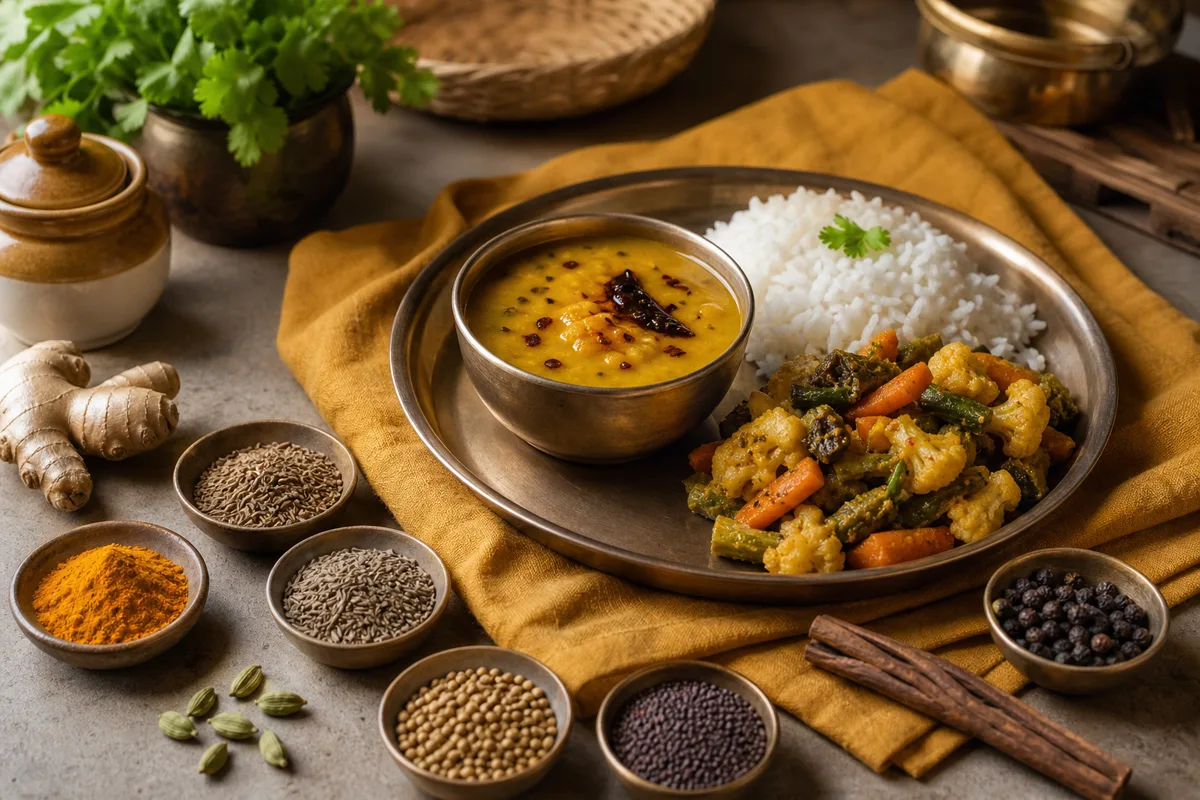
A beginner Ayurvedic spice pantry can include turmeric, cumin, coriander, fennel, ginger, cardamom, cinnamon, mustard seed, and black pepper. Ayurveda describes these foods through traditional qualities such as warming, cooling, dry, oily, light, and heavy. Use those terms as a cooking vocabulary, bloom spices carefully, and treat medical claims or concentrated products as separate decisions.
What are Ayurvedic spices?
Ayurvedic spices are kitchen ingredients used within Ayurveda, a traditional Indian medical system that describes foods through qualities and their expected effects on a person. Common examples include turmeric, cumin, coriander, fennel, ginger, cardamom, cinnamon, mustard seed, and black pepper.
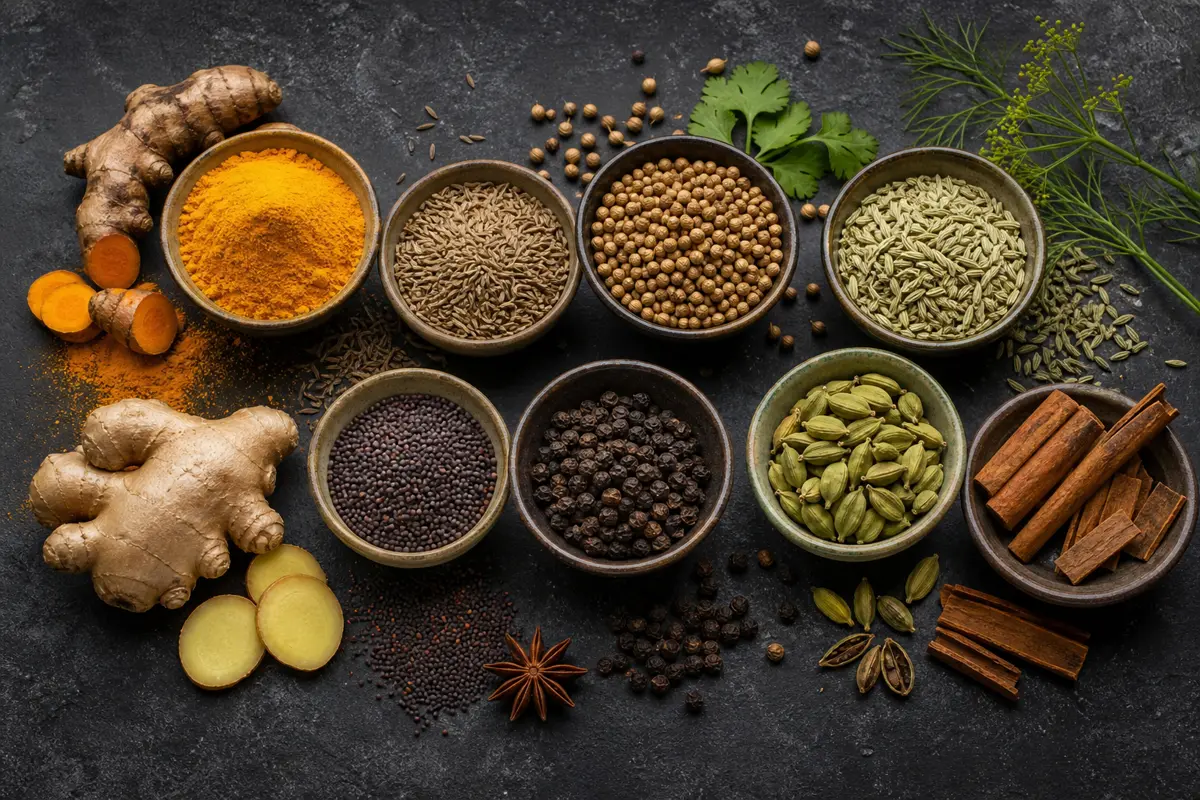
- Earthy: Turmeric and cumin
- Aromatic seeds: Coriander and fennel
- Pungent: Ginger, mustard, pepper
- Sweet aroma: Cardamom and cinnamon
Turmeric brings yellow color, earthiness, and a mild bitter edge. It often cooks with fat and other spices rather than acting as a strong solo seasoning.
Cumin seed adds toasted warmth, while coriander seed supplies a lighter citrus note. Fennel and cardamom can soften a blend with sweet, fresh aromas.
Fresh or dried ginger adds direct pungency. Mustard seed and black pepper create sharper heat, so their amount can change the character of a meal quickly.
Ayurvedic texts and teachers may classify the same ingredient differently depending on form, dose, season, preparation, and the rest of the meal.
A list without that context is a starting point, not a fixed rule.
Culinary use means seasoning ordinary food in ordinary amounts.
A capsule, extract, medicinal powder mixture, or metal-containing preparation belongs to a different safety discussion.
| Need in the dish | Useful spices | What they change |
|---|---|---|
| Earthy base | Turmeric, cumin | Color, toast, gentle bitterness |
| Fresh seed aroma | Coriander, fennel | Citrus and sweetness |
| Pungent warmth | Ginger, mustard, black pepper | Heat and appetite appeal |
| Sweet fragrance | Cardamom, cinnamon | High aroma in grains, milk, fruit, and tea |
What do vata, pitta, and kapha mean for cooking?
Vata, pitta, and kapha are the three doshas in Ayurveda. Traditional practice uses them to describe patterns in constitution, current condition, environment, and food rather than three modern nutritional categories.
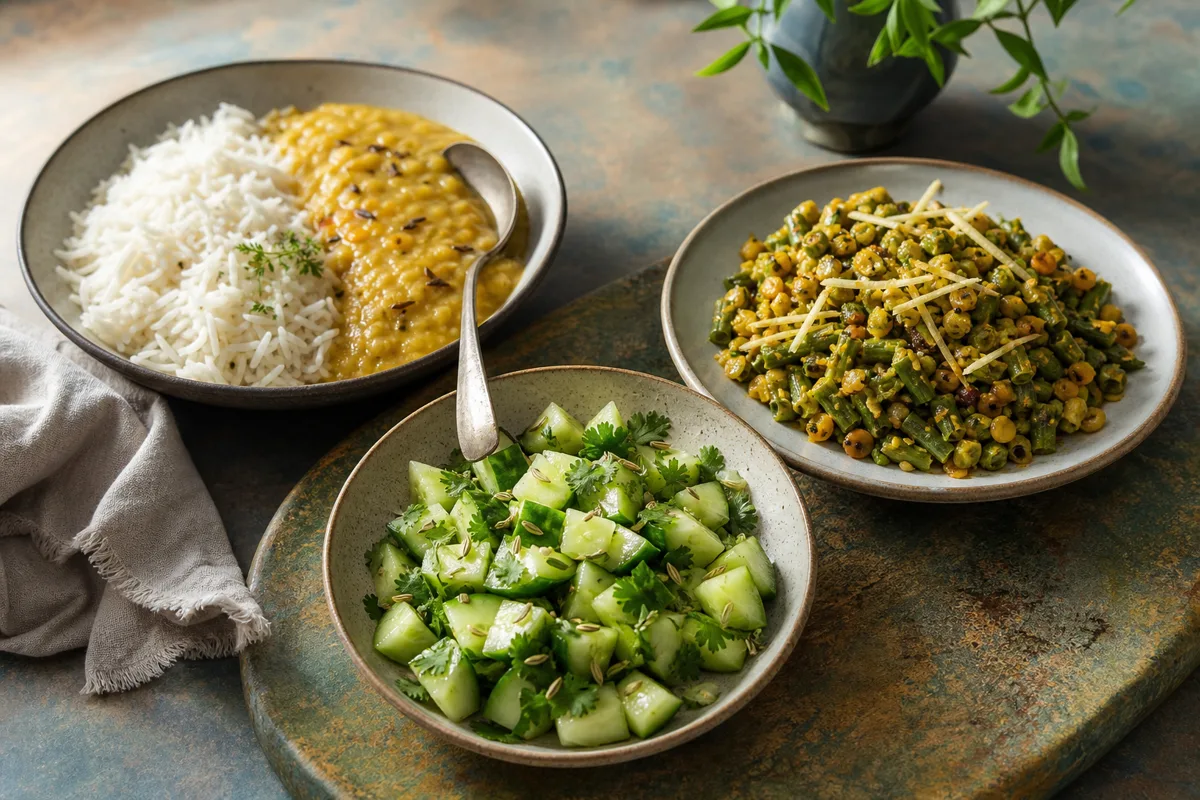
- Vata tendency: Warm, moist, gently aromatic
- Pitta tendency: Less chile, more cooling aroma
- Kapha tendency: Lighter, drier, more pungent
Traditional vata-balancing cooking often favors warm, moist, cooked food with gentle aromatic spice. A cook might use cumin, ginger, asafoetida, or cinnamon in soup, dal, or soft grains instead of serving a dry cold meal.
Traditional pitta-balancing cooking often limits intense chile, mustard, and very sour food. Coriander, fennel, cardamom, mint, or a smaller spice dose may keep the meal aromatic without aggressive heat.
Traditional kapha-balancing cooking often favors lighter food and more pungent or bitter accents. Ginger, black pepper, mustard seed, or turmeric may appear in a dry vegetable dish or lighter lentil preparation.
These tendencies do not tell you what you medically need.
A short online quiz cannot account for allergies, reflux, pregnancy, medication, nutritional needs, or a diagnosed condition.
Use dosha language to ask a practical cooking question. Does this meal need more warmth, moisture, lightness, freshness, or less pungency?
| Traditional tendency | Often emphasized | A practical meal change |
|---|---|---|
| Vata | Warm, moist, grounding | Add broth, cooked grains, and gentle toasted spice |
| Pitta | Cooling, less sharp | Reduce chile and mustard, add coriander or fennel |
| Kapha | Light, warming, stimulating | Use a leaner method and measured ginger or pepper |
Which Ayurvedic spices are warming or cooling?
Ayurvedic warming and cooling labels describe a traditional expected tendency, not the measured temperature of the food. Ginger, mustard, black pepper, cinnamon, and clove are commonly described as warming or heating.
Coriander, fennel, mint, and sometimes cardamom are commonly described as cooling or less heating.
Cumin is often warming but gentler than mustard or chile.
Fresh and dried forms may receive different emphasis. Fresh ginger tastes juicy and bright, while dried ginger is more concentrated and often treated as more strongly warming.
Dose changes the meal. One crushed peppercorn in a pot is not equivalent to a spoonful of pepper in a concentrated drink.
Cooking method also matters. Toasted cumin in oil smells rounder and deeper than raw ground cumin stirred into cold yogurt, even though the ingredient name stays the same.
The rest of the plate can move in another direction. A small warming spice in a moist coconut stew creates a different experience from the same amount in a dry roasted snack.
| Spice | Common traditional description | What a cook can observe |
|---|---|---|
| Ginger | Warming | Fresh pungency and citrus heat |
| Mustard seed | Heating | Sharp nutty aroma after popping |
| Black pepper | Warming | Dry penetrating heat |
| Coriander seed | Cooling or balanced | Citrusy gentle aroma |
| Fennel | Cooling | Sweet anise fragrance |
| Cardamom | Cooling or balanced | Sweet eucalyptus-like lift |
When sources disagree, choose by flavor, tolerance, and the meal in front of you.
Do not turn a traditional label into a claim that a spice will lower fever, treat inflammation, or correct a medical condition.
How do you cook with Ayurvedic spices?
Cook Ayurvedic spices by matching each form to the heat it can tolerate. Whole seeds usually enter warm fat first, while fine ground spices need lower heat and a shorter bloom.
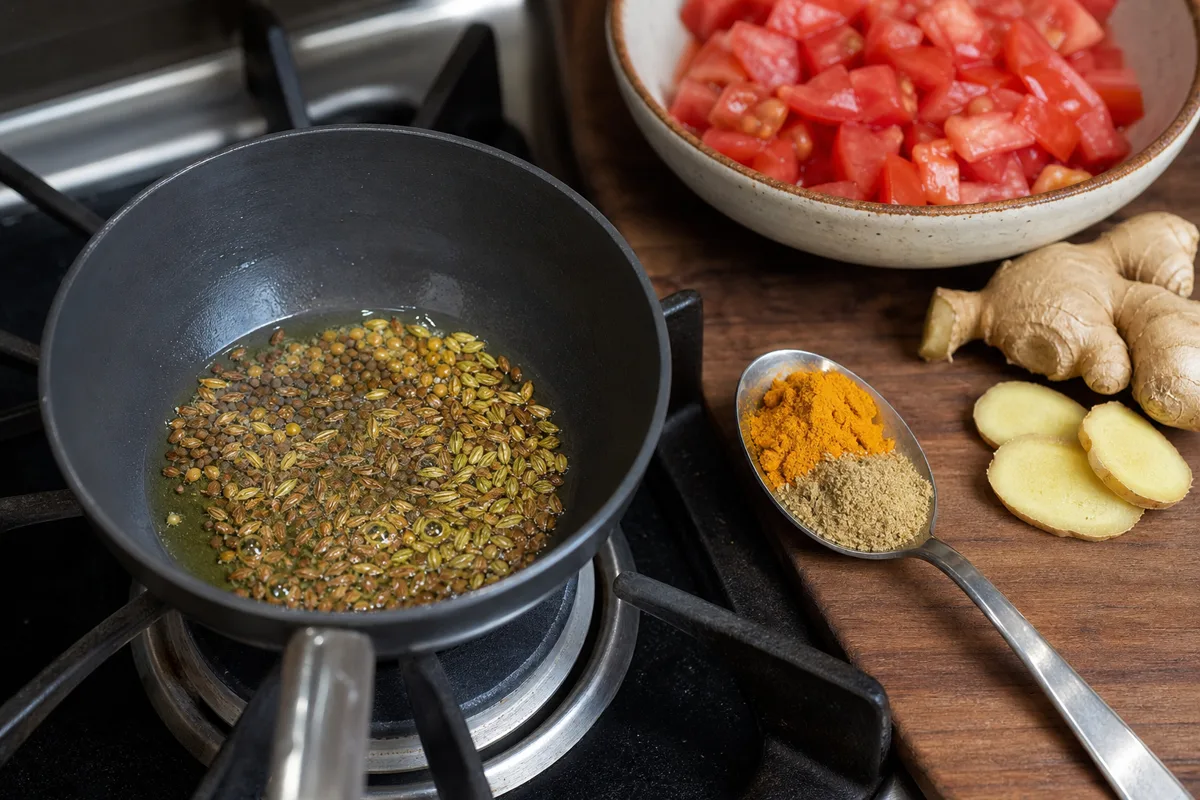
- First: Whole seeds
- Briefly: Ground spices
- Then: Liquid or moist food
- Late: Delicate aroma
Warm ghee or oil over medium heat, then add cumin, mustard, or fennel seed. Mustard seed may pop, and cumin should darken slightly and smell toasted without turning black.
Lower the heat before adding turmeric, ground coriander, or another powder. Stir for several seconds, then add onion, tomato, lentils, vegetables, or liquid before the powder scorches.
Fresh ginger can cook with the onion or enter after whole seeds.
Cardamom pods and cinnamon bark can infuse rice, milk, or stew, then be removed if their texture is unpleasant.
A late pinch of ground cardamom preserves high aroma in porridge, fruit, or milk.
Fresh herbs and citrus also belong late because long cooking flattens them.
- Heat the fat gently: It should shimmer without smoking.
- Bloom whole seeds: Stop when they smell nutty and active.
- Lower the heat for powders: Fine spices burn fast.
- Add moisture: Onion, tomato, vegetables, or liquid halt dry scorching.
- Taste after simmering: Salt, acid, and spice intensity change as food cooks.
Blackened powder tastes bitter and cannot be repaired with more seasoning.
Start the spice bloom again in a clean pan if the aroma turns acrid.
This sequence is a focused form of layering spices. It places toasted base notes early and fragile aromas near the end.
What is a simple Ayurvedic spice blend?
A simple beginner blend can use equal parts cumin seed, coriander seed, and fennel seed.
It is mild enough for lentils, rice, vegetables, and soup, but it is a culinary base rather than a universal remedy.
Toast the seeds separately in a dry pan over low to medium heat until fragrant. Coriander may need a little longer than slender cumin, while fennel can lose its sweet top note if it darkens heavily.
Cool the seeds fully before grinding.
Make a small batch and store it airtight away from heat, light, and steam.
Use about one teaspoon for a pot serving several people, then adjust after tasting. The right amount depends on the dish size, freshness of the seeds, and other seasonings.
| Dish needs | Add or change | Result |
|---|---|---|
| More earthiness | A small amount of turmeric | Yellow color and mild bitterness |
| More pungency | Fresh ginger or a few peppercorns | Sharper warming finish |
| More sweet aroma | Cardamom or cinnamon | Fragrant grain or milk dish |
| More nutty sharpness | Popped mustard seed | Distinct savory top note |
The fennel seed share can be reduced when its anise flavor dominates a savory meal.
Increase coriander instead of covering the blend with chile.
Whole-seed storage preserves aroma better than keeping a large jar of powder for months. Grind only what you expect to use within a few weeks.
Can you use Ayurvedic spices every day?
Ayurvedic spices can be used regularly as ordinary food seasonings when they suit the person and the dish.
Daily use does not require repeating the same blend at every meal.
Rotate the flavor structure. One meal can use cumin and coriander, another cardamom and cinnamon, and another mustard seed with turmeric.
Season matters because hot weather can make heavy chile and mustard less appealing, while a cool wet day may suit ginger and toasted cumin. Appetite and comfort give useful culinary feedback.
- Choose the spice for the food, not for a rigid daily quota.
- Keep pungency lower when reflux, mouth irritation, or stomach upset appears.
- Use moist cooking when a dry toasted meal feels harsh.
- Change one element at a time so you can taste what worked.
- Keep diagnosed allergies and medical restrictions above traditional food rules.
Ordinary culinary amounts are not the same as a daily concentrated drink, paste, or capsule. A teaspoon of several spices in one small serving can already be a strong dose for taste and tolerance.
Anyone who repeatedly develops pain, vomiting, rash, wheeze, or swelling should stop the suspected product and seek appropriate medical care.
A traditional category cannot explain those symptoms safely.
Use cardamom or another aromatic because it improves the meal, then judge the finished flavor. A health promise should not be needed to justify good seasoning.
Are Ayurvedic spice remedies supported by evidence?
Ayurvedic use establishes a long traditional record, but tradition alone cannot prove that a remedy treats a disease. Clinical evidence must test a specific product, dose, group of people, outcome, and comparison.
Some studies examine turmeric, ginger, or multi-herb Ayurvedic formulations.
Results for one standardized extract cannot automatically be applied to a pinch in food, a different formula, or every condition associated with that ingredient.
Small trials can suggest a question without settling it. Short duration, inconsistent formulas, weak comparison groups, and selective reporting all reduce certainty.
The National Center for Complementary and Integrative Health says evidence is limited for many Ayurvedic health uses. It also distinguishes preliminary findings from established treatment.
Ingredient pages can still explain what is known about a particular spice. The anti-inflammatory spice evidence review, for example, asks a narrower question than this traditional cooking guide.
For cooking, judge aroma, balance, texture, and tolerance.
For treatment, ask whether the exact intervention has reliable evidence and whether it is safe with current care.
Are Ayurvedic supplements safe?
Ayurvedic supplements are not automatically safe because their ingredients are traditional or plant-based. Concentration, added absorption enhancers, contamination, and interactions can change risk.
NCCIH warns that some Ayurvedic preparations contain lead, mercury, or arsenic at harmful levels. These metals may be intentional traditional ingredients or unwanted contamination.
A culinary jar of mustard seed is easy to recognize, while a proprietary tablet may combine many ingredients under unfamiliar names.
Read the entire Supplement Facts panel and other ingredients.
Highly bioavailable curcumin products can behave differently from turmeric in food, and liver injury has been reported with some formulations. Piperine from black pepper may change absorption rather than merely add flavor.
Herbal products can interact with prescription and over-the-counter medicines.
Pregnancy, breastfeeding, liver disease, surgery, anticoagulants, and medicines with a narrow safe range deserve professional review.
| Question | Ordinary food use | Supplement or medicinal product |
|---|---|---|
| Amount | Shared across a meal | Concentrated daily dose |
| Formula | Visible kitchen ingredients | Extracts or many combined ingredients |
| Main purpose | Flavor and food preparation | Health outcome claim |
| Safety review | Allergy and tolerance | Interactions, contamination, dose, condition |
- Show the exact product to a pharmacist or clinician.
- List every medicine and supplement already used.
- Check for independent quality testing, while recognizing that testing does not prove effectiveness.
- Avoid products with hidden proprietary amounts or claims to treat disease.
- Report adverse effects and stop the product when urgent symptoms occur.
The safer beginner approach is to learn the cuisine with recognizable spices in food. Any concentrated product should earn a separate evidence and interaction review.