
Which Moroccan Spices Belong in Each Kind of Dish?
Match cumin, coriander, ginger, cinnamon, saffron, and ras el hanout to the foods they serve best.
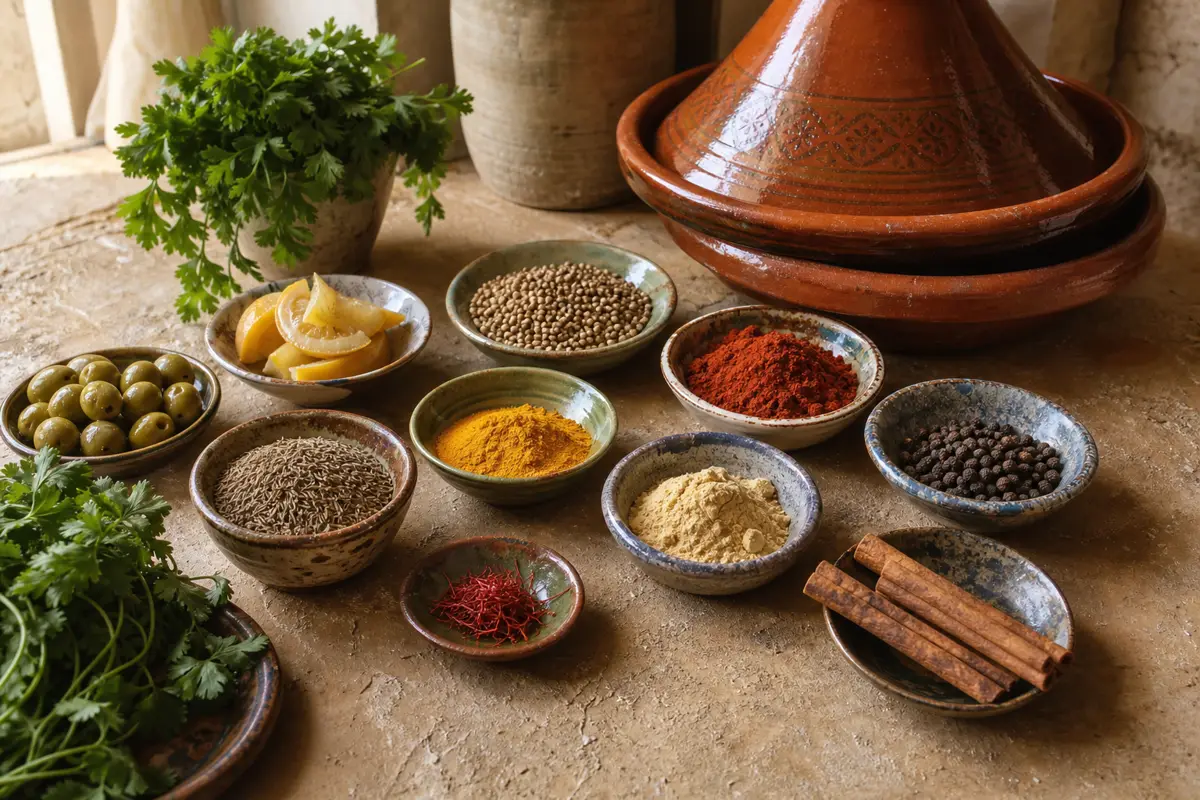
Start a Moroccan pantry with cumin, coriander, ginger, cinnamon, turmeric, paprika, black pepper, and a good ras el hanout. Add saffron when its floral aroma matters. Choose combinations by dish, bloom ground spices gently, and keep preserved lemon, olives, herbs, and dried fruit in the flavor picture.
What spices are essential in Moroccan cooking?
The most useful Moroccan spices are cumin, coriander seed, ground ginger, cinnamon, turmeric, paprika, black pepper, and ras el hanout. Saffron is a valuable accent, but a beginner does not need it for every meal.
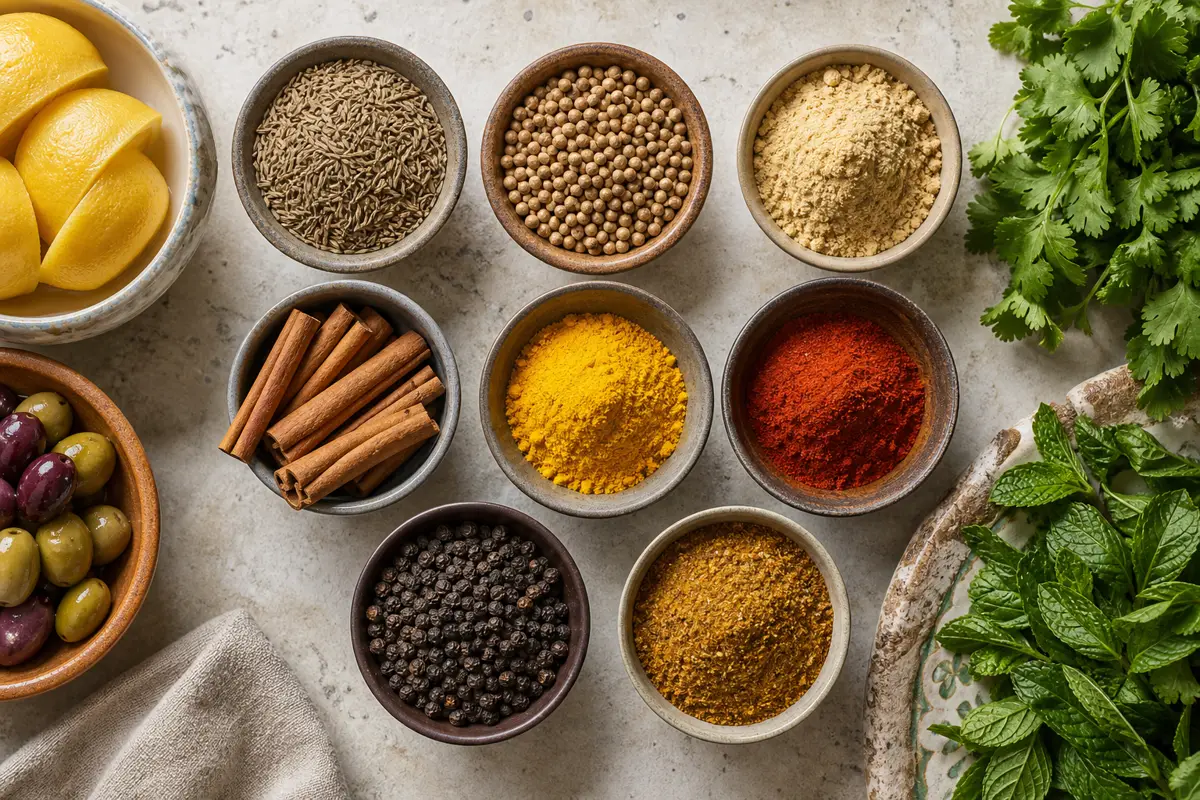
- Savory base: Cumin and coriander
- Warmth: Ginger and pepper
- Color: Paprika and turmeric
Cumin spice gives earthy, slightly bitter depth to grilled meat, lentils, soups, and salads. It is one of the few seasonings that may also appear at the table for a final adjustment.
Coriander seed is lighter and more citrusy. It rounds cumin without copying its dark flavor, especially in marinades and vegetable dishes.
Ground ginger and black pepper provide dry warmth. Cinnamon adds sweet wood aroma to meat, pastry, and dishes with dried fruit.
Paprika and turmeric build color with different flavors.
Paprika tastes sweet or peppery, while ground turmeric tastes earthy and can become bitter when overused.
Moroccan food also depends on ingredients that are not dry spices. Preserved lemon, olives, garlic, parsley, cilantro, mint, orange blossom water, and dried fruit can define a dish as strongly as any jar.
| Ingredient | Main effect | Good first uses |
|---|---|---|
| Cumin | Earthy and savory | Harira, lentils, grilled meat |
| Coriander seed | Citrusy and rounded | Marinades, vegetables |
| Ginger | Clean dry warmth | Chicken, lamb, couscous |
| Cinnamon | Sweet wood aroma | Lamb, prunes, pastilla |
| Paprika | Red color and pepper sweetness | Fish, chicken, vegetables |
| Turmeric | Golden color and earthiness | Chicken, vegetables, rice |
| Ras el hanout | Complex warm aroma | Selected tagines and grills |
How do the core Moroccan spices change a dish?
Each Moroccan spice changes a different part of the flavor, so adjust the jar that matches the missing quality. More of the whole mixture is rarely the best correction.
Cumin supplies a low earthy note and slight bitterness.
Use it when beans, lentils, beef, or lamb taste flat, then stop before the dish becomes dusty.
Coriander seed opens the aroma with a mild lemon-like quality. Toasting whole seed briefly makes it nuttier, while ground coriander blends more evenly into a sauce.
Ginger powder gives steady warmth without the juicy bite of fresh ginger. Black pepper adds a sharper finish that becomes clearer near the end of cooking.
Sweet paprika brings red color and soft pepper flavor.
Hot paprika or cayenne pepper should be measured separately so color does not force excessive heat.
Turmeric pushes a dish toward gold and earthiness. Cinnamon moves it toward fragrant sweetness even when the recipe contains no sugar.
| If the dish needs | Try first | Add carefully because |
|---|---|---|
| Earthy depth | Cumin | Too much tastes bitter |
| Citrusy lift | Coriander seed | Old powder can taste dull |
| Dry warmth | Ginger | It builds during simmering |
| Red color | Sweet paprika | Some jars contain hot chile |
| Golden color | Turmeric | It does not copy saffron |
| Sweet aroma | Cinnamon | Powder can dominate quickly |
Is ras el hanout used in every Moroccan dish?
Ras el hanout is not used in every Moroccan dish. It is a variable premium blend, while many everyday recipes rely on a shorter combination of individual spices.
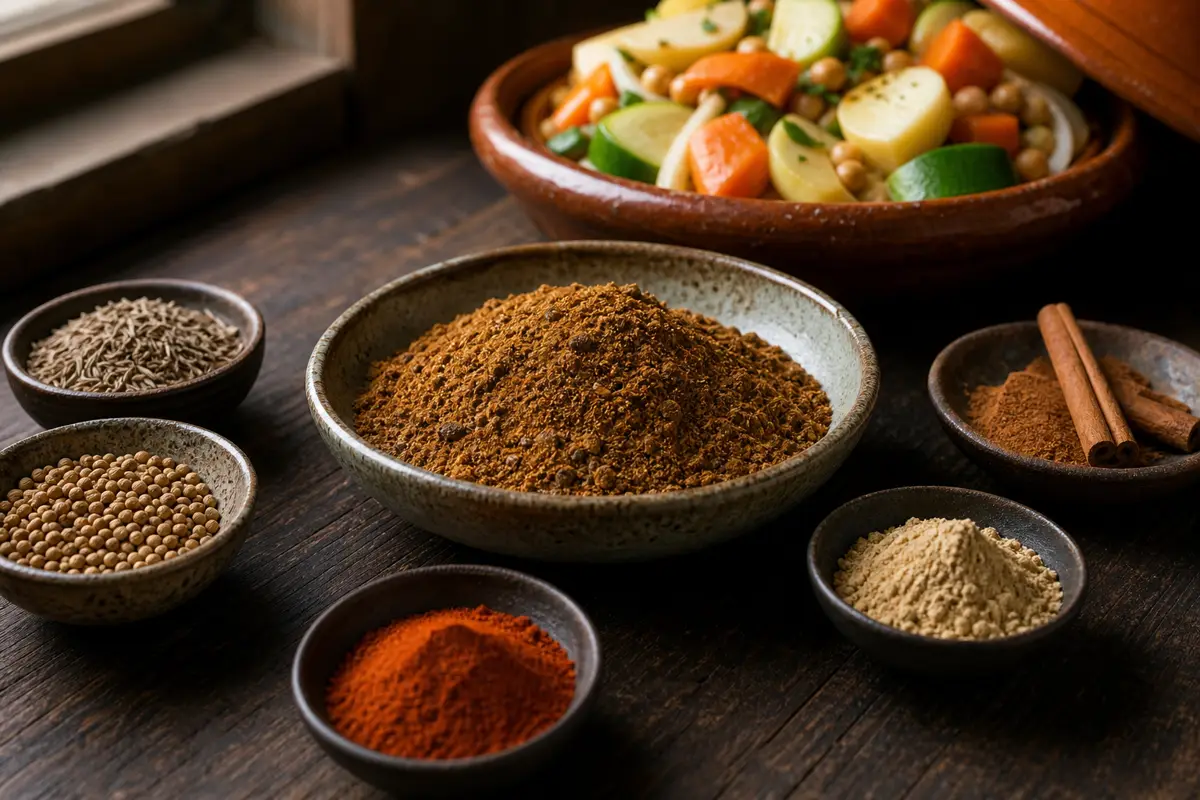
- Blend: Variable and complex
- Individual jars: Easy to control
- Best choice: Depends on the dish
The name refers to a shop's leading mixture, so formulas differ.
One may emphasize rose, cardamom, and mace, while another leans on cumin, coriander, turmeric, and pepper.
Use ras el hanout when a tagine, roasted vegetable dish, grilled meat, or couscous needs a broad warm aroma. Start modestly because high notes can overwhelm delicate food.
Choose individual spices when you want a clear cumin crust, a saffron-led chicken dish, or paprika-forward fish. The shorter list keeps one flavor legible.
Check the label before adding salt or chile.
Some commercial blends include both, while others contain only spices.
A fresh blend should smell vivid before it reaches the pan. A large old jar only adds brown powder, so buy an amount you can finish within several months.
What spices go into a Moroccan tagine?
Moroccan tagine spices change with the main ingredient. Ginger, pepper, turmeric, and saffron suit chicken, while cumin and cinnamon often support lamb and beef.
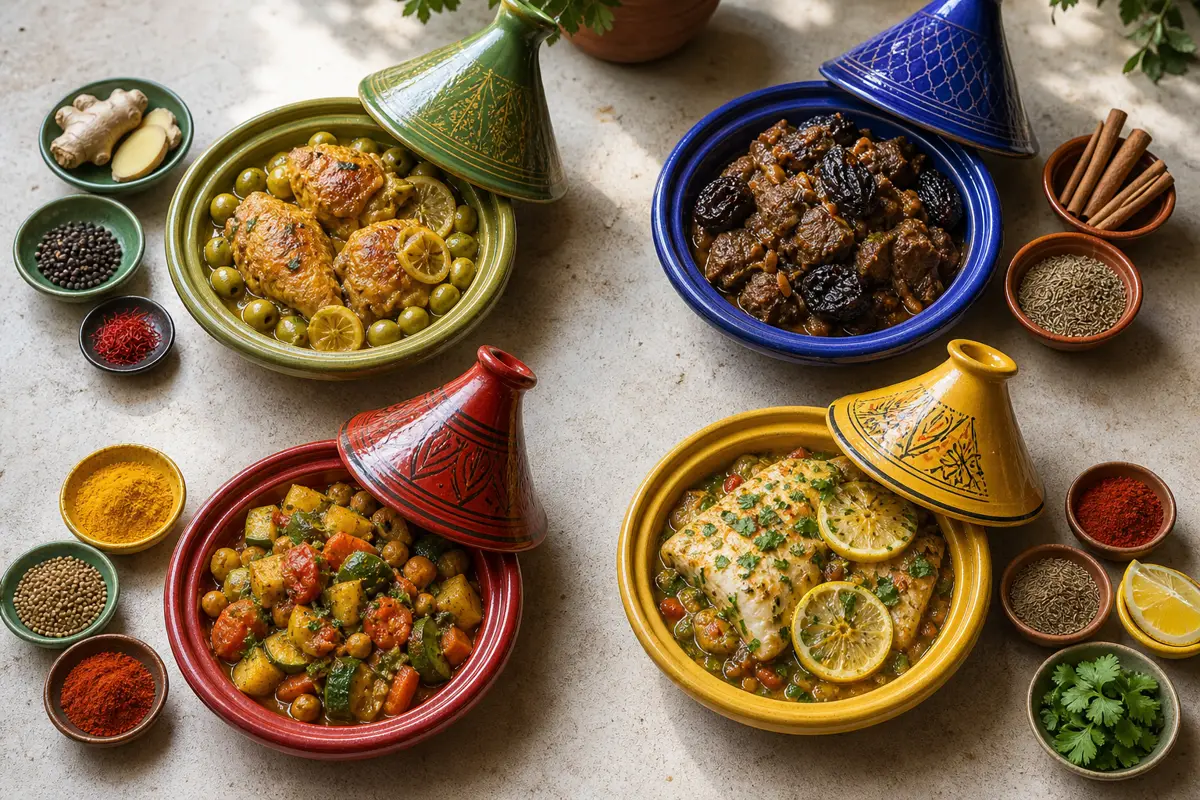
- Chicken: Ginger, pepper, saffron
- Lamb: Cumin and cinnamon
- Fish: Paprika and cumin
Chicken with preserved lemon and olives often uses ginger, black pepper, turmeric, and saffron.
Cinnamon is optional and should stay quieter than the lemon.
Lamb or beef with prunes can take ginger, cinnamon, pepper, and a restrained ras el hanout. Sesame and toasted almonds may finish the dish without entering the cooking liquid.
Vegetable tagines work well with cumin, coriander, ginger, turmeric, and paprika. Add less spice when the vegetables are young and naturally sweet.
Fish tagines often lean on paprika, cumin, garlic, cilantro, and lemon. A paste-like marinade can cling to fish better than dry powder, and spice pastes covers the moisture control that makes it work.
| Main ingredient | Useful combination | Supporting ingredients |
|---|---|---|
| Chicken | Ginger, pepper, turmeric, saffron | Preserved lemon, olives |
| Lamb or beef | Ginger, cinnamon, pepper, ras el hanout | Prunes, apricots, almonds |
| Vegetables | Cumin, coriander, turmeric, paprika | Tomato, chickpeas, herbs |
| Fish | Paprika, cumin, pepper | Garlic, cilantro, lemon |
Treat these as starting paths rather than fixed formulas.
The amount of liquid, sweetness, preserved lemon, and olives changes how strongly the spices read.
Does the tagine pot itself change how the spices behave?
The cone is not decoration. It condenses rising steam and returns it to the food, so very little escapes the pot.
That matters for spice, because aroma leaves with steam. In an open pan, volatile notes from cinnamon, coriander, and ras el hanout drift away across a long cook, while a sealed tagine keeps most of them circulating.
The practical effect is that you need less liquid and less spice than the same stew would take in a wide pot.
It also means the spices you added at the start are still doing work at the end.
Delicate finishes still belong late. Saffron water, fresh herbs, and preserved lemon go in near the end, because circulation preserves aroma but sustained heat still degrades the most fragile compounds.
Cook the same recipe in a Dutch oven and expect to add liquid, then correct the seasoning before serving.
Why does cinnamon work in savory Moroccan food?
Cinnamon works in savory Moroccan food because a small amount links browned meat, onions, and dried fruit with one warm aroma. Salt, pepper, and meat keep that aroma from reading as dessert.
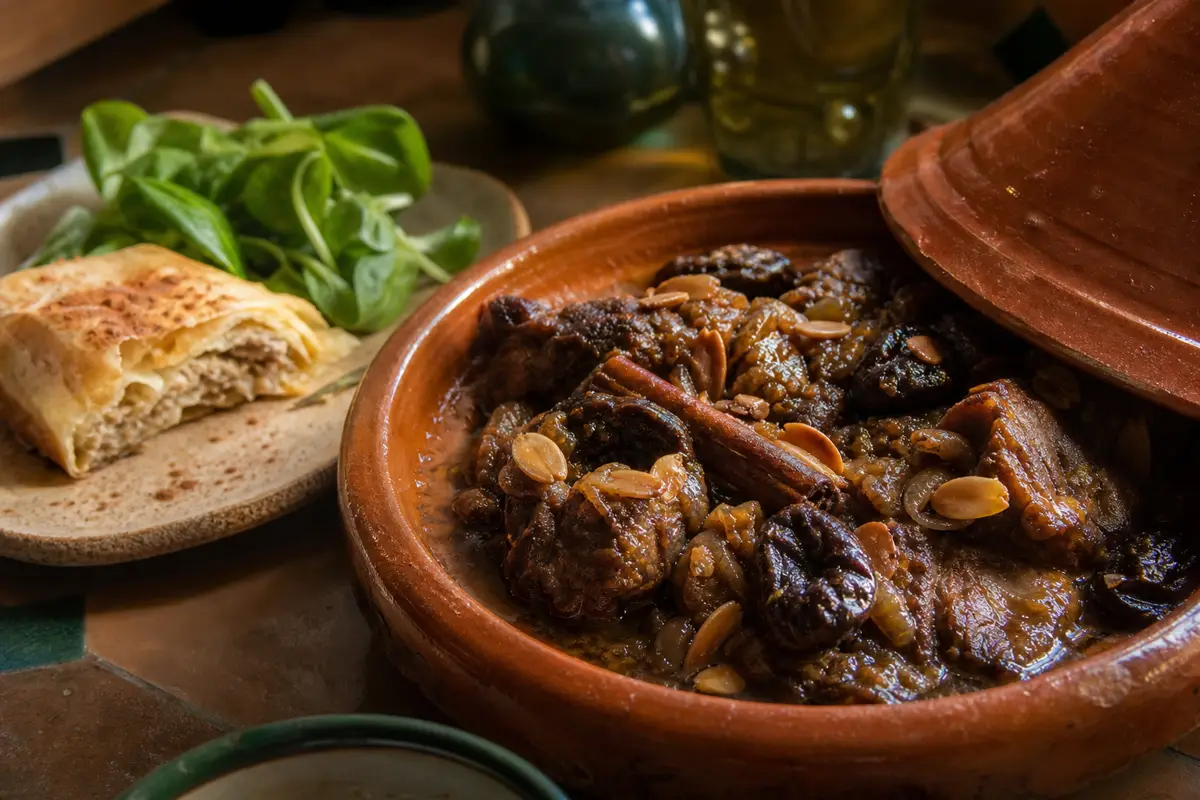
- Stick: Slow, removable infusion
- Powder: Fast and concentrated
- Partners: Lamb, onions, prunes
A cinnamon stick is forgiving in a long braise because it releases flavor gradually and can be removed. Ground cinnamon disperses immediately and needs a lighter hand.
With lamb and prunes, cinnamon connects the meat's browned flavor to the fruit.
Ginger and pepper prevent the sauce from becoming one-dimensional.
Pastilla uses cinnamon in a savory poultry filling and may also carry a sweet dusting on the pastry. The contrast is intentional, but the filling still needs salt and aromatic herbs.
Start with one small stick in a family-size tagine or a modest pinch of powder. Taste after simmering before adding more because cinnamon strengthens as liquid reduces.
Can turmeric replace saffron in Moroccan cooking?
Turmeric can replace some of saffron's yellow color, but it cannot replace saffron's floral, honeyed aroma.
Decide whether color or flavor matters most before making the swap.
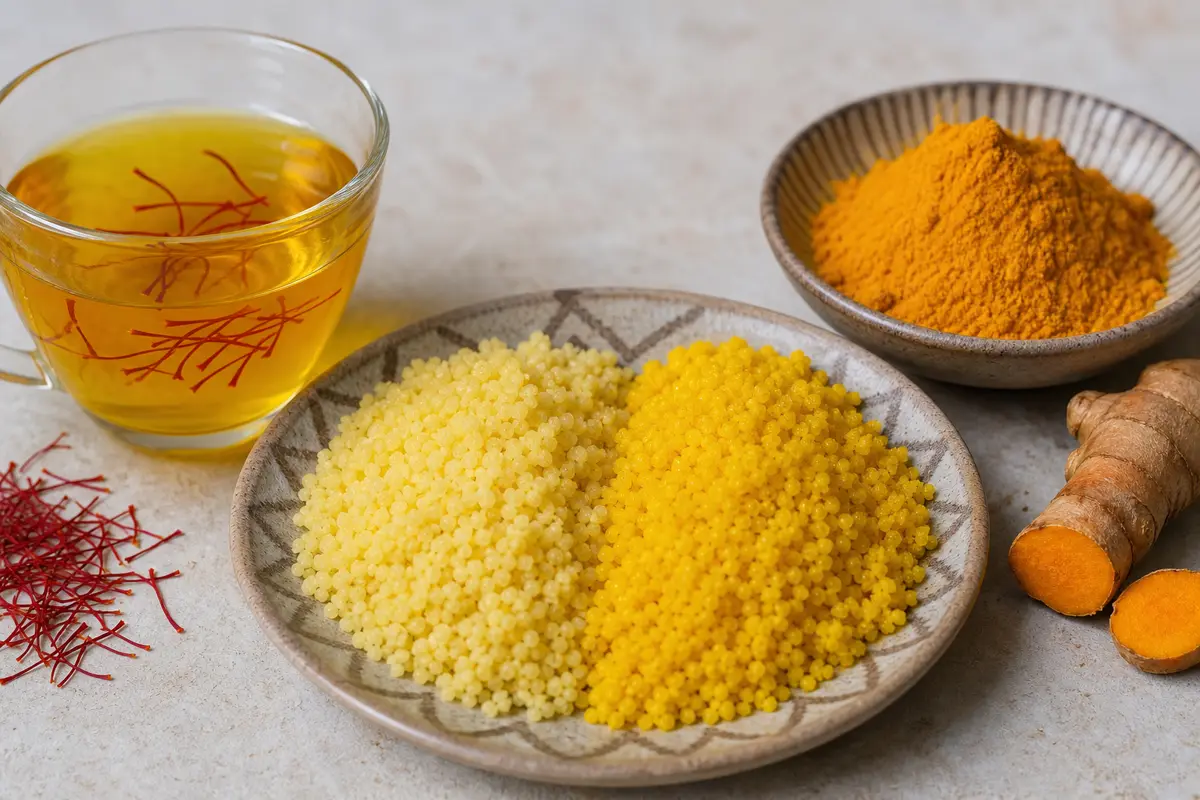
- Saffron: Floral aroma and gold color
- Turmeric: Earthy flavor and yellow color
- Swap: Visual, not equal flavor
Crush saffron threads lightly and steep them in warm water before adding the liquid. This spreads both color and aroma more evenly than dropping dry threads into one corner.
Ground turmeric can go into the onion and spice base. Start with a small pinch because too much adds bitterness and an opaque yellow color.
| Decision | Saffron | Turmeric |
|---|---|---|
| Aroma | Floral and honeyed | Earthy and root-like |
| Color | Clear gold | Strong yellow |
| Preparation | Steep threads | Bloom powder gently |
| Cost | High | Low |
| Best use | Special chicken, couscous | Everyday color and earthiness |
For a budget dish, use turmeric for color and accept the flavor change.
For a saffron-led recipe, use fewer real threads rather than claiming turmeric is identical.
Some cooks use both. Turmeric establishes the background color, while a small saffron infusion supplies the aroma that turmeric lacks.
When should Moroccan spices be added?
Add most ground Moroccan spices after onions begin to soften, then cook them gently in fat for about 30 seconds before adding liquid. This removes the raw powder taste without scorching paprika or turmeric.
Whole cumin or coriander seed can toast briefly before grinding.
Stop when the aroma rises, since dark seed quickly turns bitter.
Keep the heat moderate when ground spices enter oil. If the pan looks dry, add a spoonful of water rather than letting the powder blacken.
- At the onion stage: Add cumin, coriander, ginger, turmeric, paprika, and pepper for a cooked-in base.
- With the liquid: Add cinnamon sticks and other whole spices that need time to infuse.
- After steeping: Add saffron with its warm soaking liquid so it spreads evenly.
- Near the end: Adjust pepper, cumin, herbs, preserved lemon, and salt after reduction concentrates the sauce.
Long tagine cooking softens sharp edges but also mutes top aromas. A small final pinch can restore cumin or pepper without making the whole dish dusty.
Fresh cilantro and parsley usually taste livelier when some is cooked into the sauce and some is held for the end.
Mint is often better as a fresh drink or garnish note than as a long-simmered spice.
Taste after olives, preserved lemon, and dried fruit have contributed salt, acid, and sweetness. Correcting too early can leave the finished sauce harsh or oversalted.
What can substitute for Moroccan spices, and how should they be stored?
When a Moroccan spice is missing, replace its cooking effect with a short combination rather than reaching for generic curry powder. Cumin and coriander are the most useful base to rebuild first.
For a missing ras el hanout, combine cumin, coriander, ginger, cinnamon, black pepper, and a little turmeric or paprika.
This will not copy a particular blend, but it supplies an honest warm profile.
Garam masala may cover some cinnamon, cardamom, clove, cumin, and coriander notes. Add ginger and paprika separately, and use less because garam masala can be clove-heavy.
| Missing | Use | Limit |
|---|---|---|
| Ras el hanout | Cumin, coriander, ginger, cinnamon, pepper | Less complex |
| Saffron | Small turmeric pinch for color | No floral aroma |
| Paprika | Mild chile plus a little turmeric | Different color and heat |
| Coriander seed | Cumin plus lemon zest | Darker and sharper |
Buy whole cumin and coriander when you can grind small batches. Buy ground ginger, turmeric, and paprika in containers you will empty before their aroma fades.
Keep every jar airtight, dark, cool, and away from stove steam.
The full spice storage guide explains why heat, light, air, and moisture shorten useful life.
Replace spices that smell flat after crushing or need a much larger dose than before. Discard any jar with moisture, mold, insects, or an abnormal odor.