
Which Celery Seed Substitute Fits Your Recipe Best?
Choose a bitter, grassy, or seed-textured replacement that fits the dressing, brine, soup, or rub.
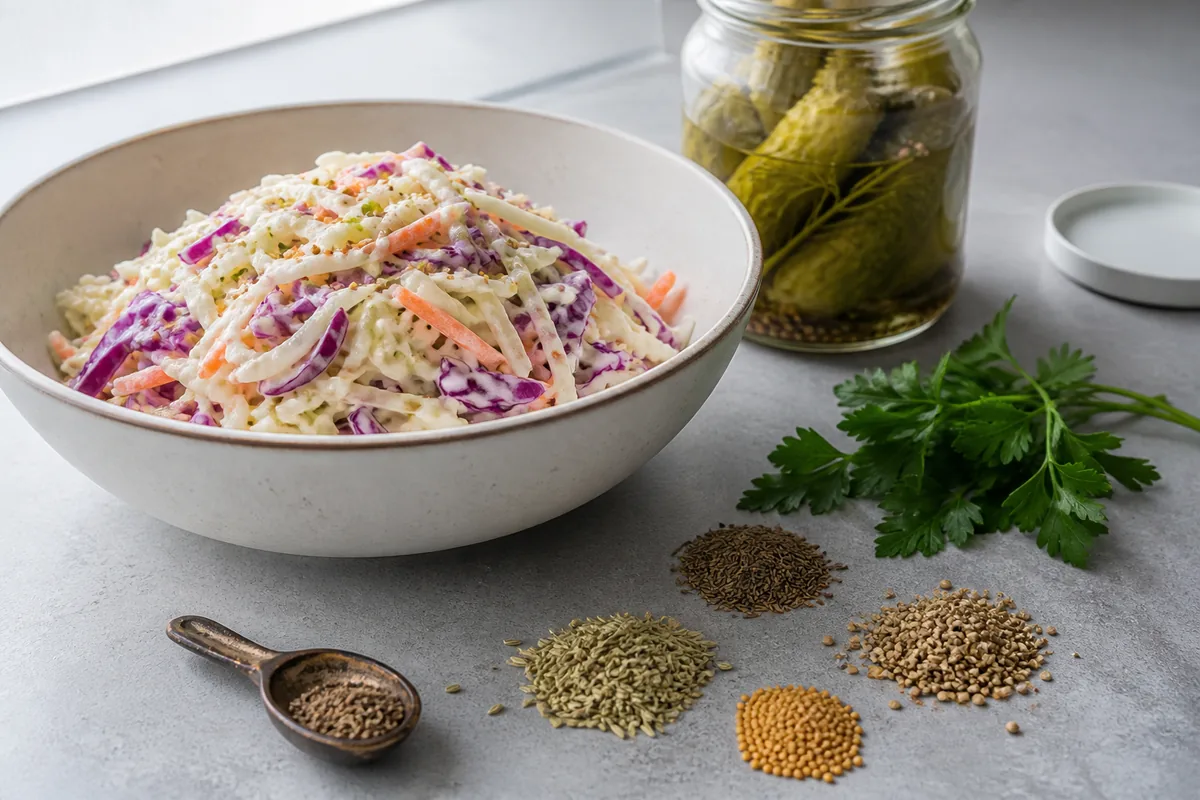
Dill seed is the best celery seed substitute for cold salads and brines, starting at three-quarter volume. Fennel, mustard, coriander, and parsley solve different cooked, pungent, citrus, or fresh-green jobs, so the recipe matters more than seed shape.
Five Celery Seed Substitutes for Dressings, Brines, and Heat
Celery seed brings a concentrated version of celery's grassy aroma, plus a dry bitterness that cuts mayonnaise and rich meat. McCormick notes that the tiny brown seeds come from smallage rather than the familiar supermarket stalk, which explains why a teaspoon tastes far stronger than a teaspoon of chopped celery.
Dill is the most useful first choice in coleslaw, potato salad, and pickling liquid because it keeps an herbal seed character without adding sweetness. Cooked food opens other paths: fennel seeds retain texture, mustard seed supplies pungency, coriander supplies warm citrus, and parsley gives a fresh green finish when seeds would feel wrong.
No option recreates celery seed in every setting. The table starts each replacement below full volume when its flavor is louder or moves in a different direction.
| Number | Substitute | Starting ratio for 1 tsp celery seed | Best use | Main change |
|---|---|---|---|---|
| 1 | Dill seed | 3/4 tsp | Slaw, potato salad, cucumber salad, brine | More pickle-like |
| 2 | Fennel seeds | 1/2 tsp | Soup, sausage, tomato sauce, vegetables | Sweeter and anise-like |
| 3 | Mustard seed | 1/2 tsp | Pickles, relish, cabbage, sharp dressing | More pungent, no celery aroma |
| 4 | Coriander seed | 1/2 tsp | Soup, stew, dry rub, roast vegetables | Warmer and citrus-led |
| 5 | Parsley | 1 tbsp chopped | Cold salads, soup finish, egg salad | Fresh leaf, no seed bitterness |
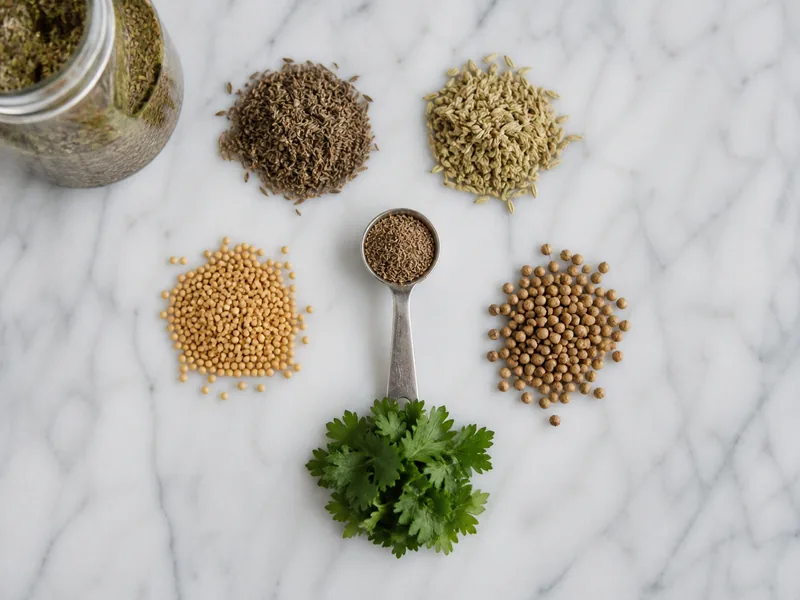
- Dill: Herbal and pickle-like.
- Fennel: Sweet, sturdy seed.
- Mustard: Pungency before aroma.
- Coriander: Warm citrus.
- Parsley: Fresh finish only.
1. Dill Seed
Use three-quarter teaspoon dill seed for each teaspoon celery seed in coleslaw dressing, potato salad, cucumber salad, or pickle brine.
Dill carries a dry herbal edge and remains visible, so it preserves more of the original experience than a soft leaf does.
The tradeoff is recognizable pickle aroma. That direction feels natural in cucumbers and brine, but it can take over a mild chicken salad if the dressing rests overnight.
Crush dill seed lightly for mayonnaise or vinaigrette, then wait ten minutes before deciding whether to add more. Leave it whole in a heated brine, where time and liquid extract it more gradually.
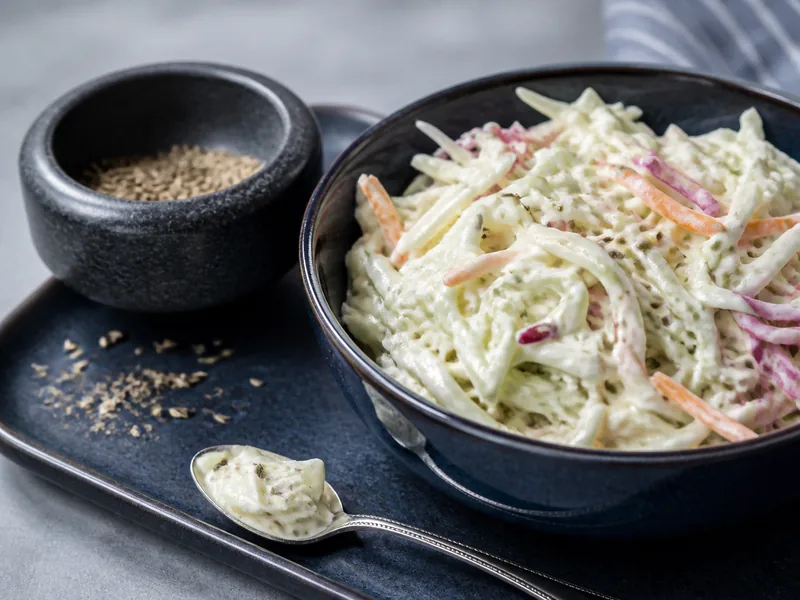
- Cracked seed: Faster release.
- Creamy base: Aroma carries during rest.
- Visible pieces: Seed texture remains.
2. Fennel Seeds
Fennel works when the recipe needs a seed that survives simmering or roasting. Start with half a teaspoon for one teaspoon celery seed in tomato sauce, sausage, soup, cabbage, or carrots.
Heat brings out fennel's sweetness and anise aroma, which can soften a bitter vegetable but pulls slaw away from its familiar celery profile.
That change is easier to accept in a long-cooked tomato base than in a cold spoonful of dressing.
Crush the larger seeds so they disperse, and add black pepper separately if the finished dish lacks the dry bite celery seed would have supplied. Do not increase fennel simply because the first taste is sweeter rather than sharper.
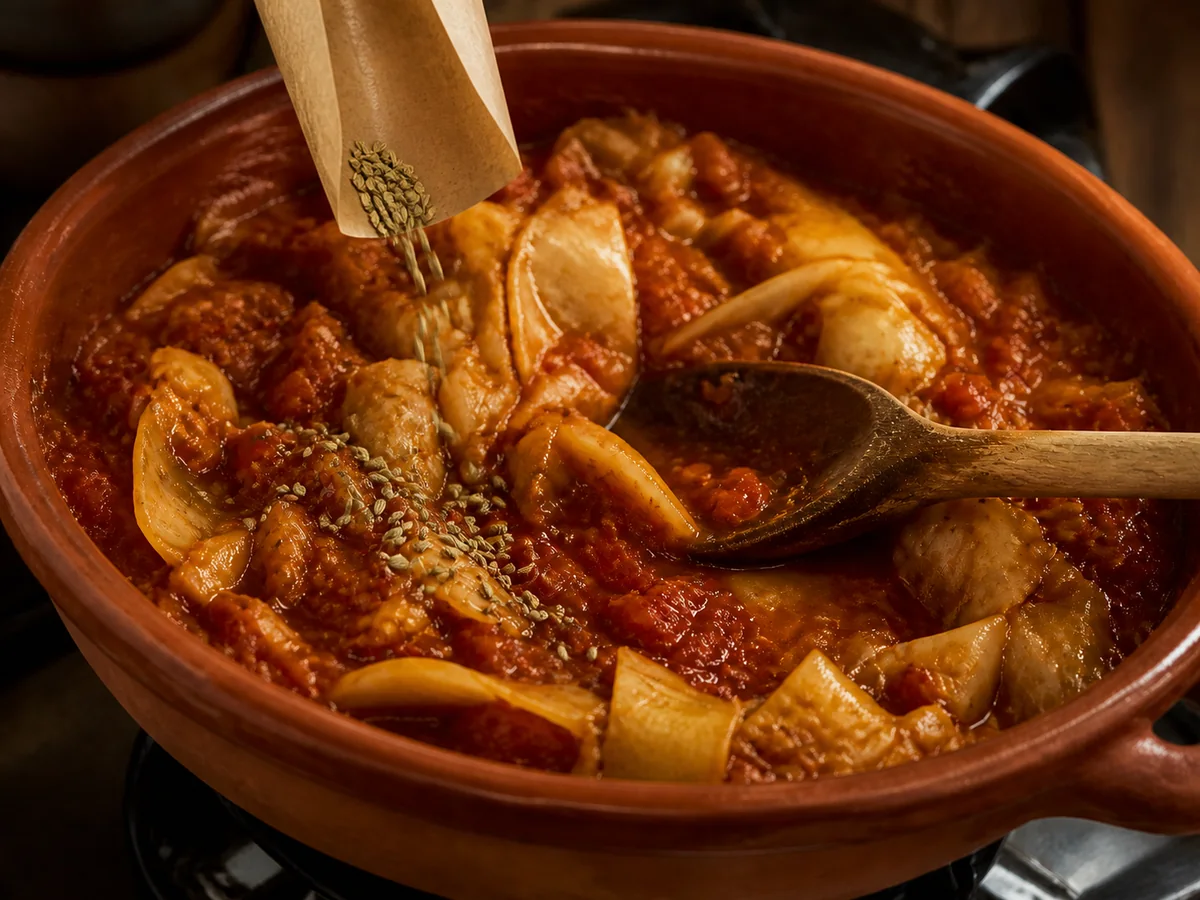
- Crushed seeds: Broken fennel releases faster and disperses more evenly.
- Tomato base: Acidity and long cooking can support fennel's sweeter direction.
- Braised cabbage: A sturdy vegetable benefits from the seed's warm aroma.
- Separate pepper: Restore dry bite without increasing the fennel dose.
3. Mustard Seed
Use half a teaspoon mustard seed per teaspoon celery seed when pungency and a visible seed matter more than celery aroma. Pickles, relish, cabbage, and mustard-forward vinaigrettes can absorb that shift without tasting accidental.
Mustard becomes a directional replacement rather than a flavor copy. It sharpens the food and contributes round seed texture, but it cannot create the grassy, slightly bitter note associated with celery.
Keep the seeds whole in brine or crack them for dressing.
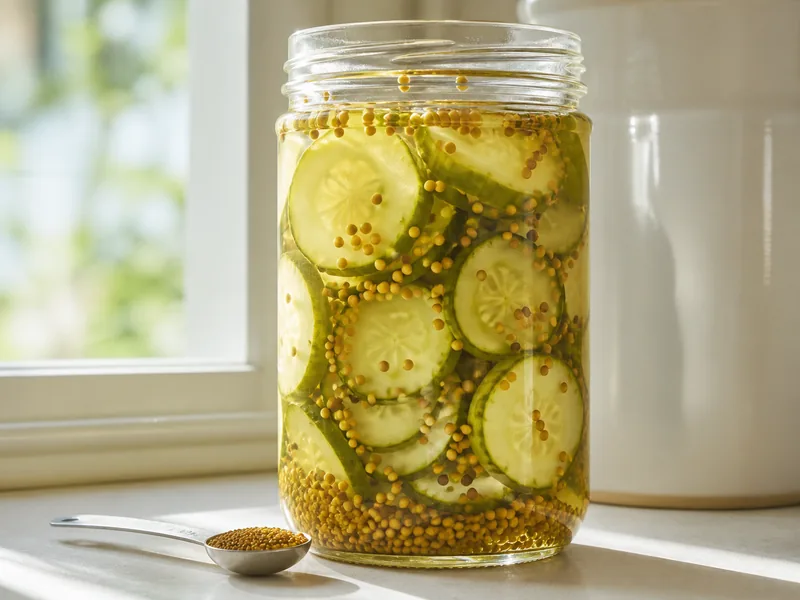
- Whole seed: Slow extraction.
- Round texture: Visible in brine.
- Flavor shift: Sharper and more pungent.
If the dish still needs a fresh green cue, add chopped parsley at the end instead of doubling the mustard.
4. Coriander Seed
Coriander belongs in soup, stew, dry rub, and roasted vegetables where a warm aromatic seed can stand in for celery's background complexity.
Begin at half volume because toasted coriander develops a sweeter lemon-like aroma rather than celery bitterness.
Crack the seeds before simmering, or grind them for an even rub. Whole coriander in a fast-cooked sauce stays hard and releases too slowly, while finely ground coriander can become dusty if it never meets fat or moisture.
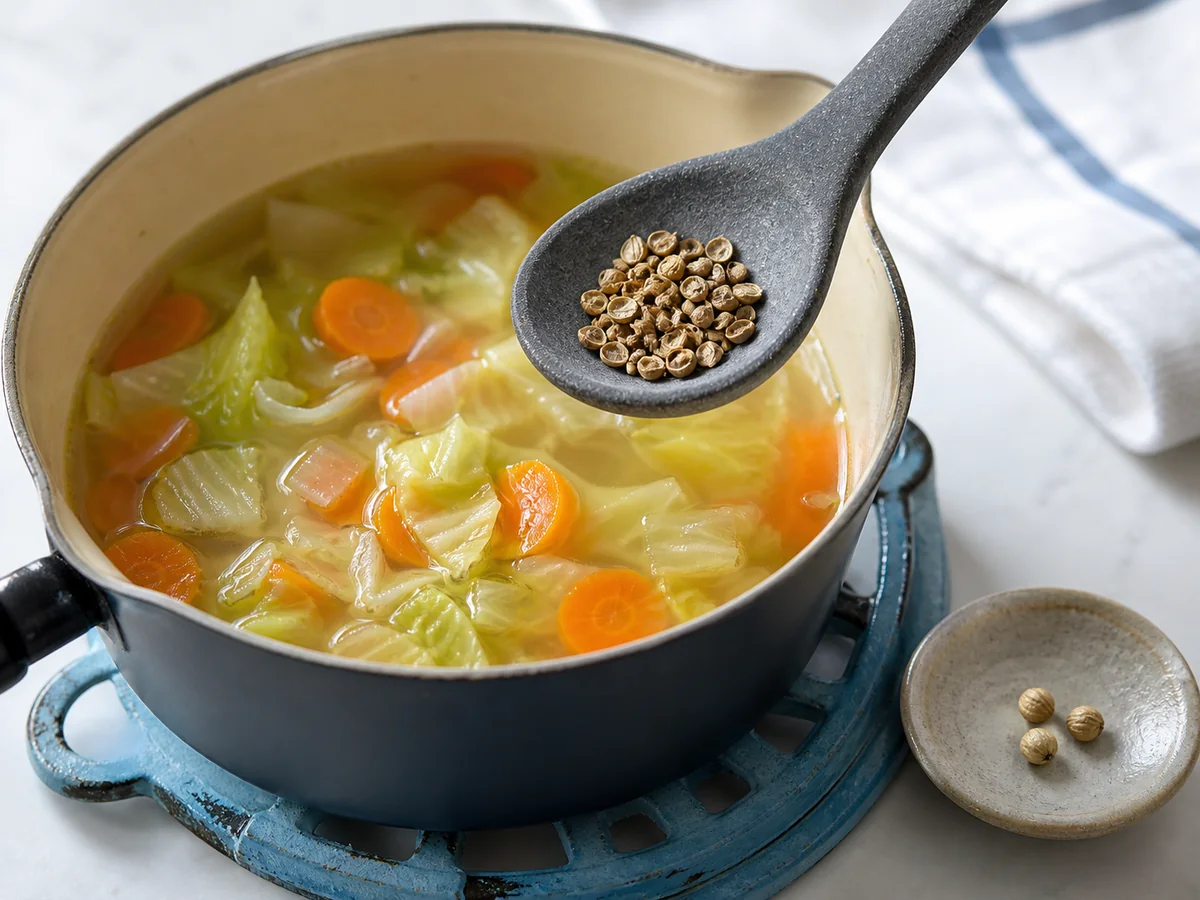
- Cracked seed: The opened shell releases aroma sooner than a whole seed.
- Clear broth: Makes hard, underextracted seeds easy to notice.
- Carrot and cabbage: Mild vegetables leave room for coriander's warmer direction.
- Intact seeds: The side dish shows the form that would release too slowly.
5. Parsley
Parsley is a fresh finishing substitute, not a seed replacement.
Use one tablespoon finely chopped parsley for one teaspoon celery seed in potato salad, egg salad, creamy dressing, or soup served immediately.
Its leaf volume restores green freshness and visual contrast, but it brings neither bitterness nor crunch. That makes parsley useful when a child or guest dislikes seeds, and weak when a pickle brine depends on slow seed extraction.
Fold parsley into cold food near serving time.
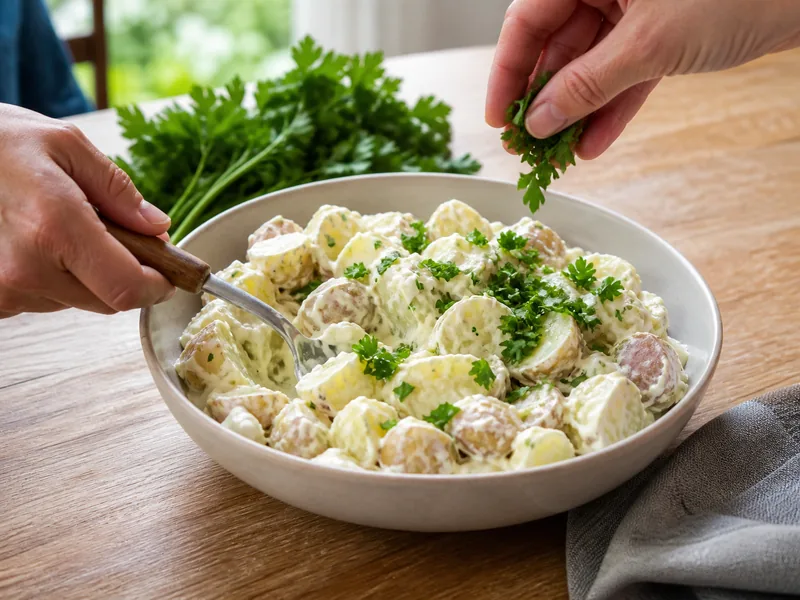
- Late addition: Fresher aroma.
- Fine chop: Even distribution.
- No seed: Softer bite.
In soup, add most of it after the heat is off, then use black pepper to recover a drier edge without pretending that the leaf tastes like celery seed.
Raw Dressings Expose Sweetness and Bitterness
Cold fat holds aromatic compounds close to the palate, so a small fennel or dill change becomes obvious in mayonnaise. The same half-teaspoon can seem quiet in a pot of soup and dominant in one cup of slaw dressing.
Crushing accelerates extraction because it breaks the seed coat and exposes more surface. That is useful when dinner is soon, but whole seeds give you a wider margin in a dressing that will rest for hours.
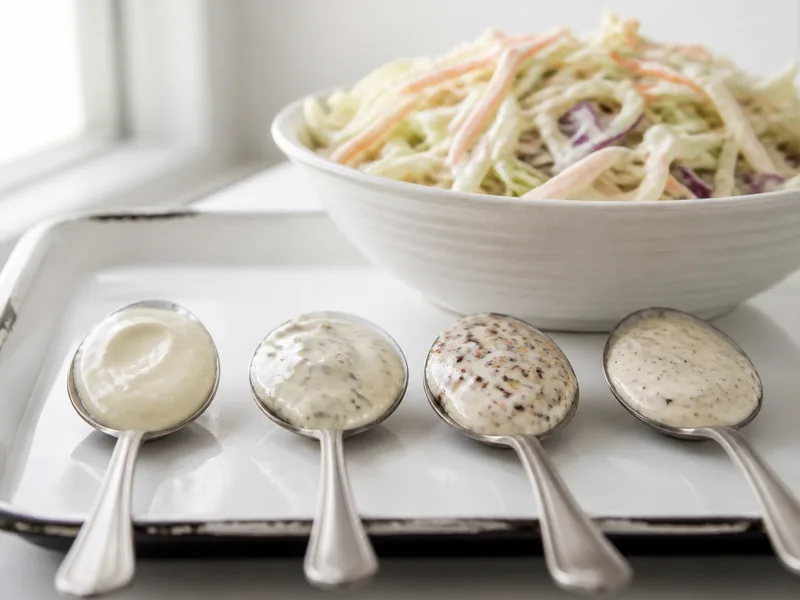
- Crushed seed: Faster extraction.
- Whole seed: Slower, more visible release.
- Mayonnaise: Amplifies aromatic direction.
- Rest time: Part of the seasoning process.
Dill seed keeps the herbal seed cue, while fennel belongs only when sweetness suits the slaw.
Dill works for a pickle direction, while parsley gives a cleaner fresh finish.
Mustard seed fits a sharp dressing. Crushed coriander suits citrus or roasted vegetables.
Celery salt can supply the expected flavor, but reduce plain salt before it enters.
Taste a cold dressing after its planned rest, not only at the mixing bowl. If dill has become too recognizable, expand the dressing with unsalted mayonnaise, yogurt, or the original liquid base rather than adding sugar.
Pickles, Soup, and Rubs Need Different Timing
Pickling liquid extracts whole seeds during heating and storage.
Add dill, mustard, or fennel to the brine early, but remember that the flavor continues developing after the jar cools.
Soup rewards a different approach. Crack fennel or coriander and cook it with the aromatics so the seed softens and releases flavor into fat, then use parsley only at the finish.
Dry rubs expose particle size on the surface. Grind coriander finely, or crush fennel enough that large seeds do not fall away and scorch separately from the meat or vegetables.
- Brine whole seedsHeat dill, mustard, or fennel in the liquid so extraction begins evenly.
- Crack seeds for soupAdd coriander or fennel with moist aromatics, not as a raw garnish.
- Grind for a rubMatch the particle size of the rest of the seasoning for even contact.
- Hold leaves backStir parsley into finished food so its green aroma survives.
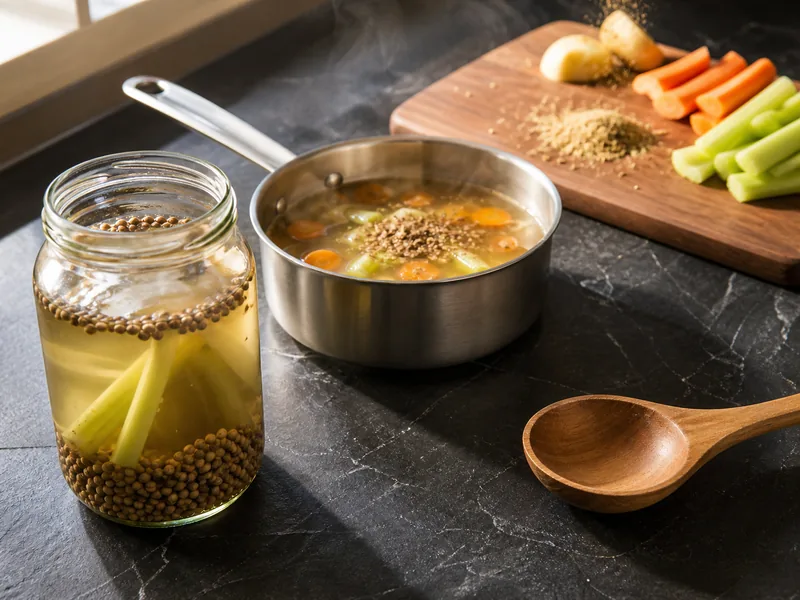
- Brine: Slow whole-seed extraction.
- Soup: Cracked seed plus moisture.
- Rub: Fine, even particles.
- Finish: Fresh parsley off heat.
The finished cue matters more than a timer. Stop simmering a seed replacement once the food has the intended aromatic background, because extra cooking does not turn fennel or coriander into celery.
Ground and whole replacements also differ inside the same recipe.
A ground seed reaches full intensity quickly and disappears into dressing, while a whole seed releases in bursts and can remain firm after a short rest.
If the recipe calls for ground celery seed, grind dill, fennel, mustard, or coriander before applying the listed ratio, then begin slightly below it because fresh grinding exposes more surface. When the recipe calls for whole seed, do not replace it with the same volume of powder without accepting a faster, more uniform flavor.
Acid changes perception as well as extraction. Vinegar makes bitter and pungent notes feel sharper, so a dill or mustard substitute that tastes balanced in oil may become louder once the dressing or brine is acidified.
Build the final mixture in the order the recipe uses: seed, liquid, acid, then salt. This sequence gives each strong variable one tasting checkpoint and makes the source of an imbalance easier to identify.
Celery Salt Changes the Salt Equation
Celery salt is not standardized as a cooking ratio, and salt commonly occupies most of the jar. Read the ingredient order before measuring because two brands can deliver different amounts of celery character at the same spoon volume.
Begin with the recipe's unsalted base rather than its finished seasoning.
For each half-teaspoon celery salt added, withhold half a teaspoon of the plain salt called for, then correct only after the food has rested or simmered.
Cold salads provide little room for dilution once mayonnaise and vegetables are combined. Test celery salt in one spoonful of dressing, wait several minutes, and scale that result to the bowl only when both salinity and celery aroma are balanced.
Soup offers a wider correction window because unsalted stock, vegetables, or beans can expand the base. Add celery salt before the final reduction, since water loss concentrates sodium even when the celery aroma seems to fade into the other ingredients.
A brine has an additional texture decision. Celery salt can season the liquid, but it cannot create the slow aromatic bursts or visible seed pattern expected in a coarse pickle or rub.
Choose dill or mustard seed when that physical cue matters.
Celery salt is the most direct pantry product when the missing job is celery flavor, but it contains salt as well as celery seed.
Brand proportions vary, so a one-for-one spoon swap can make salad or soup too salty before the celery note seems strong enough.
Start with half the celery-seed measure and omit an equal-looking portion of the recipe's plain salt. Stir, rest, and taste before adding either ingredient again.
Celery salt also removes the seed's crunch. That loss is minor in soup or dressing, but it changes a pickle or coarse rub where visible seeds contribute texture.
When Leaving It Out Is the Better Choice
A small seed dose may also be supplying bitterness rather than a recognizable celery aroma. Taste the unsalted base first, then decide whether black pepper or mustard already covers that contrast.
Texture can make omission more noticeable than flavor in a pickle or coarse rub. Leave the seed out of a smooth sauce more readily than a preparation where diners expect visible aromatic seeds.
Serving temperature changes the final judgment because chilled fat suppresses aroma and warm broth releases it. Recheck the dish at the temperature in which people will eat it.
When the substitute would introduce a louder named flavor, omission protects the recipe's existing balance. A quiet gap is easier to accept than accidental fennel, dill, or mustard dominance.
Omission is safer when celery seed appears as a small background amount beside stronger aromatics.
A tomato sauce with onion, garlic, pepper, and herbs can lose a quarter-teaspoon seed more gracefully than it can absorb a loud fennel or mustard detour.
- The amount is tiny: A pinch in a large pot rarely justifies a forceful replacement.
- Fresh aromatics already lead: Celery stalk, onion, parsley, or carrot may already cover the green savory base.
- The substitute changes the cuisine: Tarragon-like anise or heavy cumin can be more distracting than a missing background note.
- The seed defines the food: Pickle brine, celery salt blends, and celery-forward slaw deserve a planned replacement or a trip to the store.
Taste for what is actually absent.
Pepper can help when the food needs bitterness, and parsley can help when it needs green freshness. An unrelated spice should not be pushed past its limit when the unmistakable celery-seed identity is missing.