
Pickling Spice Substitutes for Vegetables, Fruit, and Meat
What Pickling Spice Contributes to a Brine
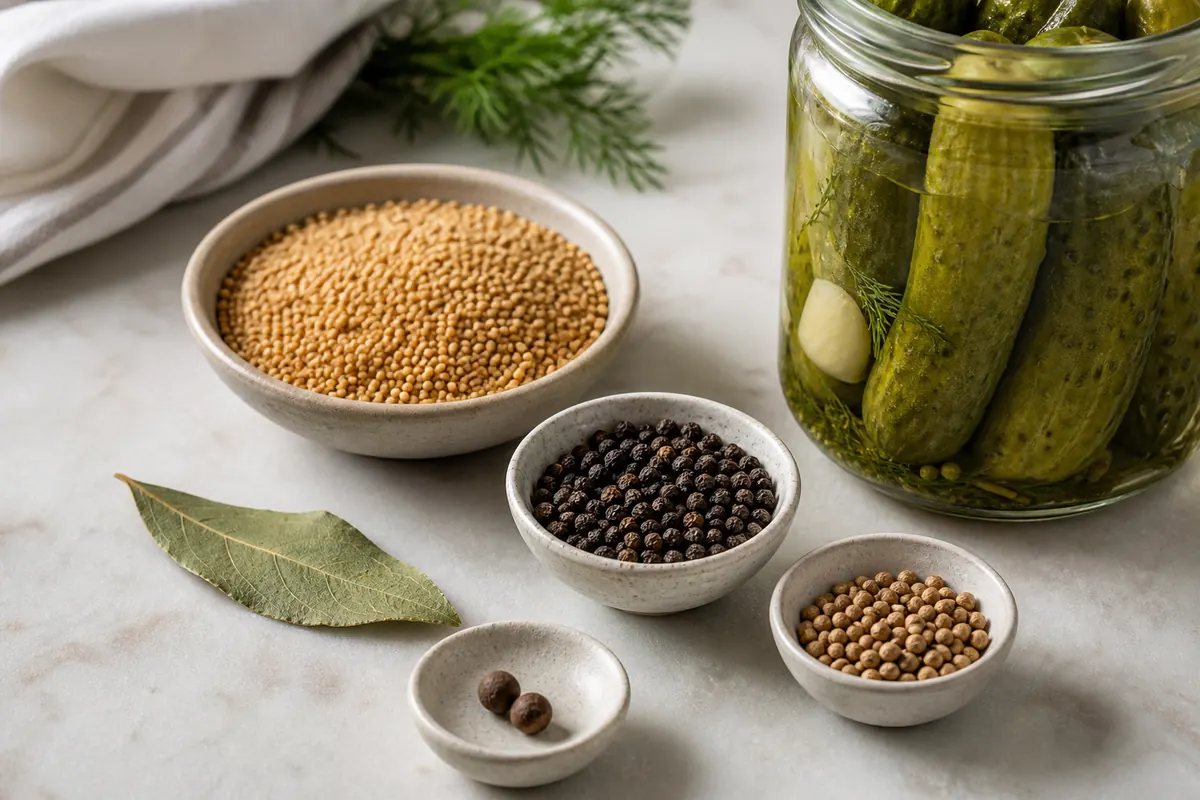
The most dependable pickling spice substitute is a small blend of whole mustard seed, black peppercorns, bay leaf, and allspice. These ingredients rebuild the main jobs of a typical blend without forcing a sweet, hot, or heavily clove-scented flavor into every jar.
Pickling spice is a category rather than one fixed recipe. One jar may lean on mustard and coriander, while another may contain cinnamon, clove, ginger, chile, dill seed, or juniper.
- Pungency
- Mustard seed gives a clean, rising sharpness that suits vinegar and salt.
- Brightness
- Coriander seed adds a citrus-like aroma that keeps vegetable brines lively.
- Heat
- Black peppercorns provide a dry bite without coloring the liquid.
- Warm depth
- Allspice, clove, or cinnamon can round out fruit, beet, and meat brines.
- Long aroma
- Bay leaf develops slowly during simmering or a long rest.
That variation is useful because the food should determine the blend. Cucumbers need a cleaner seed profile than pears, and corned beef can carry resinous juniper that would overwhelm a quick radish pickle.
Whole spices also behave differently from ground spices. Their flavor enters a hot brine gradually, which gives you time to remove a sachet or strain the liquid before one spice dominates.
Ground spice releases quickly and leaves sediment on vegetables. It can work in a cooked relish, but it is a poor substitute when a clear brine and clean surface matter.
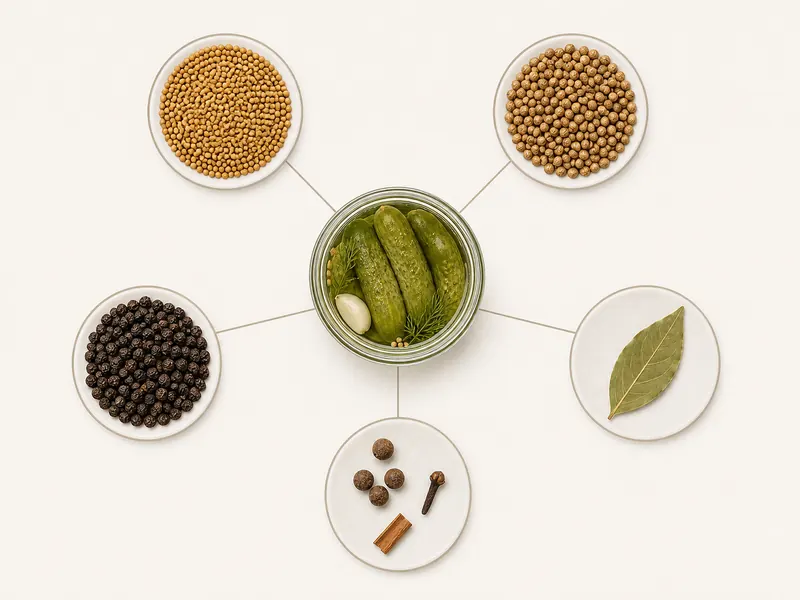
- Mustard: Clean pungency.
- Coriander: Citrus lift.
- Pepper: Dry heat.
- Warm spice: Rounded depth.
- Bay: Slow aroma.
The safest starting point is therefore restrained. You can add another peppercorn or coriander seed after tasting the cooled brine, but you cannot pull out dissolved clove flavor once it has taken over.
Four Pickling Spice Substitutes for Different Brines
No single replacement fits every pickle. Choose the blend from the food, the length of extraction, and whether you want a clean savory brine, a bright vegetable aroma, warm fruit spice, or a darker meat seasoning.
| Number | Substitute | Starting amount | Best use | Main tradeoff |
|---|---|---|---|---|
| 1 | Mustard seed, black pepper, bay, and allspice | About 1 tbsp blend | General vegetable brines | Less citrusy |
| 2 | Mustard, coriander, and dill seed | 1 tbsp blend | Quick vegetables | Less warm and peppery |
| 3 | Allspice, clove, and cinnamon | Small dose per quart | Fruit and beets | Sweet warm direction |
| 4 | Juniper, pepper, mustard, and bay | About 1 tbsp blend | Corned meat and cabbage | More resinous |
1. Mustard Seed, Black Pepper, Bay Leaf, and Allspice
For one tablespoon of pickling spice, start with two teaspoons mustard seed, one teaspoon black peppercorns, one bay leaf, and two allspice berries.
Tear the bay leaf once so it fits the sachet, but do not grind it.
This is the closest flexible pantry blend because it covers sharpness, pepper heat, slow leafy aroma, and a small amount of warm depth. It works in cucumber, onion, cabbage, carrot, and mixed vegetable brines.
- Measure the baseAdd 2 tsp mustard seed and 1 tsp black peppercorns.
- Limit the warmthAdd only 2 allspice berries.
- Add the slow noteTear in 1 bay leaf.
- Test the brineCool a spoonful before adding more spice.
Allspice needs restraint. Equal parts would turn a clean vinegar brine toward clove and baked-fruit aromas, especially after the jar rests overnight.
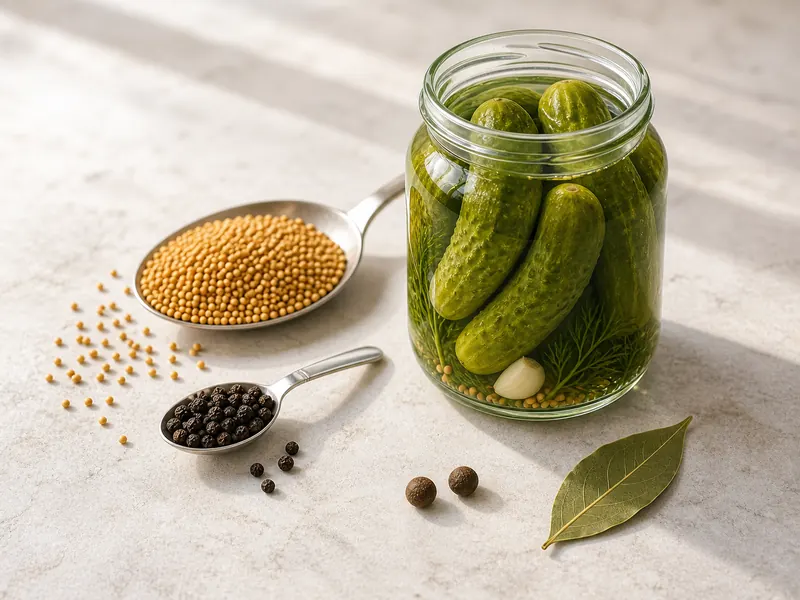
- Large mustard measure: Main sharpness.
- Peppercorns: Clean bite.
- Two allspice berries: Controlled warmth.
- Bay leaf: Slow extraction.
If the cooled liquid tastes flat rather than warm, add one teaspoon coriander seed. If it already smells sweet, remove the allspice before you increase any other ingredient.
The blend also suits a short simmer for pickled onions. Put the spices in the vinegar while it heats, turn off the burner when the sugar and salt dissolve, then remove the packet after the onions cool.
2. Mustard Seed, Coriander Seed, and Dill Seed
Use two teaspoons mustard seed, two teaspoons coriander seed, and one teaspoon dill seed for every tablespoon of pickling spice. This brighter blend fits radishes, green beans, onions, and refrigerator cucumbers.
Coriander brings a lemony aroma without adding acid.
Dill seed adds the recognizable savory note found in many cucumber pickles, but its concentrated seed flavor is stronger and woodier than fresh dill leaf.
Keep the seeds whole for a brine that will sit for several hours. A light crack speeds extraction in a ten-minute hot pickle, though it also creates fragments that must be strained.
Keep the seeds whole so their bite stays clean.
Add a few peppercorns when the beans are strongly flavored.
Let coriander soften the raw onion edge.
Keep dill seed central and strain loose fragments.
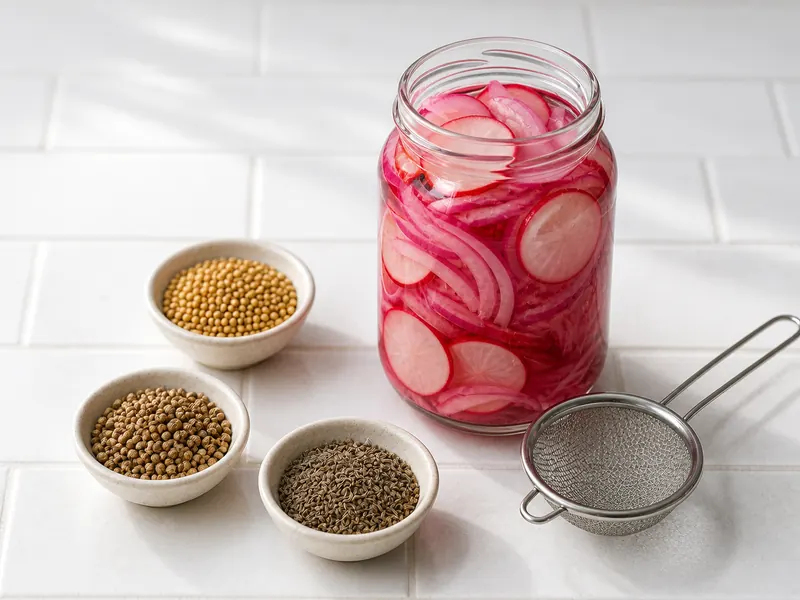
- Coriander: Bright aroma.
- Dill seed: Savory pickle note.
- Pink vegetables: Short extraction.
- Mesh strainer: Clean finish.
This option lacks the peppery finish of a broad commercial blend. Add half a teaspoon of black peppercorns when the food is strongly flavored, but leave them out when delicate radishes already have enough bite.
Do not swap dried dill weed at the same volume. The leaf floats, clings to vegetables, and gives up flavor faster than dill seed, so add a smaller pinch near the end if leaf is all you have.
For a cold refrigerator pickle, wait until the liquid has cooled before judging strength. Hot vinegar smells sharper than the finished jar and can make a balanced seed blend seem weak.
3. Allspice, Clove, and Cinnamon
Warm spices fit fruit and some beet pickles, but they are measured by pieces rather than spoonfuls. For one quart of sweet brine, start with four allspice berries, one clove, and a one-inch piece of cinnamon.
The small dose is deliberate.
Clove contains an assertive aroma that spreads through hot syrup quickly, while cinnamon continues to release flavor as the fruit cools.
This blend works best when sugar and fruit are already part of the recipe. It is not a neutral replacement for dill pickles or a crisp cabbage brine.
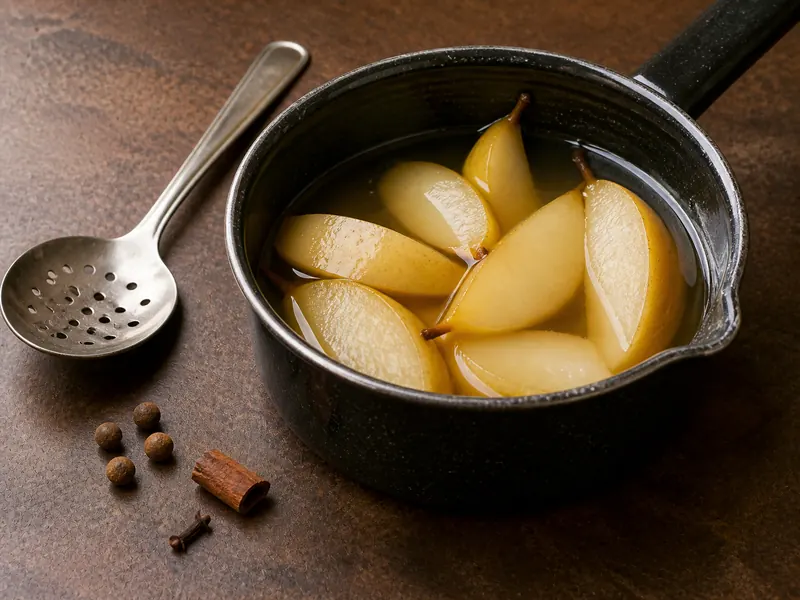
- One clove: Firm upper limit.
- Cinnamon shard: Slow sweetness.
- Allspice berries: Peppery warmth.
- Pear syrup: Appropriate context.
Beets can support one teaspoon mustard seed alongside the warm trio. The seed restores savory pungency and prevents the liquid from reading like dessert syrup.
Remove the clove when the fruit reaches the texture you want. Cinnamon and allspice can remain for a longer cool rest if their aroma is still faint, which gives you separate control over the strongest spice.
4. Juniper, Black Pepper, Mustard Seed, and Bay Leaf
For one tablespoon of pickling spice in a corned beef or cabbage pot, use one teaspoon juniper berries, one teaspoon black peppercorns, one teaspoon mustard seed, and one bay leaf.
Crush the juniper once with the side of a knife so the berries split without becoming powder.
Juniper adds pine, citrus peel, and resinous depth. Those notes support beef, venison, cabbage, and dark brines, but they can taste harsh in cucumber or fruit.
Black pepper and mustard remain steady through a long cook.
They give the broth a savory backbone after the brighter juniper aroma begins to soften.
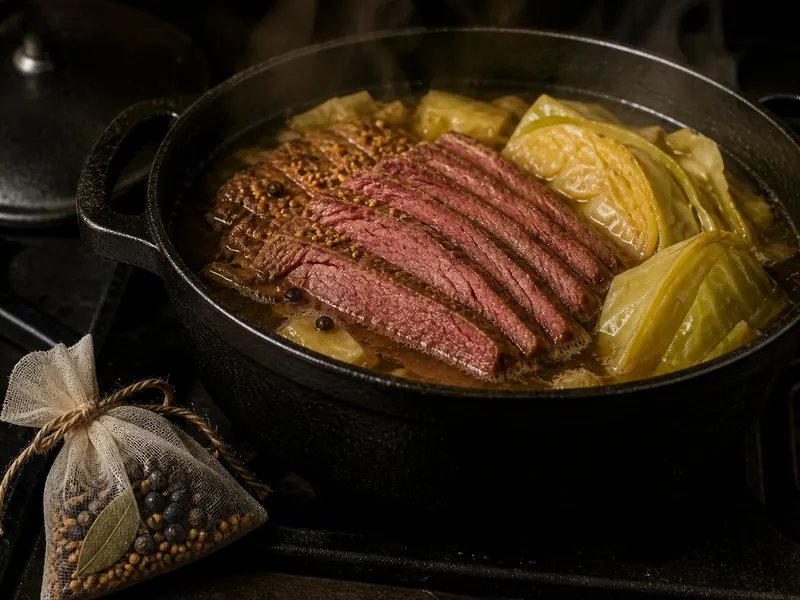
- Cracked juniper: Resin and citrus.
- Pepper and mustard: Savory backbone.
- Tied sachet: Timed removal.
- Deep pot: Long extraction.
Halve the juniper for poultry or a mild vegetable braise. Keep the pepper and mustard unchanged, then decide near the end whether the dish needs more bite.
A spoonful of commercial pickling spice often contains cinnamon or clove. This meat-focused version omits both so the broth stays savory and the juniper remains recognizable.
Keep Whole Spices Removable and the Brine Clean
A spice sachet is the cleanest method for a simmered brine. Put whole spices in food-safe muslin or a large tea filter, leave room for liquid to circulate, and tie it firmly enough that seeds cannot escape.
Do not pack the bag tightly. Water needs to pass around the seeds, and a dense knot can leave the center nearly dry while the outer peppercorns over-extract.
- Measure whole spicesSet the ratio before crushing anything.
- Crack only hard berriesSplit juniper or coriander once when faster release is needed.
- Leave room in the bagUse a packet larger than the dry spice pile.
- Taste after coolingA cooled spoonful gives a truer reading of salt, acid, and spice.
- Remove on timePull the packet when the strongest note is clear.
Loose whole spices are also workable when the brine will be strained before it reaches the jar. Pour the hot liquid through a fine mesh strainer, press lightly, and discard the spices rather than pushing fragments through.
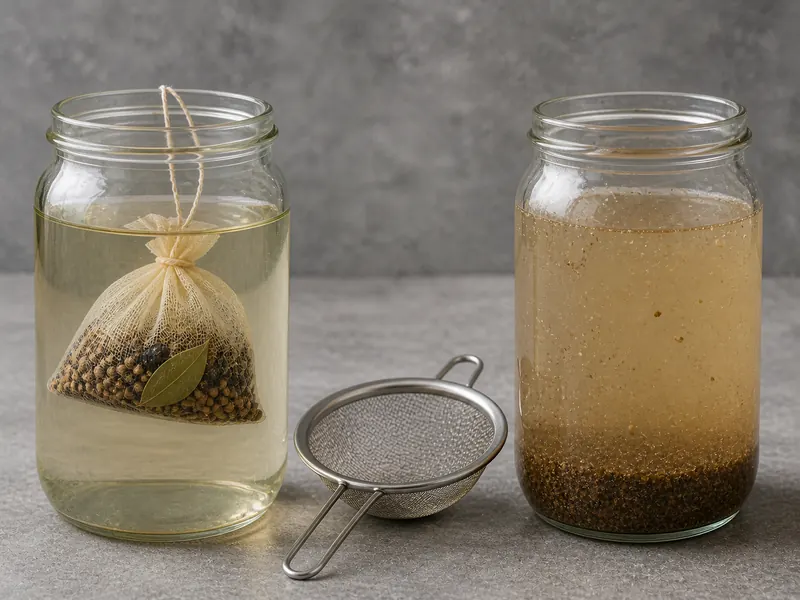
- Clear jar: Removable whole spice.
- Cloudy jar: Ground sediment.
- Loose packet: Better circulation.
- Fine mesh: Backup straining.
Fine ground spices solve a speed problem but create a texture problem.
Mustard powder can turn the liquid opaque, ground bay cannot be removed, and cinnamon dust may cling to pale vegetables.
If ground spice is the only option, use less than the whole-spice volume and steep it briefly. Strain through a coffee filter only when clarity matters enough to justify losing some aromatic oil along with the sediment.
Hot liquid extracts flavor quickly, while a cold brine may need several hours. This difference is why a blend that tastes quiet immediately after mixing can become forceful the next day.
Salt, sugar, and acid also change how spice tastes.
Judge the complete cooled brine rather than smelling the dry mixture and adding more before extraction begins.
How Heat and Rest Time Change the Same Blend
A hot brine and a cold refrigerator pickle can begin with the same measured blend, but they should not be judged at the same moment.
Heat opens aromatic oils quickly, while a cold mixture may need hours before whole seeds become noticeable.
Bring whole spices up with the liquid when the recipe calls for a simmer. The first steam will smell intense because volatile aromas rise above the pot, so smell alone is a poor reason to add more.
Cool one spoonful until it is comfortable to taste. Acid seems sharper when hot, and that sharpness can hide coriander, bay, and allspice until the liquid settles.
Taste a cooled spoonful before the liquid reaches the food.
Taste the food after several hours, then judge again the next day.
Check earlier because the exposed interiors release aroma faster.
Taste the broth at intervals and remove the packet when the strongest note is complete.
Cold brines create the opposite temptation.
The freshly mixed liquid may taste like vinegar and salt with almost no spice, but mustard and coriander continue to release flavor during the refrigerator rest.
Adding a second full dose immediately can make the next-day pickle bitter or perfumed. Give the original whole spices time, then correct one flavor job rather than repeating the entire blend.
If the pickle needs more pungency, add mustard seed. Add one or two peppercorns for bite, a few coriander seeds for brightness, or one allspice berry for warmth.
That focused correction keeps a weak note from becoming an excuse to double clove, cinnamon, bay, and every other ingredient. It also makes the result easier to reproduce in the next batch.
Particle size changes the schedule as much as temperature does.
A cracked coriander seed exposes its aromatic interior at once, while an intact seed releases slowly through its shell.
Use cracked seed when a quick hot pickle needs flavor in minutes. Keep it whole when the jar will rest overnight, and strain fragments before serving if clean texture matters.
A long-cooked meat brine needs staged removal rather than a larger starting dose.
Pepper and mustard tolerate time, but broken juniper, clove, and bay can move from aromatic to harsh while the meat is still tenderizing.
Put the stronger ingredients in a separate small sachet when you want precise control. Remove that packet first and allow the steadier seeds to continue cooking.
The food is the final tasting sample because vegetables and meat absorb aroma differently from the surrounding liquid.
Taste one cooled piece before changing the jar, then record the correction if you plan to repeat the batch.
When a Smaller Blend Is Better Than a Fuller Substitute
Use fewer spices when the vegetable has a delicate flavor or the brine rests for only a few minutes. Mustard seed and peppercorn alone can season sliced onions without making every bite taste like a commercial blend.
Omission is also reasonable when pickling spice appears as an optional aromatic in a strongly seasoned recipe. The vinegar, salt, sugar, garlic, or fresh herbs may already give the food enough character.
- Use the four-part core for general cucumber, cabbage, carrot, and onion brines.
- Choose mustard, coriander, and dill seed for bright quick vegetables.
- Reserve clove and cinnamon for fruit, beets, or an intentionally warm syrup.
- Use juniper only when meat or a dark savory vegetable can support resin.
- Leave ground spice out when clear liquid and a clean vegetable surface matter most.
A full warm blend can hide young cucumbers and tender radishes. In that case, the best substitute is a teaspoon of mustard seed plus a few peppercorns, not a longer ingredient list.
Fresh herbs should enter late when you want their green aroma. Dill fronds, tarragon, or parsley lose their freshness during a hard boil, so add them after the hot liquid has stopped bubbling.
Do not treat spice choice as a replacement for a tested preservation process. Flavor ingredients can change aroma and color, but safe shelf-stable canning depends on the recipe's verified acidity, processing time, jar size, and method.
For refrigerator pickles, cool the food as the recipe directs and keep it chilled. The substitute should improve the taste without changing the safety instructions that came with the recipe.
The final check is simple.
Taste one cooled piece of food, not only the liquid, because the vegetable or meat may absorb spice at a different rate than the surrounding brine.