
Which Bay Leaf Substitute Can Survive a Long Simmer?
Match the herb to the liquid, contain small pieces, and remove it before pine or bitterness takes over.
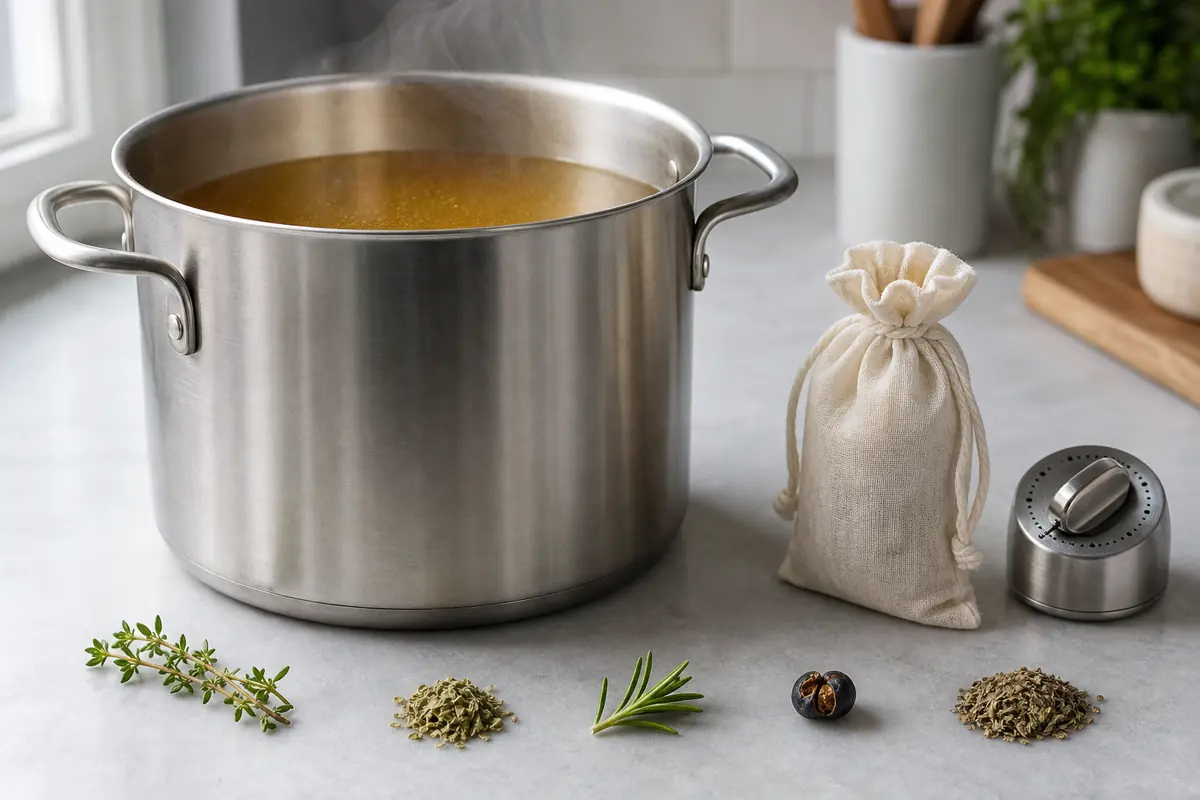
Use one-quarter teaspoon dried thyme or one small fresh thyme sprig for each bay leaf in stock, beans, poultry, or a cream sauce. Thyme is the broadest fallback because it can sit quietly behind the main ingredients, but remove a fresh sprig after 20 to 30 minutes. Because bay leaf seasons through time and is normally removed, the useful replacement ratio must include an infusion time and a way to pull a faster-releasing herb back out.
Five Bay Leaf Substitutes Ranked by Infusion Risk
Thyme is the safest broad replacement because a small amount can support stock, beans, poultry, and sauce without becoming the first aroma. Oregano, rosemary, juniper, and basil each need a narrower dish and a shorter leash.
A whole bay leaf releases gradually from a smooth intact surface. Crumbled herbs and crushed berries expose more aromatic material to the liquid, so a small measure can become stronger than one leaf long before the pot finishes.
| Number | Substitute | Starting ratio for 1 bay leaf | Best use | First check |
|---|---|---|---|---|
| 1 | Thyme | 1/4 tsp dried or 1 small sprig | Stock, beans, poultry, cream sauce | 20 minutes |
| 2 | Oregano | 1/4 tsp dried | Tomato sauce, beans, dark braise | 15 minutes |
| 3 | Rosemary | 1/8 tsp dried or 2 cm sprig tip | Lamb, beef, potatoes | 10 minutes |
| 4 | Juniper berries | 1 lightly crushed berry | Game, cabbage, dark stock | 20 minutes |
| 5 | Basil | 1/2 tsp dried | Tomato sauce, vegetable soup | Final 15 minutes |
These ratios assume an ordinary medium dried bay leaf and need adjustment for a large Turkish leaf, a small California bay leaf, or a fresh leaf.
Use the recipe's known leaf as the comparison unit whenever its size or origin is clear, then treat the clock as part of the measurement.
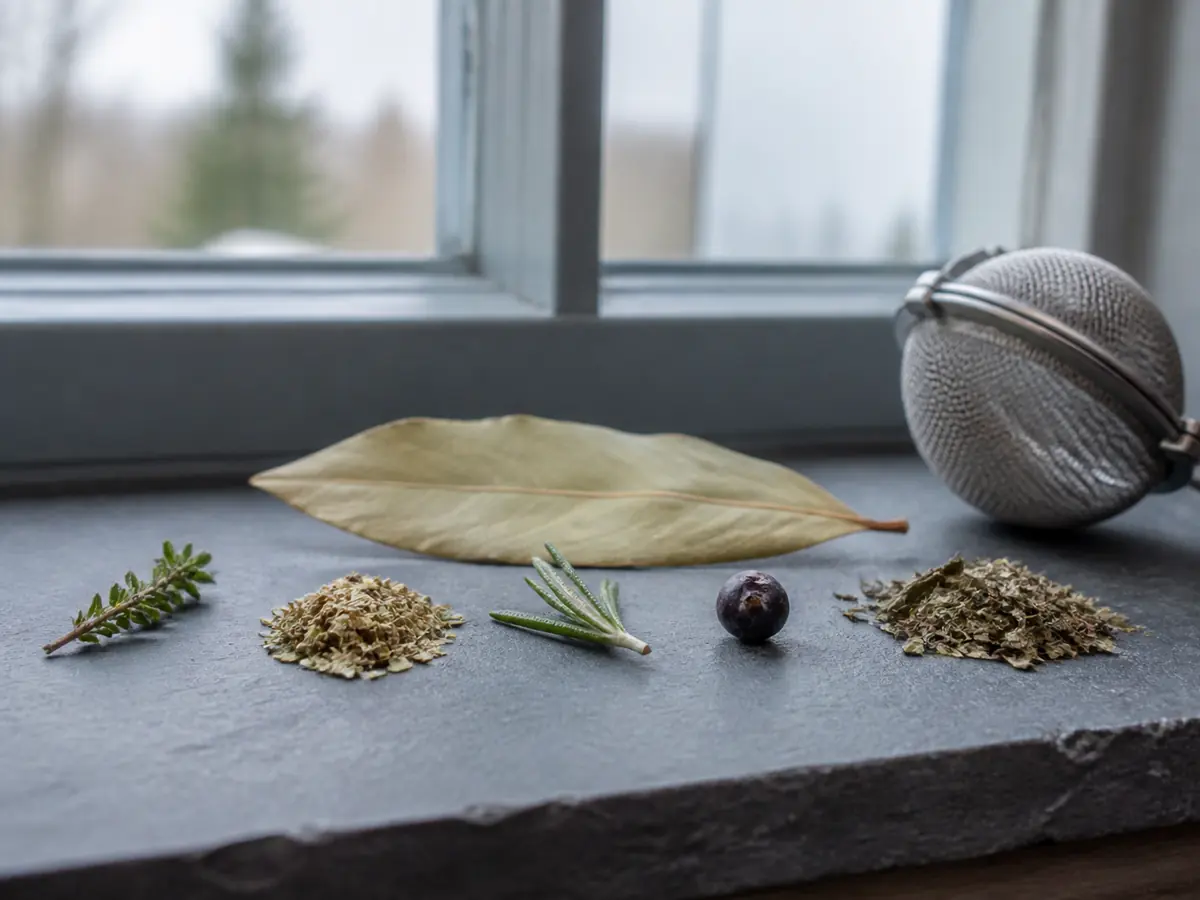
- Thyme: Gentle enough for the broadest range of liquids.
- Rosemary: A very short tip can season a whole pot.
- Juniper: Crack one berry once and keep it removable.
- Dried herbs: Start tasting before the recipe's full simmer ends.
1. Thyme
Use one-quarter teaspoon dried thyme or one small fresh sprig for each bay leaf. Tie the sprig or place the dried leaves in a small sachet when the pot will simmer longer than half an hour.
- Starting ratio
- 1/4 teaspoon dried or one small fresh sprig per bay leaf
- Best for
- stock, beans, poultry, cream sauce, lentils, and vegetable soup
- Main tradeoff
- more grassy mint and less eucalyptus-like depth
- Adjust
- taste at 20 minutes and remove a sprig by 30 minutes
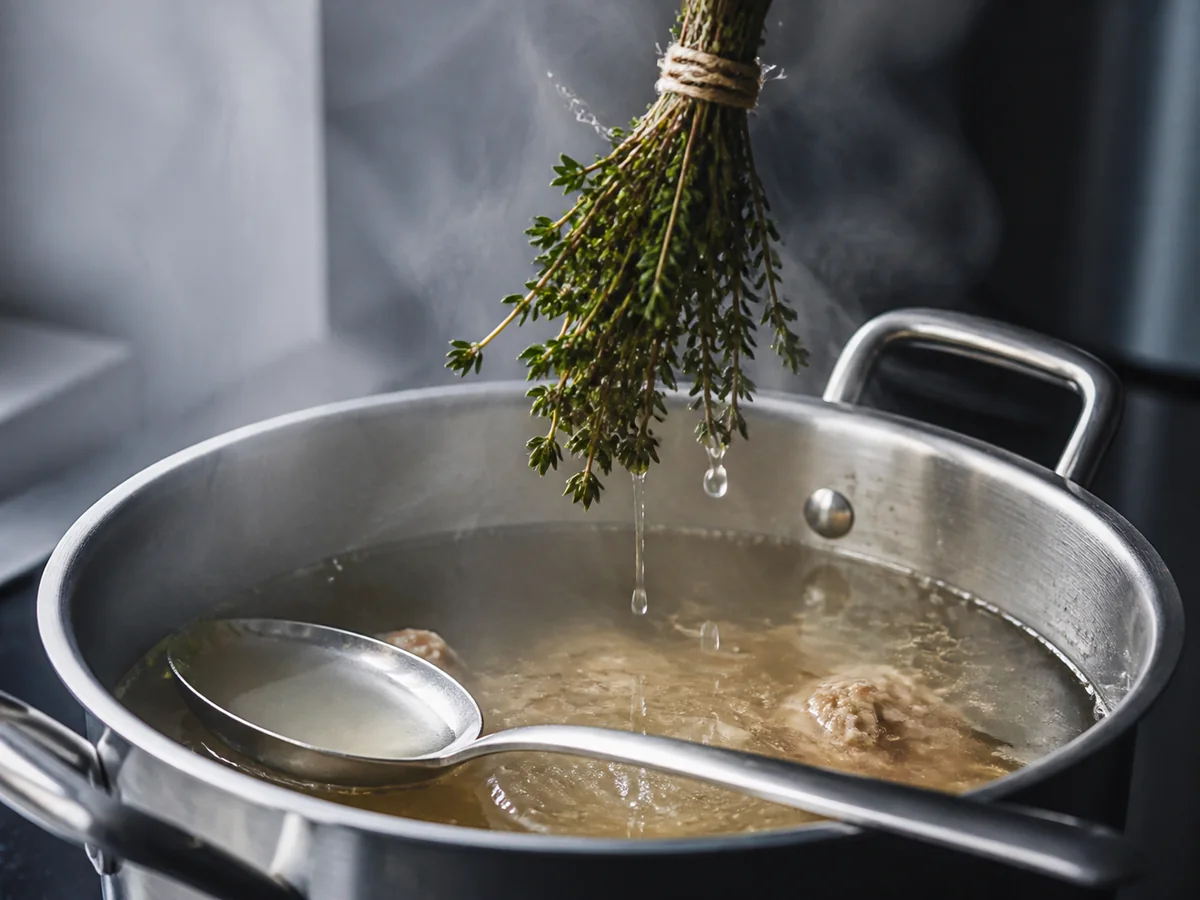
- Tied sprig: Lifts out cleanly without loose leaves.
- Clear stock: Exposes excess thyme sooner than a dark sauce.
- Tasting spoon: Check the liquid at 20 minutes.
Thyme belongs in many of the same slow-cooked foods as bay, but it speaks more clearly. Its small leaves release quickly and can leave visible flecks, while bay usually stays in the background as one removable leaf.
Fresh thyme gives better control because the sprig can be lifted out. A tea ball or tied cloth gives dried thyme the same advantage without forcing you to strain the finished stock.
In a clear chicken stock, start with the lower measure and remove it early. Beans and lentils can carry a little more because starch and a thicker liquid soften the herb's sharper edge.
Let a thyme-seasoned sample cool for one minute before adding more because steam hides its minty and woody notes. A hot spoon can seem quiet even while the same thyme becomes conspicuous at serving temperature.
2. Oregano
Start with one-quarter teaspoon dried oregano for each bay leaf in tomato sauce, a bean stew, or a dark meat braise. Check it after 15 minutes because the peppery aroma rises sooner than bay.
- Starting ratio
- 1/4 teaspoon dried per bay leaf
- Best for
- tomato sauce, bean stew, braised beef, and eggplant
- Main tradeoff
- more pepper, bitterness, and Mediterranean herb character
- Adjust
- contain it in delicate liquids and avoid adding a second oregano measure
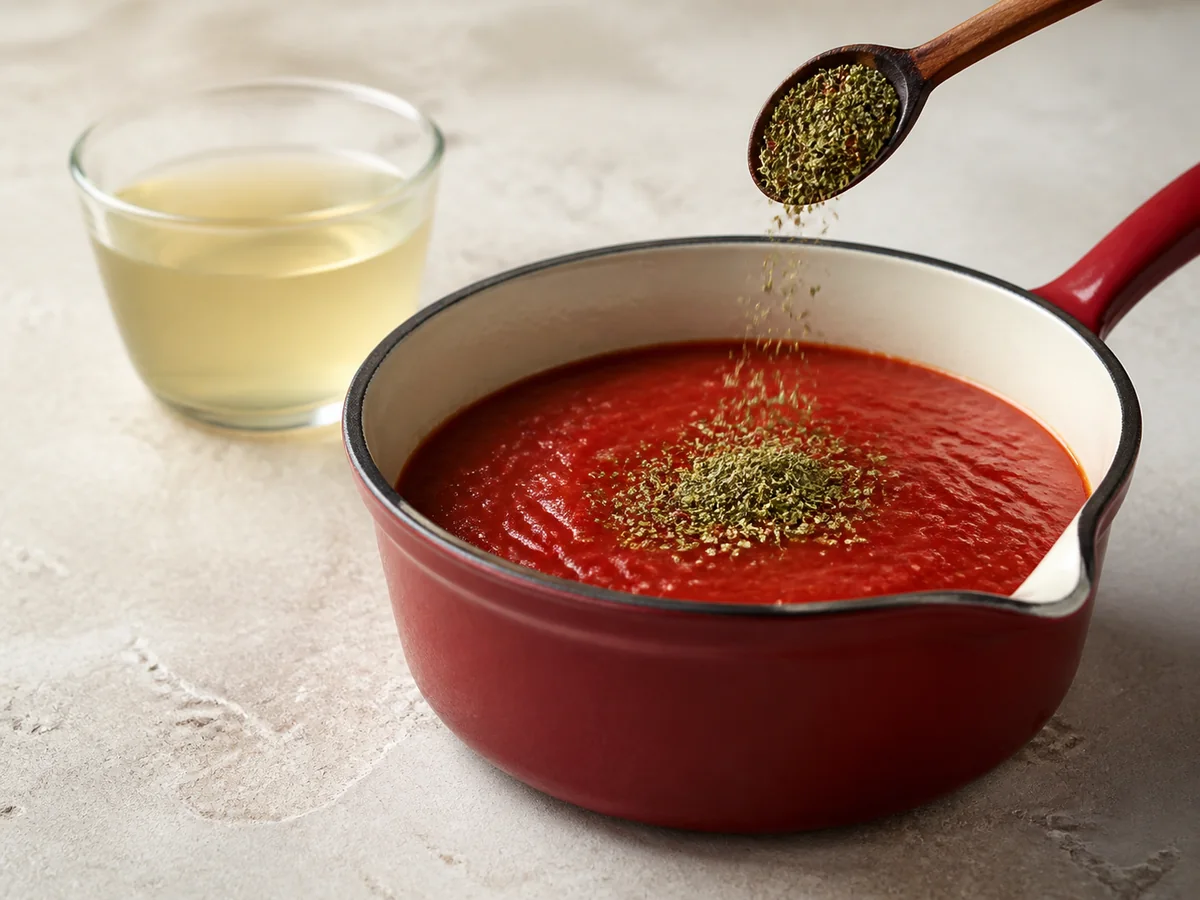
- Red sauce: Supports oregano with tomato, oil, and garlic.
- Clear broth: Makes the substitute announce itself immediately.
- Small spoon: Keeps the first dose below a dominant herb level.
Tomato, garlic, olive oil, and browned meat can absorb oregano's more obvious direction.
That makes the swap useful when the dish already sits near that flavor family.
Clear stock exposes the difference immediately. Oregano turns a neutral broth into oregano broth, while bay would normally deepen the aroma without naming itself.
If oregano already appears elsewhere, increase that measure by no more than one-eighth teaspoon instead of adding a separate replacement dose. Duplicating oregano can change the whole dish before the missing background effect of one bay leaf becomes important.
3. Rosemary
Use one-eighth teaspoon dried rosemary or a fresh sprig tip about 2 centimeters long for each bay leaf. Rosemary is suitable for lamb, beef, potatoes, mushrooms, and dark braises that can carry pine and resin.
- Starting ratio
- 1/8 teaspoon dried or one 2 cm fresh sprig tip
- Best for
- lamb, beef, potatoes, mushrooms, and dark braises
- Main tradeoff
- stronger resin and pine with a needle-like texture
- Adjust
- remove the fresh tip after 15 to 20 minutes
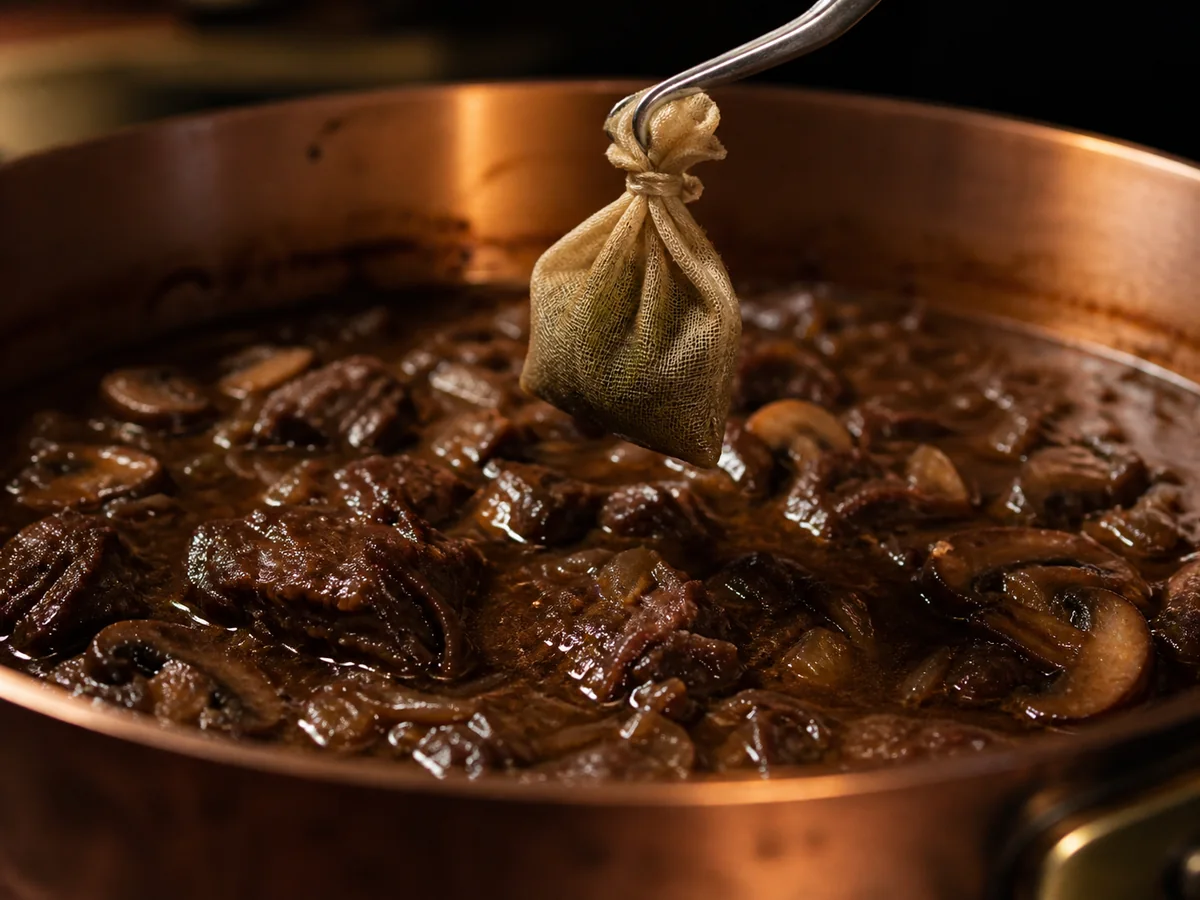
- Tiny sprig tip: Matches rosemary's high aromatic strength.
- Dark braise: Can balance pine and resin better than pale stock.
- Sachet: Preserves removal control after the aroma enters the fat.
Rosemary is the highest-risk leafy substitute because its aroma dissolves readily into hot fat. A braise with browned lamb can balance that force, while fish stock or pale chicken broth cannot.
Keep dried rosemary in a sachet because the needles remain unpleasant even after their aroma has entered the liquid. Crushing them into powder makes removal impossible and speeds extraction further.
Remove rosemary when the broth first tastes complete because longer cooking moves it toward a heavier resinous finish. Waiting for the recipe clock cannot reverse an infusion that has already crossed from piney to medicinal.
4. Juniper Berries
Lightly crush one juniper berry for each bay leaf and contain it in cloth or a tea ball.
Use it in game, beef, cabbage, sauerkraut-style dishes, or a dark stock where pine and citrus are welcome.
- Starting ratio
- one lightly crushed berry per bay leaf
- Best for
- game, beef, cabbage, dark stock, and fermented cabbage dishes
- Main tradeoff
- pine, citrus, and a recognizable gin-like aroma
- Adjust
- crack the berry once and keep the seeds contained
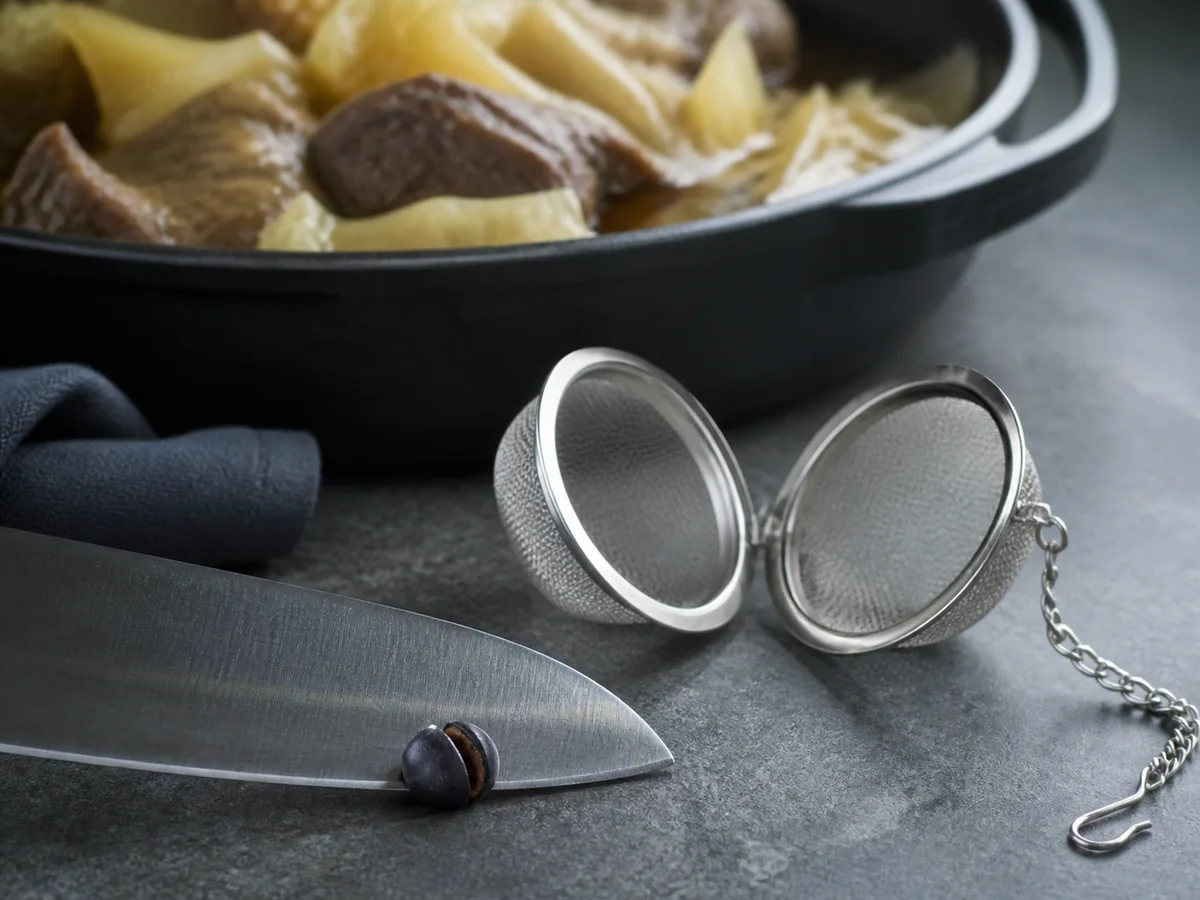
- One split: Releases aroma without the speed of grinding.
- Tea ball: Makes the berry easy to remove.
- Cabbage and beef: Can carry juniper's pine and citrus direction.
Juniper does not mimic bay, but it can supply the forest-like aromatic depth that some meat and cabbage dishes need. The citrus edge also keeps a fatty braise from feeling flat.
Grinding the berry creates too much exposed surface and releases gritty seeds into the pot. Press it once with the side of a knife until the skin splits, then remove it with the sachet at the first clear pine aroma.
One juniper berry is enough for a small household pot before a medicinal gin note hides the other aromatics.
The limit comes from the first clear pine aroma rather than from matching the physical size of a bay leaf.
Do not use juniper as the default replacement in tomato sauce or light vegetable soup. The swap is strongest when the food already accepts gamey, fermented, smoky, or deeply browned flavors.
5. Basil
Use one-half teaspoon dried basil for each bay leaf in tomato sauce or vegetable soup, and add it only for the final 15 minutes.
This is a short-infusion option rather than a full replacement for stock.
- Starting ratio
- 1/2 teaspoon dried per bay leaf
- Best for
- tomato sauce, vegetable soup, minestrone, and zucchini
- Main tradeoff
- sweeter and more visibly herbal with less pine and bitterness
- Adjust
- add late and do not simmer it through a multi-hour stock
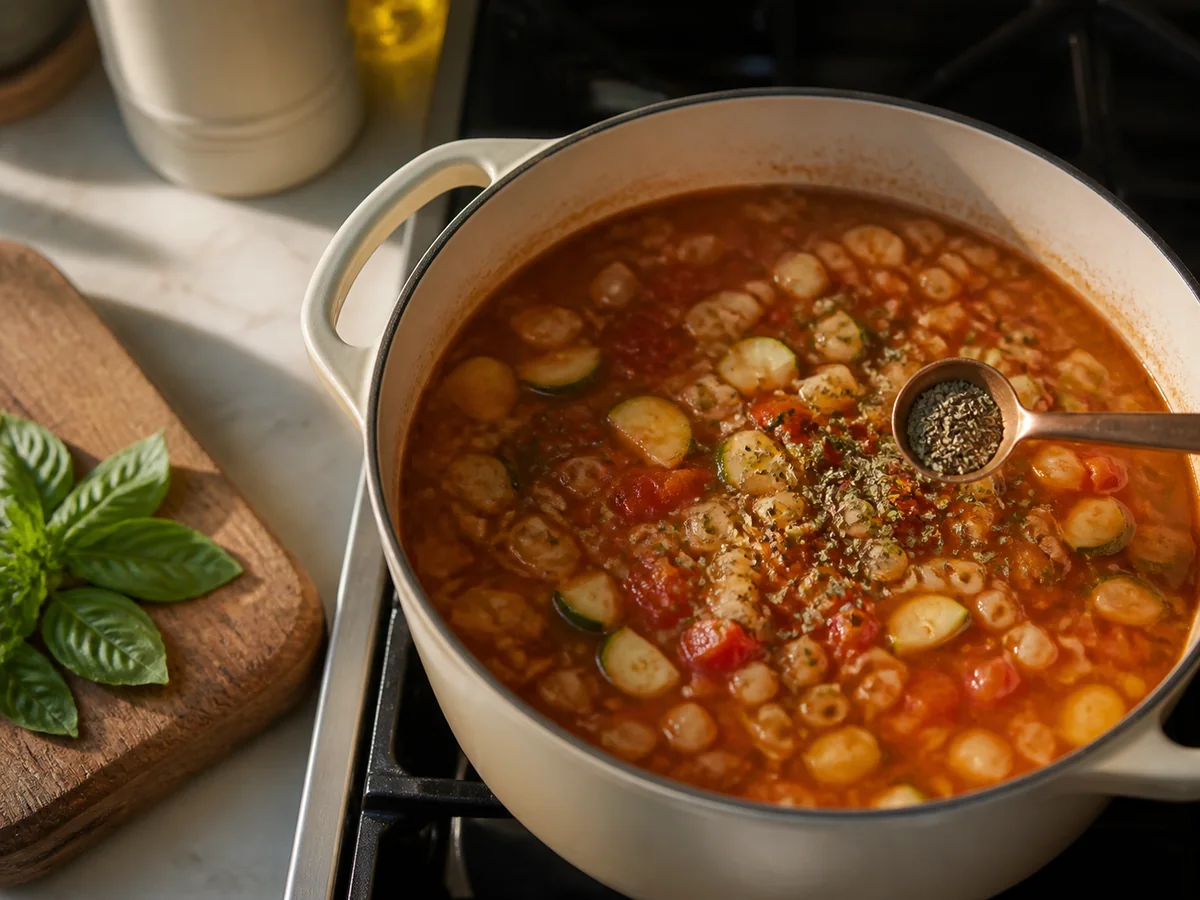
- Late spoonful: Protects more of basil's upper aroma.
- Soft vegetables: Suit its sweeter herbal direction.
- Off-heat leaves: Show why basil is not a multi-hour stock herb.
Dried basil suits tomato and soft vegetables because its sweet herbal direction belongs there. It cannot provide the slow woody background that bay gives to stock, but it can keep a simple sauce from tasting bare.
Add it late because a long simmer drives off what remains of basil's upper aroma. The leaf fragments also soften quickly and disperse, so containment matters less than it does for rosemary.
Treat fresh basil as an off-heat finish instead of boiling it as if it were bay. This choice changes the dish toward a fresh top note and should not be counted as a slow background infusion.
Bay Leaf Works Through Time, Not Volume
Surface area explains why a fraction of a teaspoon can replace one whole leaf. Crumbling, grinding, or crushing opens more edges to water, fat, and alcohol, which shortens the time needed for aromatic compounds to leave the plant.
Bay remains controllable because the leaf can be removed intact. A ground substitute keeps extracting until the pot is strained or eaten.
Pros
- A whole sprig or berry can be removed when the aroma is sufficient.
- A sachet gives crumbled herbs the same stop control.
- Small measured amounts can fill the background without copying bay exactly.
Cons
- Ground herbs release faster than one intact leaf.
- Hot steam can hide resin and bitterness during tasting.
- Long cooking cannot reverse rosemary or juniper once they dominate.
Water draws out a broad range of compounds slowly, while fat can make rosemary and thyme feel stronger earlier. Wine and spirits can pull additional aromas into a braise, so a replacement in wine-rich liquid deserves an earlier check.
Taste a cooled spoonful at two checkpoints and remove the sachet when the herb grows clearer without improving the food.
Fresh leaves can taste greener and more bitter than well-dried culinary bay. A recipe written for one form should not set an automatic ratio for the other.
Contain Small Herbs So You Can Pull Them Out
A square of cheesecloth, a reusable tea ball, or a tied piece of leek green turns loose thyme, oregano, rosemary, and juniper into a removable infusion. Choose a container with enough room for water to move around the herb.
Do not pack a tea ball tightly because a compressed mass wets unevenly and over-extracts its outer leaves first.
Leave visible space for liquid to circulate through the bundle instead of extending the infusion to compensate for a dry center.
- Measure the replacement before it touches the cooking liquid.
- Place small leaves or the lightly crushed berry in cheesecloth, a tea ball, or a clean tied bundle.
- Lower the bundle into the liquid where it remains submerged but easy to retrieve.
- Set the first tasting point from the ratio table rather than from the total recipe time.
- Cool one spoonful briefly, taste for pine, mint, bitterness, and pepper, then remove the bundle when the background is complete.
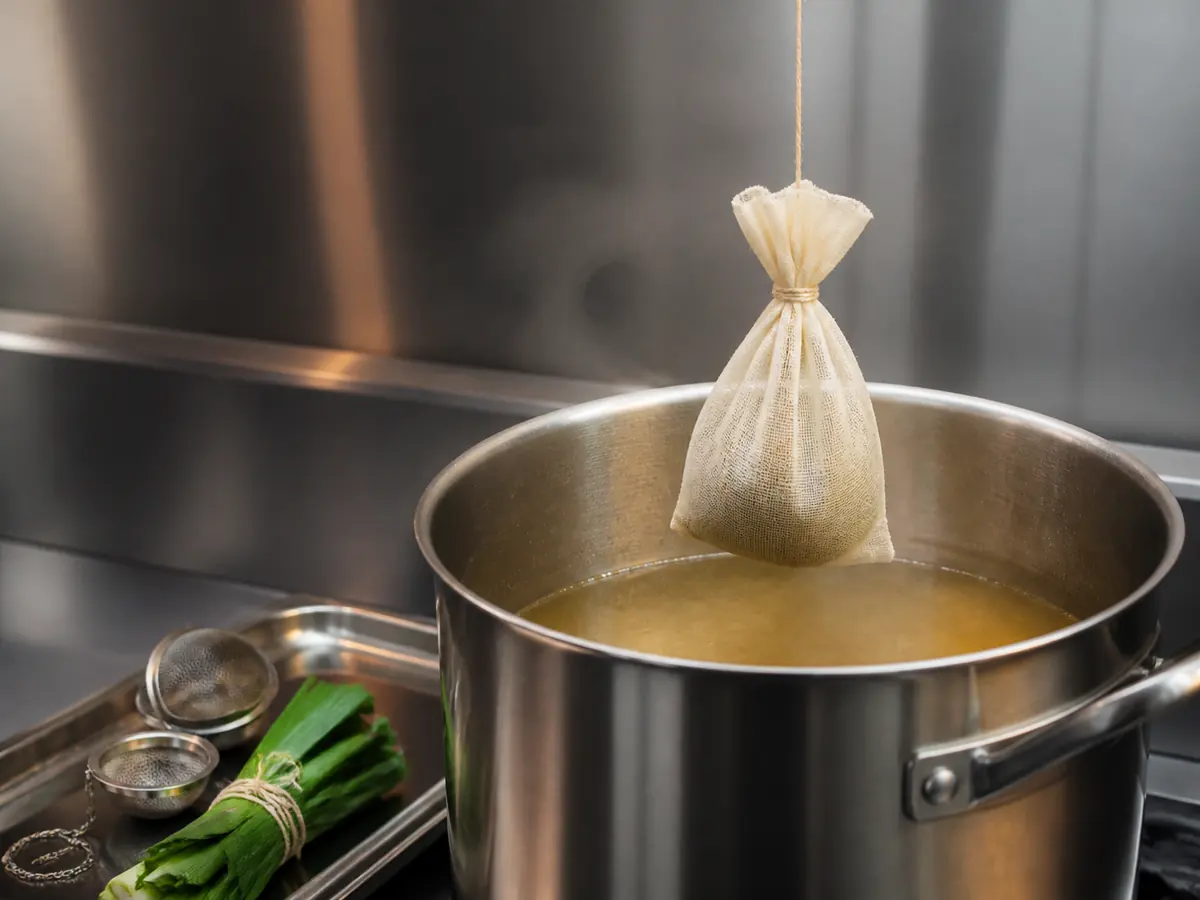
- Leave room: Water must circulate around the herbs.
- Keep a retrieval tail: The bundle should come out without searching the pot.
- Taste cooled liquid: Steam can hide pine and bitterness.
- Record removal time: Minutes are part of the working ratio.
Tie cheesecloth with plain kitchen twine and leave a tail long enough to find. Do not tie the string to a plastic handle that could soften against the pot.
For a very small saucepan, a paper tea filter works if it is designed for hot water and contains no fragrance. Fold the open end securely so herb fragments do not escape as the liquid moves.
For a repeatable result, record both the herb amount and the minute when it left the pot.
The next cook can reproduce one-quarter teaspoon infused for twenty minutes more reliably than a ratio with no removal time.
Stock, Beans, Tomato Sauce, and Pickles Expose Different Problems
Clear stock has nowhere to hide oregano flecks, rosemary needles, or an obvious minty top note. Use thyme in a removable bundle, or leave bay out when the stock already contains onion, celery, parsley stems, and other aromatics.
Beans have more body and can carry thyme or a restrained oregano dose. Salt and acidity still matter more to texture and balance than forcing a bay-like aroma.
Use one small thyme sprig and remove it early. Avoid oregano, basil, and ground rosemary.
Use thyme broadly, or oregano when tomato and garlic already lead.
Use oregano for a peppery cooked direction or dried basil for a softer late addition.
Use a rosemary tip or one crushed juniper berry when pine suits the meat and wine.
Change herbs only in a tested recipe and never alter the vinegar, water, or salt proportions that control preservation.
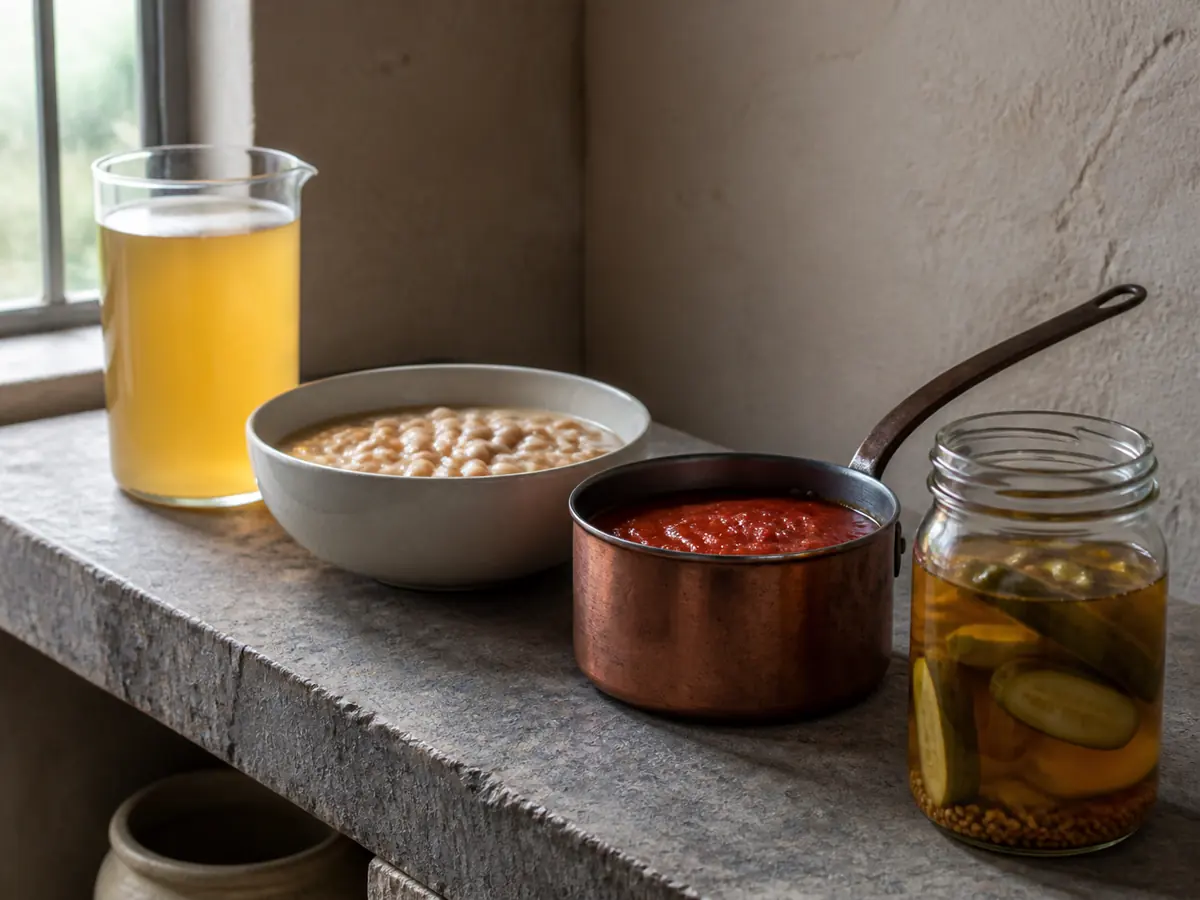
- Stock: Choose subtlety and removability.
- Beans: Starch can carry a quiet thyme infusion.
- Tomato: Oregano or late dried basil can belong.
- Pickles: Never change tested acid and processing proportions.
Pickling requires a separate safety boundary. Swapping one culinary herb for another does not justify changing vinegar strength, dilution, processing time, or the tested vegetable quantity.
Use thyme or one juniper berry only as optional aroma in a tested refrigerator or shelf-stable pickle formula.
An herb substitution never authorizes a change to vinegar strength, dilution, processing time, or the tested vegetable amount.
Tomato sauce needs no removable sachet when a small dried oregano or basil dose can remain in the food. Dark braises benefit from containment because rosemary and juniper continue extracting through a long cook.
Leave Bay Leaf Out When the Pot Is Already Aromatic
Bay leaf is often a background ingredient, so its absence does not always create an empty space. Onion, celery, carrot, garlic, wine, pepper, thyme, parsley stems, and browned meat may already supply enough aromatic structure.
Audit the pot before adding another herb. The more complex the base, the less useful a conspicuous rosemary or oregano replacement becomes.
- Count existing woody herbs before adding thyme, oregano, or rosemary.
- Check whether the liquid is clear enough to expose loose leaf fragments.
- Decide whether pine, mint, pepper, or sweet herb actually belongs in the dish.
- Use a removable form when the simmer exceeds 30 minutes.
- Leave bay out when every available substitute would become easier to taste than the missing leaf.
A rich beef braise can remain complete without one bay leaf because browning, wine, onions, and stock carry most of the result. Adding too much rosemary to compensate creates a larger and harder-to-correct change.
In a simple broth, accurate seasoning and careful skimming can be cleaner than an assertive replacement for a subtle background note.
Omission protects the main ingredient when rosemary or oregano would become easier to name than the broth itself.