
Which Annatto Seed Substitute Gives the Right Color?
Choose red, orange, yellow, or gold while controlling smoke, bitterness, heat, and oil clarity.
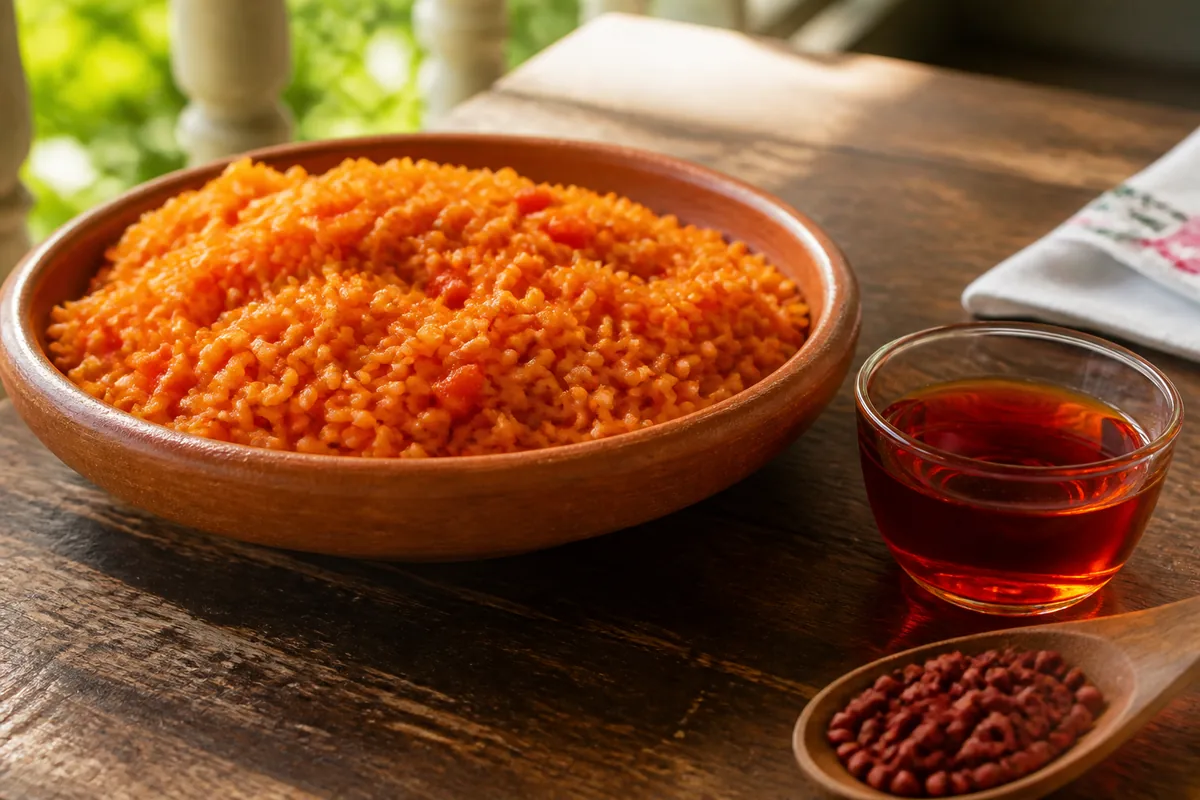
Sweet paprika is the broadest annatto seed substitute when a dish needs mild red-orange color. Use turmeric for yellow-gold, saffron only where its aroma belongs, ancho powder in chile-friendly marinades, and smoked paprika only when smoke supports the food.
Five Annatto Seed Substitutes Chosen by Color
Annatto, also called achiote, colors fat yellow-orange to red-orange while adding mild earthy and peppery flavor. Whole seeds are often warmed in oil and strained, which means the original ingredient may contribute more color than texture or strong spice aroma.
A replacement should begin with the intended hue. Paprika moves food toward red-orange, turmeric creates yellow-gold, saffron gives a clear golden tone, ancho chile darkens marinades with mild fruit, and smoked paprika adds a red color with obvious smoke.
These starting ratios assume one teaspoon whole annatto seeds used mainly to tint a dish or a small amount of oil.
Ground annatto, commercial coloring, achiote paste, and prepared sazón are different products and should not be converted with the same spoon measure.
| Number | Substitute | Starting ratio for 1 tsp annatto seeds | Best use | Main change |
|---|---|---|---|---|
| 1 | Paprika | 1/2 tsp | Rice, beans, soup, cheese sauce | Redder and sweeter |
| 2 | Turmeric | 1/4 tsp | Yellow rice, broth, dough, coconut sauce | Yellower and more bitter |
| 3 | Saffron | 6 to 10 threads | Rice, broth, special dishes | Golden with floral aroma |
| 4 | Ancho chile powder | 1/2 tsp | Marinades, beans, dark rice | Browner red with mild chile fruit |
| 5 | Smoked paprika | 1/4 tsp | Grilled meat, smoky rice, dark stew | Smoke becomes part of the dish |
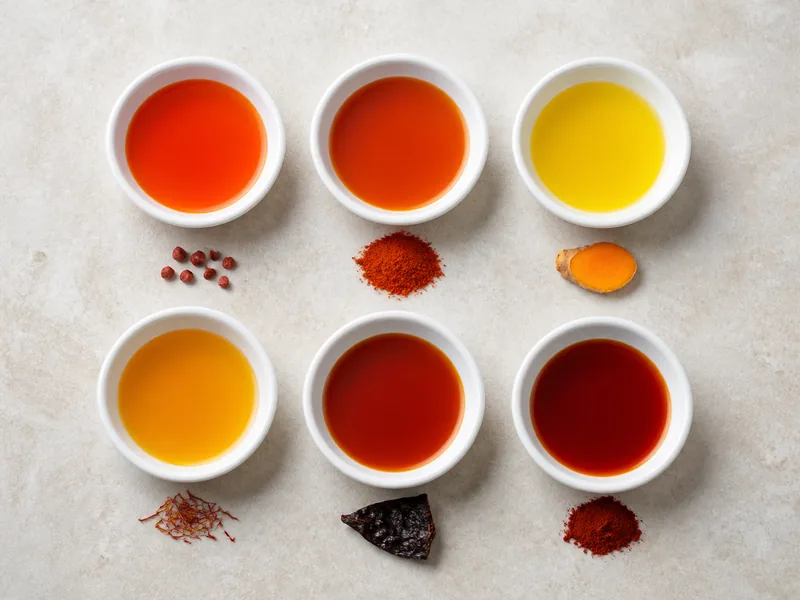
- Paprika: Red-orange and mild.
- Turmeric: Strong yellow-gold.
- Saffron: Clear gold with aroma.
- Ancho: Darker chile-red.
- Smoked paprika: Red with smoke.
1. Paprika
Begin with half a teaspoon sweet paprika for each teaspoon annatto seeds in rice, beans, soup, cheese sauce, dry seasoning, or colored oil that does not need to be perfectly clear. Paprika gives an accessible red-orange direction with gentle pepper sweetness.
Warm the paprika in oil over low heat just until the fat takes color and the spice smells fresh. Fine particles remain in the oil, so stop before they darken and settle the mixture before deciding whether to strain it.
- Starting ratio
- 1/2 teaspoon sweet paprika per 1 teaspoon annatto seeds
- Best for
- rice, beans, soup, cheese sauce, and dry seasoning
- Main tradeoff
- redder hue with more sweet-pepper flavor
- Adjust
- mix with a small turmeric pinch only when a more orange result is needed
Use sweet paprika rather than hot or smoked paprika when the original annatto served mainly as color. The wrong paprika can introduce heat or smoke before the oil reaches the desired shade.
Paprika is especially practical in food that already contains red pepper, tomato, or browned meat.
Its flavor has fewer places to hide in butter, a pale cheese sauce, or clear oil.
2. Turmeric
Use one-quarter teaspoon ground turmeric for each teaspoon annatto seeds in yellow rice, broth, dough, coconut sauce, or another dish where yellow-gold is acceptable. Turmeric colors strongly, so an equal spoon measure can turn the food bright yellow and add a bitter earthy edge.
Bloom turmeric briefly in fat or disperse it in the recipe's liquid. A dry clump creates fluorescent yellow spots and tastes much more bitter than the same amount spread through a pot.
High heat can darken the spice and make its bitterness more obvious. Move from blooming into the wet ingredients as soon as the oil is evenly colored.
Turmeric suits coconut, legumes, grain, and strongly seasoned broth better than neutral cheese or butter. Its flavor remains part of the food even when the color seems close enough.
3. Saffron
Use six to ten saffron threads for a medium pot that would otherwise use a teaspoon of annatto seeds. Saffron produces a clear golden infusion with honeyed, hay-like, and floral aroma rather than annatto's red-orange tint and mild earthiness.
Crush the threads lightly and steep them in a few tablespoons of warm water, broth, or milk for at least ten minutes. Add the liquid and threads together so the color spreads without frying the delicate spice.
Saffron is a poor economical substitute when the original annatto was only a cheap source of color.
It earns its place in rice, broth, or a special dish where the changed aroma improves the food rather than creating an expensive distraction.
- RiceAdd the saffron infusion with the cooking liquid for even gold color.
- BrothTaste after the aroma opens because more threads change flavor as well as hue.
- DairyUse only when saffron's floral note belongs in the finished dish.
- Red-orange targetChoose paprika because saffron will remain golden rather than red.
4. Ancho Chile Powder
Begin with half a teaspoon ancho chile powder for each teaspoon annatto seeds in meat marinades, beans, dark rice, and chile-friendly sauces. Ancho produces a browner red color with dried-fruit flavor and mild heat.
The powder remains in the food and adds more body than strained annatto oil. In a thick marinade that change may be useful, while a clear oil or pale cheese should use paprika instead.
Ancho belongs where a chile note already makes sense. Its raisin-like flavor can support browned meat, tomato, cacao, beans, or citrus, but it changes a neutral color-only preparation into a seasoned one.
Ancho can deepen the red color and support charred meat.
The mild dried-fruit note integrates during simmering.
Use when the other seasoning can carry a brown-red chile tone.
Choose paprika because ancho particles and fruit are too visible.
5. Smoked Paprika
Use one-quarter teaspoon smoked paprika for each teaspoon annatto seeds in grilled meat, smoky beans, dark stew, or rice that is meant to carry wood smoke. Its color can look useful long before the smoke tastes balanced.
Mix it with sweet paprika when the dish needs more red-orange color. Adding only smoked paprika multiplies smoke with every correction, and reduction concentrates that aroma in sauces and stews.
Taste a cooked portion rather than the raw spice. Smoke integrates with browned meat and fat, while the dry powder can smell harsher before it heats.
Powder Cannot Copy a Strained Seed Infusion Exactly
Whole annatto seeds release pigment into warm fat and can be removed.
Paprika, turmeric, ancho, and smoked paprika are fine particles that remain suspended, settle, or cling to the food.
That difference is visible in clear oil. A seed infusion can stay translucent after straining, while a powder replacement looks cloudy and may leave sediment at the bottom of a bottle or pan.
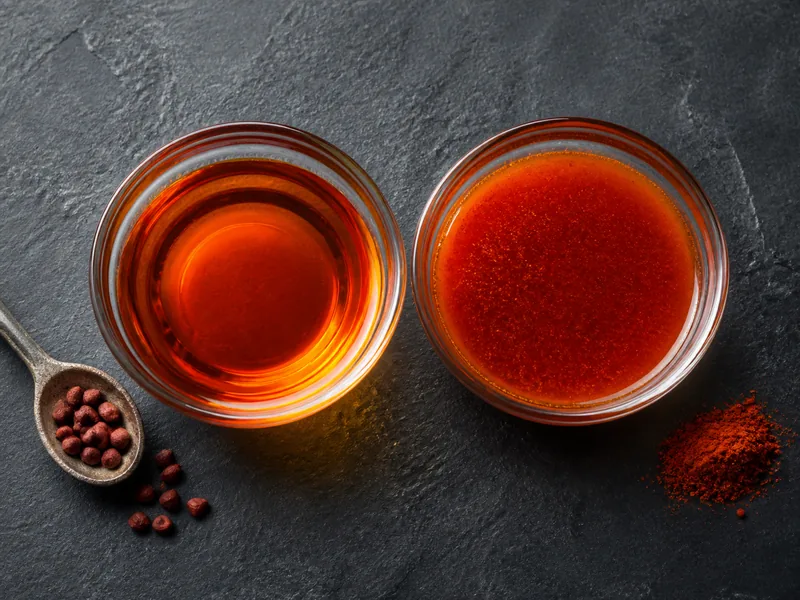
- Seed infusion: Color moves into fat and seeds are removed.
- Paprika: Fine red particles remain.
- Turmeric: Yellow particles settle strongly.
- Straining: Improves clarity but cannot make powder identical.
- Warm the recipe's oil over low heat rather than waiting for it to shimmer aggressively.
- Whisk in the measured powder and watch the fat change color for 20 to 30 seconds.
- Move into the recipe's wet ingredients as soon as the powder smells aromatic.
- For standalone colored oil, let particles settle and pour the clear portion through a fine filter.
- Judge both color and bitterness before making a second addition.
Do not let paprika or turmeric fry until brown. A darker color at the pan edge signals scorching rather than a closer annatto match.
Water-based dishes behave differently because annatto's principal culinary color is often carried through fat. Turmeric disperses readily through a wet pot, while paprika's color looks fuller when some oil is present.
Rice, Cheese, and Marinades Need Different Hues
Rice accepts colored fat early and distributes it as the grains absorb liquid. Paprika creates a muted orange-red result, while turmeric or saffron pushes the pot toward yellow or gold.
Pale cheese sauce exposes every particle and flavor change. Sweet paprika is usually the least disruptive choice, and a small dose is easier to correct than smoked paprika or turmeric.
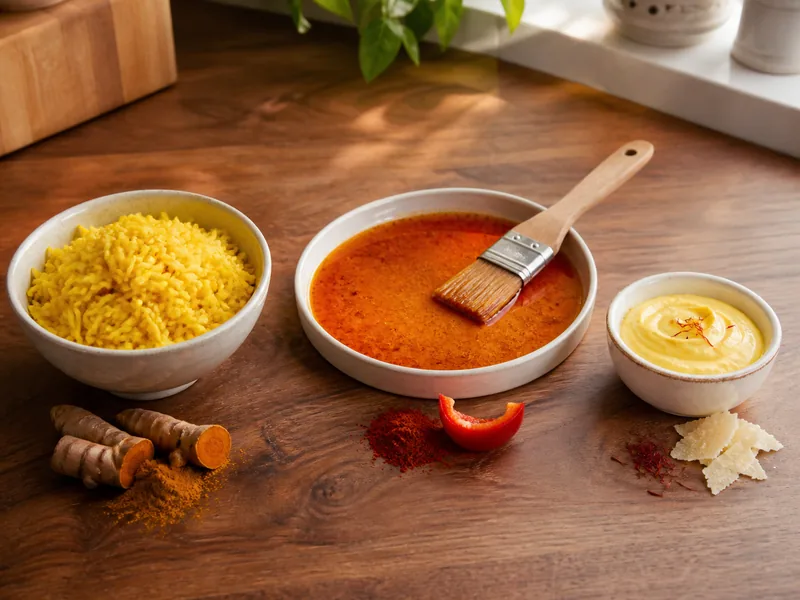
- Rice: Carries colored oil through the pot.
- Cheese: Exposes particles, smoke, and bitterness.
- Marinade: Can carry ancho fruit or paprika sweetness.
- Final hue: Judge after cooking, not in the dry bowl.
Use paprika for orange-red, turmeric for yellow, or saffron for aromatic gold.
Start with sweet paprika and whisk it into the fat before adding the dairy.
Ancho or smoked paprika can work when chile fruit or smoke fits the meat.
Paprika is broadest, while turmeric belongs in a deliberately yellow broth.
Disperse the powder through the liquid or fat before mixing to prevent streaks.
Acid in a marinade sharpens chile flavor but does not turn a yellow spice orange. Build hue with the correct pigment instead of using vinegar or citrus as a color correction.
Achiote Paste Is More Than Ground Annatto
Prepared achiote paste may contain ground annatto with vinegar, salt, garlic, herbs, and other spices.
Replacing it with paprika or turmeric solves only part of the marinade.
Read the package and the recipe together. If the paste supplies acid and salt as well as color, those elements need their own measured replacement rather than being hidden inside a larger spoonful of colored powder.
Do not convert one tablespoon achiote paste into one tablespoon ground spice. The paste contains liquid and other ingredients, while the dry powder may be many times more concentrated in color.
Correct Color Before It Turns Muddy or Bitter
Identify the problem before adding another pigment.
Excess turmeric is yellow and bitter, excess paprika is red and sweet-peppery, excess smoked paprika tastes smoky, and ancho darkens the food toward brown-red.
- Too yellowExtend the uncolored base before adding a very small paprika portion for orange.
- Too redAdd more of the original pale liquid, grain, sauce, or dough rather than trying to cancel red with yellow.
- Too smokyDilute with an unsmoked base. More sweet paprika may improve color but does not remove dissolved smoke.
- Too cloudySettle and strain an oil, or accept that powder-colored food will contain particles.
- Too bitterStop frying the spice and extend the base before restoring salt or acid.
Mixing red and yellow repeatedly can turn the food muddy without moving it closer to annatto. Use one main color direction, make a small test in a spoonful of the base, and scale only after seeing the cooked result.
Color should be tested in the actual cooking medium rather than on a dry spoon.
Warm one tablespoon of the recipe's oil with a measured pinch of candidate spice, then spread a drop on a white plate. The thin film shows hue and cloudiness more clearly than a deep bowl.
For a water-based dish, repeat the test in broth or milk because pigments disperse differently without much fat.
A white plate also reveals undertone. Paprika leans red, turmeric leans yellow, saffron stays golden, and ancho moves toward muted brick rather than annatto's clean orange-red.
Scale only after choosing that direction.
If a full batch needs more color, increase the same substitute in small portions instead of mixing pigments without a plan. Fully disperse each addition and view it under ordinary kitchen light before adding more.
The final color often deepens as rice absorbs liquid, cheese cools, or a marinade cooks onto meat.
Reserve a small uncolored portion when appearance matters for a catered dish or large cheese batch. It can lighten an overcolored mixture without forcing extra water, salt, or dairy into everything.
Keep the correction tied to flavor as well as hue. A visually accurate orange still fails when smoke, bitterness, or chile heat becomes the first taste.
Check color at two stages when the food will simmer, bake, or fry.
Keep one spoonful after the substitute is first dispersed, then compare it with a cooked spoonful under the same light. Paprika can look darker after browning, while turmeric may remain bright even when the finished dish needs a softer orange.
This paired sample also exposes flavor drift.
If the cooked sample tastes smoky, bitter, or distinctly like chile before the desired color appears, stop increasing that substitute. Choose a milder pigment for the remaining correction rather than forcing one powder to provide the entire hue.
Record the carrier, test amount, and cooked color for a successful batch. A ratio copied from oil will not automatically produce the same hue in broth, dough, or dairy.
The useful end point is the color the dish needs, not a laboratory match to annatto oil. A golden rice or redder marinade can be successful when the flavor remains balanced and the changed hue is understood.