
Which Poultry Seasoning Substitute Fits Your Dish?
Rebuild the sage-led blend, then change the herb choice for stuffing, roast skin, soup, or gravy.
Five Poultry Seasoning Substitutes for Different Dishes
Poultry seasoning is usually a salt-free dried-herb blend led by sage and thyme. Marjoram, rosemary, pepper, or nutmeg may support those two herbs, but formulas vary enough that the ingredient label is more reliable than the front of the jar.
For one teaspoon poultry seasoning, the most faithful pantry replacement is half a teaspoon sage plus half a teaspoon thyme. Herbes de Provence and Italian seasoning provide convenient blends with different directions, while marjoram and rosemary work as deliberate single-herb substitutes.
| Number | Substitute | Starting ratio for 1 tsp poultry seasoning | Best use | Main change |
|---|---|---|---|---|
| 1 | Sage and thyme | 1/2 tsp each | Stuffing, roast poultry, gravy, soup | Less background complexity |
| 2 | Herbes de Provence | 1 tsp | Roast poultry, vegetables, casserole | More floral, less sage-led |
| 3 | Italian seasoning | 1 tsp | Tomato braise, soup, meatballs | More oregano and basil |
| 4 | Marjoram | 1 tsp | Stuffing, dumplings, mild gravy | Softer and sweeter |
| 5 | Rosemary | 1/2 tsp, finely crushed | Roasts, potatoes, pan drippings | Piney and concentrated |
1. Sage and Thyme Blend
Combine half a teaspoon dried sage with half a teaspoon dried thyme to replace one teaspoon poultry seasoning.
This pairing rebuilds the savory, slightly camphor-like body and the finer herbal lift expected in stuffing, gravy, soup, and roast poultry.
Rub both herbs between your fingers before measuring them into a moist dish. Crushing breaks large sage flakes and helps the blend spread rather than leaving one mouthful sage-heavy and the next almost plain.
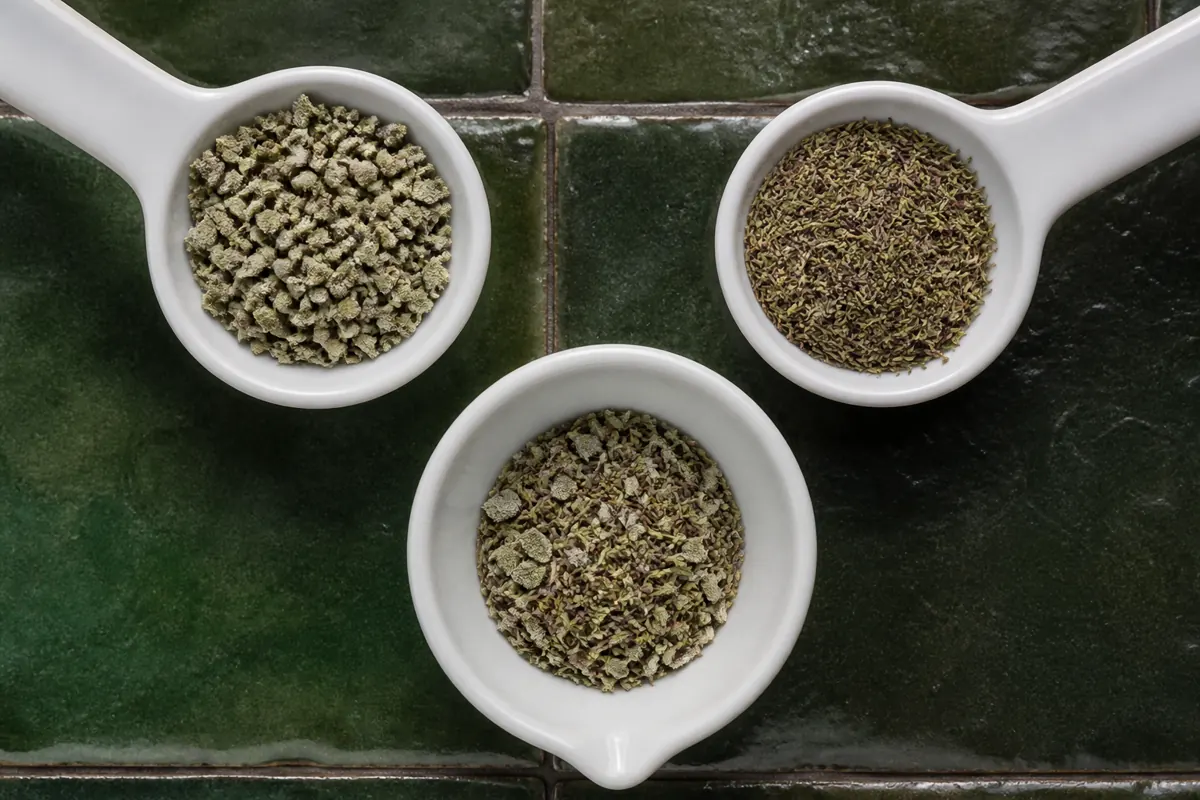
- Sage: Savory body.
- Thyme: Fine herbal lift.
- Equal halves: Balanced starting point.
- Break up the sageRub broad flakes between dry fingers so they distribute evenly.
- Measure equal halvesCombine 1/2 teaspoon sage and 1/2 teaspoon thyme.
- Smell the blendIf sage dominates before cooking, add only a small extra pinch of thyme.
- Keep salt separateSeason the finished food according to its own recipe.
This homemade blend formula is intentionally small enough for one recipe. Sage supplies the recognizable body, while thyme prevents the mixture from tasting flat and dusty.
If the stuffing already contains fresh sage, shift the dry replacement toward thyme rather than stacking two concentrated sage doses.
The leaf size should look reasonably even before the blend reaches the food.
Large sage pieces float to the top of soup and collect on roast skin, while fine thyme settles lower in a measuring cup. Rub, stir, and measure the combined herbs only after their particles are closer in size.
2. Herbes de Provence
Use one teaspoon Herbes de Provence for one teaspoon poultry seasoning on chicken thighs, turkey legs, roast vegetables, or a casserole. Thyme and other dry Mediterranean herbs tolerate oven heat, so the blend holds its aroma across a long roast.
The result is less sage-led and can become floral when the blend contains lavender.
Check the label before it enters pale gravy or traditional bread stuffing, where a perfume-like note is more obvious than it is on browned skin.
Roast surfaces give this blend its best setting because oil fixes the small leaves to the food and browning supports thyme and savory.
A wet bread filling magnifies lavender while softening the crisp herbal edge that makes the blend useful on skin.
If the jar contains large rosemary pieces, crush the measured spoon before mixing it with oil. Do not increase the dose to compensate for the missing sage center.
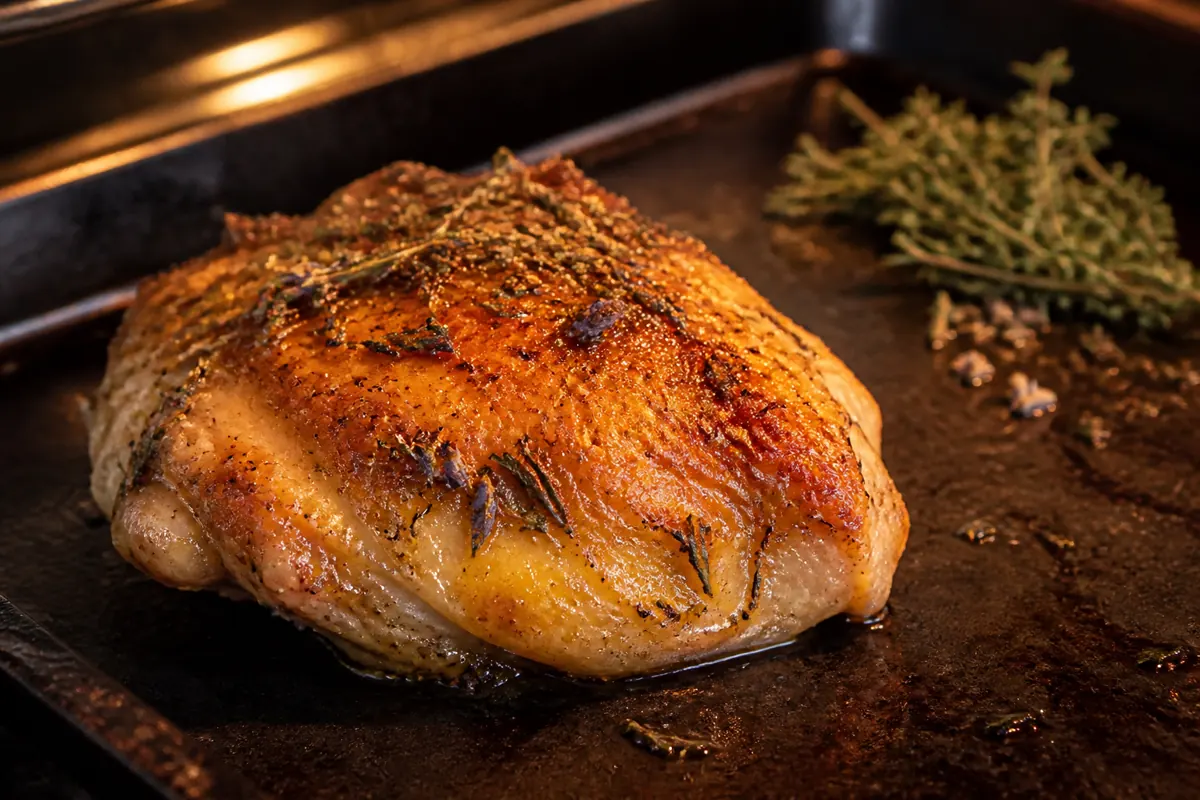
- Dry surface: Better browning.
- Oil film: Even herb contact.
- Label check: Lavender changes gravy.
3. Italian Seasoning
Italian seasoning replaces poultry seasoning at equal volume in chicken soup, tomato braise, meatballs, and casseroles.
Its oregano and basil direction fits tomato, garlic, and onion but shifts classic stuffing toward an Italian-American herb profile.
Add the dried blend early enough for the leaves to soften in liquid. On roast skin, crush coarse flakes and mix them with oil first so they adhere instead of falling onto the hot pan and scorching.
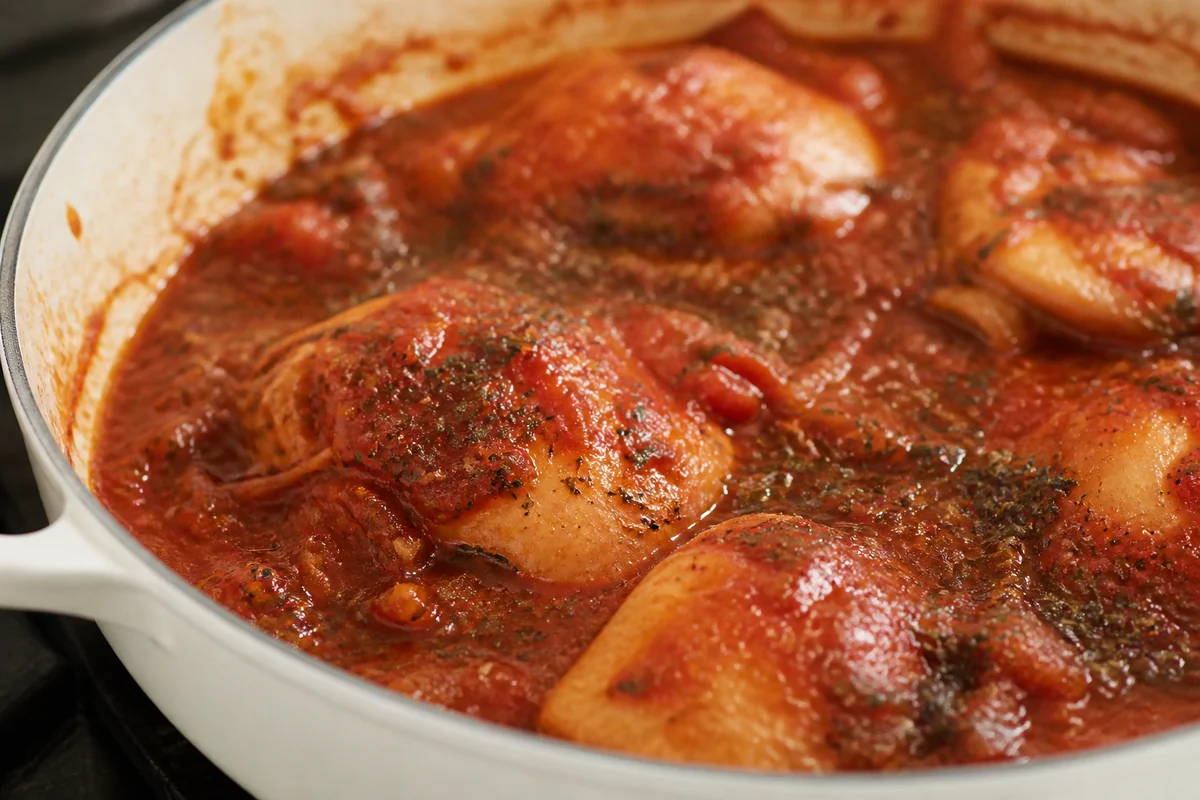
- Tomato base: Supports oregano and basil.
- Moist heat: Softens mixed leaves.
- Cuisine shift: Moves away from sage-led stuffing.
Italian seasoning performs best when the other ingredients support its oregano-basil direction.
Tomato, garlic, olive oil, and browned meat make the shift coherent in a braise or meatball mixture. In a pale cream gravy, the same blend announces a different cuisine before it provides the sage-like comfort the recipe expected.
Check whether the blend contains rosemary flakes that are much larger than its other leaves. Crush those pieces before they meet a surface roast, but leave the blend coarser in soup where moisture has time to soften it.
This is a texture correction rather than permission to increase the spoon volume.
4. Marjoram
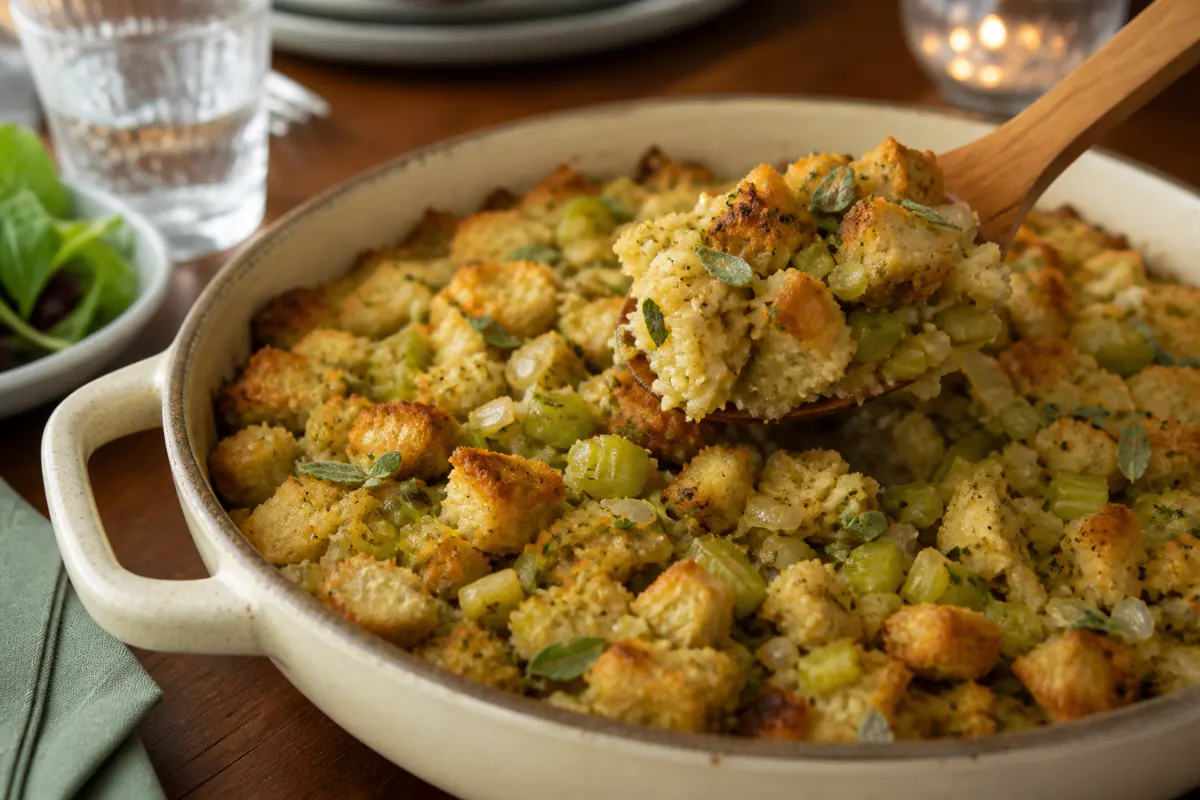
Use one teaspoon dried marjoram for one teaspoon poultry seasoning in stuffing, dumplings, mild soup, or cream gravy.
Marjoram has a soft sweet-herb aroma that seasons moist bread without the pine of rosemary or the floral possibility of lavender.
It cannot supply the sage backbone of the original blend. Keep the substitution gentle rather than doubling it, then use black pepper separately if the finished food needs a drier edge.
Marjoram earns its place when celery, onion, stock, and bread already provide most of the savory structure.
Its softer aroma fills the gaps without turning the stuffing piney.
Cream gravy needs the herb to enter before the final reduction. Give dried marjoram several minutes in the warm liquid, then judge it after the sauce coats a spoon.
A roast surface is a poor use for marjoram alone because the fine leaf can brown before the poultry finishes. Choose the sage-thyme blend or crushed rosemary when the herbs must stay exposed to oven heat.
- Moist bread: Softens dry leaves.
- Gentle aroma: Leaves room for vegetables.
- Missing sage: Flavor becomes lighter.
5. Rosemary
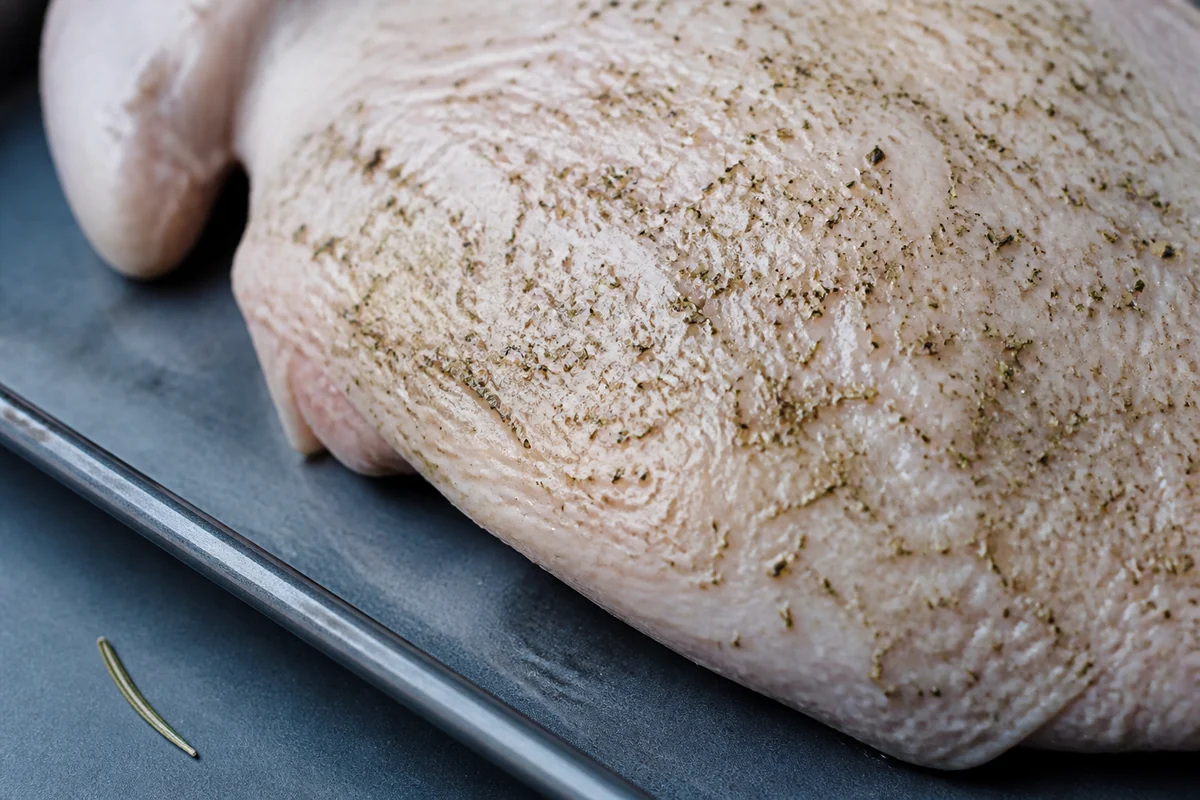
Begin with half a teaspoon finely crushed dried rosemary for one teaspoon poultry seasoning on roast chicken, turkey legs, potatoes, or pan drippings. Rosemary survives prolonged heat and gives browned food a clear woody aroma.
Its needles remain tough when they are left coarse, and the pine-like flavor can dominate gravy.
Crush the measured portion finely and disperse it in fat before roasting rather than increasing the dose to imitate a multi-herb blend.
- Fine crush: Shortens woody needles.
- Oil film: Spreads the measured dose.
- Half volume: Controls pine intensity.
Rosemary is a method-specific fallback rather than a general replacement. It suits exposed skin, potatoes, and pan drippings, but it makes bread stuffing and cream gravy feel narrower than a sage-thyme blend does.
Stuffing, Roast Skin, Soup, and Gravy Extract Herbs Differently
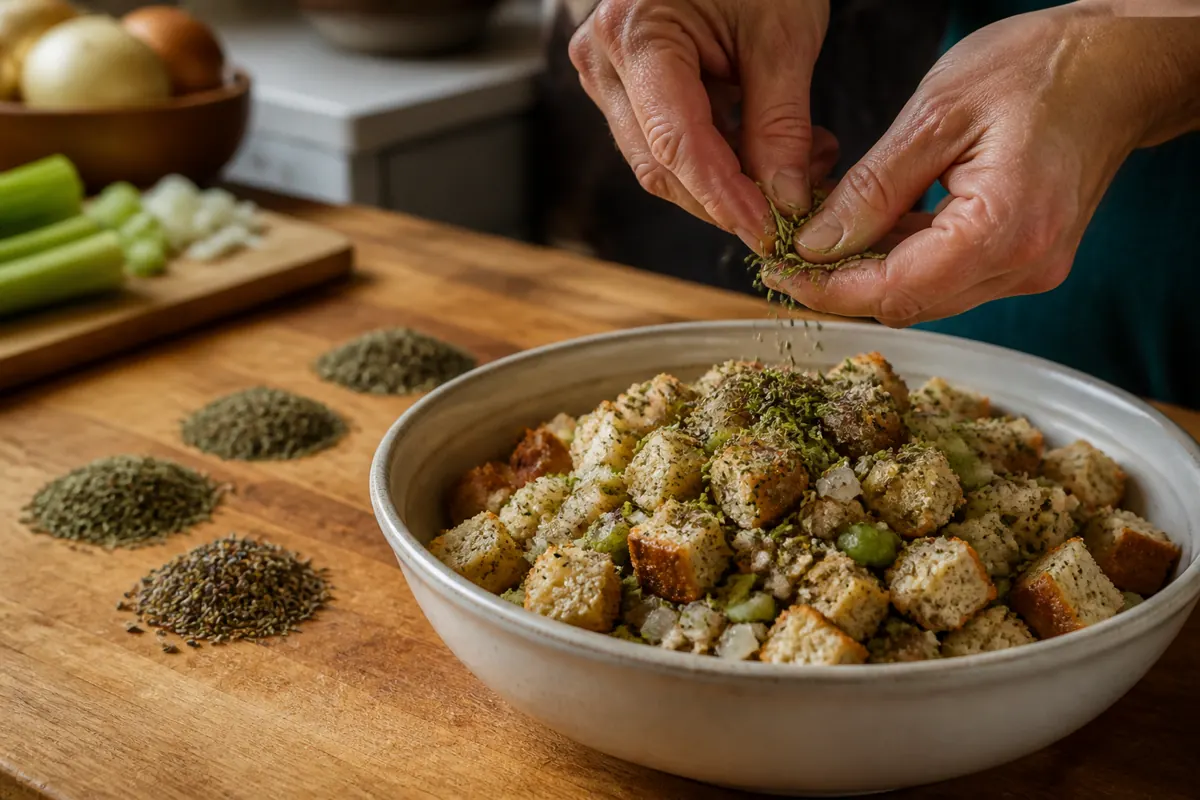
Stuffing hydrates dry herbs slowly as stock moves into bread. Mix sage, thyme, or marjoram through the dry bread first, then add stock so the leaves do not collect in one wet pocket.
Roast skin exposes herbs to direct heat and surface fat. A thin oil film carries aroma and holds small flakes in place, while loose dry herbs can scorch before the meat is done.
Soup gives Italian seasoning or the sage-thyme blend time to soften and spread. Add them with the aromatics, then reserve fresh herbs for the end so they do not lose their brighter character during a long simmer.
Gravy concentrates whatever entered the drippings.
Use a smaller rosemary or lavender-containing dose on the roast when those drippings will be reduced, because water loss increases the apparent seasoning strength.
Test stuffing in its hydrated state, not from the dry bowl. Warm one spoonful of bread with stock in a small pan, then correct the main batch only after the leaves have softened.
For roast skin, spread the measured herbs through enough oil or softened butter to cover the surface. A concentrated patch browns faster and tastes stronger than the same spoon distributed evenly.
Mix sage-thyme or marjoram through dry bread before adding stock.
Use Herbes de Provence or crushed rosemary in a thin oil film.
Add sage-thyme or Italian seasoning early enough for the leaves to soften.
Begin below the roast dose because reduction concentrates strong herbs.
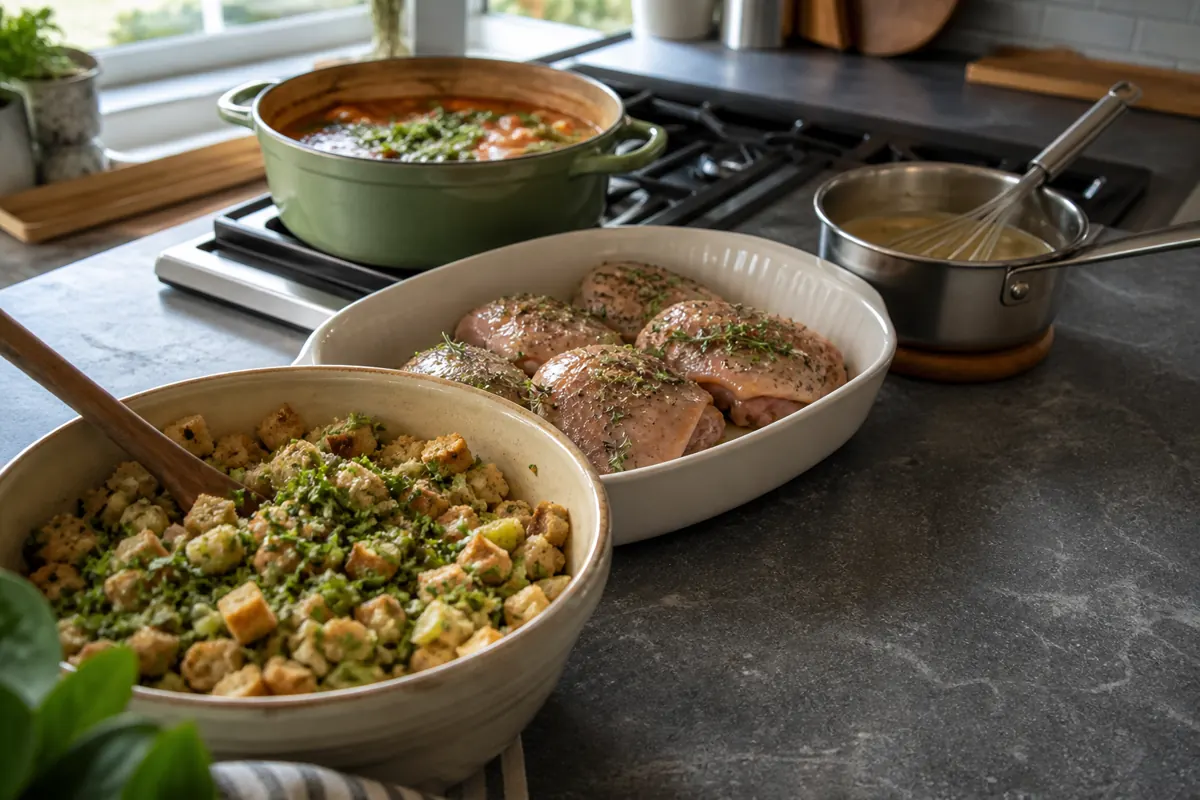
- Stuffing: Distribute before wetting.
- Skin: Bind with oil.
- Soup: Allow time to soften.
- Gravy: Expect concentration.
Judge the seasoning after the food reaches its final moisture level. A stuffing mixture can smell assertive before baking and taste balanced after the bread absorbs stock, while gravy often becomes stronger during reduction.
Fresh Herbs Need a Volume and Timing Change
Fresh sage, thyme, marjoram, or rosemary can replace a dried blend, but fresh leaves contain water and occupy more volume.
Use about one tablespoon finely chopped fresh herbs for one teaspoon dried poultry seasoning, then choose the herb proportions for the dish.
For a familiar profile, make most of that tablespoon sage and thyme. Use less fresh rosemary because its needles remain firm, and mince it finely enough that no diner receives a long woody strip.
Fresh herbs release their brightest aroma later than dried herbs. Fold some into stuffing before baking for integration, then reserve a small portion for soup or gravy after the heat is lowered.
| Recipe context | Dried starting point | Fresh starting point | Timing |
|---|---|---|---|
| Stuffing | 1 tsp sage-thyme blend | 1 tbsp finely chopped mixed herbs | Before adding stock |
| Roast surface | 1 tsp blend | 1 tbsp chopped sturdy herbs | Mix with oil before roasting |
| Soup | 1 tsp blend | 1 tbsp chopped herbs | Dried early, fresh late |
| Gravy | 1/2 to 1 tsp | 1 to 2 tsp finely chopped | Add gradually after reduction |
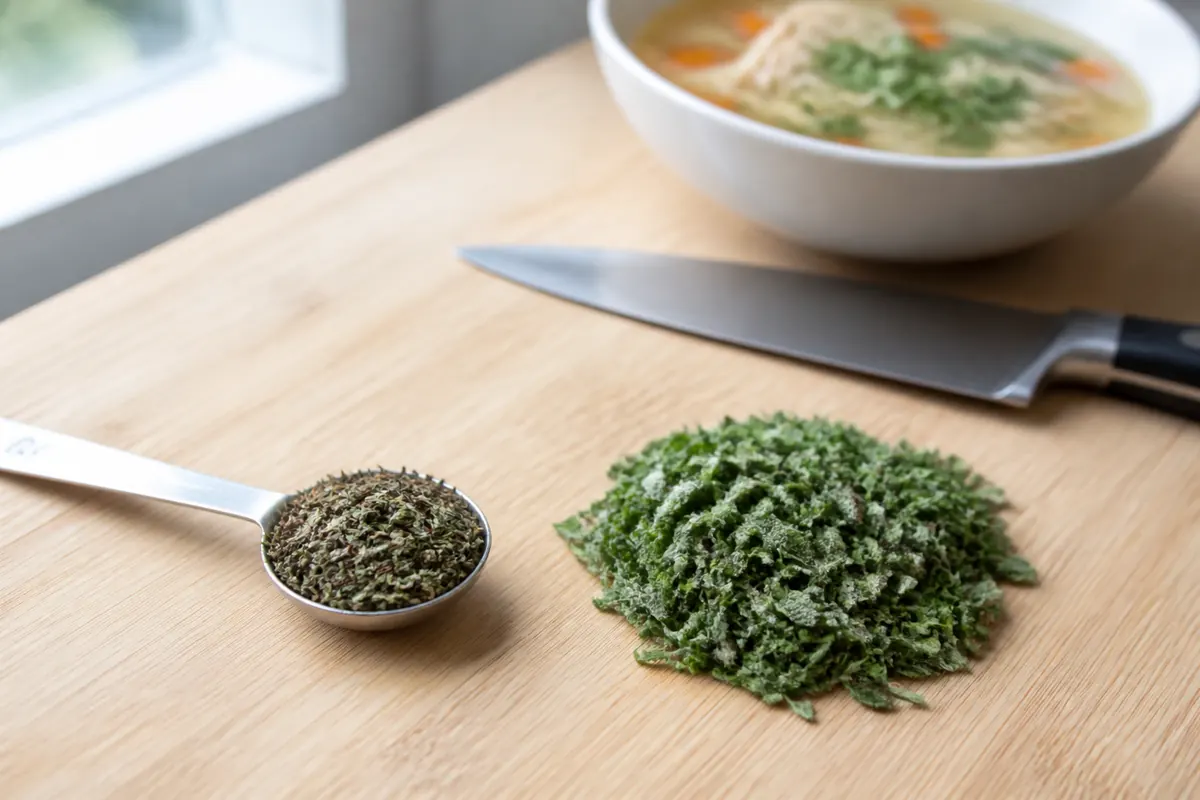
- Dried teaspoon: Concentrated and early.
- Fresh tablespoon: Moist and later.
- Fine chop: Even distribution.
Commercial blend age changes the useful dose even when the label is unchanged.
A newly opened jar can smell sharper than a blend that has spent a year near stove heat. Rub a pinch between your fingers and smell it before measuring, since increasing an exhausted blend adds dry leaf texture faster than it restores aroma.
When the aroma is weak, build the replacement from fresher individual herbs instead of doubling the old mixture.
Use black pepper only after the herb balance is clear, because pepper supplies bite rather than the missing sage-thyme structure. A small nutmeg pinch can round cream gravy or stuffing, but it should remain a supporting note rather than part of every poultry seasoning swap.
Pan drippings deserve one final unsalted taste before gravy seasoning begins.
Brined poultry and salted butter can concentrate enough sodium during roasting that no extra salt is needed. Add herb replacement first, reduce the gravy, and correct salt at the end.
Rubbed Herbs and Fine Powder Do Not Fill a Spoon the Same Way
Poultry seasoning can be a loose rubbed blend, a coarse leaf mixture, or a nearly uniform powder. The label may use the same name for all three, but one teaspoon of each does not carry the same amount of herb.
Rubbed sage and thyme trap air between irregular leaves. A fine commercial powder packs more tightly, coats food faster, and tastes stronger at the same measured volume.
Look through a spoonful before choosing the ratio. If you can identify broad sage flakes and small thyme leaves, an equal-volume herb blend is a reasonable starting point for stuffing or soup.
When the seasoning looks dusty and uniform, begin with three-quarters of the listed volume.
Fine particles spread across roast skin and through gravy immediately, while larger leaves need moisture and time before they release the same impression.
Crushing a substitute changes this calculation.
Rosemary needles broken in a mortar stop falling off oiled skin. The smaller pieces also expose more aromatic surface, so the dose must stay restrained.
Italian seasoning creates a different density problem because brands vary in oregano, basil, rosemary, and powdered garlic. Smell the jar and inspect the first ingredients before treating it as a neutral one-for-one blend.
- Loose rubbed leaves: Start at equal volume in moist stuffing or soup.
- Fine powder: Start at three-quarters volume and taste after hydration.
- Coarse rosemary: Crush the measured portion before it touches the food.
- Garlic or chile in the blend: Reduce separate seasoning that repeats those ingredients.
- Old dusty jar: Replace it rather than adding a larger stale dose.
Gravy exposes fine powder quickly. Whisk the substitute into warm fat or a small amount of stock, then wait until the leaves hydrate before deciding that the flavor is weak.
Stuffing gives coarse herbs more room.
Moist bread holds leaves and continues extracting them in the oven, so a blend that tastes slightly restrained before baking may become complete at the table.
Roast skin rewards even particle size. Large leaf pieces scorch at exposed edges while powder can gather in wet patches, which makes crushing and oil distribution more important than adding another spoonful.
A kitchen scale does not solve every variation because herb moisture and grind still change aroma. Use appearance to set the opening dose, then use the cooked food rather than the dry bowl as the final test.
This prevents a common correction error. Adding more seasoning before the first dose hydrates can turn a mild-looking herb coating into a bitter, sage-heavy crust.
Salt, Pepper, and Nutmeg Stay Separate
Poultry seasoning and poultry-flavored seasoned salt are different products.
Read the label before substituting, since a salt-heavy product can over-season stuffing or gravy before enough herb aroma is present.
Keep recipe salt outside the herb replacement and add it according to the food's actual sodium sources. Stock, brined poultry, butter, and pan drippings can already provide more salt than the dry blend does.
Black pepper and nutmeg are supporting choices rather than automatic parts of every substitute. Pepper suits roast skin and gravy, while a very small nutmeg pinch can round bread stuffing or cream sauce.
Ingredient order reveals more than the blend name.
A jar that begins with sage and thyme will behave differently from one led by oregano, salt, garlic, or powdered bouillon.
Fine powder also measures more densely than loose rubbed leaves. Level the spoon and avoid packing it, especially when copying a fluffy homemade sage-thyme mixture with a finely milled commercial blend.
The final test is whether the dish tastes herbaceous without one named herb taking over. A quieter blend can be corrected at the table, while excessive sage, rosemary, lavender, or salt is difficult to remove.