
Sage Substitutes for Stuffing, Roasts, and Brown Butter
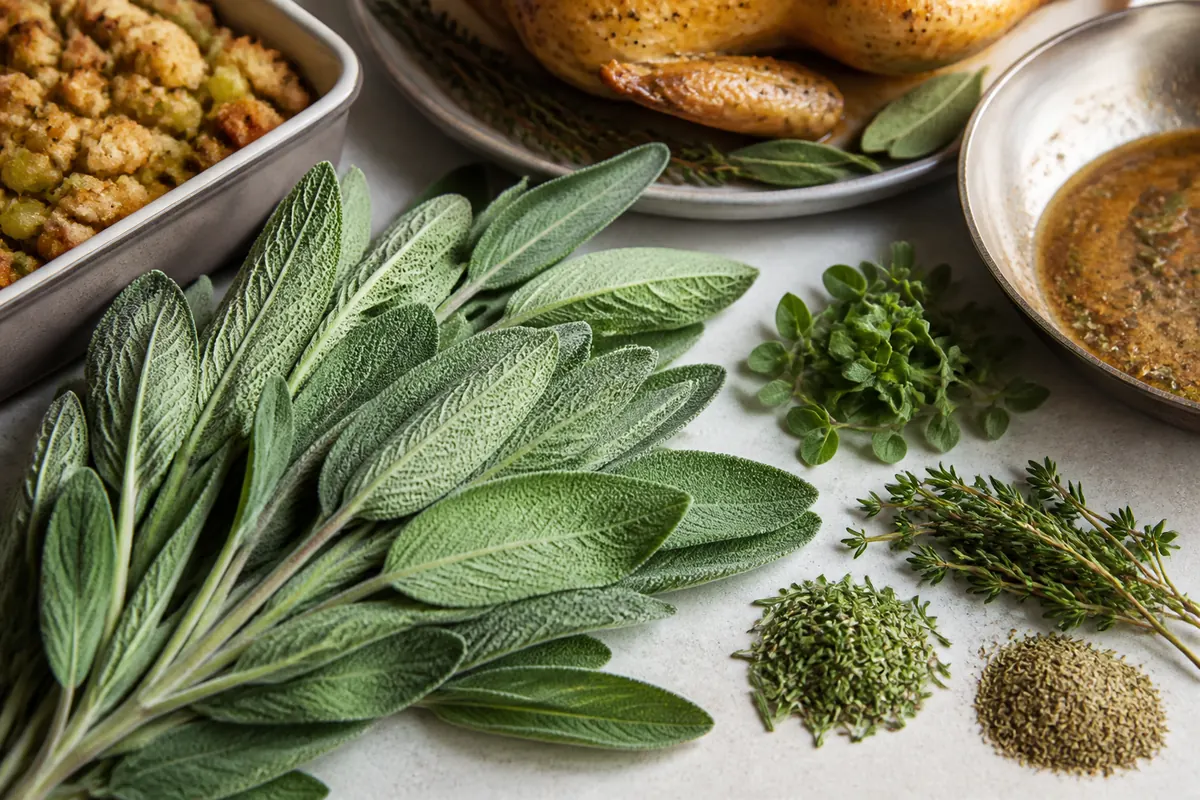
Sage Brings Earthiness, Resin, and Fat-Soluble Aroma
Marjoram is the closest gentle sage substitute for stuffing and poultry. Use it at equal volume when both herbs are in the same fresh or dried form, then add thyme only if the finished food needs a firmer earthy note.
Sage has a combination that common herbs divide among themselves. Its flavor is earthy and faintly bitter, its aroma is resinous without being as piney as rosemary, and its soft leaf can disappear into a bread mixture or become crisp in hot fat.
Fresh sage leaves have a thick, velvety surface.
That texture lets a whole leaf fry into a brittle garnish, while chopped leaf releases aroma slowly into sausage, squash, beans, and stuffing. Tender marjoram cannot create the same crisp leaf, and rosemary needles remain much tougher.
- Earthy depth
- Sage keeps rich meat, butter, and bread from tasting merely fatty.
- Resinous aroma
- Its camphor-like edge gives roast food a woodland character.
- Soft leaf texture
- Chopped sage blends into stuffing and sausage without hard needles.
- Heat behavior
- Fresh leaves can fry in butter, while dried leaf survives mixing and baking.
Fat matters because many sage recipes bloom the herb in butter or meat drippings. The aroma spreads through the fat, which makes a modest dose taste fuller across every bite.
A substitute added only at the end may smell bright but fail to season the butter underneath.
The reverse can happen with tender herbs. Marjoram cooked hard for an hour loses the fresh sweetness that made it a good replacement, so long cooking favors thyme even though thyme is less similar in the jar.
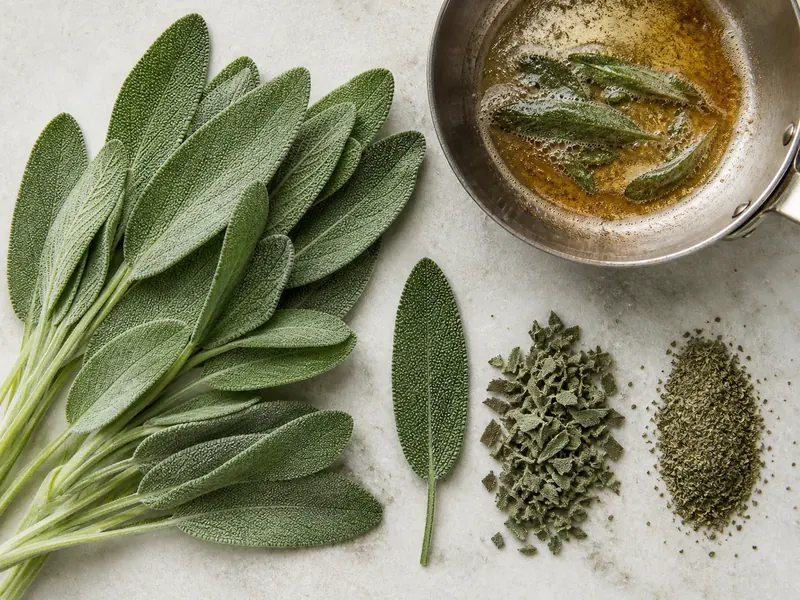
- Velvety leaf: Soft chopped texture.
- Browned butter: Aroma carrier.
- Whole leaf: Frying option.
- Rubbed herb: Even distribution.
Dried sage creates another ratio problem. Its water has already been removed, so one spoon carries more leaf material and a more concentrated flavor than the same spoon of chopped fresh sage.
Match forms before comparing volume. If a recipe asks for fresh sage and you have a dried substitute, begin at about one-third the fresh volume, then taste the cooked food before increasing it.
Four Sage Substitutes with Different Heat Limits
Choose the substitute from the cooking method rather than from leaf color. Marjoram suits soft bread and poultry, thyme endures a roast or bean pot, rosemary belongs with forceful roasted food, and oregano is useful only when a tomato or sausage dish can support its recognizable shift.
| Number | Substitute | Starting ratio for 1 tsp dried sage | Best use | Main change |
|---|---|---|---|---|
| 1 | Marjoram | 1 tsp dried | Stuffing, poultry, beans | Sweeter and gentler |
| 2 | Thyme | 3/4 tsp dried | Roasts, gravy, long simmers | More floral, less musky |
| 3 | Rosemary | 1/3 tsp finely chopped | Pork, lamb, potatoes | Piney and stronger |
| 4 | Oregano | 1/2 tsp dried | Tomato sausage, meatballs | Sharper cuisine shift |
1. Marjoram
Use one teaspoon dried marjoram for one teaspoon dried sage, or one tablespoon chopped fresh marjoram for one tablespoon fresh sage. This equal-form ratio is the best starting point for stuffing, chicken, turkey, white beans, and a mild breakfast sausage.
Marjoram shares sage's warm herbal direction but tastes sweeter and less bitter.
Its leaves are tender, so they fold through moist bread without leaving needles or stems. That texture makes marjoram more convincing in stuffing than rosemary, even when rosemary may smell stronger beside the uncooked ingredients.
- Match the formReplace dried sage with dried marjoram or fresh with fresh.
- Mix most into the baseDistribute the herb through the moistened bread.
- Hold a small portionAdd it near the end if baking has muted the aroma.
- Taste with the fatJudge a buttered spoonful, not dry bread cubes.
Add dried marjoram when the onions and celery have softened in butter. A brief warm contact opens its aroma, but hard frying can make the small leaf fragments dull.
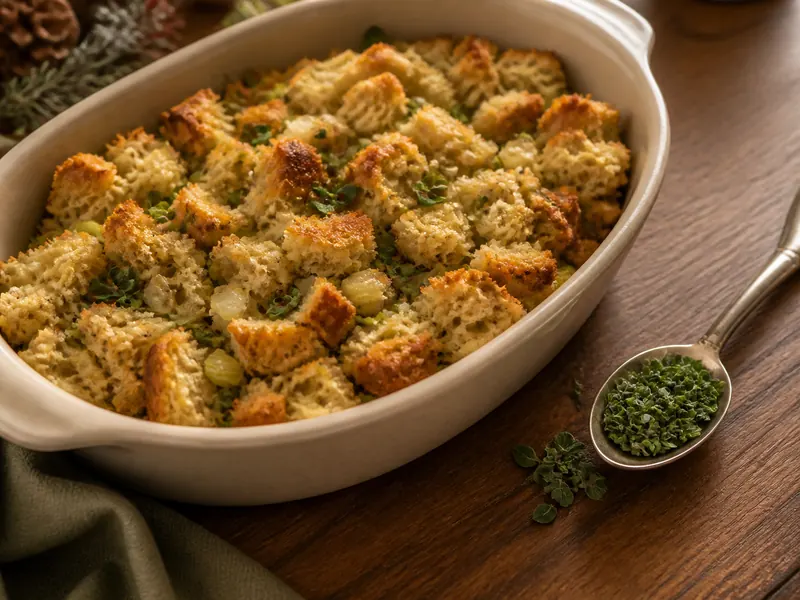
- Equal form: Reliable starting ratio.
- Moist bread: Softens the leaf.
- Butter stage: Carries aroma.
- Late portion: Restores freshness.
For sausage, cook a teaspoon-sized sample before seasoning the whole mixture. Salt, fat, and browning make herbs taste different from the raw mixture, and marjoram can seem quiet until the meat releases fat.
If the cooked sample lacks sage's darker edge, add a small thyme pinch rather than doubling marjoram.
Long uncovered roasting is marjoram's weak point. Use it inside stuffing or under the skin where moisture protects the leaf, or add a fresh portion after the roast rests.
2. Thyme
Use three-quarters teaspoon dried thyme for one teaspoon dried sage in roast chicken, beans, gravy, and a stuffing that cooks for a long time. Thyme is less musky, but it keeps its aroma under heat better than marjoram.
Fresh thyme sprigs offer a useful advantage. They can season drippings, stock, or beans and then leave the pot before their stems become a texture problem.
Strip the leaves when thyme must remain in stuffing.
Tie fresh sprigs and remove them from the pan juices.
Simmer a sprig, then taste before adding dried leaf.
Crush dried thyme finely so no stem fragments remain.
Use stripped fresh leaves or rubbed dried thyme.
Thyme brings a floral, slightly minty edge rather than sage's broad earthy bitterness. In a long braise, browned meat and stock can fill that missing depth better than another spoon of herb.
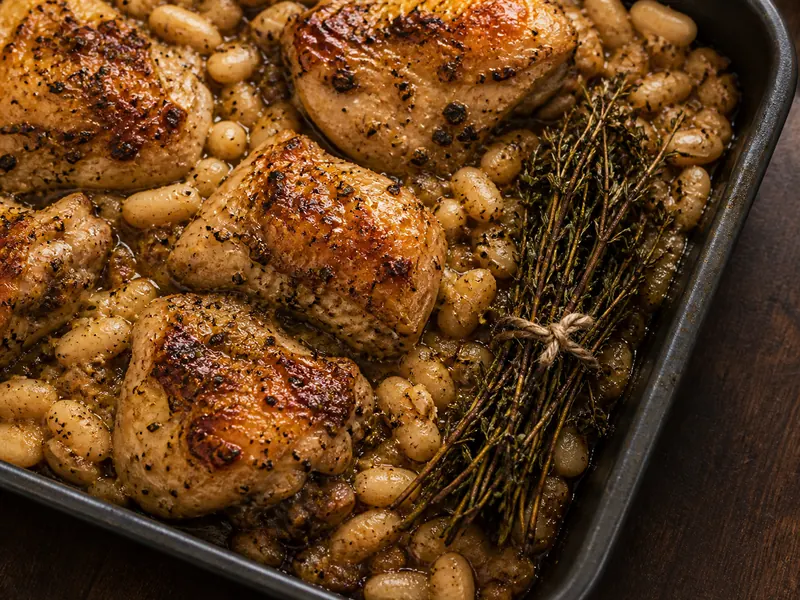
- Tied sprigs: Easy removal.
- Dark tray: Long heat.
- Beans: Slow absorption.
- Pan juices: Aroma carrier.
Crush dried thyme between your fingers before measuring. This breaks the leaf clusters and produces a more accurate spoonful without grinding stems into powder.
Do not judge thyme by the raw stuffing mixture alone.
Its aroma becomes rounder after butter and stock heat the leaves, so bake a small spoonful when the final balance matters. Add more only after that sample has cooled enough to taste.
In a quick brown-butter sauce, thyme can work, but use fewer leaves and add them earlier than fresh marjoram. The herb needs a short warm infusion, while the butter should come off the heat before either the leaves or milk solids scorch.
3. Rosemary
Use one-third teaspoon finely chopped rosemary for one teaspoon dried sage. Rosemary is a strong, piney substitute for pork, lamb, potatoes, roast squash, and other foods that can carry a distinct resinous flavor.
The reduced ratio is essential.
Rosemary's needle leaves contain concentrated aromatic oils and remain firm after cooking. An equal spoon can dominate the meat while leaving hard green fragments in stuffing or sauce.
Pork and potatoes give rosemary room to work because browning, starch, and fat soften its piney edge. Mix the small dose into oil before coating the food so no piece receives a dense clump.
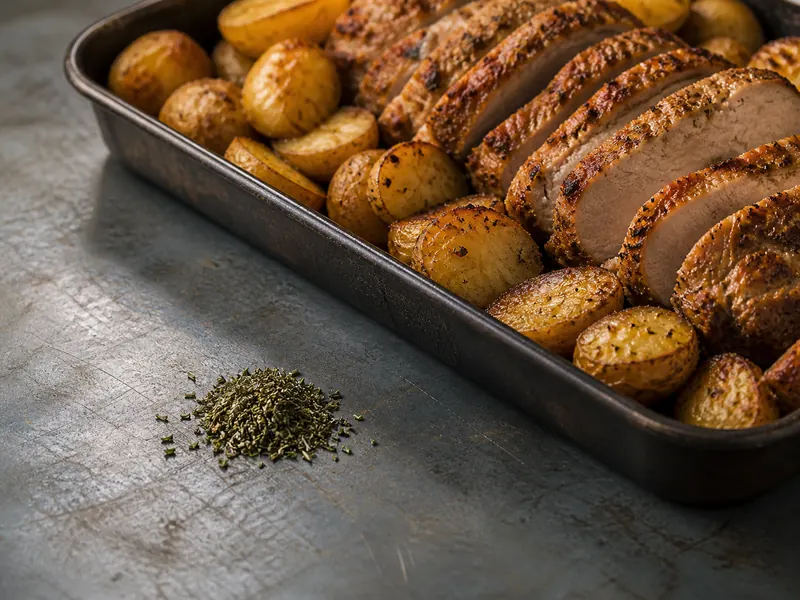
- Tiny measure: Strong resin.
- Fine chop: Better texture.
- Pork fat: Spreads aroma.
- Large tray: Dilutes intensity.
A removable sprig is often better than chopped rosemary in gravy or beans. Infuse it during the simmer, remove it early, and let black pepper or browned onions supply the savory bite sage would have added.
Rosemary is a poor fit for delicate sage butter over pasta.
The sauce has too little bulk to hide its needle texture and pine aroma. Thyme or a reduced amount of marjoram gives a cleaner result, while omission may be better when the butter is meant to taste simple.
If rosemary has already become too strong, increase the unsalted base rather than adding sugar. More potato, stock, beans, or plain meat spreads the oil across a larger volume without creating a new flavor conflict.
4. Oregano
Use half a teaspoon dried oregano for one teaspoon dried sage when the recipe contains tomato, sausage, beans, or browned ground meat. Oregano is not a close sensory match, but it can preserve herbal pungency in a dish that already points toward Mediterranean flavors.
This is an intentional change of identity.
Oregano tastes sharper and more immediately recognizable than sage. In pale stuffing or brown butter, that named flavor can make the whole dish seem like a different recipe.
Bloom dried oregano briefly in oil before tomato liquid enters the pan. The fat spreads its aroma and takes away the dusty raw-leaf impression.
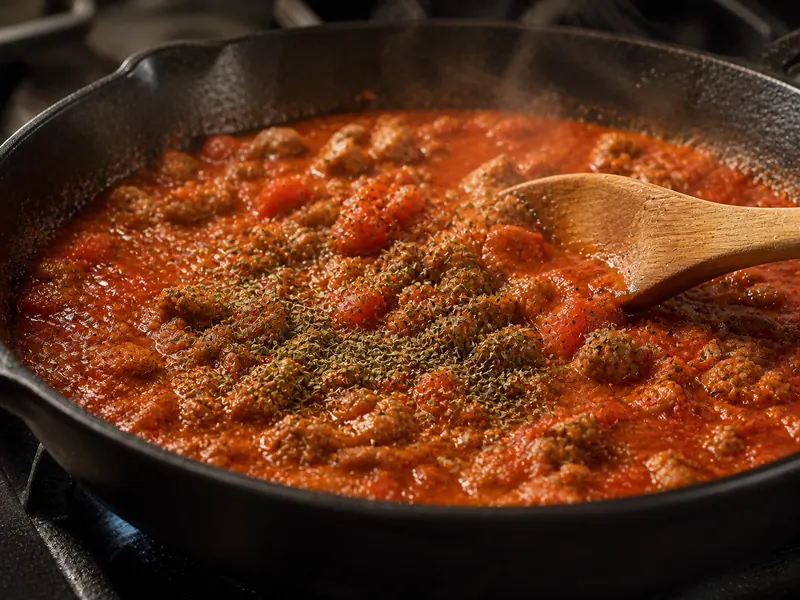
- Tomato base: Supports oregano.
- Sausage fat: Carries aroma.
- Small dose: Limits the shift.
- Black skillet: Brief oil bloom.
For meatballs, mix the oregano with thyme. Thyme rounds the upper floral note and makes the result less like a single-herb tomato sauce.
Do not use oregano to imitate crisp fried sage leaves.
Its small dried fragments cannot supply the garnish texture, and fresh oregano becomes leathery rather than brittle in the same way. Choose a different garnish or leave the surface plain.
Taste the finished sauce after it reduces. Oregano concentrates with the liquid, so a half teaspoon that seems mild at the start may become complete by serving time.
Fresh, Dried, Fried, and Simmered Herbs Need Different Timing
A substitute works only when its form fits the recipe. Fresh leaves carry water and a brighter top aroma, while dried leaves deliver more material in each spoon and spread through mixtures more evenly.
For a recipe written for one tablespoon fresh sage, begin with one teaspoon dried marjoram or about three-quarters teaspoon dried thyme. This is a starting conversion, not a universal equation, because leaf cut and storage age change the density.
Brown butter requires a method decision before an herb decision.
Whole sage can fry until crisp, but marjoram and thyme are too small to create the same garnish. Use them to perfume the butter, then finish the plate with a separate crisp element such as toasted breadcrumbs or nuts if texture matters.
- Brown butterAdd thyme or marjoram when the foaming slows, then remove the pan before the leaves darken.
- StuffingWarm dried herbs in the vegetable butter and reserve fresh tender leaves for the final mix.
- RoastPut thyme or rosemary under the food or in the pan juices where exposed leaves will not burn.
- Long simmerUse removable sprigs and taste before the final reduction.
- Fresh finishAdd marjoram only after the strongest heat has passed.
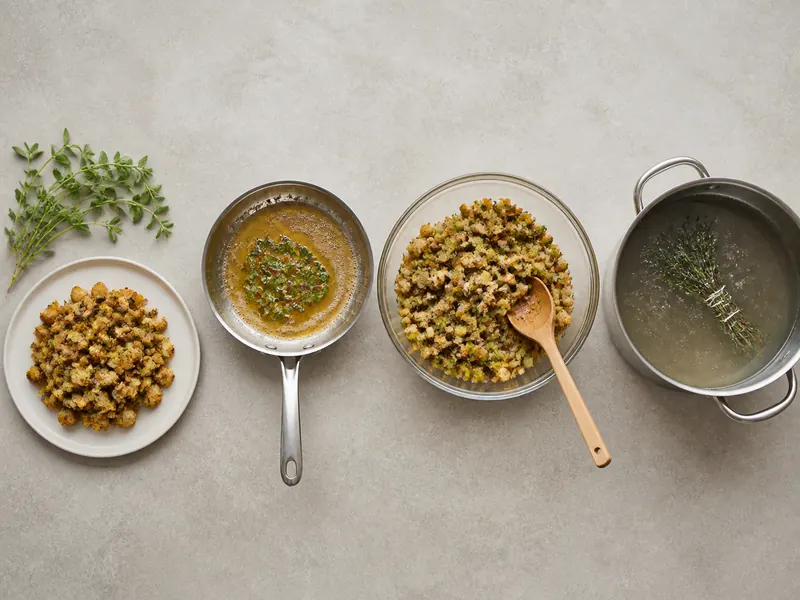
- Fresh finish: Protects top aroma.
- Butter pan: Brief extraction.
- Stuffing bowl: Even distribution.
- Simmer bundle: Long flavor, easy removal.
Stuffing benefits from two additions when you use marjoram. Warm the dried portion with the vegetables, then fold fresh leaves through just before the mixture enters the baking dish.
That sequence creates seasoned fat underneath and a fresher aroma above.
Roasting needs protection from dry surface heat. Put thyme sprigs under chicken, mix chopped rosemary into oil, or tuck either herb among potatoes rather than scattering dry leaves on an exposed tray.
A simmer gives the cook more time to correct.
Add a removable thyme or rosemary sprig early, taste the broth when the main ingredients are tender, and pull the herb before reducing the liquid. Reduction concentrates herb, salt, and meat juices together.
Old dried herbs may need a larger amount, but age should be tested by aroma before the jar enters the dish.
Rub a pinch between your fingers. A dusty sample with no recognizable herb note has lost oils that extra volume cannot restore.
When No Herb Is Better Than the Wrong Herb
Omit sage when it is a small optional garnish and every available substitute would announce a different cuisine. Simple squash, buttered pasta, and a pale cream sauce often lose less from missing sage than they do from excessive rosemary or oregano.
Stuffing and sausage have a stronger need for herbal structure.
In those foods, marjoram or thyme supports a large mass of bread or meat, so omission leaves a clearer gap. Use a measured substitute and judge a cooked sample.
- Replace with marjoram when softness and gentle warmth matter.
- Choose thyme when the food cooks for a long time.
- Reduce rosemary sharply and reserve it for roasted meat or vegetables.
- Use oregano only when tomato, garlic, or sausage supports the shift.
- Omit the herb when sage was merely a delicate fried garnish.
Black pepper can restore a little savory bite when you omit the herb, but it does not replace sage aroma. Use it only when the dish already needs pepper and avoid creating a second substitute problem.
Browned butter, caramelized onion, toasted nuts, and roasted meat also supply depth through cooking rather than through another herb.
These elements can make omission feel complete without pretending to taste like sage. They are especially useful in squash or pasta where the original herb was one accent among several.
Wait for real sage when its whole fried leaves define the presentation. No chopped herb reproduces the broad crisp leaf or its particular aroma in hot butter.
The final decision should be easy to explain from the food.
Use marjoram for a gentle short cook, thyme for endurance, a small rosemary dose for forceful roasted food, and oregano only for a deliberate tomato or sausage direction. Leave the space empty when every option would be louder than the missing sage.