
Which Zaatar Substitute Fits the Food You Are Making?
Rebuild the herb, sumac tang, and sesame texture according to whether zaatar stays visible or cooks into the dish.
Za'atar Has Three Parts, and Each One Can Go Missing
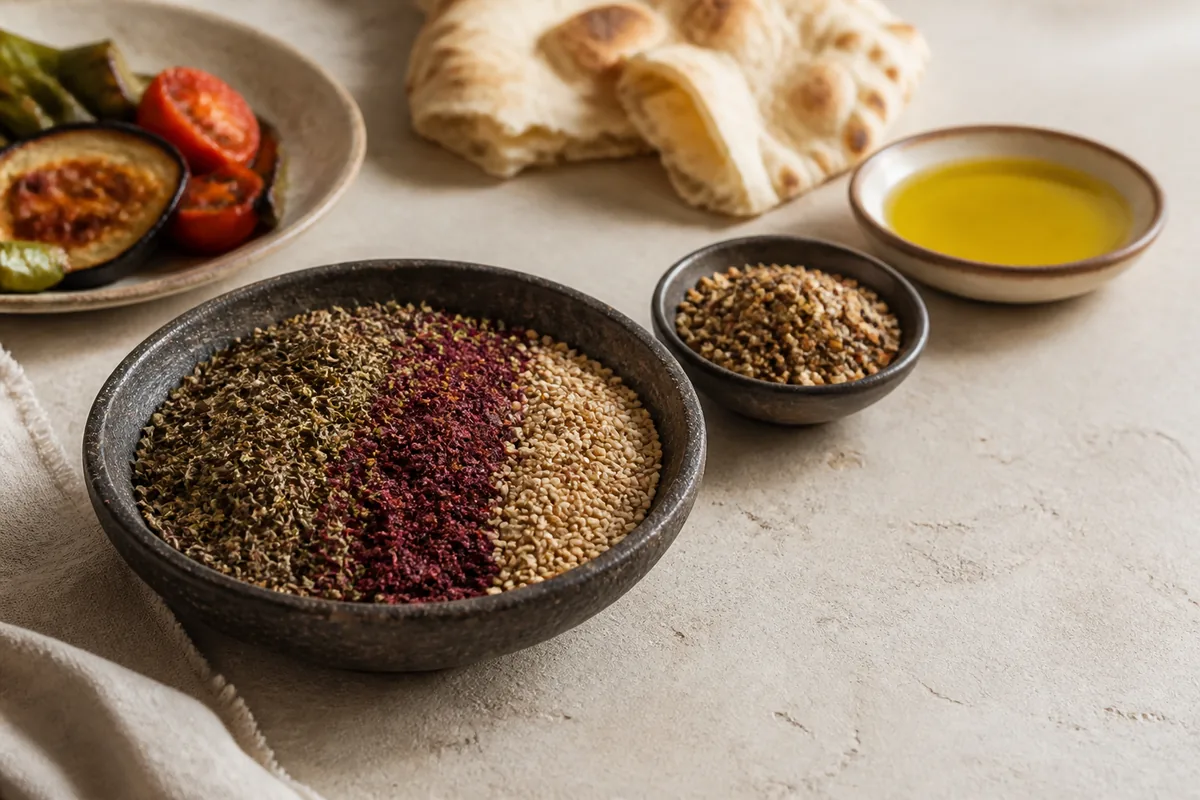
The best complete za'atar substitute is equal parts dried thyme, ground sumac, and toasted sesame seeds, used at the same total volume as the missing blend.
For one teaspoon za'atar, mix one-third teaspoon of each and add salt only after tasting.
That formula restores the three qualities most cooks expect from a mixed za'atar. The herb supplies a resinous green base, sumac brings dry berry tartness, and sesame adds toasted aroma and a coarse bite.
Za'atar can also name the regional herb itself, including Origanum syriacum, rather than only the familiar table blend. Commercial and household mixtures vary, so a jar may contain more herb, more sumac, more sesame, salt, or other additions.
- Herb base
- Thyme or a related oregano-like herb gives the blend its green savory center.
- Dry tartness
- Sumac adds brightness without the liquid of lemon juice.
- Toasted texture
- Sesame contributes aroma, oil, and visible crunch.
- Salt
- Some jars contain it and others leave seasoning to the cook.
- Extra ingredients
- Chickpea, grain, nuts, fennel, or other spices may appear in regional and commercial blends.
A substitute fails when it fixes only the loudest aroma. Plain thyme misses tartness and texture, while plain sumac gives color and acid but leaves bread or labneh without the toasted herbal body people expect.
Inspect the food as well as the jar. A dusting over oil and flatbread exposes every missing component, but a spoonful mixed into a wet marinade can hide absent sesame more easily.
The label gives another clue. If salt appears high in the ingredient list, hold back the recipe's separate salt when testing any replacement at equal volume.
Rebuild All Three Parts When Za'atar Stays Visible
Flatbread, labneh, eggs, salads, and finished vegetables keep the seasoning on the surface.
These foods reward a complete rebuild because the eater can see the seed texture and smell the uncooked herb and sumac directly.
| Thyme, sumac, and sesame | Restores herb, tartness, and seed texture with a familiar fine-coarse balance. |
|---|---|
| Dukkah | Adds pronounced nuts and crunch but usually has less dry tartness and a different herb profile. |
| Best complete use | Flatbread, labneh, eggs, salad, and a visible vegetable finish. |
| Best dukkah use | Oil-dipped bread, roast vegetables, eggs, and foods that welcome coarse nuts. |
| Main check | Taste for salt after mixing the three-part rebuild, and verify nut and sesame allergens before using dukkah. |
1. Thyme, Sumac, and Toasted Sesame
Mix one part dried thyme, one part ground sumac, and one part toasted sesame, then use the blend at the same total volume as za'atar.
Common thyme will not copy the exact aroma of the Levantine herb, but it creates the most complete pantry reconstruction when all three ingredients are available.
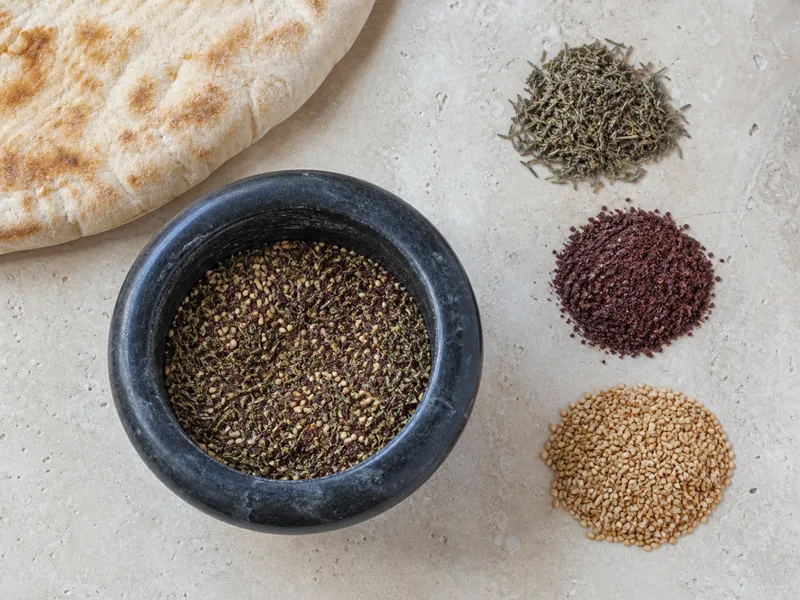
- Green herb: Forms the savory aromatic base.
- Crimson sumac: Adds dry tartness and color.
- Toasted sesame: Supplies oil, aroma, and crunch.
- Flatbread and oil: Keep every part exposed at the surface.
Toast the sesame by itself and let it cool before mixing. Warm seeds can flatten the dried herb aroma and trap moisture against the sumac.
Rub the thyme lightly between your fingers to reduce large stems, but do not grind the whole mixture into dust. Za'atar should cling to oil and food while retaining small points of texture.
- 1. Toast one-third teaspoon sesame over moderate heat until fragrant, then cool it fully.
- 2. Rub one-third teaspoon dried thyme between your fingers and remove any hard stems.
- 3. Combine the thyme with one-third teaspoon ground sumac and the cooled sesame.
- 4. Taste the blend with the food and oil it will season, then add a small salt pinch only if needed.
Increase sumac by a small pinch when the food is rich and needs a brighter edge. Reduce it when the sumac tastes sharply acidic or the recipe already includes lemon, vinegar, pomegranate molasses, or another sour ingredient.
2. Dukkah
Start with three-quarter teaspoon dukkah for each teaspoon of za'atar.
The smaller amount respects its heavier nut and seed texture, which can dominate a thin oil coating or a soft egg at equal volume.
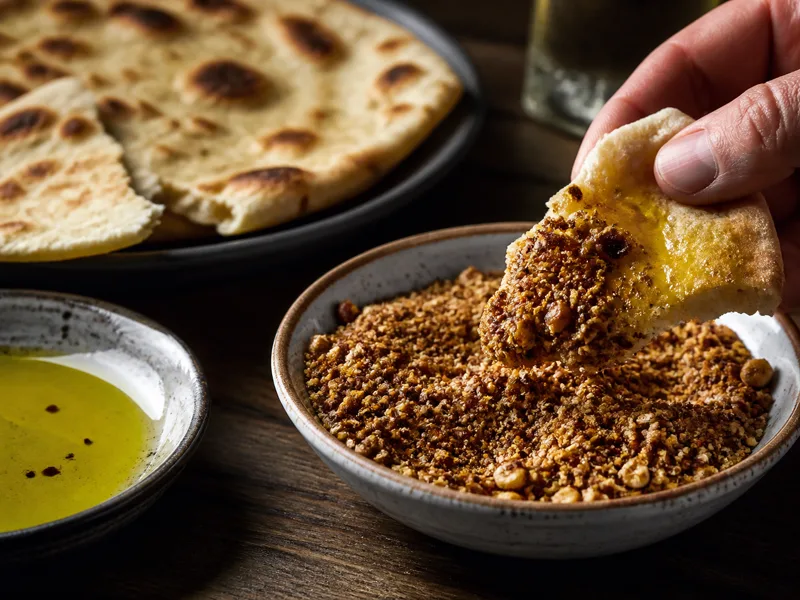
- Nut fragments: Make the finish heavier and crunchier.
- Seed mixture: Brings toasted aroma without copying zaatar herbs.
- Oil-dipped edge: Helps the coarse mixture adhere.
- Fine reference pinch: Shows the textural difference from zaatar.
Dukkah fits when the food welcomes a nutty crust or dipping texture. It is less convincing in man'oushe, a fine salad dusting, or a recipe that depends on sumac's red tartness.
Pros
- Provides immediate toasted seed and nut aroma.
- Clings well to oiled bread and roasted vegetables.
- Gives eggs and soft cheese a distinct crunchy contrast.
Cons
- Usually lacks enough sumac to reproduce zaatar tartness.
- Can contain tree nuts, peanuts, sesame, or other allergens.
- Coarse pieces change the bite of a fine topping or dough coating.
Add a small sumac pinch only when its tartness already suits the dish. Check the exact dukkah label for nuts, sesame, salt, and spices rather than relying on a generic ingredient list.
Cooked Food Can Hide a Missing Seed or a Different Herb
Roast chicken, potatoes, mushrooms, eggplant, zucchini, and oil-based marinades soften herb differences as they cook.
A mixed herb blend with sumac can work here because browning and the food's own aroma reduce the demand for a perfect raw za'atar profile.
Italian seasoning with sumac, rubbed into oil before roasting.
Italian seasoning with sumac for an oregano-led savory crust.
Herbes de Provence with sumac when the jar is not lavender-heavy.
Either herb blend with sumac, chosen by the dominant herb on the label.
Toasted sesame added after cooking when crunch still matters.
3. Italian Seasoning with Sumac
Use two-thirds teaspoon Italian seasoning plus one-third teaspoon sumac for each teaspoon za'atar.
This ratio places dried herbs in the lead while preserving enough dry tartness to keep roast chicken, potatoes, mushrooms, or a marinade from tasting like plain oregano.
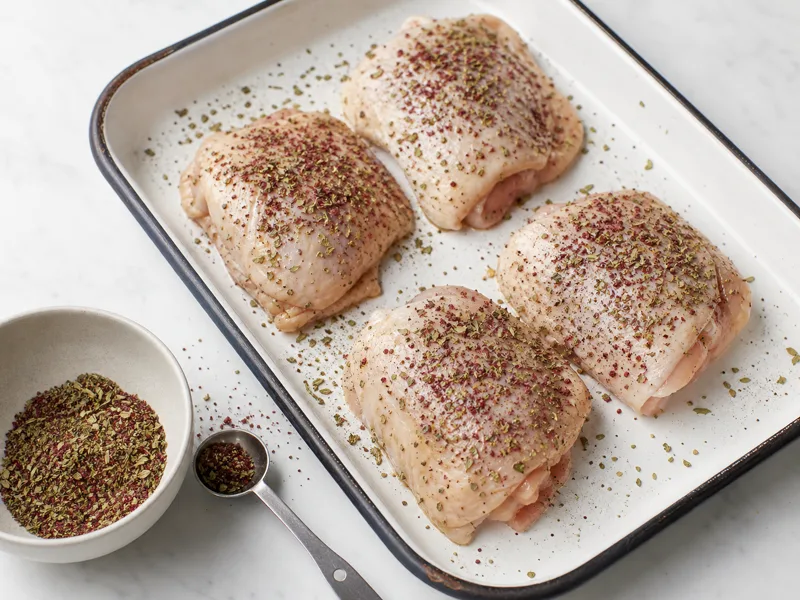
- Oiled skin: Holds the dried herbs without loose dusty patches.
- Sumac specks: Keep tartness in the crust.
- Open sheet pan: Encourages browning instead of steaming.
- No sesame yet: Seeds can be added after roasting for clearer crunch.
Read the herb list before measuring. A blend led by oregano, thyme, marjoram, or basil is easier to steer, while a rosemary-heavy mixture can make the food piney and pull it away from the intended seasoning.
Rub the mixture into oil rather than sprinkling it dry over a wet surface. Oil helps the herbs hydrate and protects small leaves from scorching before the meat or vegetables brown.
Add toasted sesame after roasting when you want the visible seed texture. Seeds added early can darken too far on an exposed sheet pan while the larger food finishes cooking.
4. Herbes de Provence with Sumac
Use three-quarter teaspoon herbes de Provence with one-quarter teaspoon sumac for each teaspoon za'atar.
This softer floral direction suits eggplant, zucchini, tomato, white beans, and roast chicken better than bread or raw labneh.
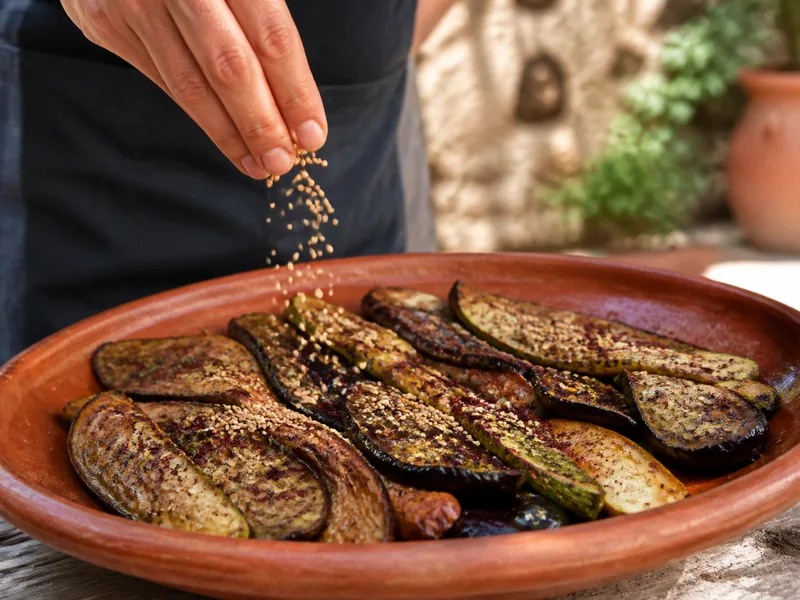
- Cut vegetables: Give the seasoning a moist surface to grip.
- Sumac coating: Adds tartness before browning.
- Sesame spoon: Keeps the seeds away from long oven heat.
- Terracotta dish: Shows a cooked application rather than a raw topping.
Lavender is the deciding boundary. A small amount can read softly floral with roasted vegetables, but a lavender-led blend turns the result perfumed and cannot be repaired with extra sumac.
Herbes de Provence also lacks sesame. Add cooled toasted seeds at the finish if the original recipe relies on crunch, or leave them out when the seasoning cooks into beans, sauce, or a soft vegetable filling.
The chicken recipe makes the timing difference visible. A herb-sumac substitute belongs in the oil before roasting, while sesame gives a cleaner finish after the skin has browned.
Raw Toppings Leave No Place for a Weak Substitute to Hide
A cooked-only fallback should not automatically move to the table.
Raw labneh, olive oil, salad, sliced tomato, and finished eggs expose woody rosemary, lavender, excess salt, and stale sesame immediately.
Use the three-part thyme, sumac, and sesame reconstruction for exposed toppings whenever possible. Dukkah is a deliberate texture change, while Italian seasoning and herbes de Provence are compromises that need heat and a suitable food base.
Fresh lemon zest can brighten a raw topping, but juice changes its moisture and acid. Add juice to the dish only when a wetter, sourer result is welcome, and do not count it as a replacement for sesame or herb aroma.
Texture also sets a stop rule. A coarse nut blend can be excellent on oil-dipped bread and still feel wrong across smooth labneh or a tender flatbread crumb.
When no complete blend is available, omission may be cleaner than a loud mismatch. Season with the herb or sumac that already belongs in the food and treat the result as a different finish.
Adjust Salt, Oil, and Sesame After Choosing the Flavor Direction
Correct the substitute after it meets the dish, because dry spoonfuls do not show how oil, moisture, and heat will spread each component.
Change one quality at a time so a salt correction does not hide a weak herb or an excess of sumac.
- Too tart: Add more herb and sesame to the remaining blend instead of covering sumac with sugar.
- Too herbal: Add a small sumac pinch and taste with oil before adding more.
- Too coarse: Grind dukkah briefly or reserve it for a food that benefits from crunch.
- Too salty: Make an unsalted portion of the blend and combine it with the first batch.
- Too dry on bread: Increase olive oil on the dough or plate rather than packing in more seasoning.
- Missing sesame aroma: Toast fresh seeds, cool them, and add them after high heat.
Oil changes perceived intensity. A blend that tastes sharp from the palm can become round and quiet on bread, while too much oil can mute the herb and make you add unnecessary salt.
Sesame should smell nutty before it turns dark. Remove it from the pan as soon as the aroma rises, because residual heat continues to toast the small seeds after they leave the burner.
Store the finished rebuild airtight and away from heat, but make a small batch first. Ground sumac and rubbed herbs lose their brighter notes sooner than whole seeds, so a fresh one-meal mixture usually gives a clearer result than a large jar held for months.
The successful substitute preserves the part of za'atar the food makes visible. Rebuild all three parts for bread and raw toppings, accept a controlled herb shift in cooked food, and keep salt and sesame as final adjustments rather than assumptions.