
Salad Supreme Seasoning Substitutes for Pasta and Vegetables
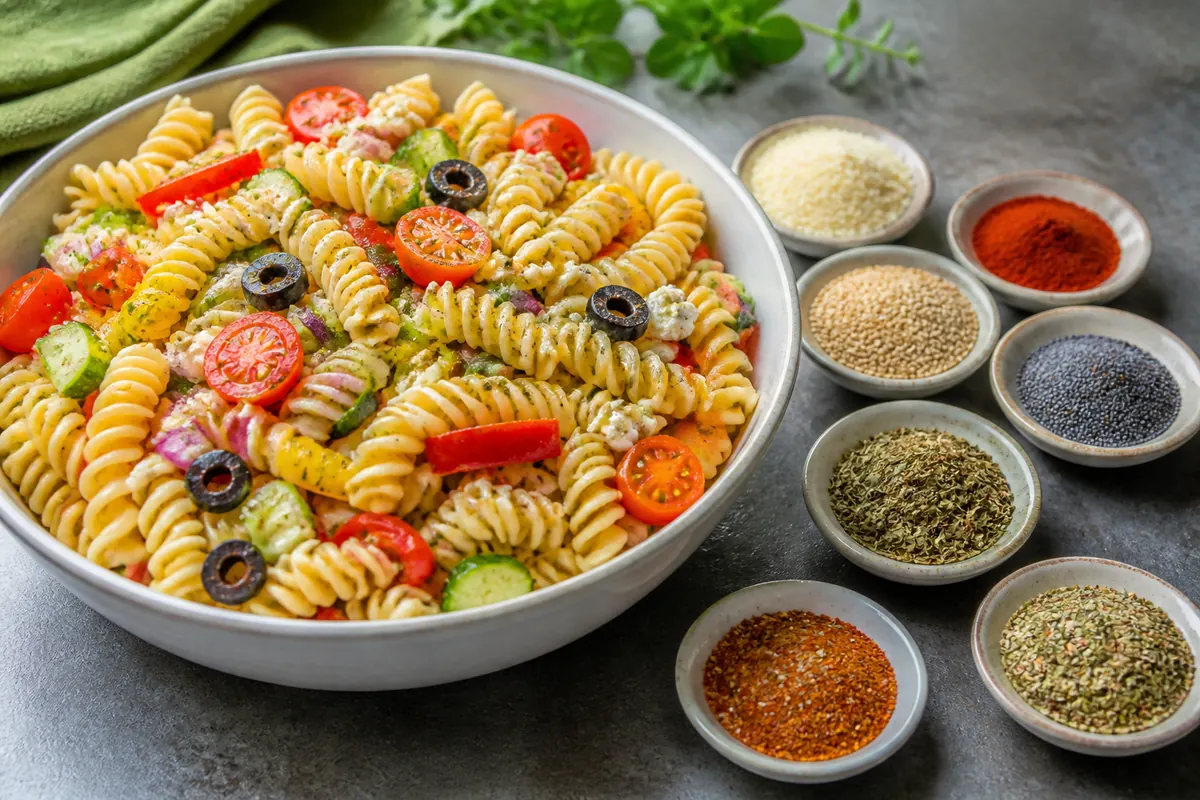
Salad Supreme Combines Flavor, Color, and Crunch
The closest Salad Supreme seasoning substitute is a small homemade blend of grated Romano, sesame seed, paprika, garlic powder, celery seed, black pepper, and restrained salt. It replaces more of the original jobs than a plain herb blend can.
McCormick's current product label lists spices that include paprika, poppy seed, celery seed, black pepper, and red pepper. It also lists Romano cheese, salt, sesame seed, whey, garlic, and other dairy ingredients.
That list explains why Italian seasoning alone tastes incomplete.
The branded blend brings savory cheese, visible seeds, red color, garlic, pepper, and salt at the same time. Each part affects pasta salad differently after the dressing soaks into the noodles.
- Savory depth
- Romano and other dairy ingredients add aged-cheese flavor.
- Seed texture
- Sesame and poppy seed leave a light crunch on pasta and vegetables.
- Red color
- Paprika and paprika extract tint the dressing and food.
- Aromatic base
- Garlic and celery seed give the blend a familiar salad-seasoning smell.
- Heat
- Black pepper and red pepper add a restrained bite.
- Salt
- The blend seasons the food before any separate salt enters.
A replacement does not need to copy a proprietary formula to work. It needs to cover the functions that the dish can actually reveal.
Cold pasta makes seed texture and salt obvious.
Roasted vegetables care more about paprika, garlic, and herbs because oven heat softens cheese and seeds. Grilled chicken can carry chile heat that might become distracting in a mild cucumber salad.
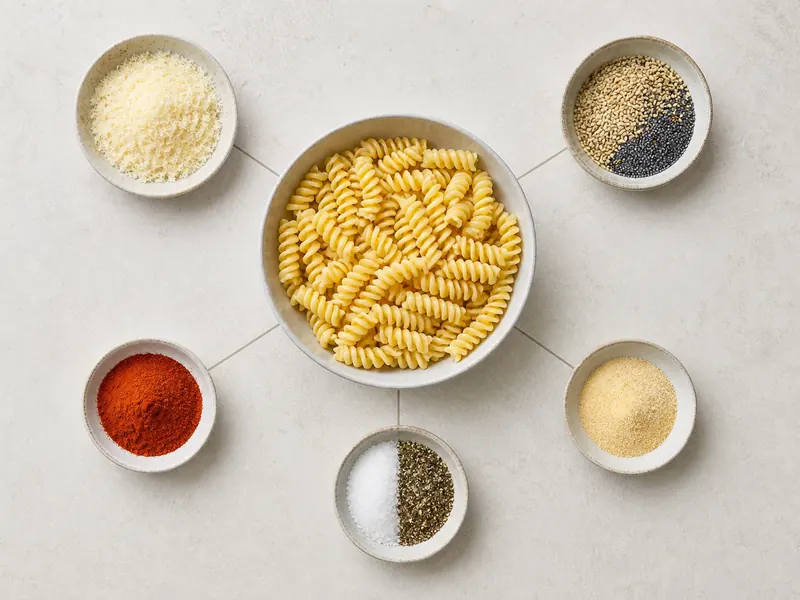
- Cheese: Savory depth.
- Seeds: Surface crunch.
- Paprika: Red color.
- Garlic: Aromatic base.
- Salt and pepper: Immediate seasoning.
Allergens are part of the decision because the current branded product contains milk and sesame. A homemade version can omit either ingredient, but that change also removes flavor or texture that should be replaced deliberately.
Nutritional yeast can give a dairy-free mix some savoriness. Toasted sunflower seed can add crunch when sesame is unsuitable, though neither tastes exactly like the ingredient it replaces.
Four Substitutes for Different Salad and Savory Jobs
Choose the blend by the food rather than by the number of ingredients available. The homemade version is closest, Italian seasoning favors cooked vegetables, za'atar favors tart fresh salads, and Cajun seasoning belongs with grilled or roasted food that can take more chile.
| Number | Substitute | Starting ratio for 1 tbsp | Best use | Main change |
|---|---|---|---|---|
| 1 | Homemade paprika, Romano, seed, and garlic blend | 1 tbsp | Pasta salad, eggs, vegetables | Closest reconstruction |
| 2 | Italian seasoning, paprika, and Parmesan | 1 tbsp | Roasted vegetables, chicken | More herbal, less seedy |
| 3 | Za'atar and grated cheese | 1 tbsp | Cucumber salad, chickpeas | Tarter and sesame-forward |
| 4 | Cajun seasoning and sesame seed | 1 tbsp | Grilled chicken, corn pasta | Hotter and often saltier |
1. Homemade Paprika, Romano, Seed, and Garlic Blend
For one tablespoon, mix one teaspoon grated Romano, one teaspoon sesame seed, one teaspoon paprika, half a teaspoon garlic powder, a quarter teaspoon celery seed, and a quarter teaspoon black pepper. Add salt only after tasting the cheese.
This is a close cooking replacement rather than a copy of the commercial formula.
Romano supplies aged-cheese savoriness and salt. Sesame creates visible texture, while paprika restores the orange-red color that makes the seasoning easy to see across pale pasta.
- Build the visible baseCombine the Romano, sesame, and paprika.
- Add the aromatic layerStir in garlic powder and celery seed.
- Control the biteAdd black pepper before any extra red pepper.
- Taste for saltJudge the cheese first, then add a small salt pinch if needed.
Celery seed needs the smallest measure because its concentrated aroma can move the blend toward pickle seasoning. Crush it lightly only when the seed is very coarse.
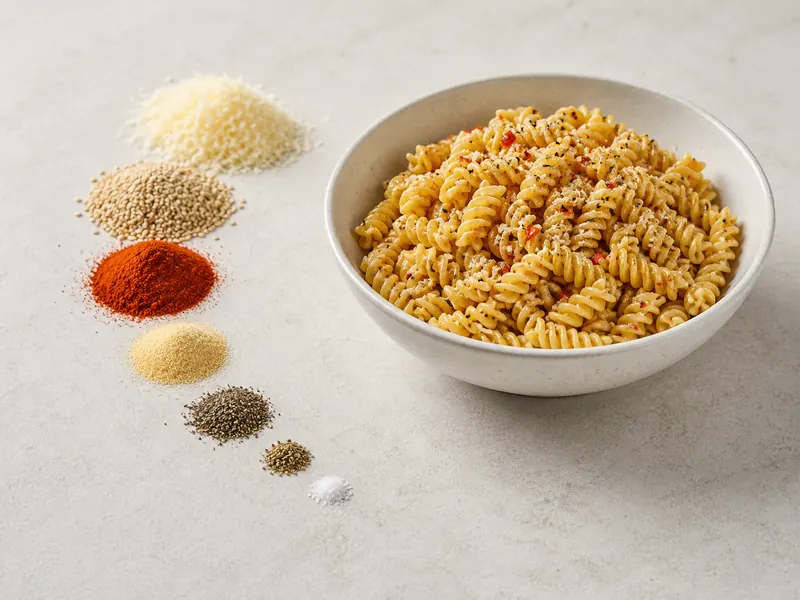
- Romano: Savory and salty.
- Sesame: Visible crunch.
- Paprika: Color.
- Celery seed: Small aromatic dose.
- Salt: Final correction.
Toss this blend with dressing before it reaches the pasta. Oil wets the paprika and garlic, which prevents dusty red pockets on cold noodles.
Use finely grated cheese.
Large shreds do not spread through the dressing and can collect at the bottom of the bowl. A powdery grate behaves more like the dry seasoning on the original product.
Poppy seed is optional when you have it. Add half a teaspoon and reduce the sesame by the same amount so seed texture does not take over.
2. Italian Seasoning with Paprika and Parmesan
Use two teaspoons Italian seasoning, one teaspoon paprika, and one teaspoon finely grated Parmesan for one tablespoon Salad Supreme. The extra volume accounts for the fact that dry herb leaves occupy more space than the dense cheese and seed blend.
This substitute is more herbal from the first bite.
Oregano, basil, thyme, and related herbs can work well on roasted zucchini, peppers, chicken, or warm pasta. They become louder in a cold salad where no browning or heat softens them.
Mix with oil so the herbs and paprika coat every cut surface.
Season before roasting, then add cheese after the hottest cooking stage.
Begin below the full ratio and let the dressing rest before adding more.
Grind the herbs finer so large leaf pieces do not interrupt the filling.
Paprika restores color that Italian seasoning does not provide. Parmesan supplies salt and savoriness, but it still leaves out the seed crunch.
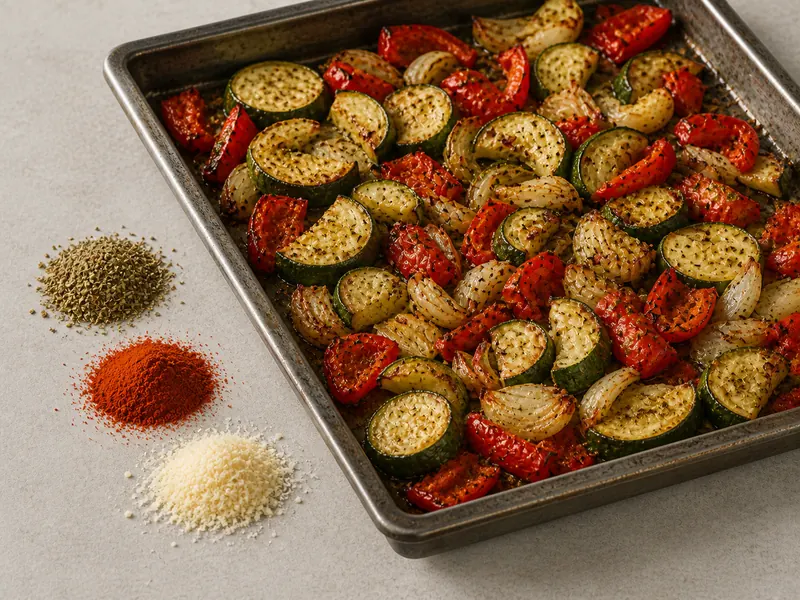
- Dry herbs: Main shift.
- Paprika: Red coating.
- Parmesan: Savory finish.
- Roasted vegetables: Support the herbs.
Add one teaspoon sesame seed when a pasta or vegetable dish needs surface texture. Leave it out when the food already contains toasted nuts or crunchy breadcrumbs.
Check the Italian seasoning label before adding salt.
Many pure herb blends are unsalted, but seasoned Italian mixes may contain salt, garlic, onion, or cheese. The name on the front does not guarantee the same formula across brands.
For oven food, hold the grated cheese until the vegetables are almost finished. Fine cheese can scorch on an exposed dark tray before the centers are tender.
3. Za'atar with Grated Cheese
Use two teaspoons za'atar plus one teaspoon grated Parmesan or Romano for one tablespoon Salad Supreme. This option preserves sesame texture and savory cheese while moving the flavor toward tart sumac and dried herbs.
The change is clear and useful in the right salad.
Za'atar suits cucumber, tomato, chickpeas, flatbread, avocado toast, and grain salads because those foods can support sesame and sumac. A creamy macaroni salad may taste unexpectedly tart.
Za'atar formulas vary.
Some contain a high share of sesame, some lean toward thyme-like herbs, and some arrive with salt already mixed in.
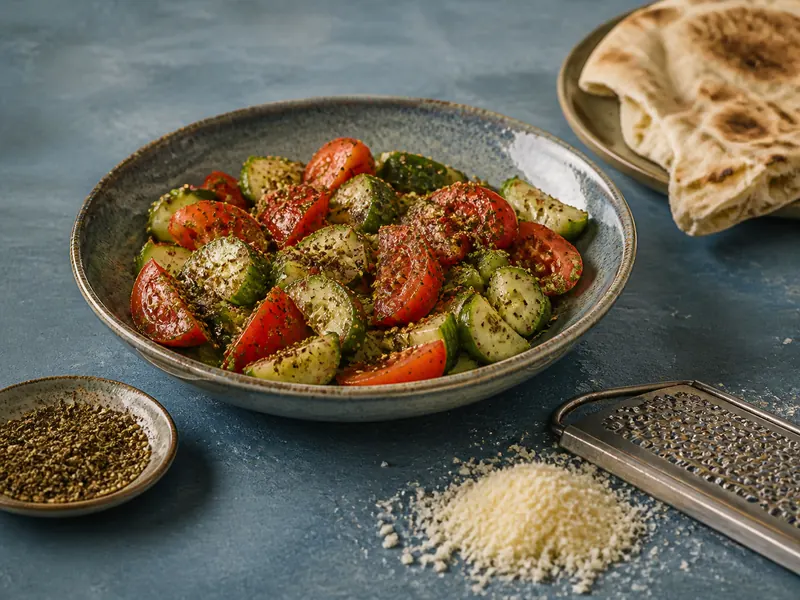
- Sesame: Familiar surface texture.
- Sumac: Tart shift.
- Fresh vegetables: Good context.
- Cheese: Restored savoriness.
Taste the dry blend before deciding how much cheese or salt to add. A salty za'atar paired with Romano can overshoot before the dressing enters the bowl.
This substitute does not restore paprika's red-orange coating. Add a small paprika pinch only when color matters and the sumac is not already giving the food a red cast.
Keep za'atar off prolonged high heat when you want visible sesame and fresh tartness. Add most of it after roasting, then toss it through the warm food with oil.
4. Cajun Seasoning with Sesame Seed
Use two teaspoons Cajun seasoning plus one teaspoon sesame seed for one tablespoon Salad Supreme.
This is a hotter option for grilled chicken, shrimp, roasted potatoes, corn pasta salad, or a cookout dish with charred flavor.
Cajun seasoning can cover paprika color, garlic, pepper, and chile in one step. It usually lacks cheese and seed texture, which is why sesame enters separately.
The chile shift can overwhelm a cold, creamy pasta salad. Start with half the listed amount when mayonnaise or mild cheese is the main flavor.
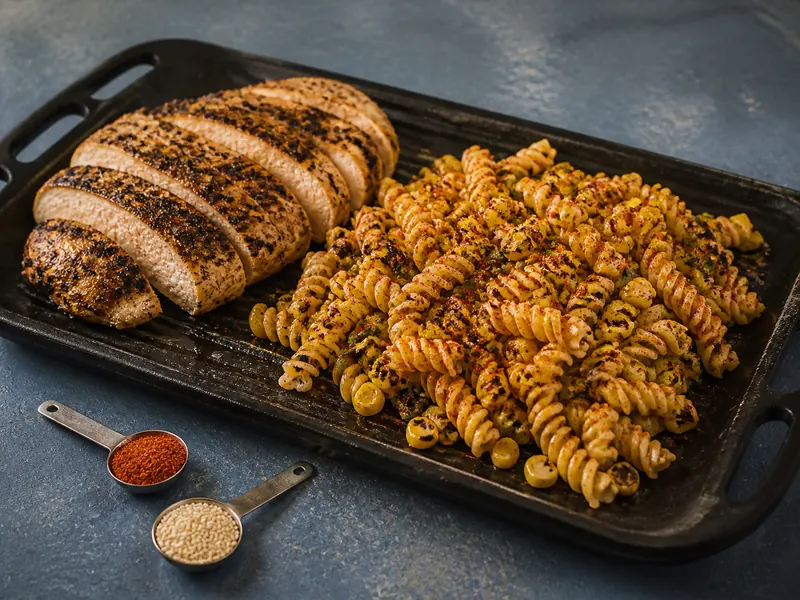
- Small red measure: Controlled heat.
- Sesame: Restored crunch.
- Grilled chicken: Supports chile.
- Corn pasta: Sweet contrast.
Add Parmesan or Romano after grilling when cheese savoriness still matters. Direct flame or a very hot grate can burn fine cheese before it adheres to the food.
For shrimp, season immediately before cooking and finish with sesame after the pan comes off the heat. The small pieces have more seasoned surface area than a chicken breast, so they need less blend per pound.
Cajun seasoning is a deliberate flavor variation. Do not use it merely because the powder looks red, since the chile and salt can change the dish more than the missing seasoning would.
Mix the Substitute into Dressing Before It Meets the Pasta
Whisk the substitute into the dressing before pouring it over pasta. This order disperses paprika, garlic, salt, and fine cheese through oil and acid instead of leaving dry clumps on damp noodles.
Seeds will remain visible, which is useful.
They spread more evenly when the liquid carries them through the bowl, and fewer seeds settle in one salty patch near the bottom.
- Mix the dressingWhisk oil, acid, and the first seasoning dose until no dry paprika remains.
- Coat warm pastaToss while the noodles are warm enough to absorb flavor but no longer steaming hard.
- Rest and coolLet the pasta take up dressing before judging salt and acid.
- Add fresh ingredientsFold in vegetables, herbs, or cheese after the pasta cools.
- Correct at serviceAdd seeds, cheese, or pepper according to the missing job.
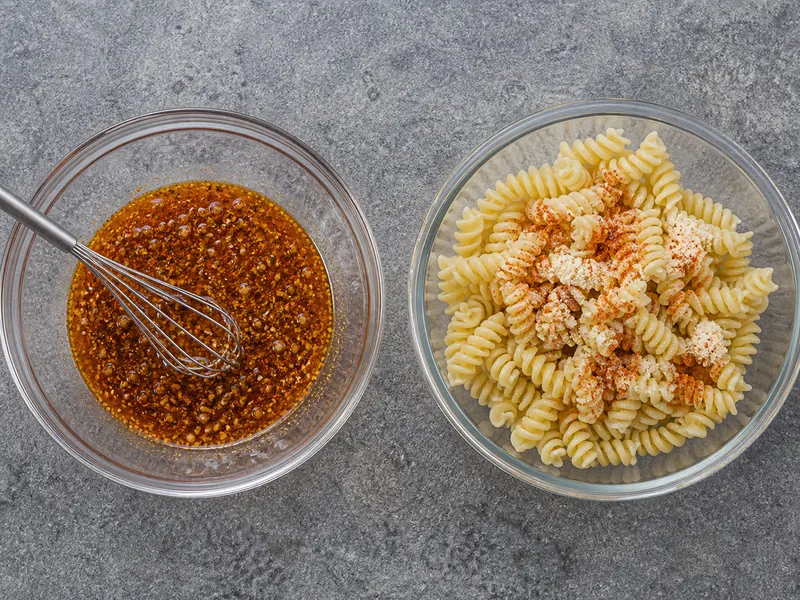
- Whisked dressing: Even color.
- Dry pasta surface: Patchy clumps.
- Warm noodles: Better absorption.
- Final taste: Salt correction.
Pasta continues to absorb liquid as it rests. A salad that tastes highly seasoned while warm may seem quieter after chilling because the dressing moves into the noodles.
Cold temperature also mutes aroma.
Wait until the salad has rested before adding another full spoon. Restore one missing quality at a time with cheese for savoriness, sesame for crunch, paprika for color, or pepper for bite.
Cheese clumps when coarse shreds meet a wet surface. A fine grate and an emulsified dressing keep the particles smaller, though some cheese will still collect on rough pasta.
Choose spirals, shells, or ridged tubes when you want the seasoning to cling. Smooth long noodles hold less seed and cheese on their surface.
Vegetables release water during the rest.
Cucumber and tomato can dilute salt and dressing, so drain very juicy pieces or fold them in shortly before serving. Taste again after they enter rather than increasing the seasoning in anticipation.
Dry Toppings and Wet Dressings Need Different Ratios
A tablespoon designed for a bowl of dressed pasta is too much for two eggs or one chicken breast.
Dressing spreads spice through oil and acid, while a dry sprinkle remains concentrated on the first surface that touches the tongue.
Begin with one-quarter of the table ratio when the substitute is a direct topping. Add more only after the powder, cheese, and seeds have adhered to the food.
Warm vegetables hold fine cheese and paprika better than cold smooth vegetables because surface moisture and oil catch the particles.
Toss the food with a small amount of oil first when most of the seasoning falls to the tray.
Grind herbs finely and use a pinch so the filling stays smooth.
Toss the blend with oil before roasting, then add cheese near the end.
Season the meat lightly before cooking and restore seeds after slicing.
Whisk the full starting dose into dressing and let the noodles rest.
Seeds create a separate adhesion problem. Sesame and poppy seed cling to wet pasta spirals, but they roll off a dry chicken breast or smooth egg white.
Add seeds after meat has been sliced or brushed with dressing. This keeps the texture on the serving surface instead of scattering it across the cutting board.
Paprika behaves best in a carrier.
A small amount of oil spreads its color across vegetables and pasta, while dry paprika can collect in dark patches that taste dusty.
Cheese needs a different timing choice. Fine Romano can dissolve partly into warm dressing, but exposed cheese can scorch under a broiler or on a hot grill.
Season meat with spice first, cook it, and add the cheese component during the rest. The residual heat helps it adhere without burning.
Cold serving temperature quiets garlic and herbs while leaving salt easy to detect.
Taste a chilled sample before correcting aroma because adding another salted blend may solve one weak smell and create a salty finish.
Correct the missing job directly. Add paprika for color, a few seeds for crunch, cheese for savoriness, or unsalted herbs for aroma instead of repeating the entire mixture.
Check Dairy, Sesame, and Salt Before You Substitute
Read both the original product label and every prepared blend used as a substitute.
The current Salad Supreme label declares milk and sesame, while za'atar commonly contains sesame and grated cheese contains milk.
A dairy-free homemade blend can use nutritional yeast for savoriness.
The flavor becomes nuttier and less salty than Romano, so add salt separately after the dressing is mixed. Do not assume nutritional yeast replaces cheese at equal weight.
- Check milk ingredients in cheese, whey, seasoning blends, and powdered dressings.
- Check sesame in the original product, za'atar, seed toppings, and the homemade mix.
- Taste prepared Cajun and Italian blends for salt before adding recipe salt.
- Keep allergen-free batches separate from shared spoons, grinders, and serving bowls.
- Label a homemade jar with its ingredients and mixing date.
For a sesame-free version, use toasted sunflower kernels chopped to a similar small size. They add crunch but also a stronger nutty flavor, so begin with less than the sesame amount.
Poppy seed may work when it is safe for the diners and available in the pantry. It brings speckled texture with less nutty aroma, though it does not replace sesame flavor.
Omission makes sense when the seasoning is a final optional sprinkle. A well-balanced vinaigrette, grated cheese, pepper, and fresh vegetables can complete a salad without a named blend.
Do not add several unrelated seasonings simply to make the ingredient list longer.
The best substitute is the smallest combination that restores the missing color, savoriness, texture, or heat. Taste the finished food after its rest, then correct the one job that remains incomplete.