
Which Madras Curry Powder Substitute Fits Your Dish?
Rebuild the coriander-cumin base, turmeric color, and chile heat as separate controls.
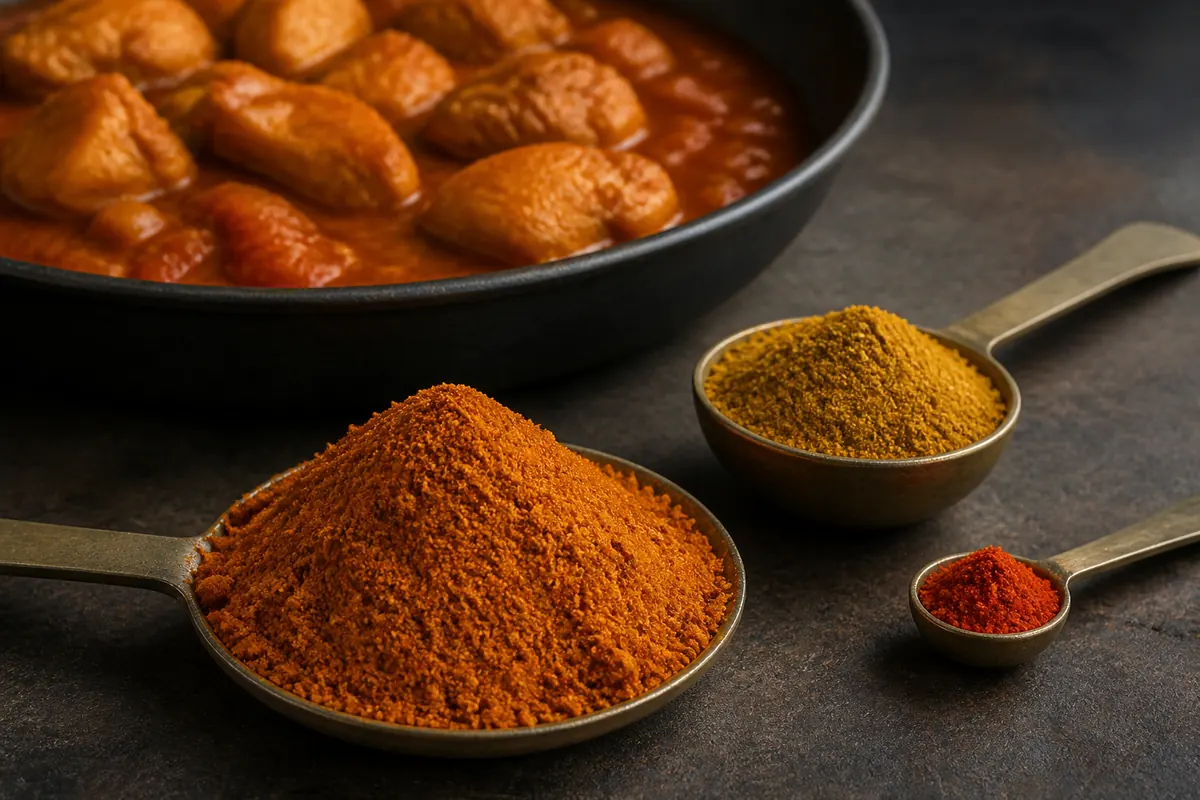
Madras Curry Powder Has a Hotter Base, Not One Fixed Formula
The closest Madras curry powder substitute is one tablespoon standard curry powder mixed with 1/4 teaspoon cayenne. The curry powder preserves the coriander, cumin, fenugreek, turmeric, and warm-spice base, while the smaller cayenne measure restores heat without forcing every flavor upward.
Start at 1/8 teaspoon cayenne when the jar is unfamiliar or the dish serves heat-sensitive diners.
Madras curry powder is a commercial curry-powder style rather than one protected formula. Most versions are hotter and often redder than mild curry powder, but ingredient order and chile strength vary by manufacturer.
That variation matters more than the word Madras on the label.
One brand may lead with turmeric and coriander, while another may place chile first and add mustard, fenugreek, garlic, ginger, fennel, salt, or other spices. Read the ingredient order before deciding that two yellow powders deserve the same dose.
- Aromatic base
- Coriander usually supplies the broad citrusy body, with cumin and fenugreek adding earth and bitterness.
- Yellow-red color
- Turmeric creates the yellow foundation while red chile or paprika shifts the blend toward orange and red.
- Chile heat
- Cayenne, hot chile powder, and black pepper can vary sharply between products.
- Optional tang
- Some prepared pastes or recipes add tamarind, vinegar, tomato, or another sour ingredient outside the dry blend.
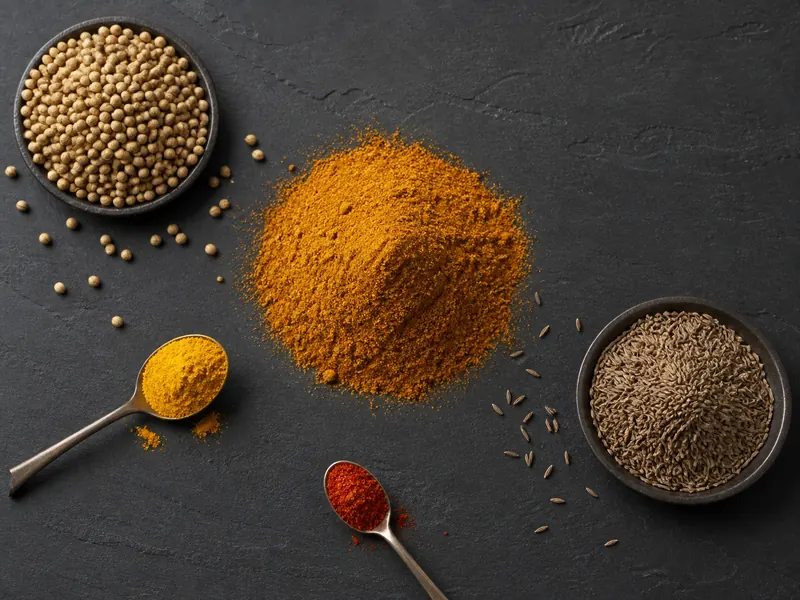
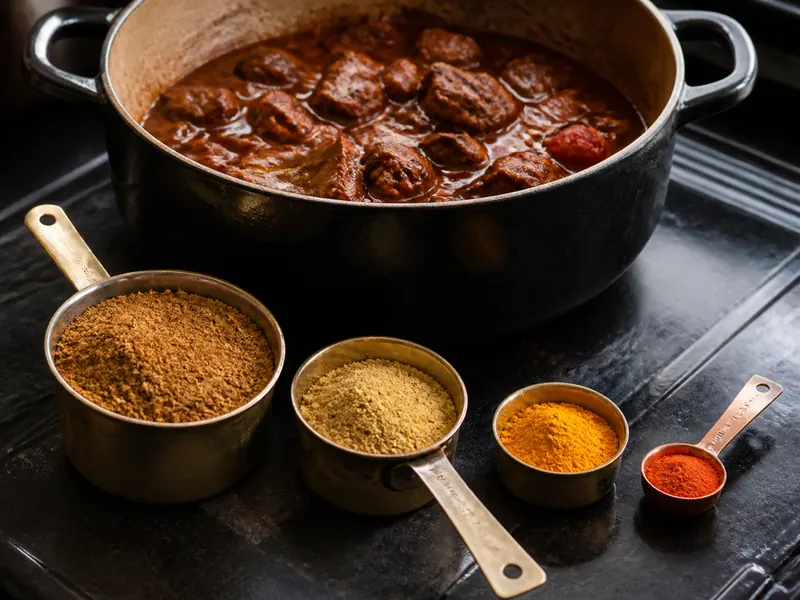
- Largest station: Coriander and cumin form more of the blend than turmeric or cayenne.
- Yellow spoon: Turmeric changes color quickly and becomes bitter when overused.
- Tiny red spoon: Cayenne controls heat independently of the aromatic base.
Look at the ingredient list before choosing a ratio. A standard curry powder already containing chile needs less cayenne than a mild yellow blend built for soups or family cooking.
Smell gives an early clue, though it cannot measure heat.
Coriander-led powder smells broad and citrusy, while a turmeric-heavy jar smells drier and earthier. A garam-masala-heavy replacement announces cinnamon, cardamom, or clove before the sauce reaches the table.
The dish decides which difference is acceptable. A tomato lamb curry can carry a darker, hotter replacement, while a coconut vegetable curry exposes bitter turmeric and a dry rub cannot accept a salty wet paste.
Check for salt before measuring any replacement. A salted commercial blend reduces the separate salt the recipe needs, while an unsalted homemade formula leaves that control untouched.
Ingredient order also predicts which correction is safest. Turmeric listed first warns against adding more yellow powder, and chile listed near the top argues for the 1/8-teaspoon cayenne start rather than the full quarter-teaspoon.
Color alone cannot settle the question because turmeric, paprika, and red chile can all produce a strong-looking jar with very different heat. Judge the label, aroma, and one cooked spoonful together.
Build the Replacement Three Different Ways
Choose the first path your pantry can support rather than combining every warm spice you own.
The three formulas below make different compromises, and only the first begins with an existing curry-powder base. These quantities replace one tablespoon Madras curry powder.
| Number | Substitute | Starting formula | Best use | Main change |
|---|---|---|---|---|
| 1 | Standard curry powder plus cayenne | 1 tbsp curry powder + 1/4 tsp cayenne | Chicken, lamb, lentils, soup, rice | Closest base, usually milder and yellower |
| 2 | Coriander-led homemade blend | 2 tsp coriander + 1 tsp each cumin and hot chile + smaller accents | Fish, vegetables, lentils, dry rubs | Fresh and adjustable, requires several jars |
| 3 | Corrected garam masala | 1 1/2 tsp garam masala + 1/2 tsp each coriander, turmeric, and cayenne | Lamb, chicken, dark braises | Sweeter cinnamon-cardamom-clove aroma |
1. Standard Curry Powder Plus Cayenne
Standard curry powder plus cayenne is the most reliable replacement because it preserves the blend structure before correcting heat. Mix one tablespoon curry powder with 1/4 teaspoon cayenne for each tablespoon Madras powder requested.
Do not judge the mixture by licking dry powder.
Capsaicin spreads through the cooked food and fat, so a small sauce sample gives a more useful heat reading than a dry fingertip taste.
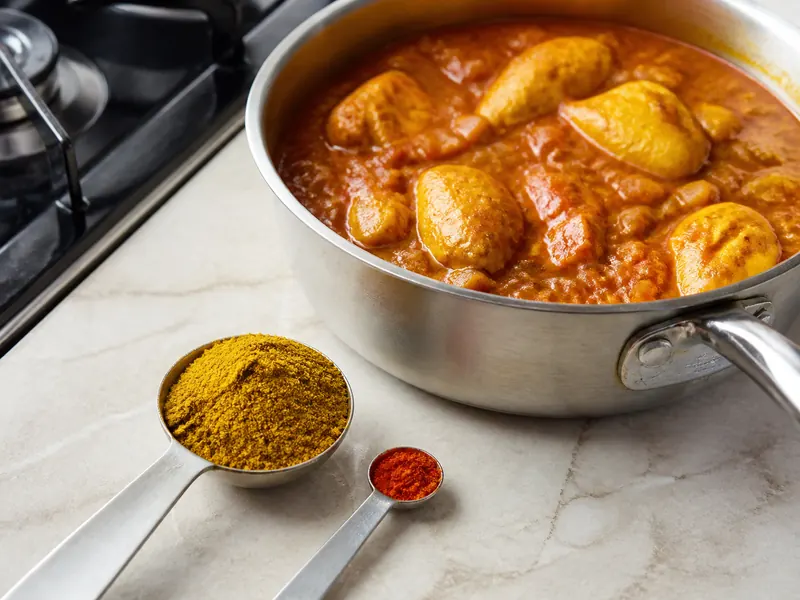
- Tablespoon: Standard curry powder supplies coriander, cumin, turmeric, and supporting spices.
- Quarter-teaspoon: Cayenne raises heat without adding more turmeric.
- Cooked sauce: The finished medium reveals both heat and color more accurately than dry powder.
- Mix the dry baseCombine one tablespoon curry powder with 1/8 to 1/4 teaspoon cayenne.
- Bloom a small pinchStir part of the mixture through warm oil or the recipe's cooked onion base.
- Add recipe liquidTomato, stock, coconut milk, or yogurt spreads the heat through the sample.
- Simmer brieflyLet the powder hydrate and lose its raw edge before tasting.
- Correct one qualityAdd cayenne for heat or paprika for red color instead of increasing the whole blend.
A mild yellow curry powder may leave the sauce paler than expected. Add 1/2 teaspoon sweet paprika per tablespoon of replacement when red-orange color matters but the heat is already correct.
For coconut milk or cream, stay near the lower cayenne dose until the sauce simmers.
Fat can soften the first sensation of heat even while the total capsaicin remains in the dish, so repeated early additions can catch up later. Wait until the sample has cooked before raising the dose.
This formula also works in curried rice, lentil soup, chicken marinade, and vegetable stew. In a dry rub, keep all ingredients dry and omit any later suggestion of curry paste.
A sauce gives you room to correct after simmering, but a dry rub commits the entire dose before the food reaches heat. For roasted vegetables or meat, mix the replacement into oil on one test piece and cook it fully before coating the remaining batch.
Marinades sit between those cases.
Yogurt or oil spreads cayenne across the surface. Acidic ingredients can sharpen the first taste, so reserve part of the replacement until the cooked sample shows the final balance.
2. A Coriander-Led Homemade Blend
Build from individual spices when you need full control over heat and turmeric. Coriander should remain the largest measure because it provides the broad base that keeps cumin, fenugreek, mustard, pepper, and chile from tasting like separate additions.
For a little more than one tablespoon, mix two teaspoons ground coriander, one teaspoon ground cumin, one teaspoon hot chile powder, 1/2 teaspoon turmeric, 1/2 teaspoon black pepper, and 1/4 teaspoon each ground fenugreek, mustard, and ginger.
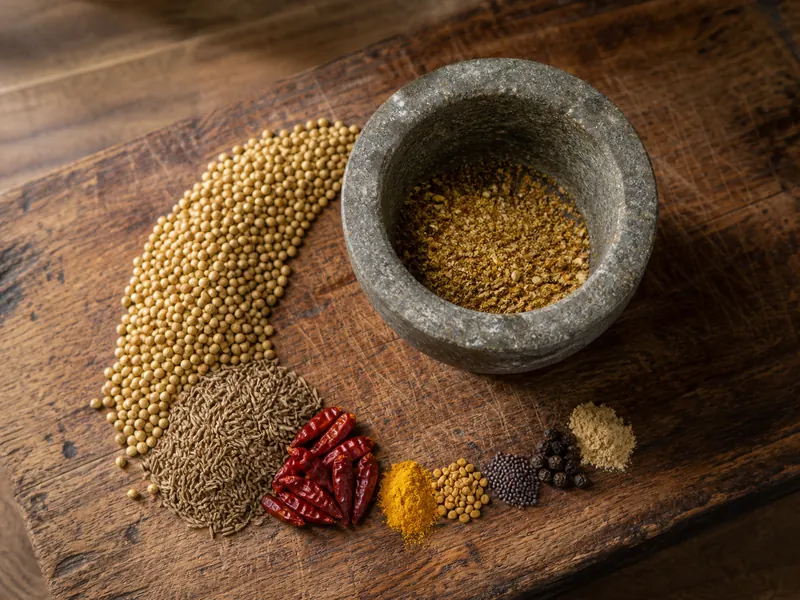
- Coriander arc: The largest share gives the blend body and a citrusy seed aroma.
- Cumin measure: The secondary dose adds earth without dominating.
- Small accents: Turmeric, fenugreek, mustard, pepper, ginger, and chile each solve a narrower job.
Broadens the blend and prevents chile or turmeric from becoming the whole flavor.
Adds toasted earthiness suited to meat, lentils, and browned onion bases.
Supplies yellow color and dry earthiness, but excess becomes bitter.
Add low bitter and pungent notes in very small doses.
Set the heat level and can be reduced for a mixed table.
Whole coriander and cumin can be toasted separately over moderate heat until fragrant, then cooled before grinding. Keep turmeric and fine ground chile out of that dry pan because powders scorch before whole seeds finish warming.
Grinding changes how quickly the blend enters the food. Fine powder suits a smooth sauce and blooms rapidly, while a coarser grind holds visible seed texture in a rub and needs longer contact with oil or liquid.
Let toasted seeds cool completely before grinding. Warm seeds trap steam inside a grinder cup, which makes fine particles cling together and shortens the blend's useful dry-storage life.
The blend is useful for fish, vegetables, lentils, minced meat, and dry rubs because salt and moisture remain under recipe control.
It will taste fresher and slightly coarser than many commercial powders. Grind only as fine as the dish needs, since a coarse rub works on roasted vegetables but can feel gritty in a smooth sauce.
Do not repair weak coriander aroma by adding more turmeric. Turmeric changes color faster than it rebuilds the missing citrusy seed body, and too much leaves a dusty bitterness that coconut milk cannot fully hide.
3. Garam Masala Rebuilt With Coriander, Turmeric, and Cayenne
Garam masala can anchor a replacement when no curry powder is available, but the result moves toward cinnamon, cardamom, clove, and black pepper.
Use it in a dish substantial enough to carry that sweeter perfume. Lamb, chicken, chickpeas, and lentils are safer contexts than mild fish or a light coconut sauce.
Combine 1 1/2 teaspoons garam masala with 1/2 teaspoon ground coriander, 1/2 teaspoon turmeric, and 1/2 teaspoon cayenne for each tablespoon Madras curry powder. The coriander restores part of the base, turmeric supplies color, and cayenne provides direct heat.
- Largest brown measure: Garam masala still determines the aroma.
- Pale and yellow measures: Coriander rebuilds body while turmeric restores color.
- Red measure: Cayenne supplies heat that many garam masalas lack.
Add the corrected garam masala with the base spices rather than saving all of it for the finish. Early cooking softens the sweeter high notes and lets coriander and turmeric merge with the sauce.
Reserve a small pinch of plain garam masala for the end only when the finished curry needs a fresh aromatic lift.
That final pinch serves a different purpose from the reconstructed base, so do not count it as part of the replacement ratio.
Bloom Powder Briefly, but Treat Curry Paste as a Wet Ingredient
Dry Madras curry powder replacements need a short bloom in fat, followed quickly by onion, tomato, stock, or another wet ingredient. Fine turmeric and chile scorch easily on bare metal, and burned powder makes the whole sauce bitter.
Look for the oil to turn yellow-orange and the spice aroma to open.
Add liquid before the powder darkens at the edges or catches in dry patches. A spoonful of water beside the stove is enough to cool the pan when the onion base is drier than expected.
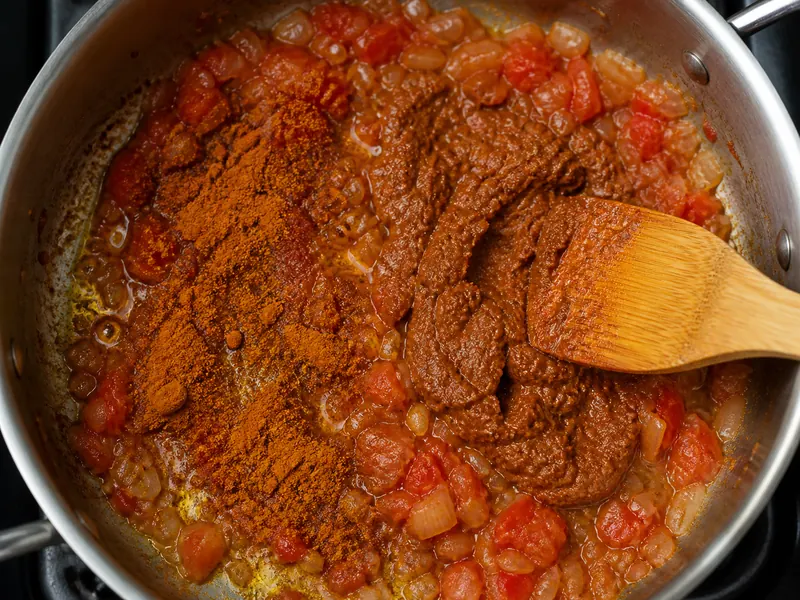
- Loose powder: Stir continuously so turmeric and chile do not scorch.
- Thick paste: Fry until the raw wet aroma softens and oil begins to separate.
- Recipe liquid: Add only after accounting for moisture already present in the paste.
Madras curry paste can replace powder in a wet curry or marinade when the label shows a compatible spice base.
Read the paste label before adjusting the pan. For each tablespoon of paste, hold back about one teaspoon of recipe oil and one-quarter teaspoon of salt, then restore either one only after the sauce has simmered and you can taste it.
A concentrated paste may need less than a one-for-one swap. Fry half the planned amount first, let its raw aroma soften, and add more only if the coriander and chile still disappear behind the main ingredients.
Paste also changes browning.
Extra water slows frying. Added sugar can catch on the pan, so use moderate heat and stir until the oil begins to separate before adding the next wet ingredient.
Start with one tablespoon paste for one tablespoon powder, then reduce the recipe's oil and salt before cooking.
Pros
- Paste already carries hydrated spices and can build a rounded sauce quickly.
- Vinegar or tamarind in the paste may supply tang the finished curry needs.
- The wet form coats meat and vegetables easily in a marinade.
Cons
- Paste can contain substantial salt and oil that the dry recipe did not expect.
- It cannot replace powder cleanly in a dry rub or seasoning dust.
- Brand acidity and chile strength are harder to separate after the paste enters the pan.
Do not add paste to a dry spice mix and call the texture unchanged.
It introduces water or oil, can make a rub clump, and may push a marinade beyond its intended salt level. Use another dry formula when surface drying and browning matter.
Correct Heat, Color, and Acidity One at a Time
A nearly correct curry should be repaired one quality at a time. Adding another full spoon of substitute raises coriander, cumin, turmeric, heat, and bitterness together.
- Too mild | Bloom a small cayenne pinch in oil or stir it into a hot spoonful of sauce before scaling up.
- Too pale but hot enough | Add sweet paprika for red color, or a restrained turmeric pinch when yellow is appropriate.
- Too bitter or dusty | Stop adding powder and dilute with more onion, tomato, stock, coconut milk, or the main ingredient.
- Too hot | Increase the unsalted sauce base and fat rather than adding sugar alone.
- Flat after simmering | Add a small squeeze of lemon or measured tamarind only if the dish needs acidity.
Paprika changes red color with less heat than cayenne, while turmeric pushes the sauce toward yellow and can become earthy or bitter.
Choose the missing color before reaching for either jar. A red curry does not automatically need more heat, and a yellow curry does not automatically need more turmeric.
Coconut milk, yogurt, cream, tomato, or extra stock can spread excess heat across a larger batch. Add salt again only after dilution, since fixing chile with salted liquid creates a second imbalance.
Acidity belongs near the end because tomato, yogurt, vinegar, tamarind, and lemon behave differently after reduction.
Taste the cooked sauce first, then add enough sourness to brighten the spice base without making tang the main flavor. A paste that already contains vinegar or tamarind may need no final acid.
The best substitute remains standard curry powder with a small cayenne measure because it keeps the base and heat adjustable. Build from individual spices when precision matters, use corrected garam masala only when its sweeter aroma fits, and handle curry paste as a separate wet ingredient.