
Chinese Five Spice Powder Substitutes That Stay Savory
Rebuild anise, warm bark spice, and pepper separately, then reduce the dose for glazes and exposed surfaces.
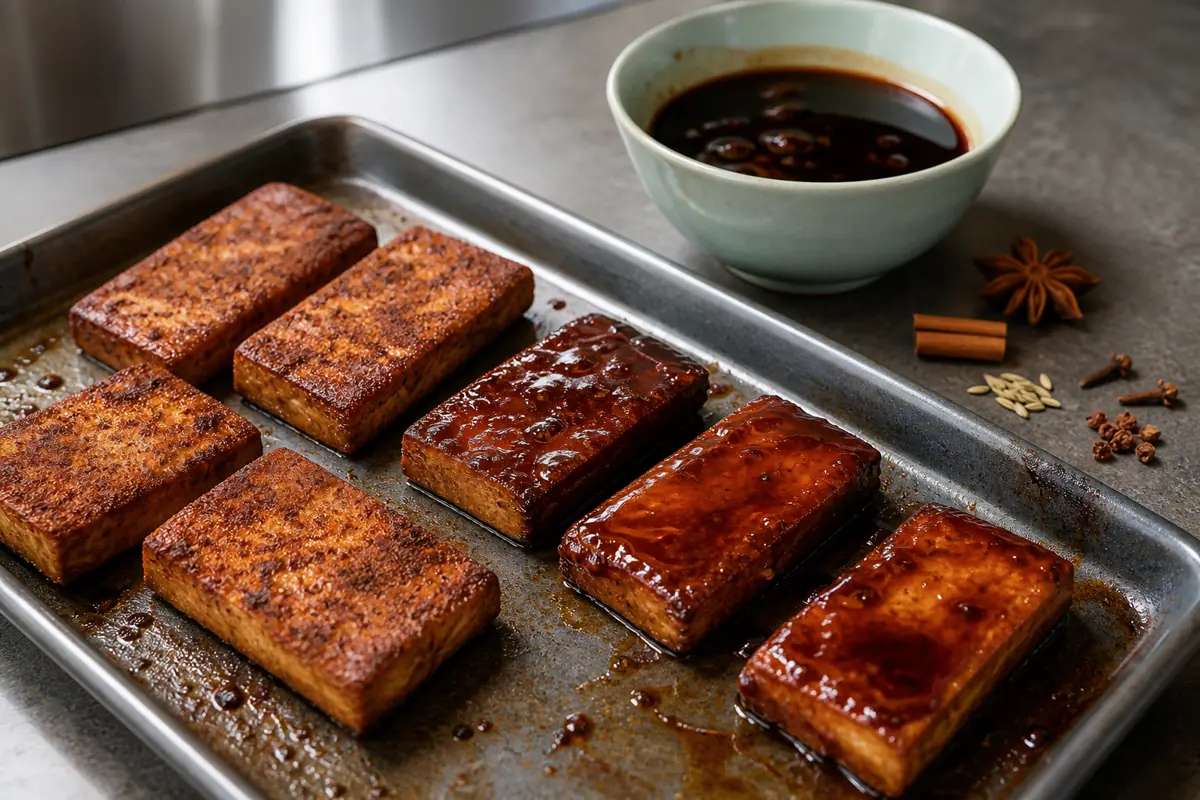
The closest replacement is a small homemade blend of star anise, cinnamon or cassia, fennel seed, clove, and Sichuan peppercorn used at equal volume. If you do not have all five, start with one-half teaspoon garam masala plus a small pinch of ground star anise for each teaspoon of five spice in a dark braise. In a glaze or dry rub, start below the full ratio because sugar, soy, fat, and roasting concentrate five spice on the food's surface.
Five Chinese Five-Spice Substitutes Ranked by Signature
Five spice is recognized first through star anise, but the blend stays useful because cinnamon or cassia, fennel, clove, and Sichuan peppercorn broaden that licorice signal. A replacement that supplies only sweetness can make savory food taste like baking spice.
The five options range from a full reconstruction to a single-spice emergency measure and assume ground, unsalted spices.
| Number | Substitute | Starting ratio for 1 tsp five spice | Best use | Main gap |
|---|---|---|---|---|
| 1 | Homemade Chinese five spice | 1 tsp | Roast, braise, glaze, stir-fry | Requires separate spices |
| 2 | Garam masala | 1/2 tsp plus pinch star anise | Dark braise, mushrooms, meat | Less anise, fennel, and Sichuan pepper |
| 3 | Pumpkin pie spice | 1/3 tsp | Sweet glaze, fruit, baking | No anise or pepper |
| 4 | Allspice | 1/4 tsp | Dark braise, barbecue sauce, ground meat | Narrow clove-cinnamon warmth |
| 5 | Star anise | 1/8 tsp ground | Soy braise, broth, anise-led glaze | Licorice signal only |
Because commercial formulas may include ginger, white pepper, or orange peel, use the cooked food rather than ingredient count as the final test.
The target jar still matters because a substitute for a pepper-led formula should not be corrected like one dominated by cinnamon.
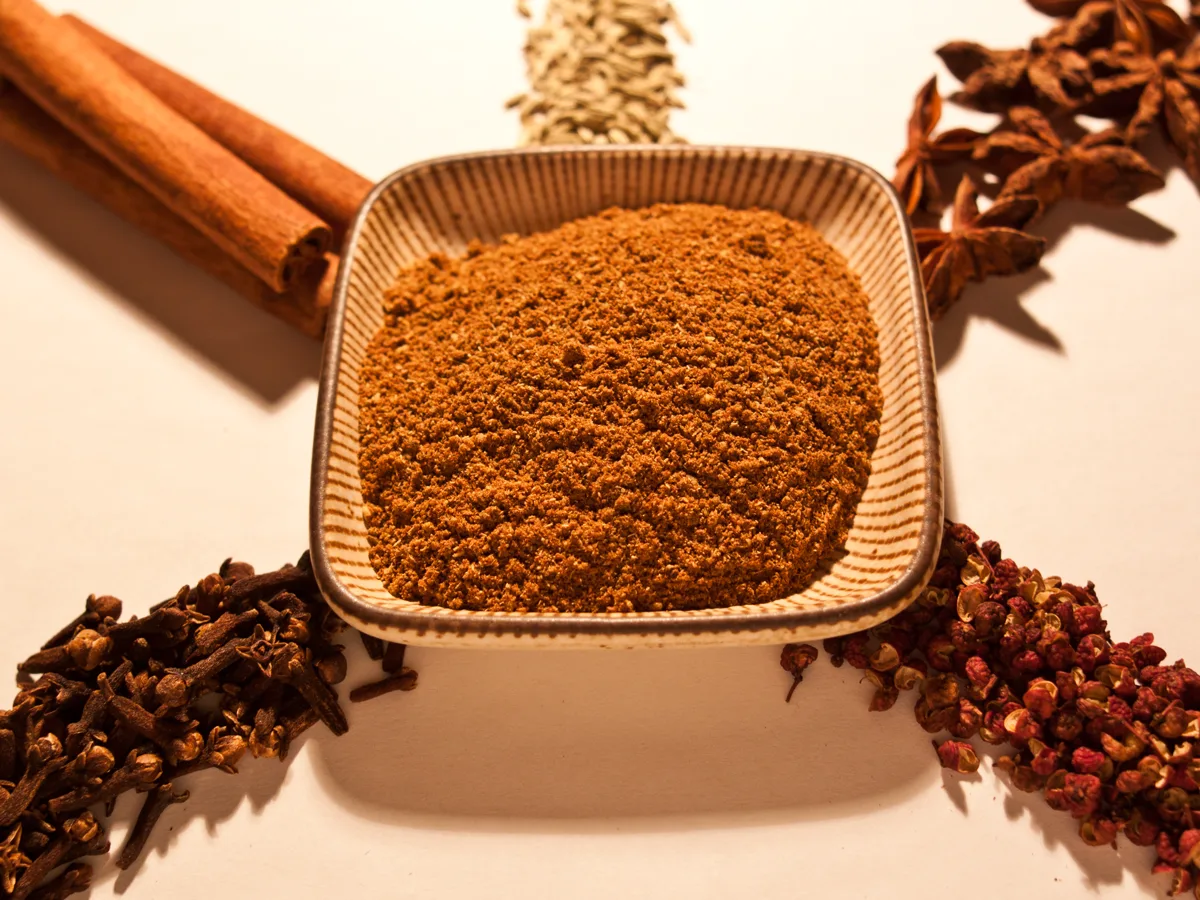
- Star anise: The first aroma most people identify.
- Fennel seed: A softer anise bridge rather than a duplicate.
- Cinnamon and clove: Warmth that becomes louder in sweet glazes.
- Sichuan peppercorn: Citrus lift and a dry, tingling finish.
1. Homemade Chinese Five Spice
Mix and use a small homemade five-spice blend at equal volume. Grinding only what the recipe needs preserves the citrus lift of Sichuan pepper and prevents star anise from dominating an old jar.
- Starting ratio
- equal volume after grinding and mixing
- Best for
- roast meat, tofu, braises, glazes, marinades, and stir-fries
- Main tradeoff
- requires five separate spices and a grinder
- Adjust
- reduce star anise when the dish already contains a whole star
For about four teaspoons, combine one and one-half teaspoons ground star anise, one teaspoon ground cinnamon or cassia, three-quarter teaspoon ground fennel seed, one-half teaspoon ground Sichuan peppercorn husks, and one-quarter teaspoon ground cloves.
This formula makes the anise clear without giving clove equal weight. Commercial blends vary, so it is a practical center rather than a claim that one composition represents every kitchen.
Sift the mixture after grinding because hard star anise points and peppercorn seeds can leave coarse fragments. Use the fragrant Sichuan pepper husks and discard most of the gritty black seeds before grinding.
Reduce ground star anise by one-quarter when the recipe already simmers a whole star.
Whole and ground forms release at different speeds but still contribute to the same licorice signal in the finished sauce.
2. Garam Masala
Use one-half teaspoon garam masala plus a small pinch of ground star anise for each teaspoon of five spice. Choose it for a dark soy braise, mushrooms, beef, or another savory dish that can carry cardamom and cumin.
- Starting ratio
- 1/2 teaspoon plus a small pinch of ground star anise
- Best for
- dark braises, mushrooms, beef, tofu, and rich sauces
- Main tradeoff
- cardamom and cumin replace fennel and Sichuan pepper
- Adjust
- choose a less floral formula and hold the star anise below 1/8 teaspoon
Garam masala supplies cinnamon, clove, and other roasted warm spices, but most formulas lack the anise that makes five spice recognizable. The small star-anise correction moves it closer without pretending the blends are interchangeable.
Cardamom can become conspicuous in a sweet glaze, especially after sugar reduces. Keep this option in dark savory liquids where soy, browned food, and stock spread the aroma.
Add half of the garam masala early and hold the rest until the braise reduces. The late portion restores aroma that a long simmer would otherwise flatten.
Do not add cumin, cardamom, or extra clove unless the cooked sauce shows a specific gap beyond the garam masala.
3. Pumpkin Pie Spice
Use one-third teaspoon pumpkin pie spice for each teaspoon of five spice only in a sweet glaze, fruit dish, or baked application. Add a tiny pinch of star anise when licorice belongs in the result.
- Starting ratio
- 1/3 teaspoon per 1 teaspoon five spice
- Best for
- honey glaze, plum sauce, roasted fruit, cake, and cookies
- Main tradeoff
- cinnamon and nutmeg sweetness without anise or pepper
- Adjust
- keep it out of savory stir-fries and unsweetened broth
Pumpkin pie spice covers the warm cinnamon-clove side of five spice and usually brings nutmeg or ginger. It has no built-in fennel, star anise, or numbing-citrus pepper finish.
That gap matters less when sugar is already part of the recipe. A plum glaze or spiced cookie can accept the dessert direction, while a vegetable stir-fry cannot.
Keep star anise below one-eighth teaspoon and taste the cooled glaze because hot syrup hides its persistent licorice finish.
The cooled sample predicts what remains on the tongue after the glossy surface reaches the plate.
4. Allspice
Start with one-quarter teaspoon ground allspice for each teaspoon of five spice in a dark braise, barbecue sauce, or ground meat mixture. Use it where concentrated clove-like warmth helps more than anise recognition.
- Starting ratio
- 1/4 teaspoon per 1 teaspoon five spice
- Best for
- dark braises, barbecue sauce, meatballs, and ground pork
- Main tradeoff
- one concentrated berry with no licorice or Sichuan pepper
- Adjust
- add a separate pinch of star anise only when the recipe needs it
Allspice is one berry whose aroma suggests clove, cinnamon, and nutmeg. It can supply a compact warm background, but it does not contain those spices and does not reproduce the architecture of five spice.
Ground meat and dark sauce spread the small dose well. A dry surface exposes its sharper clove note, so use less on ribs or roast skin than in a liquid braise.
Add missing fennel or pepper separately instead of increasing allspice to a medicinal equal-volume dose.
A louder narrow substitute cannot rebuild the anise and citrus-pepper roles that the berry never supplied.
5. Star Anise
Use one-eighth teaspoon ground star anise for each teaspoon of five spice in soy braise, broth, or an anise-led glaze. A whole star can be infused and removed in a larger pot, but it is not a direct teaspoon conversion.
- Starting ratio
- 1/8 teaspoon ground per 1 teaspoon five spice
- Best for
- soy braise, broth, poaching liquid, and restrained glaze
- Main tradeoff
- only the licorice signal without cinnamon, fennel, clove, or pepper
- Adjust
- cook and cool the food before deciding whether to add more
Star anise makes the dish recognizable quickly because its anethole aroma is strong and persistent. Recognition is not balance, and a star-anise-only replacement can feel hollow behind the first licorice note.
Use the ground form on short cooking and the whole form in a long liquid where it can be removed. Count any whole stars already present before adding the substitute.
Fat and sugar carry the aroma efficiently, so one-eighth teaspoon can be enough for a small glaze. More ground spice cannot be pulled back out once it spreads across the surface.
Never use equal-volume star anise because its licorice finish remains strong after the dish cools.
A whole star is safer in enough liquid because the cook can remove it before reduction concentrates the aroma.
Star Anise Is the Signature, Not the Whole Blend
Star anise provides the first recognizable aroma, while fennel extends the licorice direction more softly. Cinnamon or cassia creates warm bark sweetness, and clove deepens the lower aromatic edge.
Sichuan peppercorn adds citrus and a tingling sensation that keeps the sweet spices connected to savory food. It is not a conventional black pepper heat and should not be replaced by a large black pepper dose.
Pros
- Star anise makes a small substitute recognizable quickly.
- Fennel softens and extends the licorice direction.
- Cassia and clove build warm depth behind anise.
- Sichuan pepper adds citrus lift and gentle numbness.
Cons
- Anise alone creates recognition without balance.
- Cinnamon-heavy options can make savory food taste like dessert.
- Extra clove becomes medicinal before it replaces missing pepper.
Think of the blend as a set of roles rather than five mandatory objects. If garam masala supplies bark spice and clove, add only anise and a restrained pepper correction instead of recreating every line.
White pepper can supply dry pungency but not the citrus numbness of Sichuan pepper. Use it only when the dish needs a pepper finish and accept that the sensory effect changes.
A small pinch of fennel seed broadens sharp star anise but cannot remove an excessive ground dose.
Sugar and Roasting Make the Same Teaspoon Louder
A teaspoon dispersed through four cups of braising liquid behaves differently from a teaspoon painted onto eight pieces of glazed food. Evaporation removes water while spice remains, and the exposed surface reaches the nose before the interior does.
Sugar adds another amplifier because caramelized sweetness makes cinnamon, clove, and anise feel more familiar and persistent. Fat dissolves aromatic compounds and spreads them across the tongue.
- Mix one-quarter of the planned glaze or rub with the substitute at the lower ratio.
- Coat one piece of meat, tofu, mushroom, or vegetable while leaving a second piece unseasoned for comparison.
- Cook both pieces through the same heat and browning stage as the full recipe.
- Cool the test for one minute, then judge licorice, clove, sweetness, pepper, and salt separately.
- Scale the corrected amount to the remaining food while holding back the final ten percent.
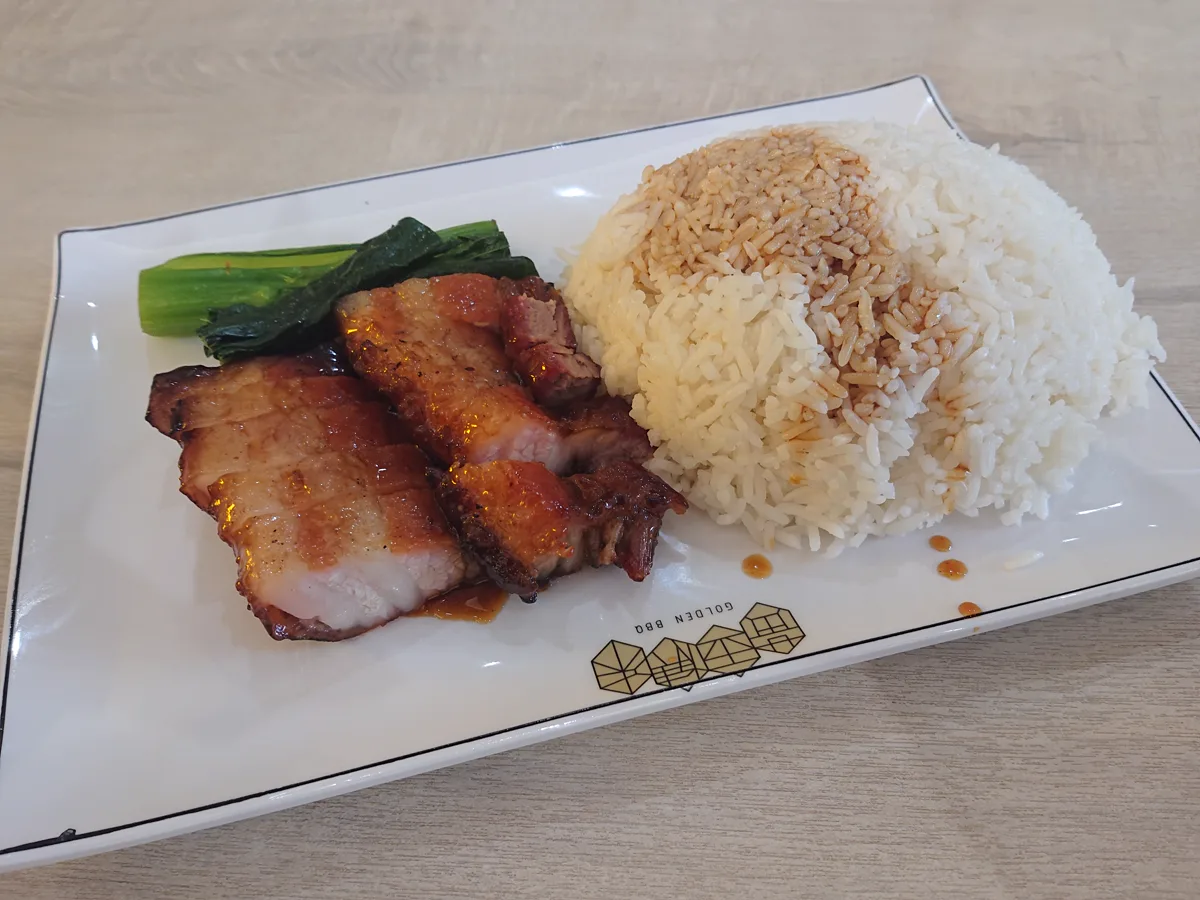
- Glossy edge: Sugar and evaporation hold aroma at the surface.
- Cut face: The interior receives much less seasoning than the crust.
- Separate rice: Dilution changes again once the food is served.
- Test piece: Taste after browning, not only in the raw sauce.
The unseasoned comparison matters because browning and soy already create strong aroma. Without it, the first warm-spice signal can seem necessary even when the food would remain complete at a lower dose.
Keep glaze slightly quieter in the bowl because water loss and repeated brushing concentrate every spice layer.
A raw glaze that already tastes complete will usually cross into clove or anise excess on the roasted surface.
A dry rub needs the same caution. The powder sits directly on the exterior and can scorch, which turns clove and cinnamon bitter before the center of the food tastes seasoned.
Roast, Braise, Glaze, and Stir-Fry Need Different Ratios
Braising liquid provides the most dilution and the easiest correction. A whole star anise can also be removed, which makes a narrow fallback more controllable than ground spice.
Roast and glaze applications keep spice on the surface. Begin at half of the table ratio when the recipe contains sugar or repeated brushing.
Use the homemade mix at full starting volume or garam masala at half volume. Recheck after reduction.
Begin at half the listed amount and test one piece because the surface concentrates aroma.
Use one-third pumpkin pie spice or a restrained homemade mix. Judge the cooled glaze before brushing again.
Add a small homemade blend near the end so star anise and Sichuan pepper remain clear without scorching.
Infuse one whole star anise when appropriate, then remove it before licorice dominates.
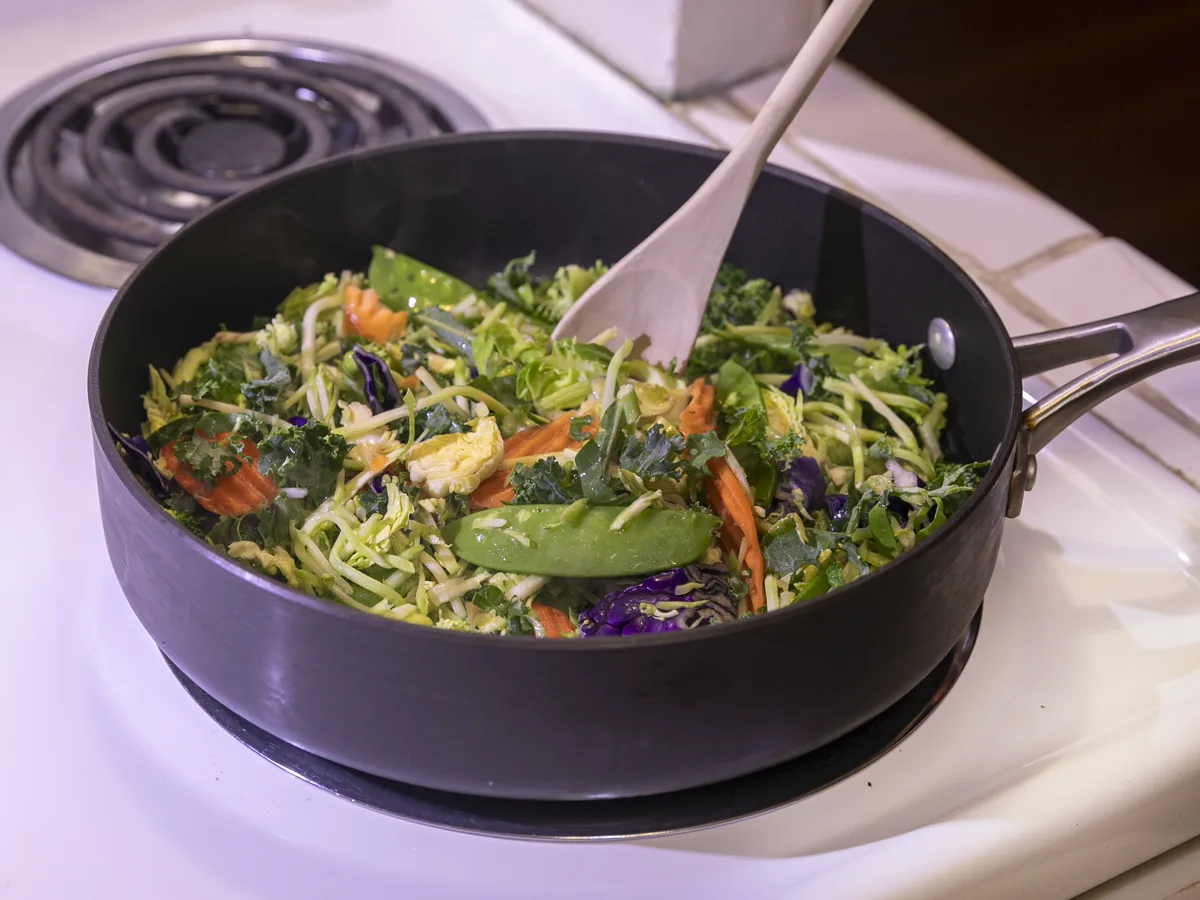
- Open pan: Aroma escapes quickly under high heat.
- Many cut faces: A small dose reaches a large coated area.
- Short cook: Coarse clove or star anise remains gritty.
- Late correction: Dissolve a pinch in sauce before adding more.
Stir-frying releases aroma quickly in hot oil, so a small measure added late can be more effective than a larger early dose. Keep ground spice away from an empty smoking wok where it can burn in seconds.
Taste a braise near serving volume because early unreduced liquid gives a false sense of safety.
The same spoonful becomes more aromatic after water leaves while the spice solids stay in the pot.
For roast skin, mix the substitute evenly into salt and other dry ingredients before applying it. Pockets of clove or ground star anise create harsh spots that a longer roast will not redistribute.
Whole Spices Need Time and a Removal Plan
One whole star anise does not equal one measured spoonful of ground star anise. A pod releases slowly from several points, can be removed when the broth tastes right, and leaves less gritty material than powder stirred directly into a clear liquid.
Use a whole star in a long soy braise or broth only when the pot has enough liquid and time for repeated tasting. Tie it in a small spice bag when broken points would be difficult to retrieve, then remove the bag before reduction makes the licorice note too strong.
Whole cinnamon, cloves, and fennel seed follow the same time rule but release at different speeds. Cinnamon can remain broad and woody, clove becomes medicinal quickly, and fennel seed may float loose unless it is contained or ground.
A quick glaze or stir-fry does not give whole spices enough time to share their aroma evenly. Use a finely ground and sifted substitute for those methods, mix it into the oil or sauce, and test it on one piece of food before coating the rest.
When the recipe already contains a whole star, reduce only the ground anise correction by roughly one-quarter at first.
Keep cinnamon, fennel, clove, and pepper unchanged until the cooked sauce shows whether those supporting roles are still missing.
The removal plan is part of the ratio. A whole spice can be taken out at the right moment, while an excessive ground dose remains in every spoonful and becomes harder to hide as sugar and liquid reduce.
Build the Blend by Parts When the Dish Depends on It
Measure whole spices before grinding so the intended proportions remain visible. Toast only fennel and Sichuan pepper lightly if they smell quiet, then cool them completely.
Break hard star anise and cassia into smaller pieces, pulse briefly, and let the dust settle before opening the grinder.
Sift the powder so woody points and peppercorn seeds do not remain as grit in a short-cooked sauce.
- Keep star anise clear but not solitary in the aroma.
- Use fennel to broaden licorice without matching the star-anise amount automatically.
- Keep clove smallest because it turns medicinal quickly.
- Choose cassia for stronger bark warmth or Ceylon cinnamon for a gentler result.
- Sift the blend and remove hard fragments before using it on a dry surface.
- Make only enough for the current recipe while Sichuan pepper still smells citrusy.
Do not toast ground spices for this batch. Fine powder scorches before the pieces heat evenly, and a burnt blend cannot be repaired with more cinnamon or sugar.
Store any small remainder airtight and away from the stove. Ground star anise and Sichuan pepper lose definition faster than whole spices, which leaves an older jar tasting mostly of cinnamon and clove.
Use equal volume as the first liquid-food test but let a lower cooked-surface dose decide glaze, rub, or many small pieces.