
Which Marjoram Substitute Fits Your Cooking Method?
Reduce stronger herbs for delicate finishes, then choose thyme or sage when fat and long heat matter.
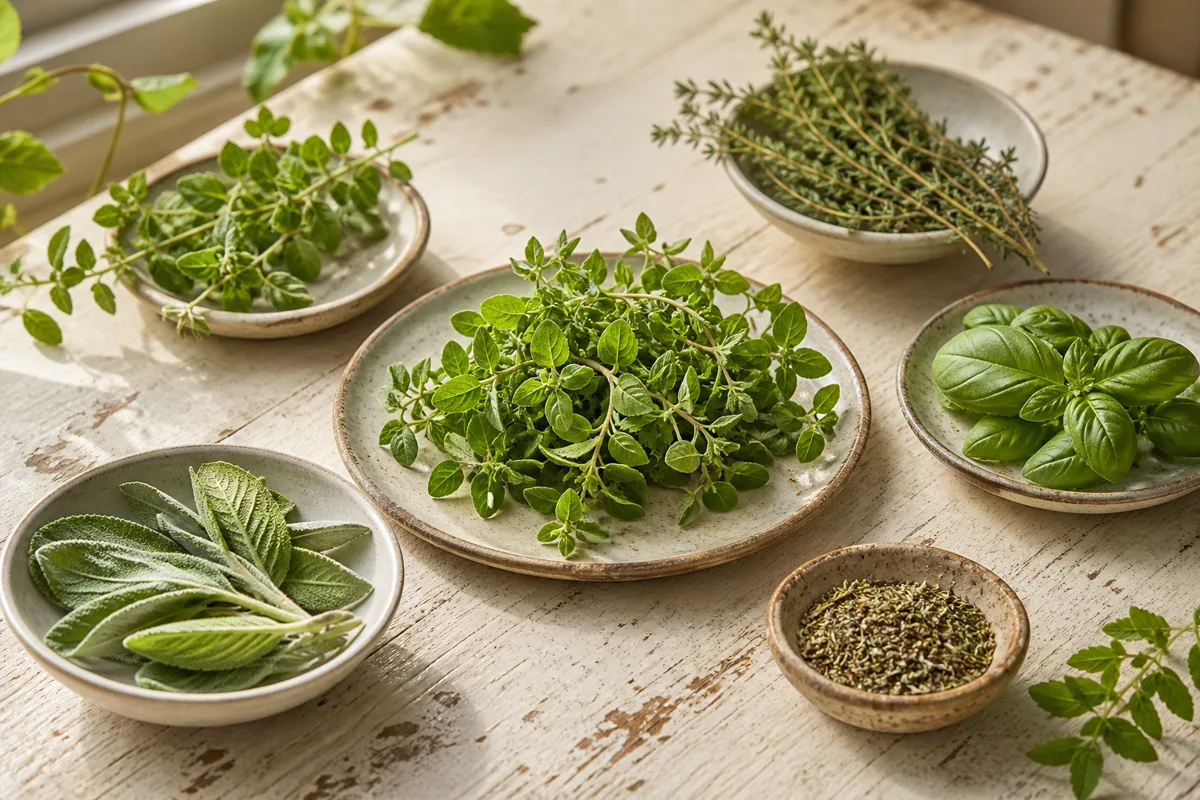
Oregano is the closest common substitute, but use only one half to two thirds as much. Thyme works better at a 1:1 ratio in sausage, beans, and braises where the herb must hold through fat and long cooking.
5 Marjoram Substitutes with Safer Starting Ratios
Oregano is the closest widely available substitute for marjoram, but use only one half to two thirds as much because its peppery edge is stronger.
Thyme is the better choice for sausage, beans, and long braises where the herb must survive heat.
Marjoram tastes sweet, lightly piney, and floral, so every replacement changes at least one part of that balance. The ratios below control the substitute's strongest note rather than trying to match marjoram leaf for leaf.
These five numbered options cover distinct cooking jobs, from a gentle fresh finish to seasoning that must survive a long braise.
| Number | Substitute | Starting ratio | Best use |
|---|---|---|---|
| 1 | Oregano | 1/2 to 2/3 tsp per 1 tsp | Tomato, meat, beans |
| 2 | Thyme | 1:1 by volume | Sausage, braise, roast |
| 3 | Sage | 1/2 tsp per 1 tsp | Pork, poultry, squash |
| 4 | Herbes de Provence | 1/2 tsp per 1 tsp | Roast, beans, tomato |
| 5 | Basil | 1:1 fresh by volume | Eggs, vegetables, late finish |
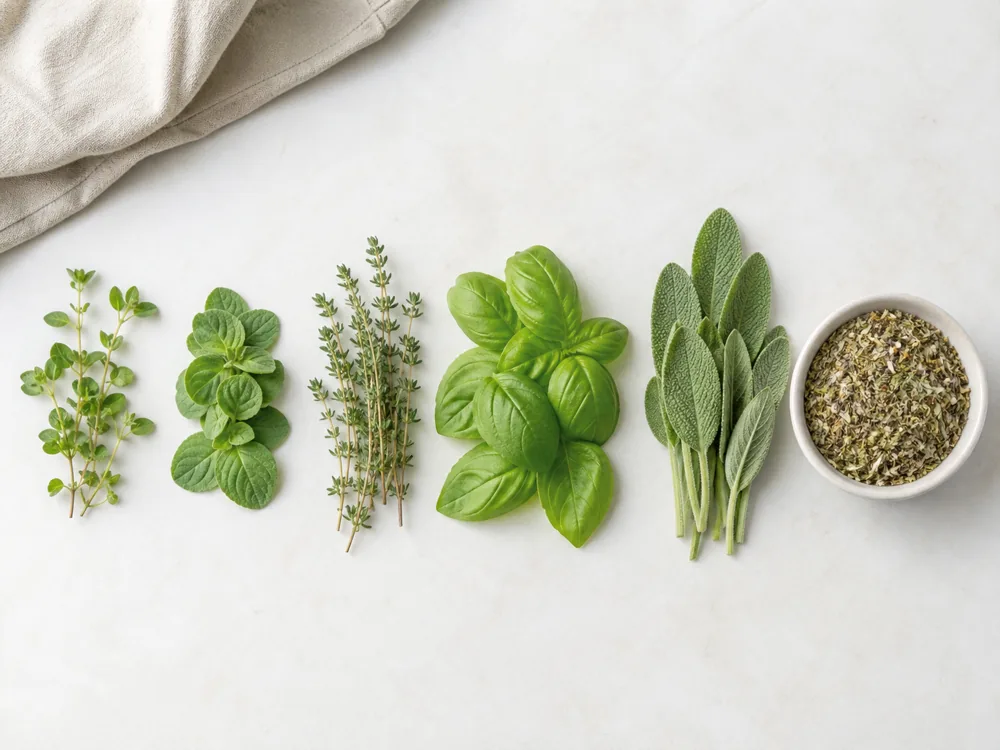
- Oregano: Closest family flavor, but sharper.
- Thyme: Heat-tolerant and resinous.
- Sage: Strong, earthy, and suited to fat.
- Blend and basil: Choose by long cooking or fresh finishing.
1. Oregano
Use 1/2 to 2/3 teaspoon oregano for every 1 teaspoon marjoram. Begin at half volume in eggs, potatoes, and pale sauce, then use the higher amount in tomato, beans, or a fatty meat dish.
Oregano supplies the closest herbal family resemblance, but it is pepperier, more bitter, and less sweet. Dried oregano also survives heat more aggressively, so an early addition remains obvious after marjoram would have softened.
Rub dried leaves between your fingers before adding them to release aroma and expose stale material. Fresh oregano should enter late, although its stronger leaf still needs a smaller handful than fresh marjoram.
Do not use a full one-to-one oregano swap in delicate eggs, mushrooms, butter sauce, or mild sausage.
The result can taste like an oregano dish rather than a marjoram-seasoned version of the original.
2. Thyme
Use thyme at a 1:1 ratio by volume for dried marjoram in beans, braises, sausage, roast meat, and soup. Strip tender leaves from woody stems when the herb will remain in the food, or remove a whole sprig before serving.
Thyme gives pine and savory depth without oregano's direct pepper bite. It lacks marjoram's floral sweetness, but its aroma holds through long cooking and fatty mixtures where a delicate finishing herb would disappear.
Add dried thyme at the original stage in a slow recipe. For a quick pan or finished vegetable, use a smaller fresh amount and let residual heat release it rather than simmering the leaves until they become woody.
Thyme is not the best choice for a soft fresh-herb finish on eggs or cold cheese.
Its stems and resinous aroma create a firmer texture and darker direction than marjoram provides.
3. Sage
Use 1/2 teaspoon sage for every 1 teaspoon marjoram. Choose it for pork, poultry, brown butter, squash, stuffing, or another rich preparation that can carry an earthy camphorous leaf.
Sage works because fat softens and spreads its strong aroma. In sausage or roast meat it can replace marjoram's role of cutting richness, but it does so with a darker and more recognizable flavor.
Add dried rubbed sage early enough to hydrate, or fry a few fresh leaves in butter and use less of the flavored fat. Whole leaves are stronger than their volume suggests and should not be chopped heavily into a delicate filling.
Avoid sage in light tomato sauce, eggs, fresh salad, and gently buttered vegetables.
Increasing other herbs around an excessive sage dose usually creates clutter rather than returning the missing sweetness.
4. Herbes de Provence
Use 1/2 teaspoon herbes de Provence for every 1 teaspoon marjoram. Read the ingredient list first because rosemary, thyme, savory, oregano, and lavender vary widely among jars.
The blend is useful in roast vegetables, chicken, beans, lamb, and tomato braises where several woody herbs already make sense. It replaces marjoram's blend-balancing role rather than its exact flavor.
Add it early in moist cooking or mix it with oil for roasting. Crush large rosemary needles before measuring so the teaspoon reflects usable herb rather than empty space between hard pieces.
Do not use the blend blindly in sausage, eggs, or a pale cream sauce.
Lavender can turn floral, rosemary can dominate, and a salted seasoning blend may duplicate salt the recipe already contains.
5. Basil
Use 1 teaspoon chopped fresh basil for 1 teaspoon chopped fresh marjoram. This is a direction change for eggs, tomatoes, mushrooms, and vegetables when the food needs a soft late herb rather than piney depth.
Basil supplies sweetness and a tender leaf texture, but it lacks marjoram's savory bitterness. Fold it in after the pan leaves the heat so its aroma and green color remain clear.
Choose a restrained sweet basil rather than a strongly licorice-like variety. Chop just before serving because bruised basil darkens and releases a larger, less controlled aroma than small marjoram leaves.
Do not use basil in dried sausage, a long bean stew, or a roast that needs seasoning through the center.
Long heat removes the reason basil was selected and leaves no durable marjoram-like background.
Fresh Finishes Need a Gentler Herb
Fresh marjoram finishes eggs, potatoes, mushrooms, carrots, and buttered beans without the pepper bite of oregano. Basil is the gentlest replacement in those foods, while a half measure of fresh oregano works when the dish can accept a sharper edge.
Add either herb off the heat. Residual warmth releases aroma into butter or egg without carrying the volatile top notes away in steam.
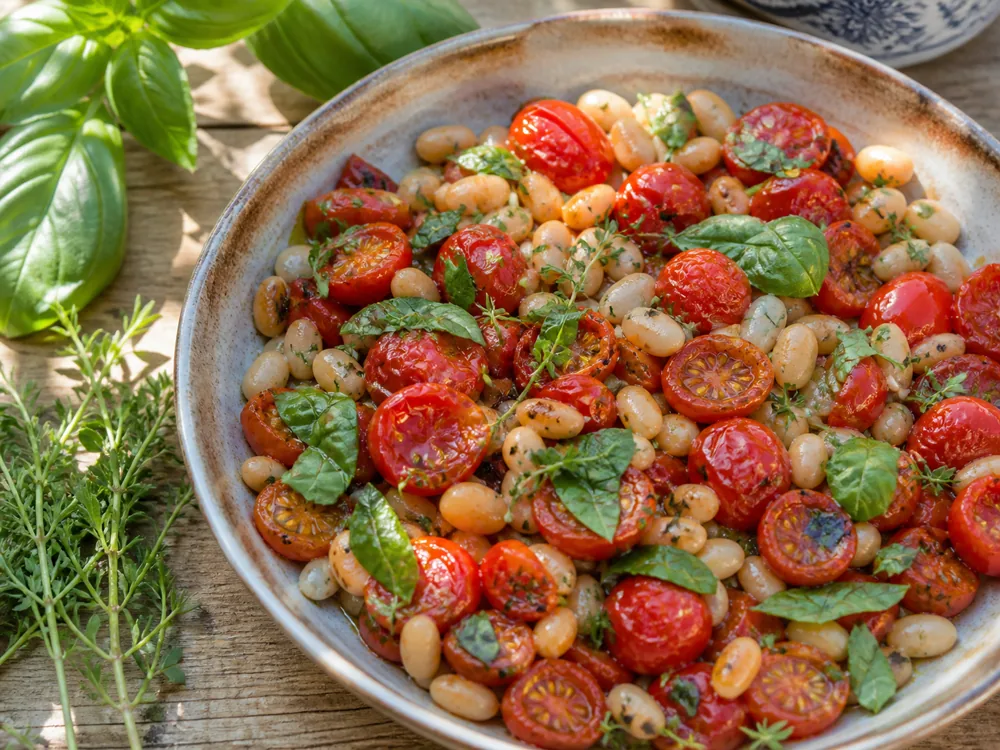
- Basil: One-to-one for a soft sweet finish.
- Oregano: Begin at half volume.
- Potatoes and eggs: Add after heat.
- Cold food: Rest briefly, then taste before increasing.
Eggs, mushrooms, tomatoes, and tender vegetables that welcome sweetness.
Potatoes, tomato, and grilled vegetables that can take pepperiness.
Warm beans or roast vegetables that need a firmer savory note.
Delicate food where every available herb would become the main flavor.
A cold dip or soft cheese needs time rather than heat. Mix in the lower ratio, rest the food for fifteen minutes, and judge the aroma after fat has spread it through the mixture.
For scrambled eggs, add basil or the lower oregano measure just before the curds set so the herb warms without losing its aroma. For roast potatoes, use oregano or thyme before the pan enters the oven because oil protects the leaves and carries their flavor across the browned surface.
Sausage needs a different test because salt and fat amplify dried herbs. Mix the lower thyme or sage ratio through a small portion, cook that test patty fully, and adjust the remaining raw mixture only after tasting it.
Do not combine all the alternatives to imitate complexity.
One coherent herb at a controlled dose usually tastes more intentional than oregano, thyme, sage, and basil competing in the same mild dish.
Sausage, Beans, and Braises Need Heat-Tolerant Replacements
Thyme is the most reliable marjoram substitute for slow cooking because its small leaves and resinous aroma survive simmering. Oregano also survives, but its sharper edge needs the lower ratio in sausage and fatty meat.
Sage belongs where pork, poultry, liver, butter, or squash can soften its force. Use half the marjoram measure and distribute it thoroughly because one sage-heavy pocket can dominate an entire bite.
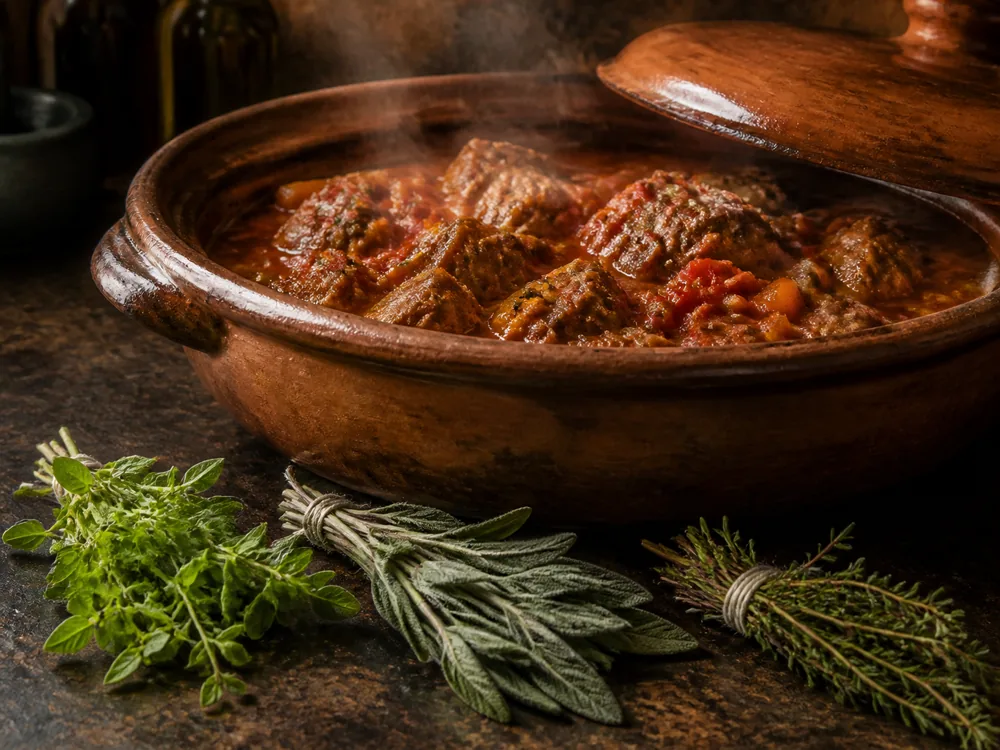
- Bean pot: Thyme at one-to-one.
- Sausage: Thyme or reduced oregano.
- Rich pork: Sage at half volume.
- Long heat: Save a small fresh finish only when the dish needs lift.
| Food | First choice | Starting ratio | Why |
|---|---|---|---|
| Beans or lentils | Thyme | 1:1 | Holds through simmering |
| Pork sausage | Thyme | 1:1 | Savory without oregano bite |
| Roast poultry | Sage | 1/2:1 | Fat carries its strong aroma |
| Tomato braise | Oregano | 1/2 to 2/3:1 | Pepperiness fits acid |
| Roast vegetables | Herbes de Provence | 1/2:1 | Several woody notes fit browning |
For ground meat, mix the substitute through the whole batch before cooking a small test patty. Tasting raw filling is unsafe, and the cooked sample reveals how fat and salt amplify the herb.
Split additions only when they perform different jobs.
An early thyme dose can season a bean pot while a small fresh basil finish changes the aroma at serving, but that finish should not be described as restoring marjoram.
Herb Blends Bring Ingredients You Did Not Ask For
Herbes de Provence can replace marjoram only when the other herbs suit the dish. Rosemary needles, thyme, savory, oregano, and optional lavender each remain after marjoram's mild sweetness would have faded.
Read the label and smell the jar before using half volume. A rosemary-led blend suits lamb or roast potatoes, while a lavender-forward version can distract in sausage or tomato sauce.
Some blends contain salt and others do not. Check the label before seasoning the food fully, especially in sausage, stock, or another mixture where salt cannot be removed later.
Use plain thyme when the label creates too many conflicts.
A narrower substitute may miss marjoram's floral side, but it preserves a clear savory direction instead of importing an entire herb mixture.
Fresh and dried herbs also require different judgment.
One tablespoon of fresh marjoram carries water and tender leaf bulk, while one teaspoon of dried marjoram is already concentrated. When you substitute a fresh herb for dried marjoram, add it later and use roughly three times the volume so long heat does not erase its greener aroma.
Correct an Over-Strong Herb Before Adding Another
Overpowering correction begins by stopping the herb dose and removing whole thyme sprigs, sage leaves, or large rosemary pieces. Ground or crumbled herbs cannot be removed.
Extend the unsalted base before adding acid, sugar, or another herb, then simmer a finished soup briefly so the correction becomes part of the dish.
Oregano excess tastes peppery and bitter, while sage excess tastes camphorous. More fat can soften perception in an appropriate sauce, but it does not remove the compounds or make the original ratio correct.
- Too peppery: Stop oregano and increase the unseasoned food.
- Too resinous: Remove stems and large leaves immediately.
- Too camphorous: Dilute sage instead of covering it with rosemary.
- Too floral: Check the blend for lavender and stop adding it.
- Too weak: Wait until dried herbs hydrate before increasing them.
- Wrong herb direction: Accept the variation instead of stacking substitutes.
Record the corrected ratio for the next batch because freshness changes herb strength.
A newly opened oregano jar can need less than the faded one whose volume established an old family recipe.
When marjoram is a quiet background note, omission may be cleaner than a substitute that announces itself. Salt, browned food, and the other intended herbs should be evaluated before another aromatic is added.