
Which Fenugreek Seed Substitute Fits the Way You Cook?
Match fenugreek's bitterness, maple-like aroma, seed texture, or soaked body to the recipe that needs it.
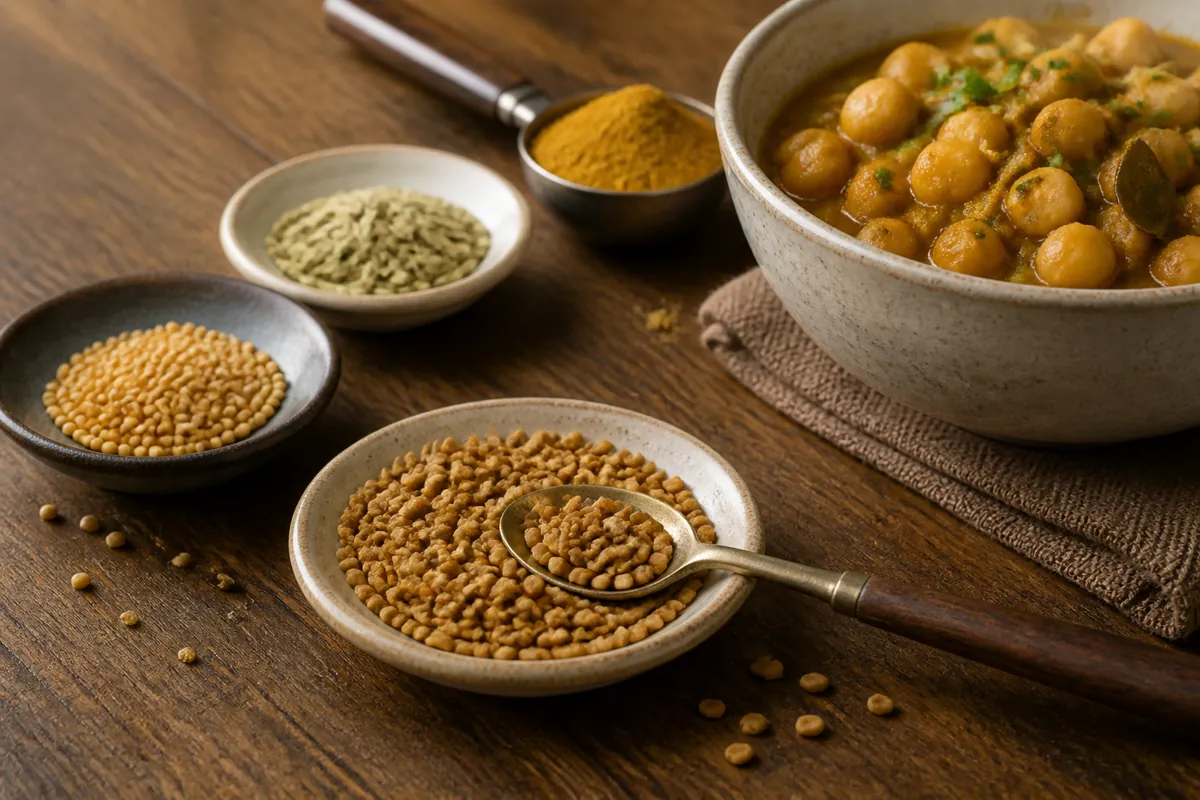
Yellow mustard seed with a trace of maple syrup is the best general fenugreek seed substitute for a cooked savory dish. Curry powder, fennel with mustard, cumin with coriander, and garam masala solve narrower problems, but none recreates the body of soaked fenugreek.
Fenugreek Has Four Jobs, and the Recipe Decides Which One Matters
Fenugreek seed tastes bitter and nutty, yet its strongest aroma suggests caramel, hay, and maple syrup. That split explains why a sweet replacement can smell convincing from the spoon and still leave a curry without the dry bitterness that held its other spices together.
Sotolon produces much of the familiar maple-like aroma.
The whole seed also brings a hard angular particle that can survive hot-oil tempering, while its outer layer contains galactomannan that swells and releases a slippery gel in water.
Those qualities do not travel as one package in another pantry ingredient. A useful substitute preserves the job the recipe exposes and accepts the qualities it cannot carry.
- Bitter balance
- Raw or lightly cooked seed keeps sweet onion, tomato, and warm spices from tasting round or flat.
- Maple-like aroma
- Sotolon gives curry and spice blends a dry caramel scent without making them sugary.
- Whole-seed behavior
- The hard seed can be tempered in oil or left visible in a pickle mixture.
- Soaked body
- Galactomannan absorbs water and gives preparations such as hilbeh a texture that flavor-only substitutes cannot reproduce.
In dal or a cooked curry, bitterness and background aroma usually matter more than the exact seed shape.
A pickle, panch phoron-style mixture, or hot-oil tempering exposes the physical seed, so powder is a poor answer even when its aroma fits.
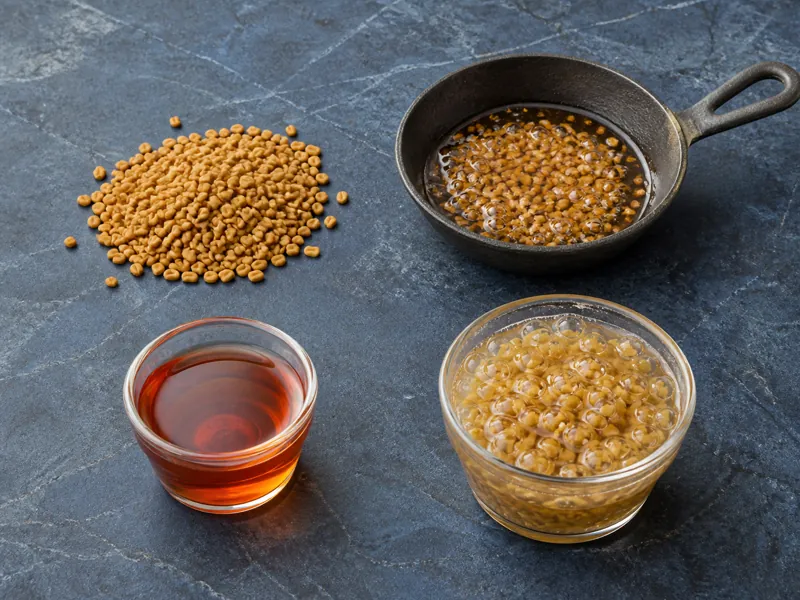
- Dry seed: Bitter, nutty seasoning remains firm enough to grind or temper.
- Hot oil: Whole seeds release flavor while keeping a visible particle.
- Aroma: Sotolon supplies the maple-like scent without syrupy sweetness.
- Soaked seed: Galactomannan creates a gel that flavor substitutes cannot copy.
A soaked condiment changes the decision completely. If the recipe needs fenugreek to thicken water, the correct answer may be to wait for fenugreek rather than force a spice swap.
Five Fenugreek Seed Substitutes Chosen by Cooking Job
Yellow mustard seed with a trace of maple syrup covers the widest savory use because it separates fenugreek's bitterness from its aroma. The maple amount must stay tiny, and the combination still cannot reproduce fenugreek's nutty middle or its behavior after soaking.
Curry powder is faster when its label already lists fenugreek and the dish welcomes the rest of the blend. Fennel with mustard keeps visible seeds, cumin with coriander rebuilds savory body, and garam masala supplies a late aromatic finish when seed texture no longer matters.
| Number | Substitute | Starting ratio for 1 tsp fenugreek seed | Best use | Main change |
|---|---|---|---|---|
| 1 | Yellow mustard seed with maple syrup | 3/4 tsp mustard + no more than 1/16 tsp maple | Dal, curry, chutney, cooked pickle masala | Sharper and less nutty |
| 2 | Curry powder | 1 tsp for ground fenugreek, or 1/2 tsp when spices overlap | Curry, lentils, soup, stew | Adds a complete blend |
| 3 | Fennel seed and mustard seed | 1/2 tsp + 1/2 tsp | Pickle masala, seed tempering, cabbage | Sweeter and more pungent |
| 4 | Cumin and coriander seed | 1/2 tsp + 1/2 tsp | Dal, chickpeas, vegetables, dry blends | Loses bitter maple character |
| 5 | Garam masala | 1/2 tsp for ground fenugreek | Finished curry, lentils, braised vegetables | Warmer and more perfumed |
1. Yellow Mustard Seed With a Trace of Maple Syrup
Use three-quarters teaspoon yellow mustard seed for each teaspoon fenugreek seed in a cooked savory dish.
Yellow mustard supplies a firm bitter edge without the stronger nasal heat of brown or black mustard. Bloom the mustard where the recipe would have tempered whole fenugreek.
Wait until stock, tomato, or another liquid enters before adding no more than one-sixteenth teaspoon maple syrup. Keeping the liquid correction separate prevents the syrup from scorching in hot oil.
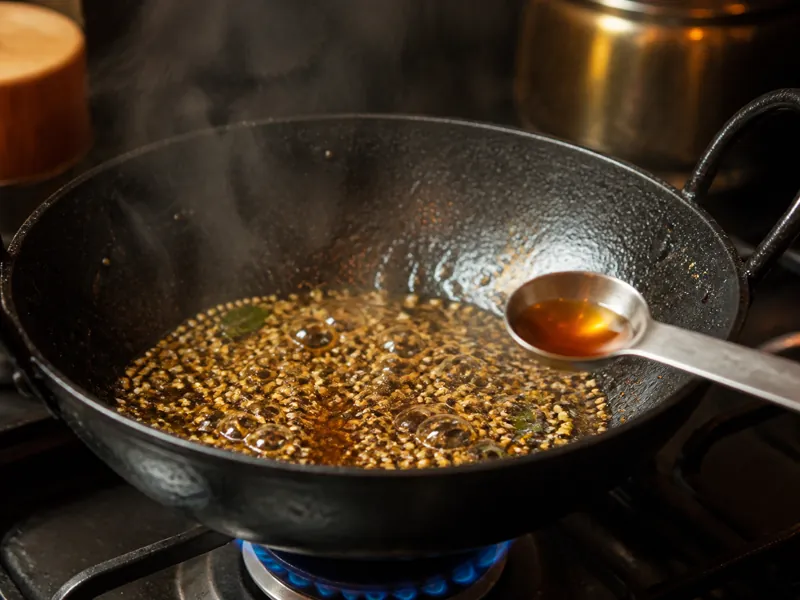
- Mustard first: Hot oil develops the bitter seed character.
- Liquid next: Stock or tomato protects the maple from scorching.
- Maple last: A trace supplies aroma without making the curry sweet.
The first taste should register as savory rather than sweet. If maple is easy to name, the correction has already passed fenugreek's background aroma and moved toward glaze.
This combination suits dal, tomato-based curry, mango chutney, and a cooked pickle masala.
It does not suit a dry panch phoron mixture that must keep clean separate seeds, and it cannot supply the gel of soaked fenugreek.
2. Curry Powder
Curry powder can be the most honest shortcut when its ingredient list includes fenugreek. Start with one teaspoon for one teaspoon ground fenugreek in a soup or simple curry, but use half that amount when the recipe already measures turmeric, coriander, cumin, or chile separately.
The label decides whether this option makes sense.
Some blends contain fenugreek, while others build their flavor without it. Salt and chile levels can change the whole pot.
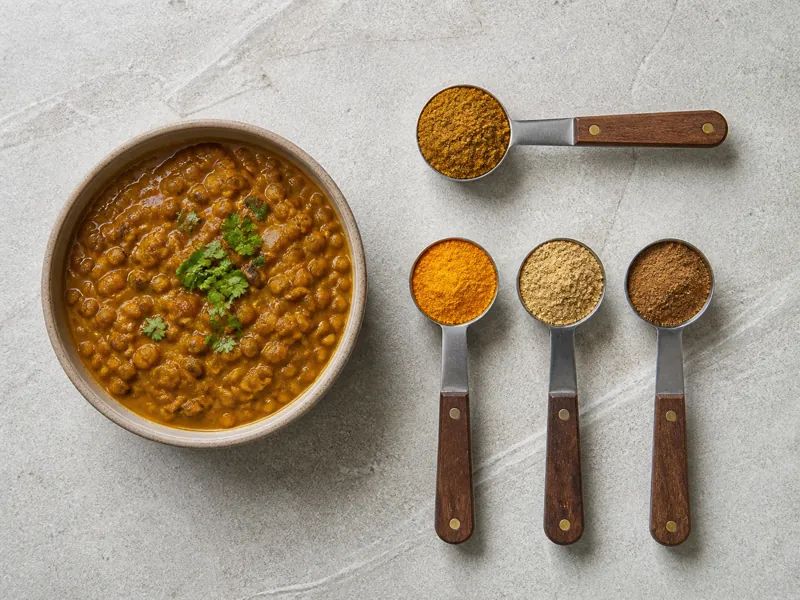
- Blend spoon: Use the label to confirm fenugreek is present.
- Separate spices: Reduce turmeric, coriander, or cumin when the blend already supplies them.
- Finished curry: Taste after the blend disperses through the moist base.
Add curry powder to moist aromatics or warm fat at moderate heat. A fine blend scorches faster than a whole fenugreek seed, so a blackened pan cannot be repaired by adding more liquid afterward.
This is a blend-level replacement rather than a seed replacement. It works in lentil curry, vegetable stew, and soup, but it cannot stand in for visible seeds in bread, pickle brine, or a tempering where each seed is meant to remain distinct.
Check the rest of the recipe before seasoning. If curry powder already supplies coriander and cumin, reduce those separate measures and rebuild the balance from the cooked food instead of doubling every spice.
3. Fennel Seed and Mustard Seed
Mix half a teaspoon fennel seed with half a teaspoon yellow mustard seed for every teaspoon fenugreek seed when the recipe needs visible seeds.
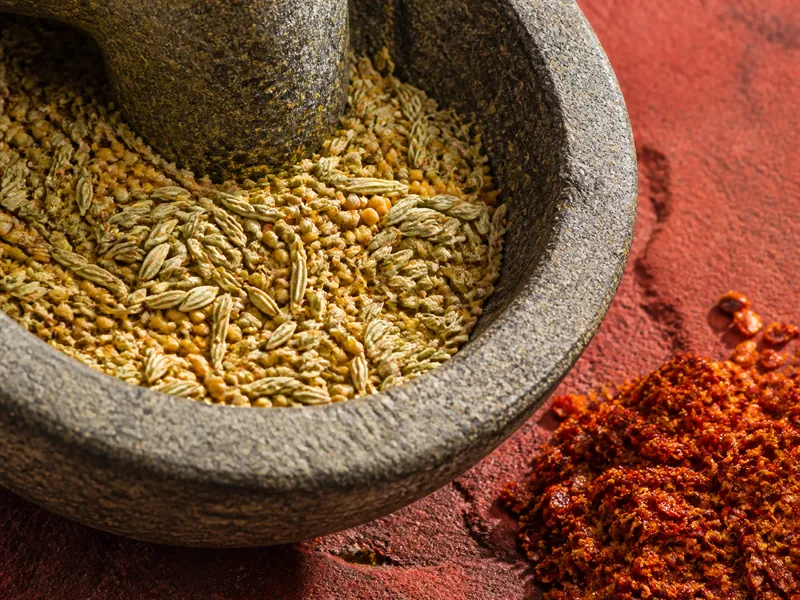
- Fennel: Long ridged seeds add sweet anise-like aroma.
- Mustard: Round yellow seeds add bitterness and hot-oil resilience.
- Light crushing: Break the seeds only when the original recipe grinds fenugreek.
Mustard carries bitterness and fennel contributes a sweet aromatic lift, so neither has to do the other's job. Fennel's anethole aroma points toward licorice rather than maple.
That difference becomes obvious in a mild dish, but pickle masala, cabbage, and a busy seed tempering can absorb it more naturally.
Supplies bitterness and a round seed that tolerates hot oil.
Supplies aromatic sweetness and a larger ridged seed.
Preserves seed texture while keeping either flavor from leading immediately.
Reduce fennel to one-quarter of the mixture when fruit, caramelized onion, or sweet vegetables are already present.
Crush the mixture only when the original fenugreek would have been ground. Whole fennel releases more slowly than broken fennel, so changing particle size can make the same ratio taste much sweeter.
In panch phoron, this replacement changes the identity of the mixture because fennel and mustard are already present.
Increase those two only modestly and accept a lighter, sweeter tempering rather than pretending the missing fenugreek has disappeared.
4. Cumin and Coriander Seed
Use equal parts cumin and coriander seed when fenugreek was a minor source of savory weight in dal, chickpea curry, or a vegetable dish. A half teaspoon of each replaces one teaspoon fenugreek by total volume.
Cumin makes the base earthier, while coriander restores enough citrus lift to keep that earthiness from becoming dull. The combination has almost none of fenugreek's bitter maple character, so it is a coherent change rather than a close flavor match.
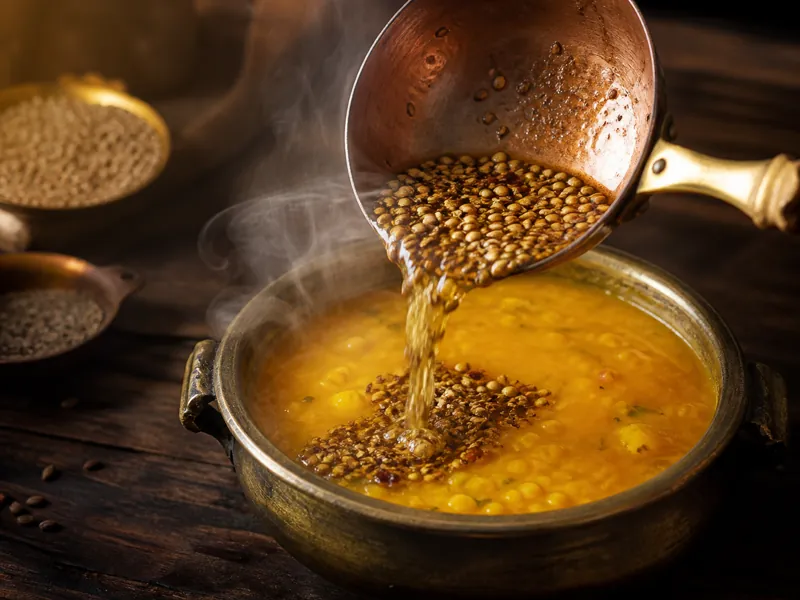
- Cumin: Supplies the deeper earthy note.
- Coriander: Keeps the base from tasting heavy or dull.
- Hot oil: Release the aroma briefly before the seeds darken.
Toast the pair briefly or bloom it in oil according to the recipe's method.
Coriander tolerates a gentler toast than cumin, and both should leave the pan when their aroma rises rather than after they turn dark.
This fallback works best where browned onion, lentils, tomato, or chickpeas already provide the dish's main identity. It fails in a spice blend or pickle whose recognizable flavor depends on fenugreek itself.
Do not add sugar to chase the missing aroma. The value of this pair is a clean savory base, and a sweet correction would not supply sotolon or fenugreek's bitterness.
5. Garam Masala
Garam masala is a late-stage fallback for cooked food after seed texture and tempering are no longer part of the decision.
Begin with half a teaspoon for each teaspoon ground fenugreek, then taste the curry away from the heat.
Recipes for the blend vary, and many contain no fenugreek at all. Cardamom, clove, cinnamon, cumin, coriander, and pepper can still restore aromatic breadth, but they move the dish toward a warmer and more perfumed finish.
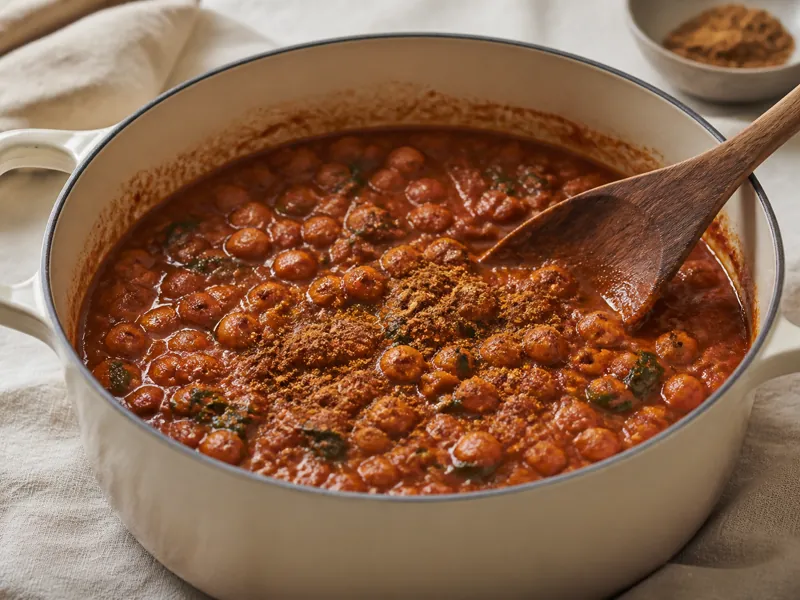
- Finished curry: Add the blend after the main simmer.
- Small dose: Start with half the missing fenugreek volume.
- Taste off heat: Stop when clove or cardamom begins to lead.
Add the blend after the main simmer so its volatile aroma stays clear. Long cooking flattens the top notes and leaves a broad brown-spice warmth that can make the replacement feel heavier than the missing fenugreek.
Use this option in chickpea curry, dal, tomato-based curry, or braised vegetables.
Skip it in pickles, seeded bread, and hot-oil tempering because a fine finishing powder performs none of the physical jobs those recipes expose.
Soaking Reveals the Job Most Substitutes Cannot Copy
Soaked fenugreek becomes swollen and slippery because water reaches galactomannan in the seed's outer cell layers. The dissolved carbohydrate forms mucilage around the seed, producing body as well as flavor.
That physical change matters in Yemeni hilbeh, where soaked and ground fenugreek helps create a thick, aerated condiment. Mustard can bring bitterness and fennel can bring aroma, but a bowl of either seed in water stays too thin to build the same structure.
The same limit applies when a recipe soaks fenugreek before grinding it into a paste. Matching the dry seed volume does not match the water binding, so the finished mixture can run loose even when its seasoning seems plausible.
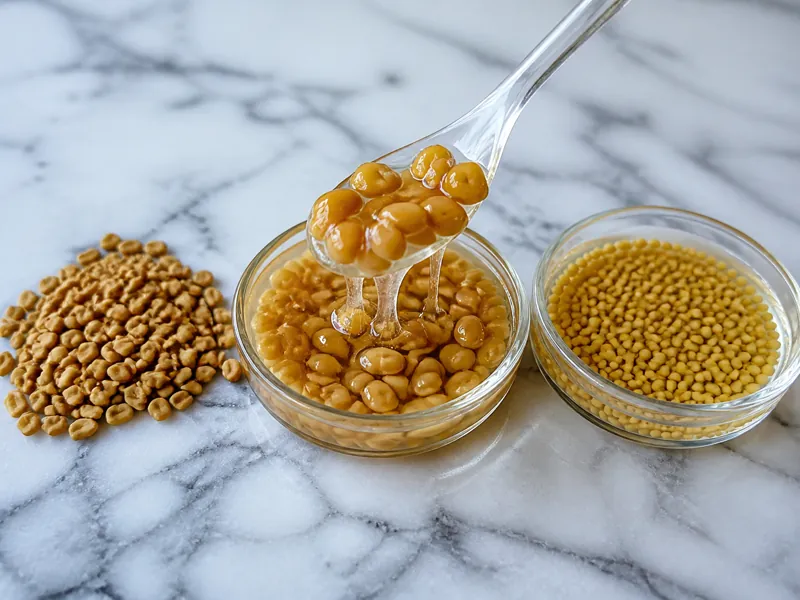
- Dry fenugreek: Angular seeds begin hard and compact.
- Soaked fenugreek: Swollen seeds hold translucent gel around their surface.
- Soaked mustard: The seeds hydrate without building the same viscous body.
- Read the methodLook for soaking, repeated rinsing, grinding with water, or whipping after hydration.
- Check the visible resultFenugreek should swell and leave the liquid more viscous than plain water.
- Separate flavor from structureDecide whether another ingredient already provides thickness before changing the spice.
- Stop when body is essentialUse real fenugreek for hilbeh or another preparation built around its gel.
A starch or another gum could thicken the liquid, but that would create a second substitution with its own texture and dosing problem.
This article does not provide a universal thickener formula because the correct material depends on the complete recipe.
For a curry that happens to soak fenugreek only to soften its bitterness, you have more room. Use the replacement that fits the later cooking stage, then judge the sauce on its existing onion, lentil, nut, or dairy body.
Choose the Replacement Where Fenugreek Enters the Recipe
The cooking stage exposes a substitute's weaknesses faster than a smell test. Whole seeds tolerate direct oil differently from fine powder, while a sweet liquid correction belongs after the pan contains moisture.
In hot-oil tempering, use whole yellow mustard or the fennel-mustard mixture and watch the seeds rather than the clock. Mustard should begin to move and pop, while fennel should smell sweet without turning brown.
A simmered curry can accept curry powder or cumin with coriander because liquid distributes a ground replacement through the pot. Add curry powder before a long simmer only with enough moist aromatics to protect it from scorching.
Use whole yellow mustard or fennel with mustard. Keep maple syrup away from bare hot oil.
Preserve whole-seed texture with mustard and restrained fennel, then taste after acid and salt settle.
Use curry powder or cumin with coriander when the base can absorb a wider spice change.
Use a small garam masala dose only when warm finishing aroma belongs in the dish.
Choose dry seeds or powder and omit maple syrup, which creates clumps and shortens storage life.
Pickles require patience because acid, salt, and time change how sharp the first taste seems.
A fennel-mustard mixture that appears mild in the bowl may taste sweeter after several days, so keep fennel controlled at the start.
Dry blends create the opposite problem. Maple syrup introduces water and sugar, while curry powder may duplicate several ingredients.
Mustard seed or a deliberate cumin-coriander change is easier to measure and store.
The best correction happens before the substitute enters. Name the carrier, choose the matching form, and accept the flavor direction instead of adding several more ingredients after the pot already tastes confused.
Fenugreek Leaves Are Not a One-for-One Seed Substitute
Fenugreek leaves and seeds come from the same plant, but they enter food at different stages and create different textures. Fresh methi and dried kasuri methi bring a leafy, hay-like aroma, while the seed is harder, more bitter, and suited to tempering, grinding, or soaking.
A leaf cannot replace a visible seed in pickle masala or panch phoron. A seed also cannot copy the soft herbal finish that crushed kasuri methi gives butter chicken or another finished curry.
If fenugreek seed is only one quiet note among many and every available substitute pulls the dish in the wrong direction, omission can be cleaner.
Wait for real fenugreek when its bitter maple aroma, soaked body, or named role defines the preparation.