
Does Ginger Help Digestion? What the Evidence Supports
Separate nausea from bloating and reflux, compare tea with supplements, and know when symptoms need medical care.
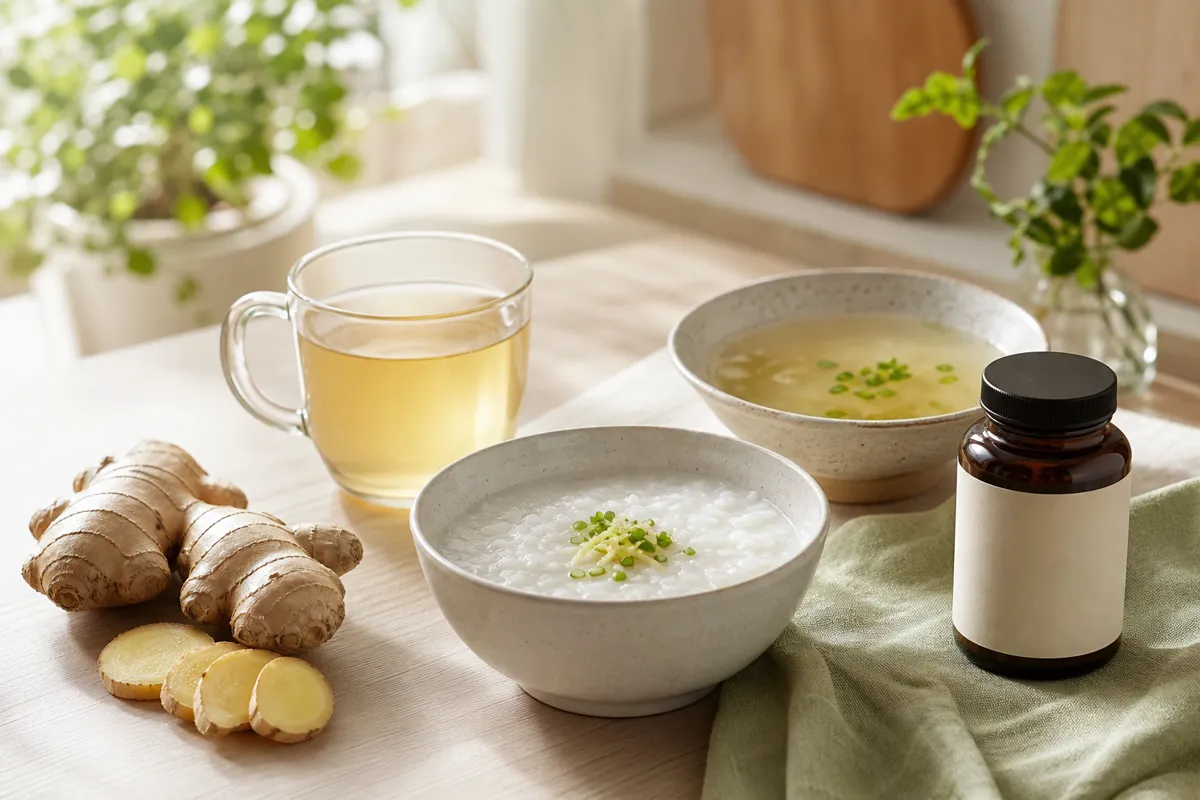
Ginger has its clearest support for some types of nausea, especially pregnancy-related nausea, though most studies tested supplements rather than food. Evidence is less certain for motion sickness, chemotherapy-related nausea, bloating, reflux, constipation, and general indigestion. Mild food or tea use may be reasonable, but stop if ginger worsens heartburn, diarrhea, or irritation.
Does ginger help digestion?
Ginger may help some kinds of nausea, but that does not mean it improves every part of digestion. Evidence is thinner or mixed for bloating, reflux, constipation, stomach pain, and broad indigestion.
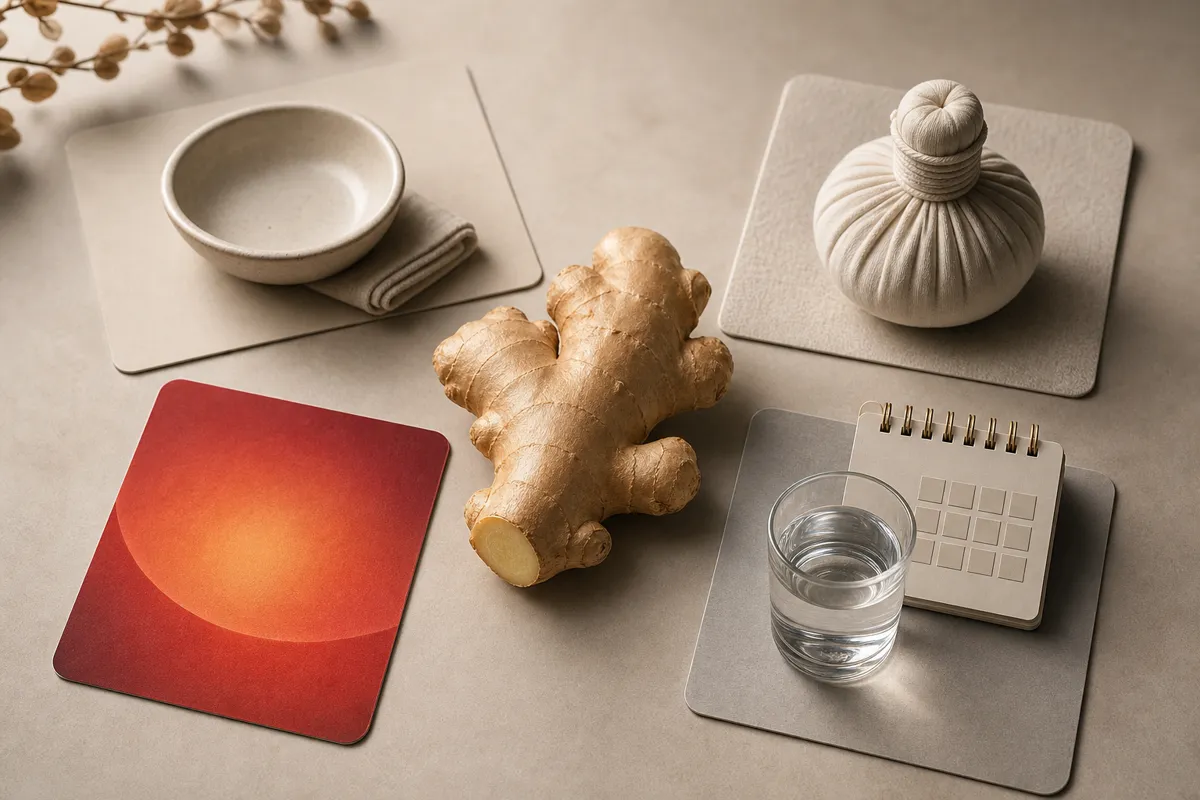
- Some support: Pregnancy-related nausea
- Mixed: Other nausea contexts
- Uncertain: Bloating and indigestion
- May worsen: Heartburn or diarrhea
The National Center for Complementary and Integrative Health finds that ginger may help nausea and vomiting associated with pregnancy. Most studies evaluated dietary supplements rather than fresh ginger in meals.
Motion sickness studies have generally not shown a clear benefit. Evidence remains uncertain for nausea after surgery or during cancer chemotherapy.
Ginger can also cause abdominal discomfort, heartburn, diarrhea, and mouth or throat irritation. A product that worsens the symptom is not providing digestive comfort.
| Symptom or goal | Evidence direction | Practical conclusion |
|---|---|---|
| Pregnancy-related nausea | Some supportive evidence | Discuss form and use with prenatal clinician |
| Motion sickness | Most studies not supportive | Do not rely on ginger alone |
| Bloating or indigestion | Limited and mixed | Look for the actual cause |
| Heartburn | Can be a side effect | Reduce or stop ginger if worse |
The main ginger profile covers flavor, cutting, cooking, and storage.
Does ginger help nausea?
Ginger has its most consistent nausea evidence in pregnancy, where reviews suggest a modest reduction for some people. Pregnancy nausea still varies in severity and cause, so symptom care should remain coordinated with a prenatal clinician.
The result cannot be transferred automatically to motion sickness. NCCIH notes that most studies of ginger for motion sickness have not found it helpful.
Chemotherapy-related nausea has many causes and occurs alongside powerful medicines. Evidence is uncertain about whether ginger adds benefit to standard anti-nausea treatment.
Postoperative nausea also depends on anesthesia, surgery, pain medicine, and individual risk. Ginger should not replace the prevention or treatment plan from the surgical team.
| Context | What the evidence suggests | What ginger should not replace |
|---|---|---|
| Pregnancy | May help some nausea and vomiting | Prenatal assessment and established care |
| Motion sickness | Benefit not clearly shown | Proven prevention and safety planning |
| Chemotherapy | Uncertain as an add-on | Oncology anti-nausea medicines |
| After surgery | Uncertain | Anesthesia and surgical care |
Nausea from infection, migraine, medication, pregnancy, bowel obstruction, or another cause does not call for one response. Repeated vomiting or severe pain needs diagnosis rather than a stronger ginger preparation.
A small amount of ginger in food may be easier to tolerate than an empty-stomach capsule. That is a comfort choice, not proof that the food form matches a clinical trial.
Use the broader health evidence library to keep food habits separate from treatment claims.
Is ginger good for bloating, indigestion, or stomach emptying?
Ginger is studied for gastric emptying, the movement of food from the stomach into the small intestine. Some small studies suggest it can change emptying time, but a mechanism result does not prove relief from every symptom.
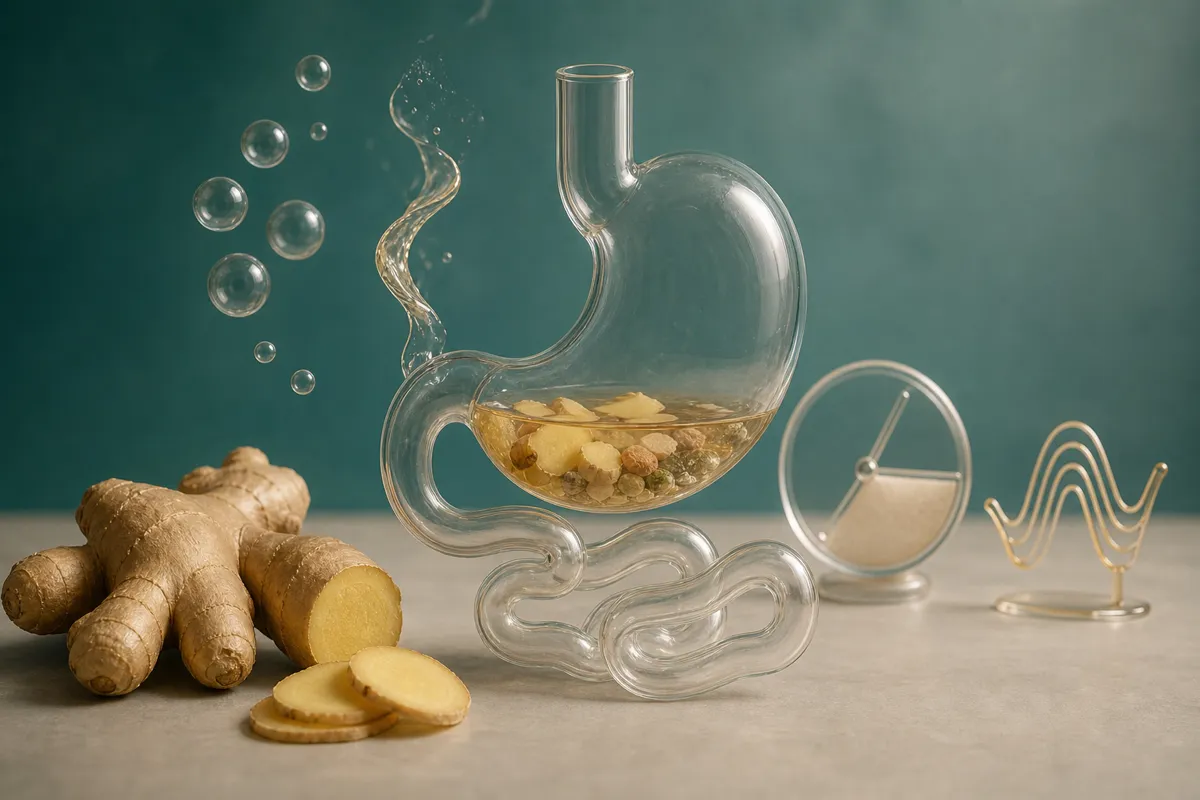
- Stomach: Emptying speed
- Esophagus: Reflux
- Intestine: Gas and bowel habits
- Brain and gut: Nausea signaling
Bloating can come from swallowed air, fermentation, constipation, food intolerance, fluid, or altered gut sensitivity. Faster stomach emptying would not address all of those causes.
Functional dyspepsia can include early fullness, upper abdominal discomfort, burning, or nausea. Trials may measure emptying without showing the same improvement in how a person feels.
Reflux is especially important because ginger itself can cause heartburn. Adding strong ginger tea to an already irritating meal may make burning worse.
Constipation also has many causes, including low fluid intake, medicine effects, pelvic floor problems, and disease. Ginger is not a substitute for an appropriate constipation plan.
| Question | What would need to be shown | Current caution |
|---|---|---|
| Does the stomach empty faster? | Measured movement after a meal | May not change symptoms |
| Does bloating improve? | Less bloating in people with that complaint | Causes vary |
| Does reflux improve? | Less acid-related burning or regurgitation | Ginger may cause heartburn |
| Does constipation improve? | Reliable bowel outcome | Not established as a treatment |
Is ginger tea as effective as fresh ginger or capsules?
Ginger tea, fresh root, dried powder, and standardized extracts are not directly interchangeable. They can contain different amounts and proportions of gingerols, shogaols, and other compounds.
Fresh ginger releases flavor into water, but infusion strength changes with slice thickness, water volume, temperature, and steeping time. A pale cup and a reduced decoction are very different exposures.
Dried ginger powder is more concentrated by weight and tastes hotter. Capsules may deliver a measured powder or a standardized extract that cannot be recreated reliably from a kitchen recipe.
| Form | What you can control | Main limitation |
|---|---|---|
| Fresh in food | Slice size and dish amount | No direct trial-equivalent dose |
| Tea or infusion | Strength and serving volume | Composition varies |
| Dried powder | Measured culinary amount | More concentrated pungency |
| Standardized supplement | Labeled extract amount | Interaction and formula questions |
Read the full label when a product is sold as a supplement. Added black pepper extract, sweeteners, acids, or multiple herbs change both tolerance and interaction questions.
Do not convert a study dose into spoonfuls at home. The tested product, manufacturing, and population matter as much as the number on the page.
How can you use ginger in food for digestive comfort?
Use ginger in food by starting with a mild amount and a familiar preparation. Thin slices in broth, rice, congee, or a simple vegetable dish keep the flavor easier to adjust than a concentrated shot.
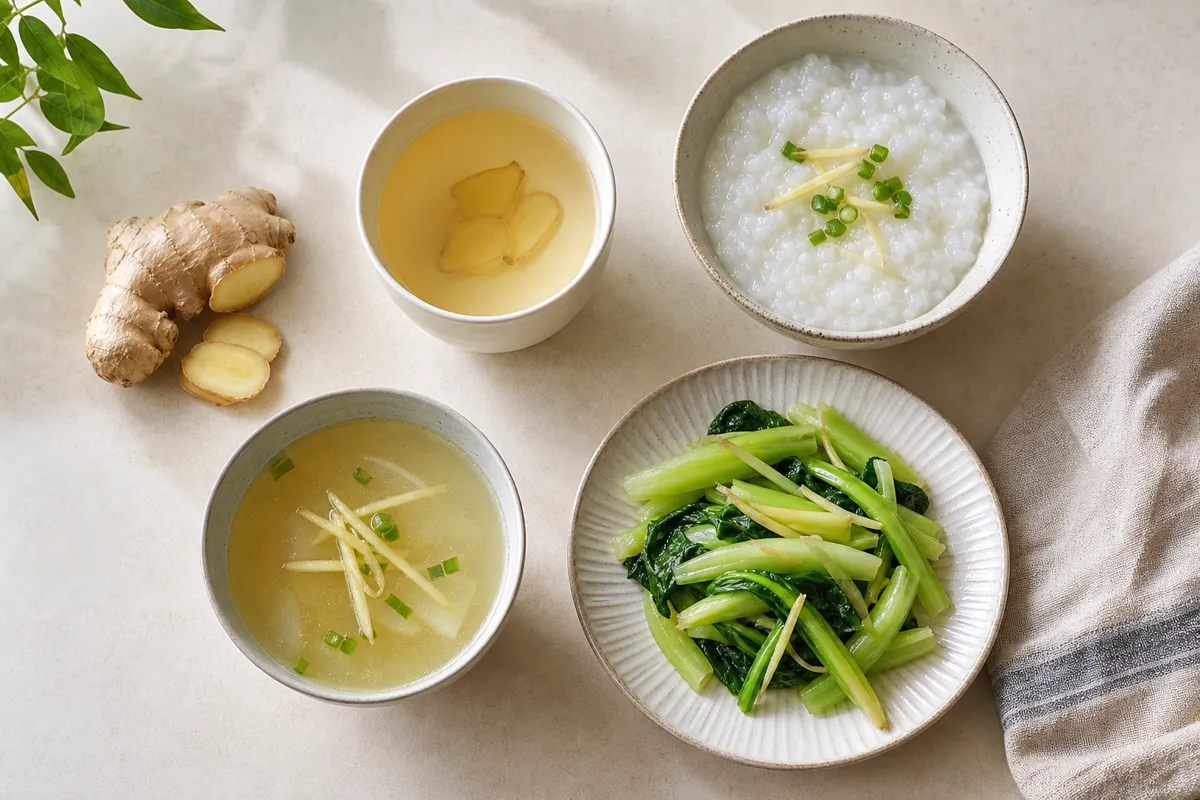
- Tea: Thin slices, gentle infusion
- Broth: Aromatic simmer
- Rice: Small minced amount
- Vegetables: Brief cooking with food
For a gentle infusion, steep a few thin slices in hot water and taste before extending the time. Stronger is not automatically better for comfort.
In broth or congee, simmer slices and remove them before serving when chewing the fibers is unpleasant. Minced ginger can remain when its texture suits the dish.
Pairing ginger with a bland starch may feel easier than taking powder on an empty stomach. Limit chile, large amounts of citrus, and heavy fat if those already worsen nausea or reflux.
- Start mild and change only one variable at a time.
- Use fresh slices when you want easy removal.
- Take notes on the symptom, preparation, and timing.
- Stop when burning, diarrhea, or discomfort increases.
- Do not keep escalating the amount when symptoms persist.
Fresh galangal is not a direct substitute for this purpose. It has a firmer texture and piney flavor, while digestive evidence for ginger does not transfer to another rhizome.
Store cut root cold, dry, and protected from condensation. The spice storage guide covers spoilage and aroma loss.
Can ginger worsen heartburn or interact with medicines?
Ginger can cause abdominal discomfort, heartburn, diarrhea, and mouth or throat irritation. These effects become more likely to matter when the product is strong, repeated, or taken without food.
Stop or reduce the preparation when it clearly worsens burning or loose stool. Continuing because ginger is supposed to help digestion ignores the evidence from your actual response.
People with gallstone disease should seek medical guidance before using concentrated ginger products. Pregnancy, breastfeeding, liver disease, surgery, and several medicines also deserve product-specific review through the wider spice safety overview.
- Bring the Supplement Facts panel and full ingredient list.
- Record serving size, frequency, and how long the product has been used.
- List prescription drugs, over-the-counter medicines, and other supplements.
- Report unusual bleeding, severe rash, swelling, breathing trouble, or persistent vomiting promptly.
The spice interaction guide explains why food, powder, and extracts require different medication checks.
Hives, swelling, or wheezing suggests an immune reaction rather than normal pungency. Follow emergency advice and the spice allergy steps when those signs occur.
Is ginger safe in pregnancy, and which red flags need medical care?
Ginger may help pregnancy-related nausea, but pregnancy still requires a product and symptom review with the prenatal clinician. Safety evidence and recommended care can differ between food, tea, and supplements.
Nausea that prevents drinking, causes repeated vomiting, or leads to weight loss may be hyperemesis gravidarum or another serious problem. Ginger should not delay assessment and rehydration.
Signs of dehydration include very dark urine, little urination, dry mouth, dizziness, and unusual weakness. Children, older adults, and pregnant people can deteriorate faster.
- Call emergency services for fainting, confusion, breathing trouble, severe bleeding, or sudden intense pain.
- Contact a clinician promptly when vomiting prevents fluids from staying down.
- Report new symptoms after starting a medicine or supplement.
- Do not mask persistent pain with repeated home remedies.
- Keep the ginger product label if symptoms began after using it.
A short-lived mild symptom may still deserve routine review when it recurs. Timing, food, medicine, bowel changes, and weight history help the clinician identify a pattern.
Ginger works best as an optional food ingredient with modest expectations. A clear symptom target and a stop rule are more useful than a broad promise about digestion.