
Which Spices Can Interact With Your Medications?
Separate ordinary food use from concentrated products, identify high-risk medicines, and prepare a useful pharmacist check.
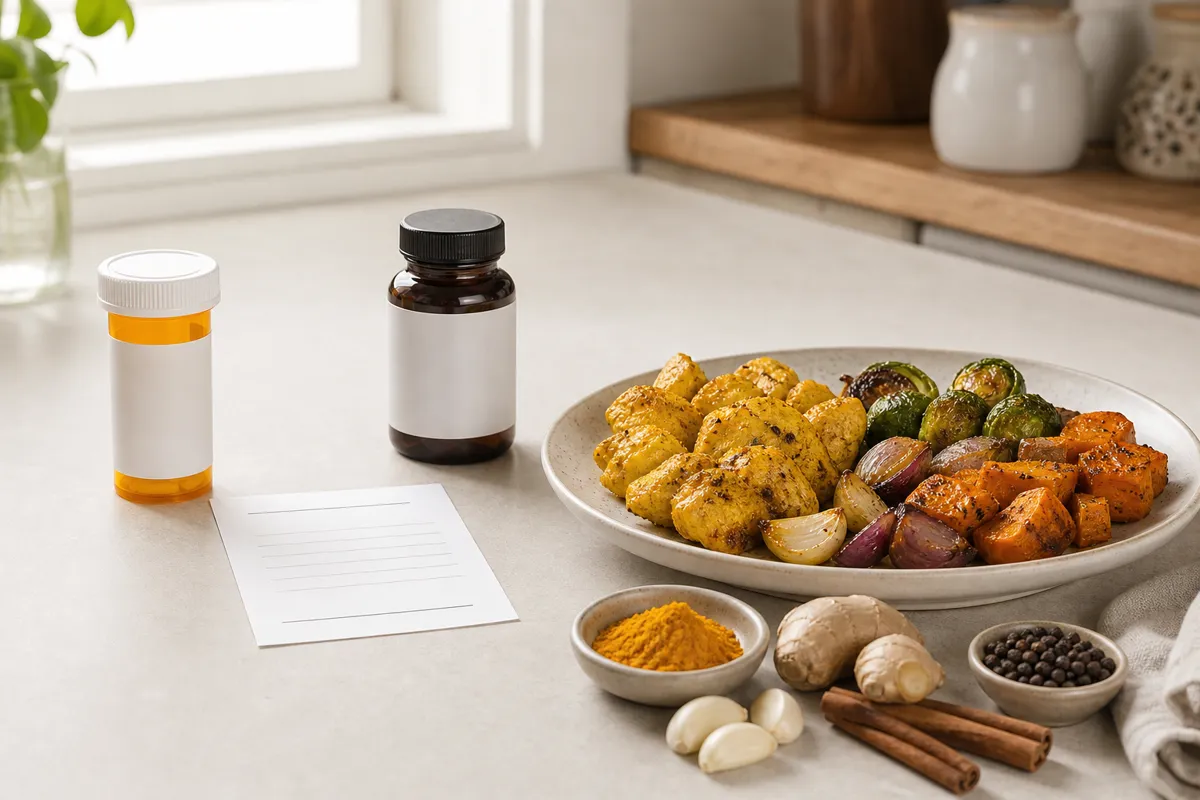
Some spice-derived supplements may change how medicines are absorbed, processed, or felt. The risk depends on the exact botanical, product form, dose, medicine, and person. A pinch in shared food is usually a different exposure from a daily extract, but people taking warfarin, digoxin, cyclosporine, cancer medicines, or other narrow-range drugs should review every supplement with a pharmacist.
Which spices can interact with medications?
Spice drug interactions are possible with products made from turmeric, ginger, garlic, cinnamon, black pepper, and many other botanicals. The spice name alone cannot predict the risk because product form and dose change exposure.
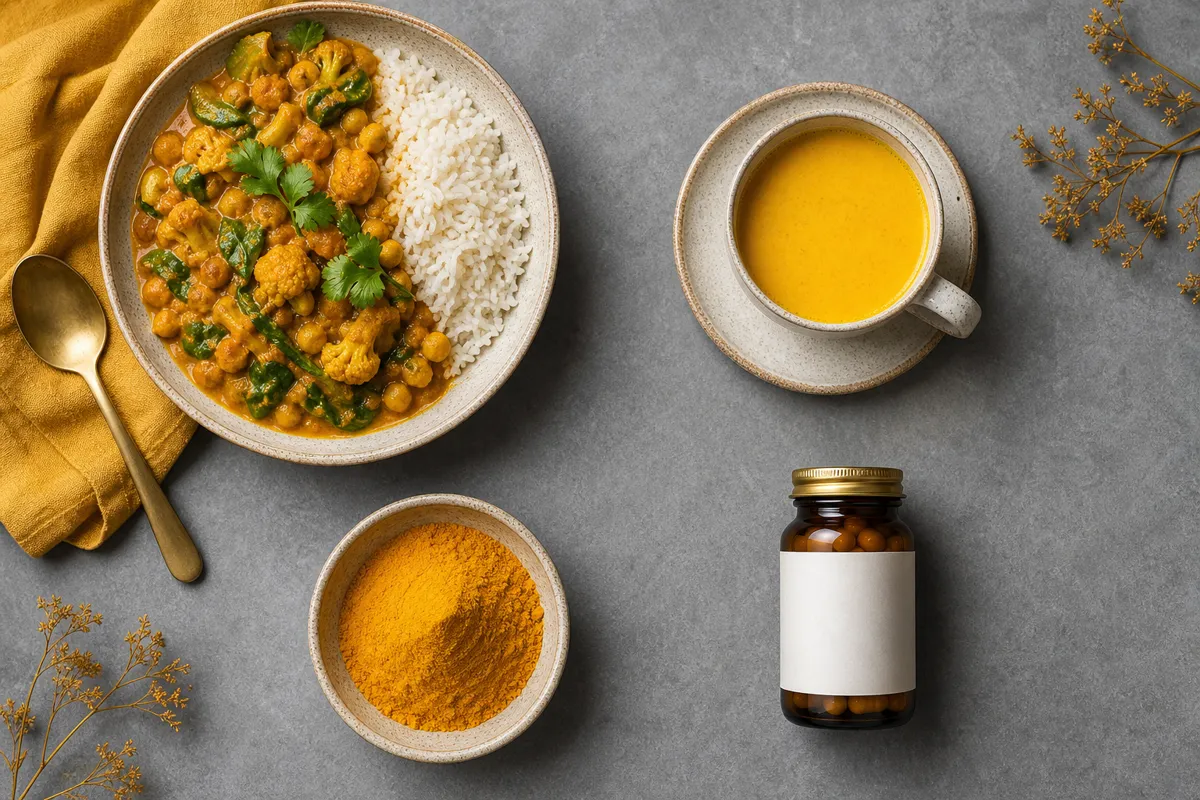
- Food: Shared culinary amount
- Tea: Repeated infusion
- Powder: Measured concentrated serving
- Extract: Standardized active compounds
Turmeric in cooking contributes color and flavor across a pot of food. A curcumin capsule may concentrate selected compounds and add piperine to increase absorption.
Fresh ginger root in soup differs from several grams of dried powder taken every day. Garlic in a sauce also differs from an aged extract sold for a health outcome.
Some proposed interactions come from laboratory experiments, animal studies, or a theoretical mechanism rather than a well-designed human trial. The warning may still matter when the medicine has little room for a change in blood level.
| Question | Why it matters | Record |
|---|---|---|
| Which botanical? | Common names can hide species differences | Scientific and common name |
| Which form? | Food, tea, powder, oil, and extract differ | Supplement Facts or recipe |
| How much and how often? | Repeated concentration changes exposure | Serving and schedule |
| Which medicine? | Risk depends on the drug and condition | Exact name and dose |
Do not remove every culinary spice because of a general online list. Ask a pharmacist about the exact product and medicine combination.
Are culinary amounts safer than supplements?
Culinary amounts are usually lower and spread across a meal, so they often create less exposure than a concentrated supplement. That difference reduces many concerns but does not make every food amount safe for every person.
A supplement may standardize curcuminoids, gingerols, cinnamaldehyde, or other compounds. The label can also recommend repeated servings that have no close cooking equivalent.
Black pepper extract is a useful example. A little ground black pepper seasons food, while concentrated piperine may be added specifically to alter absorption.
Strong teas, shots, and homemade pastes fall between dinner seasoning and standardized extract. Record the actual recipe and daily frequency instead of calling all of them food.
| Form | Typical purpose | Review question |
|---|---|---|
| Spice in a shared meal | Flavor | Is there a specific medical restriction? |
| Daily strong tea or powder | Routine or health goal | How much enters each serving? |
| Standardized extract | Concentrated health claim | Which compounds and dose? |
| Enhanced-absorption formula | Higher exposure | What additive changes absorption? |
Allergy, pregnancy, liver disease, surgery, and multiple medicines can move a food question into a higher-risk category. Use the wider spice safety boundaries when those factors apply.
Do turmeric, ginger, or garlic interact with blood thinners?
Turmeric, ginger, and garlic supplements are often flagged with anticoagulant or antiplatelet medicines because of possible effects on bleeding. Human evidence varies by product, dose, and medicine, so a broad yes-or-no answer can mislead.
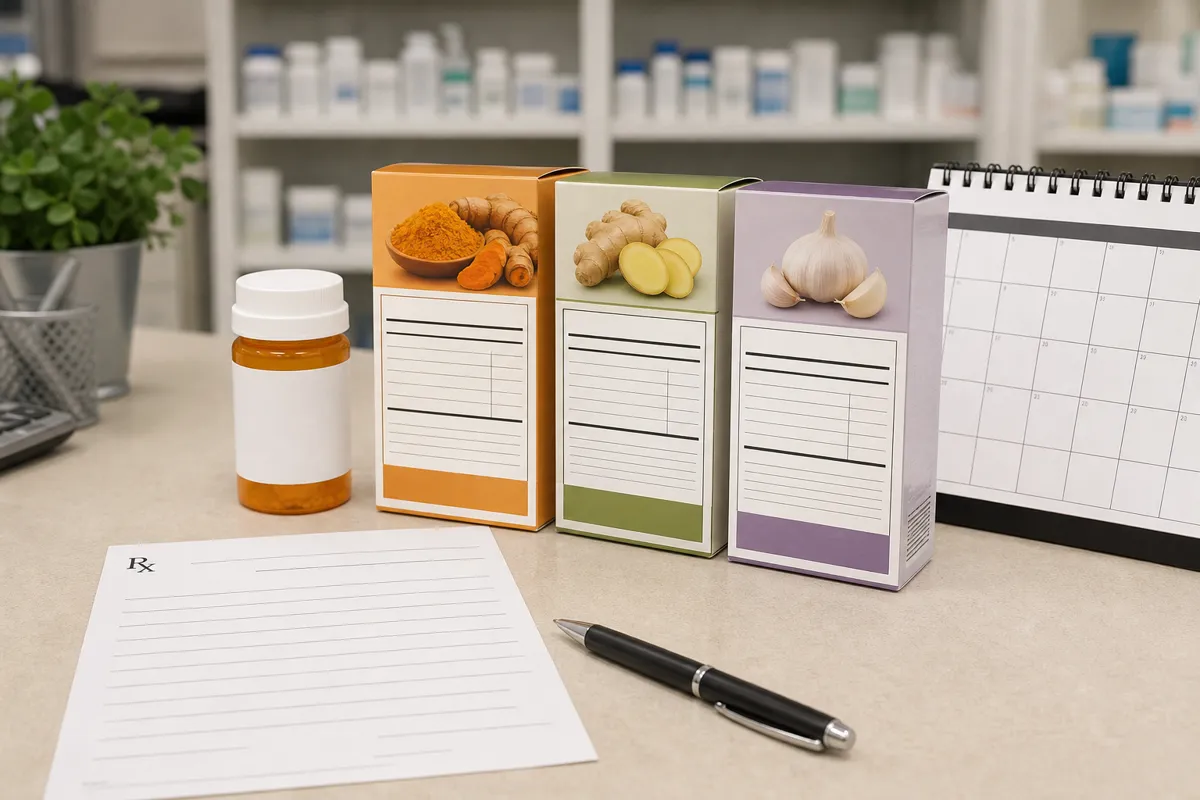
- Medicine: Exact name and dose
- Product: Full formula
- Pattern: Serving and frequency
Warfarin has a narrow therapeutic range and is monitored with INR testing. A new supplement, major diet change, illness, or medicine may justify closer monitoring by the prescribing team.
Antiplatelet medicines such as clopidogrel and aspirin work differently from warfarin, but bleeding concerns still need product-specific review. Do not transfer advice from one medicine to another.
- Seek urgent care for uncontrolled bleeding, vomiting blood, black tarry stool, fainting, or symptoms of a serious fall or head injury.
- Report unusual bruising, repeated nosebleeds, or prolonged bleeding to the clinical team.
- Tell clinicians about every capsule, powder, tea, tincture, and enhanced-absorption product.
- Before surgery or a procedure, follow the team's written instructions for both medicines and supplements.
Garlic used to season dinner is not automatically equivalent to an aged garlic extract. The same food-versus-product distinction applies to culinary garlic, turmeric, and ginger.
Can cinnamon affect diabetes or liver medicines?
Cinnamon supplements are promoted for blood sugar, which creates a concern about additive effects with diabetes medicines. Evidence for benefit and interaction risk is not consistent enough to adjust treatment without a clinician.
Cassia cinnamon contains more coumarin than Ceylon cinnamon. Repeated high exposure can matter for sensitive people and those with liver disease, while product labels may not identify the species clearly.
A light dusting of ground cinnamon on oatmeal is different from daily capsules or spoonfuls taken for a glucose goal. Bring the bottle and the reason for using it to the pharmacist.
| Detail | Why it matters | Where to find it |
|---|---|---|
| Cassia or Ceylon | Coumarin levels differ | Species name, if stated |
| Food or supplement | Exposure differs | Recipe or Supplement Facts |
| Daily amount | Duration affects concern | Serving directions |
| Diabetes or liver medicine | Effects may overlap | Medication list |
Monitor blood glucose according to the existing care plan, not according to a supplement advertisement. Symptoms of low blood sugar need the action already set by the treating team.
Stop a suspect supplement and seek prompt care for jaundice, dark urine, severe fatigue, or persistent nausea. Do not wait for a routine visit when liver injury is suspected.
Which medicines deserve the most careful review?
Medicines with a narrow therapeutic index deserve the most careful interaction review. A small change in blood level can cause loss of effect or serious toxicity.
NCCIH names warfarin, digoxin, and cyclosporine as examples requiring special care with herbal products.
Cancer medicines, transplant drugs, seizure medicines, heart rhythm drugs, and some immune-suppressing medicines can also have high consequences if exposure changes. The exact concern depends on the drug.
Upcoming surgery raises separate concerns about bleeding, sedation, blood pressure, and glucose. Give the surgical team the full supplement list well before the procedure.
Risk also rises when several medicines are used, kidney or liver function is reduced, or a person is very young, older, pregnant, or breastfeeding. Those factors change how products are processed and tolerated.
| Situation | Why it is higher stakes | Action |
|---|---|---|
| Narrow-range medicine | Small level change can matter | Review before starting product |
| Cancer or transplant treatment | Complex metabolism and high consequence | Use oncology or transplant team |
| Surgery planned | Bleeding and anesthesia concerns | Share list early |
| Several medicines | More possible pathways | One complete medication review |
A complete list includes prescription drugs, over-the-counter products, vitamins, cannabis or CBD, energy products, and every botanical. Leaving out a nonprescription item prevents the reviewer from seeing the full pattern.
The right response is targeted review, not fear of all spices. Keep normal food stable unless the clinical team gives a specific restriction.
How do spice and medicine interactions happen?
A spice-derived product may affect absorption in the gut, drug-processing enzymes, transport proteins, or the same body function targeted by a medicine. These pathways are plausible without always producing a clinically important interaction.

- Gut: Absorption
- Liver: Metabolism
- Transport: Movement across cells
- Overlap: Additive effect
An absorption change can raise or lower how much medicine reaches the blood. A metabolism or transport change may make the medicine persist longer or clear faster.
Additive effects do not require a blood-level change. Two products may both influence bleeding, sedation, blood pressure, or glucose.
Cell and animal experiments can identify a possible pathway, but they do not prove that normal human use causes a meaningful outcome. Case reports can raise concern without showing how often it occurs.
A controlled human study gives stronger evidence, yet it still applies to the tested formula and conditions. Different extracts under the same spice name may not behave alike.
Treat a confident claim without product details or human evidence cautiously. The main spice science library explains why a mechanism and a clinical result are separate questions.
How can you check a spice product for interactions?
Check a spice product by collecting its full label and one complete medicine list, then asking a pharmacist or prescribing clinician about that exact combination. A product photo is more useful than saying you take a little turmeric.
Photograph the front, Supplement Facts panel, other ingredients, directions, warnings, brand, and lot. Include any piperine, proprietary blend, or added vitamin.
List prescription and over-the-counter medicines with dose and schedule. Add supplements, teas, powders, tinctures, and occasional products.
- What is the exact product and botanical species?
- How much does one serving contain, and how often is it used?
- Why is the product being taken?
- Which medicines and conditions could overlap with that purpose?
- Is surgery, pregnancy, or a new symptom part of the decision?
- What signs should trigger stopping the product or seeking urgent care?
Use the label reading guide to find serving size, blends, and additives. Do not assume the front name describes the entire formula.
After an approved change, record new bruising, bleeding, dizziness, glucose readings, stomach symptoms, or other effects relevant to the medicine. Report them through the plan given by the clinical team.
An immune reaction belongs to a different assessment. The spice allergy guide covers hives, swelling, breathing symptoms, and ingredient exposure.