
Which Dill Weed Substitute Works Best in Your Dish?
Match the replacement to cold sauces, steady heat, or the slow extraction of pickle brine.
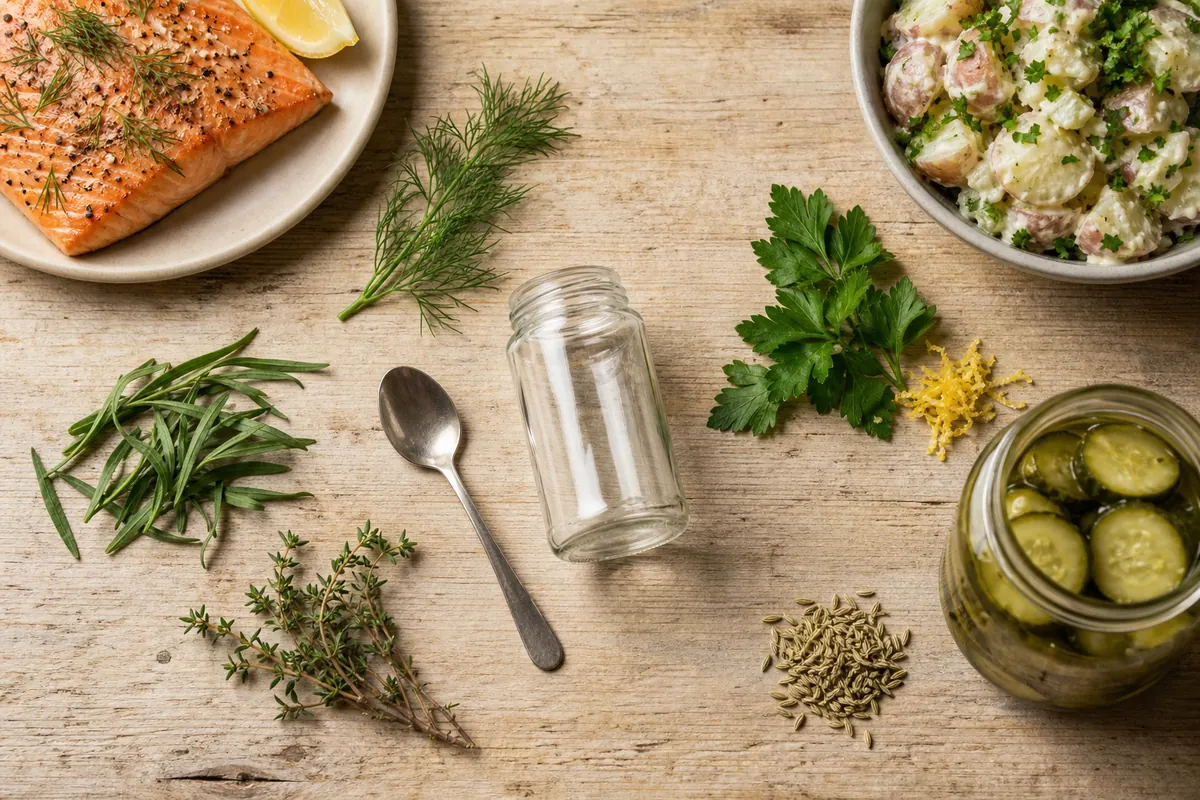
Fresh dill is the closest substitute for dried dill weed, using one tablespoon chopped fresh dill for each teaspoon dried. Tarragon suits fish and cream sauces, parsley with lemon zest refreshes cold salads, thyme survives long cooking, and fennel seed belongs only in brines or other seed-friendly food.
Dill Weed Is the Leaf, Not the Seed
Dill weed is the feathery leaf of the dill plant, sold fresh or dried.
It brings a light grassy aroma, a faint anise note, and soft green flecks rather than the concentrated warmth and hard texture of a seed.
A recipe that calls for dried dill weed usually expects the herb to disperse through a sauce, dressing, soup, or salad. The tiny dried leaves soften with moisture, so they do not interrupt a creamy texture or remain hard in a finished bite.
One teaspoon dried dill weed equals about one tablespoon chopped fresh dill under the common three-to-one fresh-herb conversion. That ratio is a starting point because fresh dill has more volume and brighter aroma, while the dried form spreads more evenly through wet food.
Dill seed comes from the same plant but solves a different cooking problem.
It withstands hot brine and long extraction, yet its firmer texture and stronger flavor can make yogurt sauce, salmon, or potato salad feel gritty and heavily spiced.
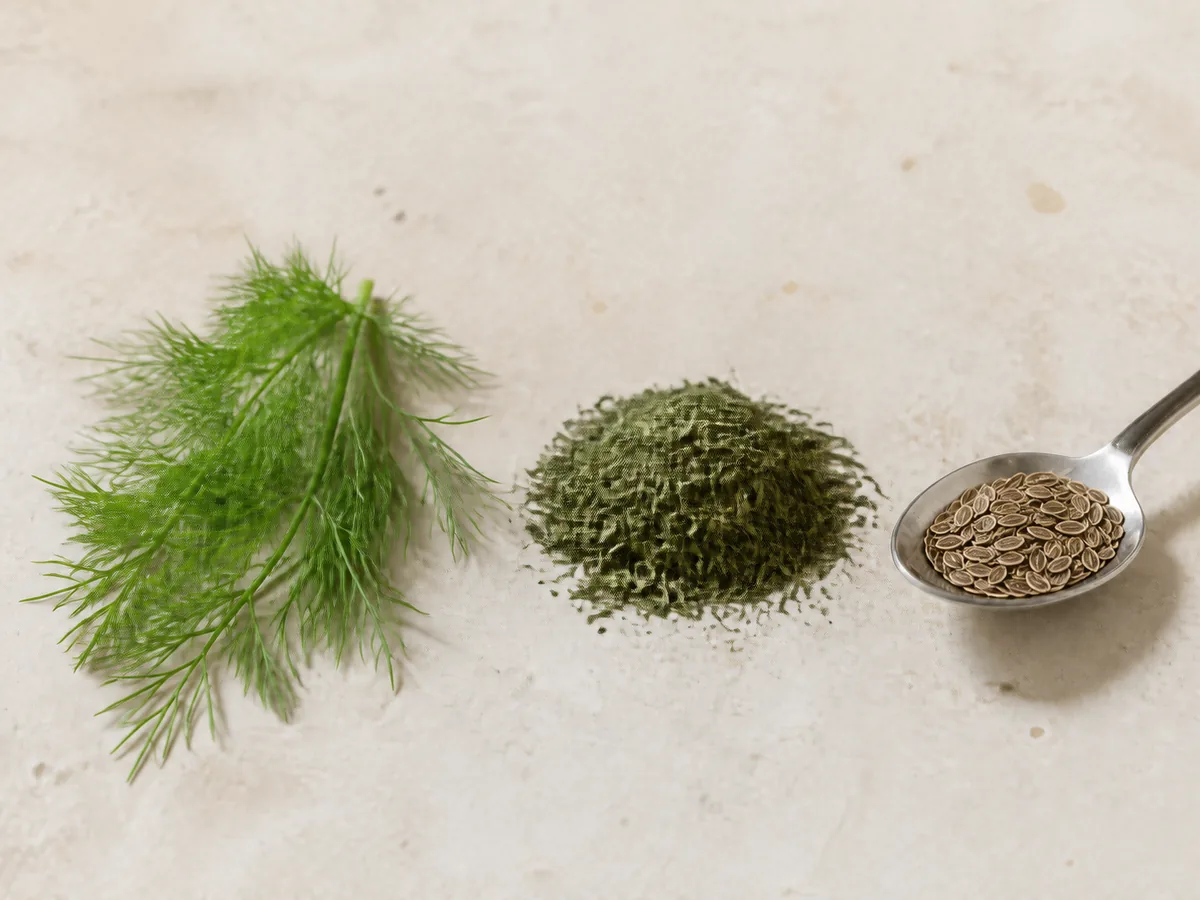
- Fresh fronds: Feathery green leaves identify the same herb in its fresh form.
- Dried dill weed: Loose green flakes disperse through sauces, soups, and salads.
- Dill seed: Tan oval seeds stay firm and bring a stronger warm flavor.
- Form first: Confirm whether the recipe names weed, leaves, or seed before substituting.
Before choosing a substitute, check whether the dill would be eaten cold, warmed briefly, simmered, roasted, or left to infuse. That stage matters more than finding an herb with one similar flavor word.
Five Dill Weed Substitutes Chosen by the Food
Fresh dill gives the smallest flavor change because it is the same ingredient in another form.
The other choices preserve one useful part of dill weed, such as anise-like aroma, green freshness, heat tolerance, or brine seasoning.
| Substitute | Starting amount for 1 tsp dried dill weed | Best use | Add it when | Main change |
|---|---|---|---|---|
| Fresh dill | 1 tbsp chopped | Salmon, dips, cold sauces | At the finish | More leaf texture |
| Tarragon | 1/2 tsp dried | Fish, eggs, cream sauce | During gentle cooking | Stronger licorice note |
| Parsley + lemon zest | 1 tbsp + 1/8 tsp | Potato or egg salad | Just before serving | No anise note |
| Thyme | 1/2 tsp dried | Soup, roast vegetables | Early in cooking | Earthier flavor |
| Fennel seeds | 1/4 tsp crushed | Pickles and brines | Before extraction | Sweet seed flavor |
These amounts control the first addition, not the final taste. Let a dried herb hydrate, a seed extract, or a hot dish finish cooking before deciding that the replacement is too weak.
1. Fresh Dill for Salmon, Yogurt Sauces, and Dips
Use one tablespoon chopped fresh dill for one teaspoon dried dill weed. Fresh dill is the only substitute that preserves the actual ingredient, so it is the first choice for salmon, yogurt sauce, sour-cream dip, cucumber salad, and potato salad.
Add the chopped leaves after the pan leaves direct heat, or fold them into cold food shortly before serving. Prolonged cooking strips away the aroma that makes fresh dill a better replacement than a different dried herb.
Fresh dill changes texture as well as volume.
Chop the fronds finely for a smooth dip, but leave slightly larger pieces when the feathery leaf is part of the finish on fish or potatoes.
The stems need a separate decision. Tender upper stems can be minced into a sauce, while thick lower stems should be reserved for stock or discarded because they remain fibrous in a cold mixture.
In a baked salmon dish, finish the fish first and add dill with lemon or a cool sauce at the table. The herb then keeps its bright aroma instead of drying on the hot surface.
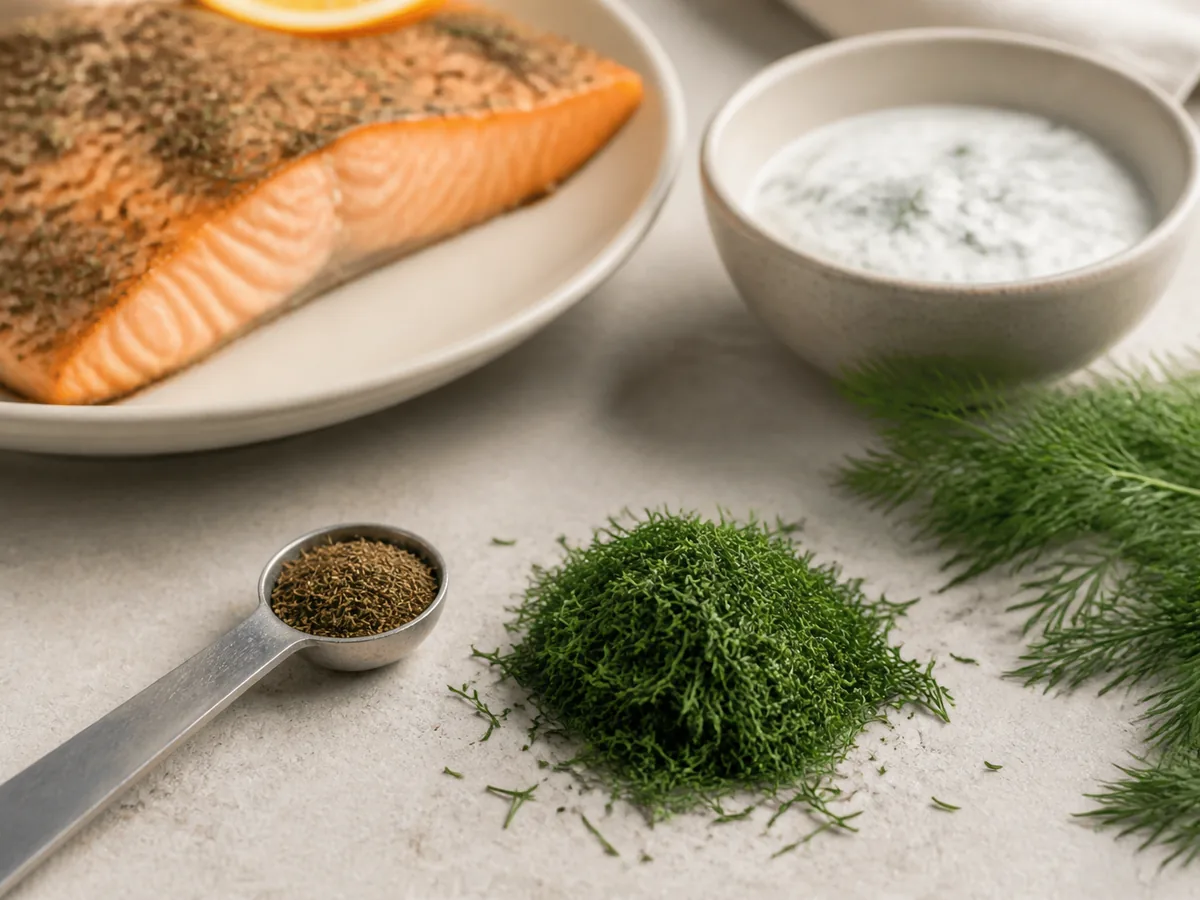
- Fresh volume: One loose tablespoon replaces one compact teaspoon dried.
- Feathery leaves: The same plant preserves dill's recognizable texture.
- Cold sauce: Yogurt holds the fresh aroma without direct heat.
- Late addition: Add the chopped dill after cooking or just before serving.
If the recipe already contains fresh dill and you only lack enough, do not stretch it with a large amount of another strong herb. Use the real dill where the diner smells it first, then let parsley supply background green color elsewhere.
2. Tarragon for Fish and Cream Sauces
Tarragon fits when the dish can accept a clearer licorice-like note.
Start with one-half teaspoon dried tarragon for one teaspoon dried dill weed in white fish, chicken, eggs, or a pale cream sauce.
Its overlap with dill is aromatic rather than exact.
Tarragon tastes sweeter and more assertive, so a full one-to-one swap can make a mild sauce taste like tarragon before the fish or egg has a chance to register.
Add the first half while the sauce cooks gently, then taste after the herb has hydrated. A second small pinch at the finish is easier to control than an oversized first dose.
This replacement handles moderate heat better than fresh dill, which makes it useful in a pan sauce that still needs several minutes to reduce.
It is less convincing in pickle brine because the sweet licorice note becomes more obvious during a long soak.
Tarragon also needs restraint around mustard. Both flavors can lead a cream sauce, so reduce the herb when Dijon, whole-grain mustard, or a strongly flavored vinegar is already prominent.
Use this choice when you want an aromatic fish or chicken sauce, not when dill is supposed to read as a fresh green garnish. A few narrow tarragon leaves on the plate cannot copy dill's feathery texture.
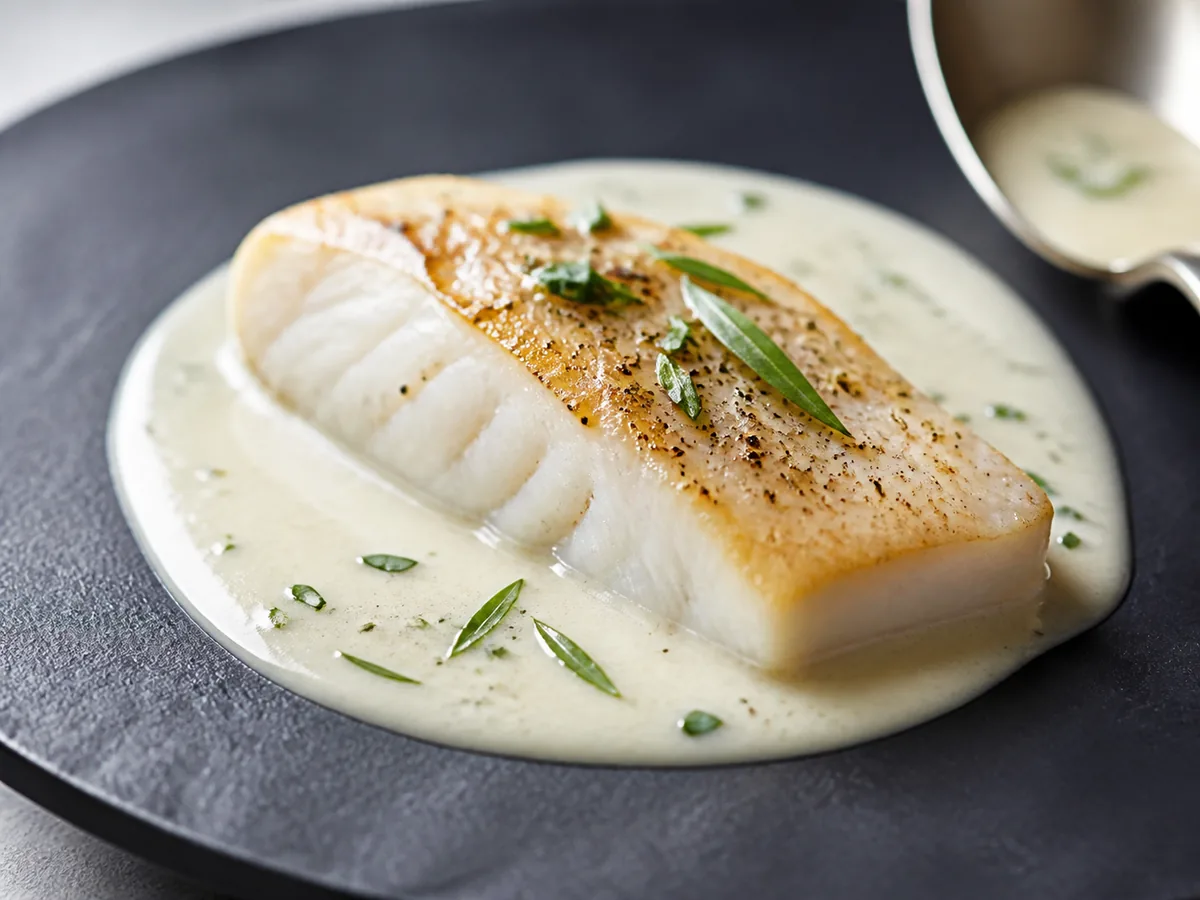
- Small dose: Tarragon becomes dominant faster than dill weed.
- Pale sauce: A mild base exposes the herb's sweet anise direction.
- Narrow leaves: Tarragon does not reproduce dill's feathery finish.
- Second taste: Let the first addition hydrate before adding more.
3. Parsley and Lemon Zest for Potato Salad
Parsley does not taste like dill, but it can restore the green freshness that a cold salad loses when the dill jar is empty. Combine one tablespoon chopped flat-leaf parsley with one-eighth teaspoon finely grated lemon zest for each teaspoon dried dill weed.
The parsley supplies clean leaf flavor and visible green flecks.
Zest supplies a fragrant citrus lift without adding the liquid or acidity that extra lemon juice would bring.
This two-part replacement works best in potato salad, egg salad, tuna salad, and cold creamy dressing because dairy, mustard, onion, and acid already share the flavor load. The missing anise note remains noticeable in a plain dill sauce with few other ingredients.
Chop parsley more finely than you would for a loose garnish so it distributes through every serving. Use only the colored outer peel of the lemon because white pith brings bitterness without useful aroma.
Taste the salad after it rests for ten minutes.
Salt and acid become clearer as the potatoes or eggs absorb dressing, and that pause may show that the mixture needs more parsley rather than more zest.
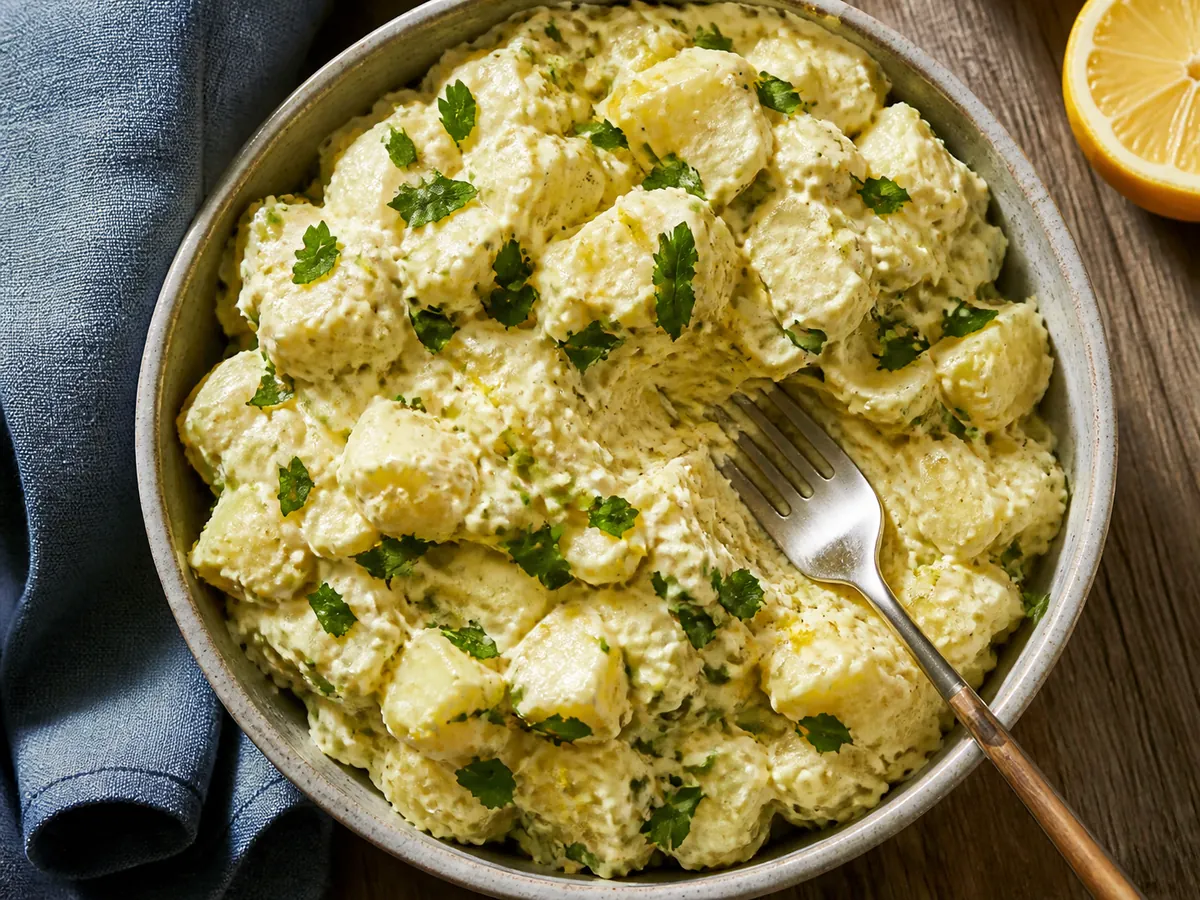
- Flat leaves: Parsley supplies green herb character rather than anise flavor.
- Fine zest: Tiny yellow flecks distribute aroma without bitter pith.
- Creamy base: Potato salad can share the flavor load across dairy, mustard, and acid.
- Rested mixture: Taste after the dressing has settled into the potatoes.
If the recipe already contains lemon juice and a strongly perfumed peel, omit the zest first. Parsley alone is a mild substitute, but that is often safer than turning a balanced potato salad into lemon salad.
4. Thyme for Soups and Roasted Vegetables
Long cooking favors thyme because its herbal character survives where dill's delicate top notes fade.
Start with one-half teaspoon dried thyme for one teaspoon dried dill weed in mushroom soup, bean soup, roasted carrots, or cooked chicken.
Thyme moves the food toward an earthy, woody flavor rather than a grassy anise lift. That trade works in browned vegetables and savory broth, but it clashes with tzatziki, cold cucumber salad, and a fresh salmon finish.
A whole sprig offers more control in soup.
Drop it in early, let the leaves season the liquid, and remove the woody stem before serving.
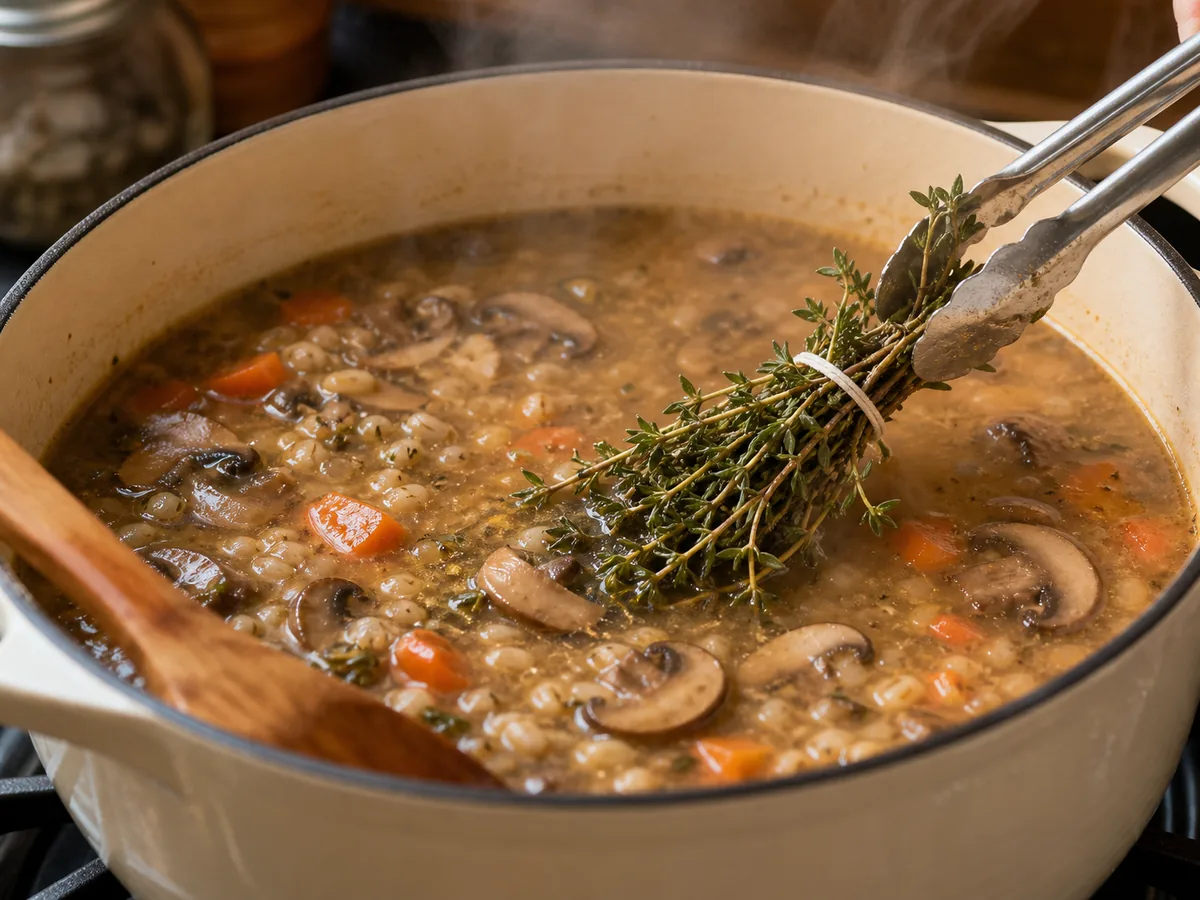
- Tied stems: A bundle keeps woody pieces out of the bowl.
- Active simmer: Time distributes thyme's durable herbal flavor.
- Mushroom broth: Earthy food accepts thyme's main tradeoff.
- Removal cue: Lift the bundle once the broth has a clear herbal background.
Dried thyme can stay in the dish, although it needs time to soften. Add it with the liquid or before roasting so heat distributes the herb instead of leaving dry leaf fragments on the surface.
Judge the substitution after the soup has simmered or the vegetables have browned. Adding more thyme in the first minutes can create a medicinal edge once the full dose has extracted.
This is a structural replacement rather than an imitation. It keeps a cooked dish from losing its herbal background, while accepting that the result will no longer smell like dill.
5. Fennel Seeds for Pickling Brine Only
Fennel seeds belong in this list because brine changes the substitution problem. Use one-quarter teaspoon lightly crushed fennel seeds for one teaspoon dried dill weed when cucumbers, cabbage, or other vegetables will soak long enough to extract the seed.
Light crushing opens the seed coat without turning the spice into powder.
The pieces remain visible, so they suit a pickle jar or braise and feel misplaced in sour cream, yogurt, or a smooth dressing.
Fennel is sweeter and more licorice-like than dill weed. Start below the amount that looks visually equivalent because a small seed measure carries more concentrated flavor than loose dried leaves.
Add the seeds before heating the brine or at the beginning of a long braise. Do not judge them immediately after mixing, since extraction continues while the liquid cools and the vegetables rest.
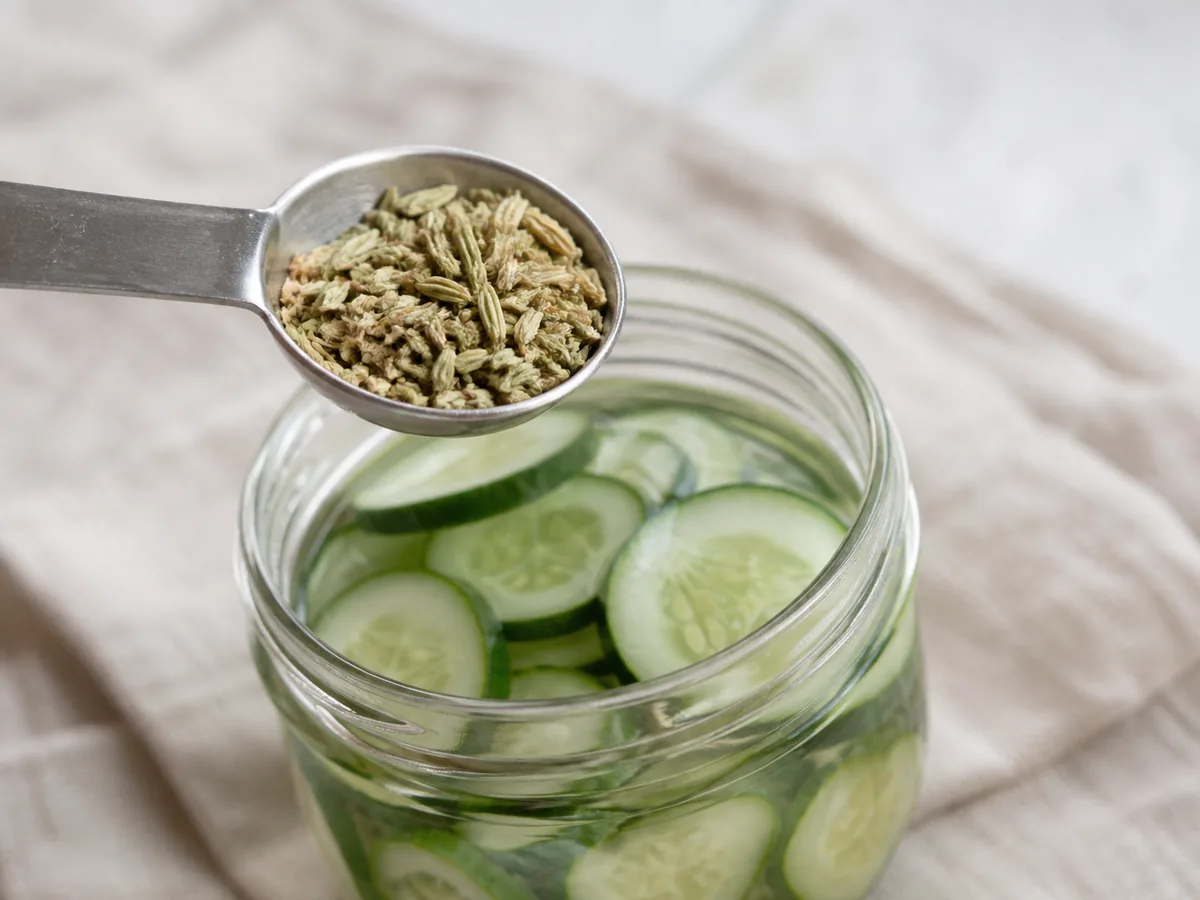
- Quarter teaspoon: The seed dose stays below the volume of dried dill weed.
- Light crush: Broken ridges release aroma while the seeds remain recognizable.
- Clear brine: Liquid extracts and distributes the concentrated flavor.
- Wait to taste: Strength develops as the jar cools and rests.
A clear cucumber pickle will taste different from a classic dill pickle.
Fennel can provide an aromatic seed note, but it cannot recreate the grassy leaf aroma that dill weed or dill flower contributes.
Keep fennel seeds away from salmon garnish, potato salad, and cold dip. In those foods, omission preserves texture better than a seed chosen only because it shares an anise association.
Match the Replacement to Heat and Moisture
The right substitute can still fail when it enters at the wrong time.
Tender leaves fade under heat, woody herbs need time, and seeds reveal their strength only after extraction.
- Identify the original form: Confirm that the recipe calls for dill weed or leafy dill rather than dill seed.
- Name the cooking state: Separate cold food and finishing from gentle sauce cooking, long simmering, roasting, or brining.
- Choose the smallest flavor change: Use fresh dill first, tarragon for delicate cooked sauces, parsley and zest for cold salads, thyme for sustained heat, or fennel seed for brine.
- Change the timing: Add fresh dill and parsley late, let thyme cook, and give fennel seed time in liquid.
- Wait before increasing: Let dried herbs hydrate and seeds extract, then taste the food in its finished state.
Cold food needs a short rest rather than more heat. Give dried herbs several minutes in yogurt, mayonnaise, or dressing so moisture can soften them and release aroma before adding another spoonful.
A simmered dish needs the opposite approach. Add thyme early enough to integrate, but reserve any fresh dill or parsley for the finish if you decide the cooked food still needs a brighter top note.
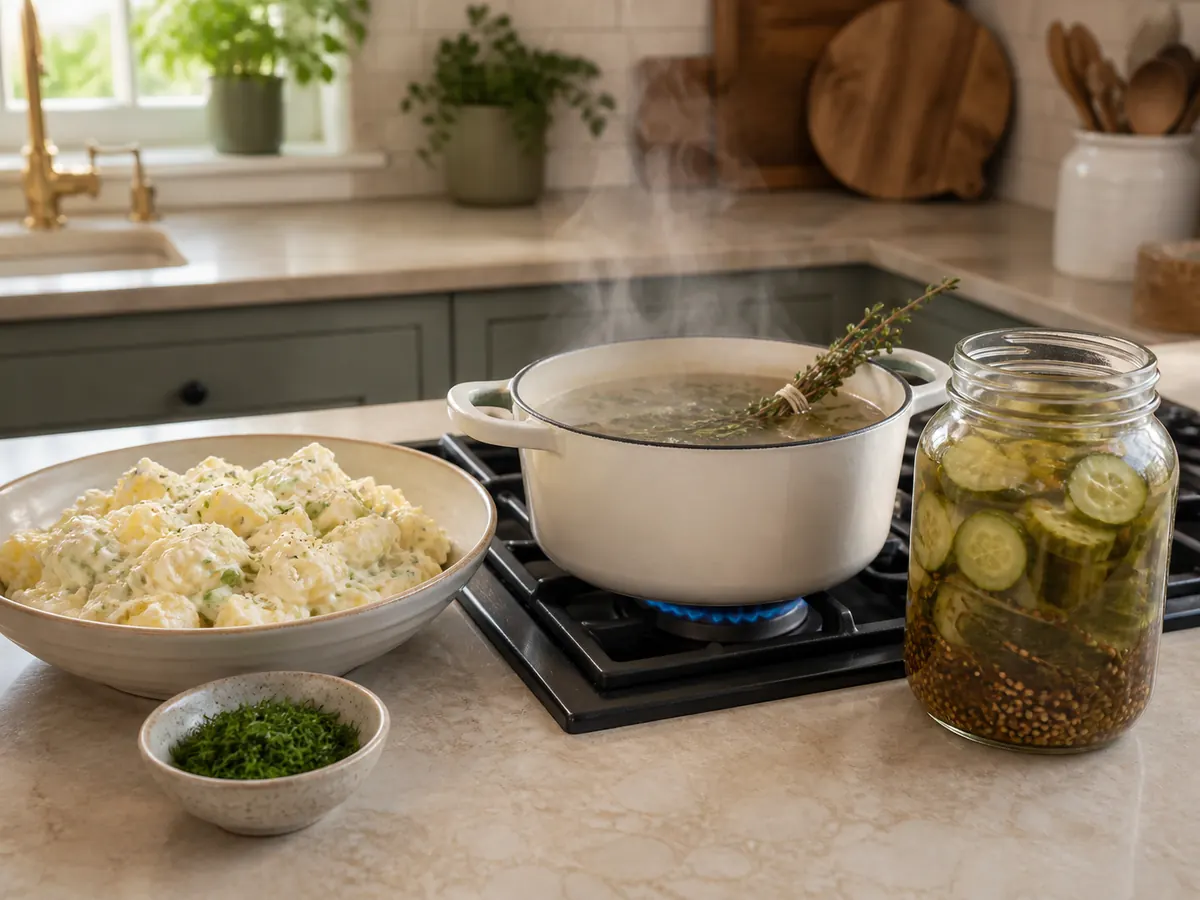
- Cold finish: Keep tender herbs beside the finished dish until direct heat ends.
- Steady simmer: Give woody thyme time in the pot, then remove the tied stems.
- Long extraction: Let seeds release gradually in brine before increasing the dose.
- Finished state: Taste the food at its serving temperature.
Acid changes perception without replacing herb flavor. Lemon juice and vinegar can make a dish seem brighter, yet adding more acid to chase missing dill may unbalance salt, sweetness, and texture.
Taste at the stage when the food will be eaten. Warm cream sauce, chilled potato salad, and cooled pickle brine can make the same substitute seem very different.
Dill-Forward Food Can Expose Every Substitute
Wait for actual dill when the ingredient supplies the name, the main aroma, or the visible identity of the food.
Dill sauce, dill bread, dill-heavy gravlax curing mix, and a simple dill pickle leave little room for another herb to hide.
Omission is a real cooking choice. A salmon fillet with lemon, pepper, and a balanced sauce can remain coherent without dill, while an aggressive tarragon dose may pull every bite in a new direction.
The same principle protects texture. A cold dip without one herb is smoother than a cold dip filled with hard fennel seeds, and a potato salad with parsley is easier to balance than one overloaded with a strong licorice flavor.
Use the replacement to preserve the dish's function, not to prove that every missing ingredient has an equivalent. Fresh dill preserves identity, while the other options solve narrower problems and should stay inside those boundaries.