
Arroz con Pollo with Sazón
Brown the chicken first, coat the rice in orange-gold oil, then let one measured simmer cook both without turning the grains wet.
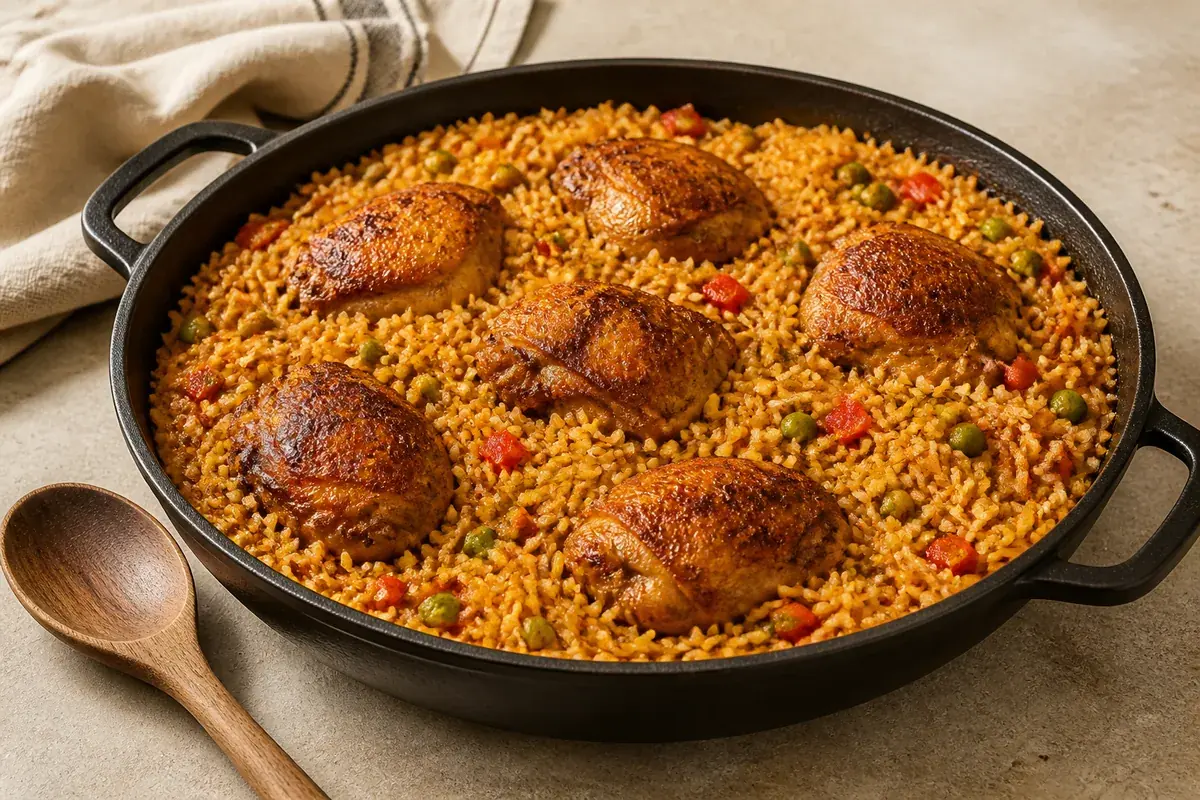
This arroz con pollo uses sazón to season the cooking liquid and color every grain. The reliable sequence is brown, coat, measure, then rest.
Ingredients
- 1 1/2 pounds bone-in chicken thighs, patted dry
- 1 teaspoon kosher salt, divided
- 1 tablespoon neutral oil
- 1 small yellow onion, diced
- 1/2 red bell pepper, diced
- 3 garlic cloves, minced
- 1 1/2 cups long-grain white rice, rinsed and drained
- 2 teaspoons sazón seasoning
- 1/2 cup plain tomato sauce
- 2 cups low-sodium chicken stock
- 1/2 cup frozen peas
Method
- Brown the chicken Season the chicken with half the salt. Brown it skin-side down in hot oil for 5 to 7 minutes, turn for 2 minutes, then transfer to a plate.
- Soften the aromatics Soften onion and bell pepper in the same pot for 4 minutes. Add garlic and cook for 30 seconds.
- Coat the rice Stir in rice and sazón until every grain is orange and glossy, about 1 minute.
- Add the braising liquid Add tomato sauce and stock. Scrape up the fond and bring the liquid to a full simmer.
- Cook chicken over rice Nestle chicken on top, cover, reduce heat to low, and cook for 25 to 30 minutes until the rice is tender and chicken reaches 165°F or 74°C.
- Rest and fluff Scatter in peas, cover off heat for 10 minutes, then fluff the rice around the chicken and taste for salt.
Choose the pot, chicken, and rice as one system
This is a Puerto Rican-inspired one-pot arroz con pollo, not a claim that every household cooks the dish the same way.
The method uses bone-in thighs, long-grain white rice, tomato, and sazón because those choices can finish together under a tight lid.
Bone-in thighs are forgiving during the covered simmer.
Boneless breast cooks sooner and should be removed once done, while brown rice needs a different liquid ratio and much longer heat.
| Choice | What it changes | Best adjustment |
|---|---|---|
| Bone-in chicken thighs | Stay juicy through the rice simmer | Brown first, then finish on top of the rice |
| Boneless thighs | Cook faster and release less flavor to the pot | Check early and remove if they reach temperature first |
| Long-grain white rice | Absorbs on the recipe timing | Rinse, drain well, and keep the stated liquid |
| Brown rice | Needs more liquid and time | Use a recipe developed for brown rice instead |
| Wide heavy pot | Gives even heat and useful evaporation | Keep the lid tight and the simmer quiet |
| Narrow saucepan | Creates a deeper rice layer | Expect less even cooking and avoid this batch size |
Sazón supplies color, garlic, cumin, and coriander, but packet salt varies.
Taste the stock and tomato mixture before adding the remaining salt because olives, bouillon, or a salty packet can change the whole pot.
Brown the chicken before the rice gets wet
Pat the chicken completely dry and heat the pot before the pieces enter. A deep gold crust and amber fond build flavor that the rice will later absorb.
Leave open space between the thighs.
If the pieces touch, brown them in two batches so released moisture can escape rather than steam the skin.
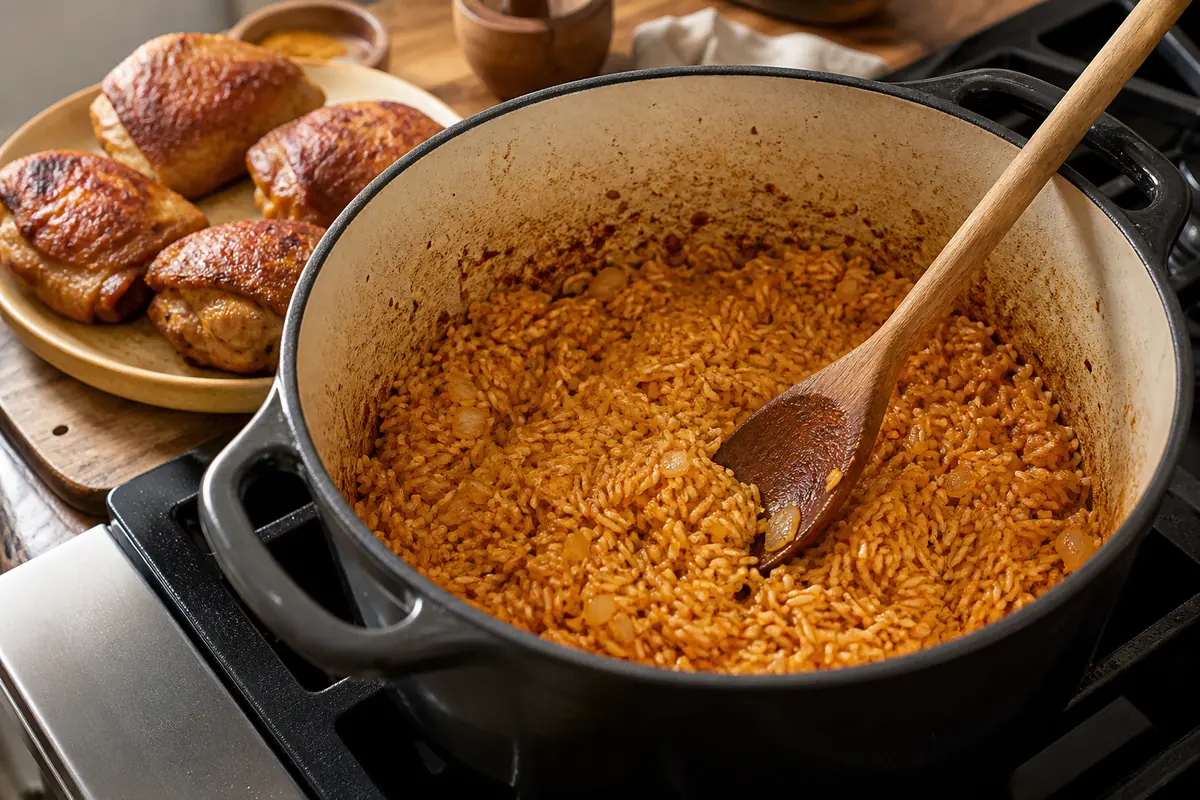
- Browned chicken: Deep gold skin without a cooked center requirement.
- Fond: Amber deposits, not black burned patches.
- Coated rice: Orange and glossy before liquid.
Transfer the chicken, then soften onion and pepper in the rendered fat.
Add garlic only when the vegetables have released enough moisture to keep it from scorching.
Stir in the rinsed and well-drained rice with the sazón. Toast for about one minute until every grain looks glossy and evenly orange, then scrape the pot when the tomato sauce and stock go in.
Use the sazón substitute ratios when you need to control salt or build the annatto, garlic, cumin, and coriander separately. A homemade blend still needs the same taste check because stock and tomato contribute their own seasoning.
Measure liquid by the pot, not by habit
For this exact setup, use two cups of stock plus one-half cup tomato sauce for one and one-half cups rinsed long-grain rice.
The chicken also releases juices, so pouring in the usual two-to-one rice ratio would leave the bottom wet.
Bring the liquid to a full simmer before returning the thighs.
Set them on top of the rice with the skin exposed, cover tightly, then lower the heat until only a quiet bubble reaches the edge.
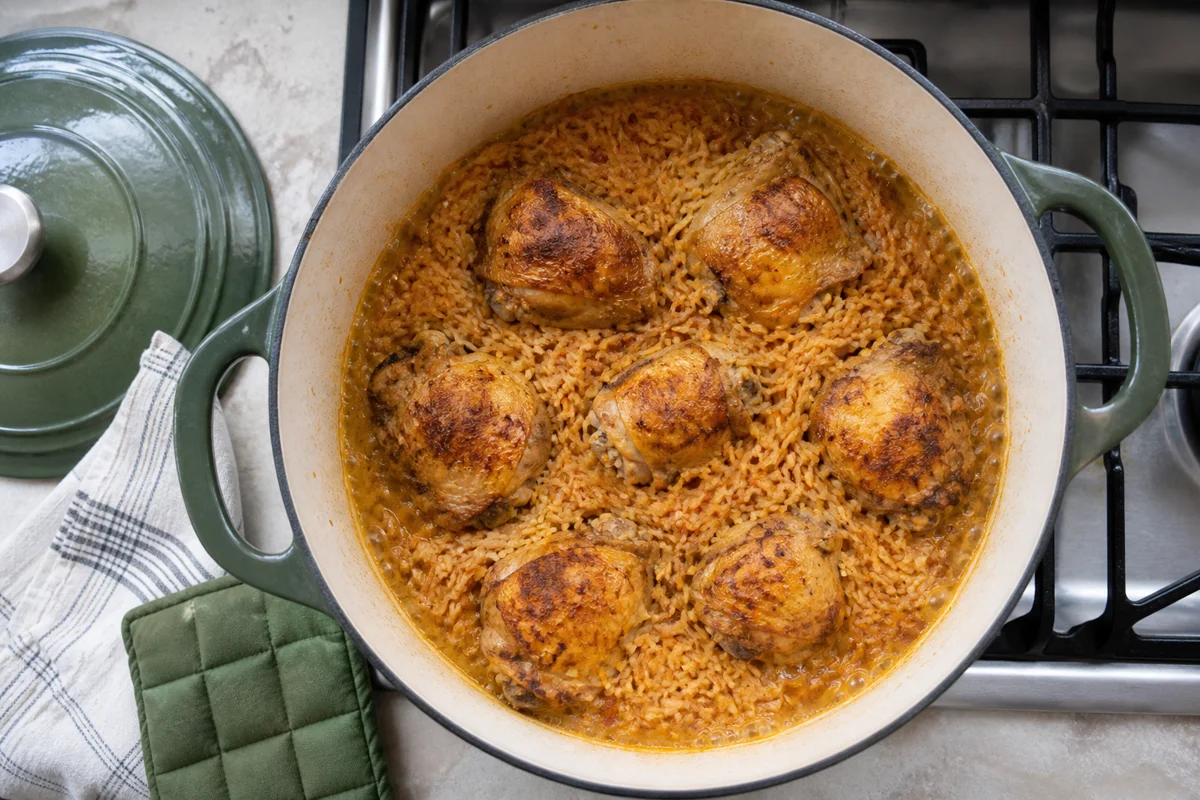
- Too early: Liquid moves freely across the center when the pot is tilted.
- Nearly ready: Rice has risen around the chicken with only an edge ring visible.
- Ready to rest: No pool remains, but the grains still look moist.
Do not stir after the lid goes on. Stirring releases starch, disturbs the level rice bed, and lets steam escape from the pot.
A pot boiling hard can dry at the edge while the center remains firm. Reduce the heat rather than adding liquid unless the pot is dry and the grains are still chalky.
Let chicken temperature and rice texture decide separately
Begin checking at 25 minutes.
Chicken is safe at 165°F or 74°C, while the rice is done when the liquid has disappeared and a grain is tender through the center.
The two checkpoints may not arrive together.
Move finished chicken to a plate if the rice needs five more covered minutes, or remove the chicken later if the rice finishes first.
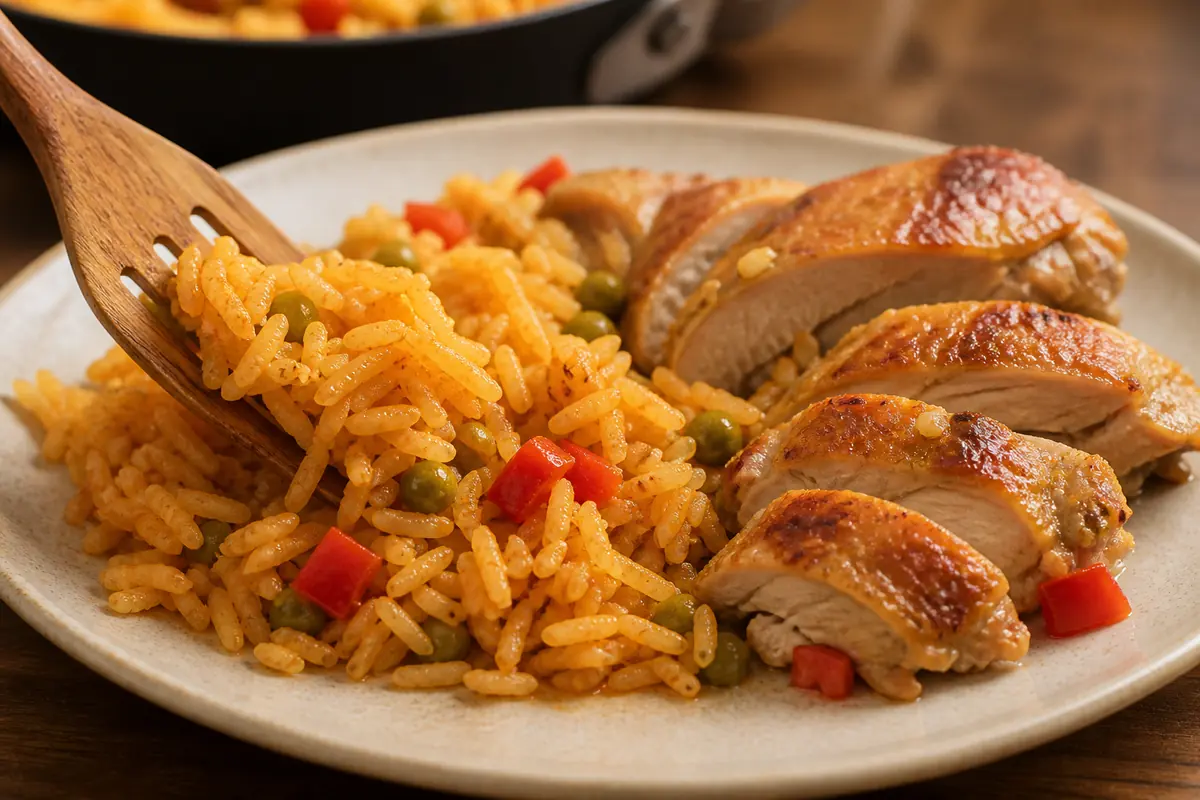
- Rice: Fluffy grains with no liquid pool.
- Chicken: Opaque center at 165°F or 74°C.
- Rest: Ten covered minutes before fluffing.
Rest the covered pot off heat for ten minutes.
Steam moves through the upper grains during this pause, and the bottom releases more cleanly when you fluff from the edge inward.
For a crisp bottom, return the rested uncovered pot to medium heat for one or two minutes and listen for a dry crackle. Stop at toasted aroma because blackened rice and burned fond will make the entire pot bitter.
Correct the symptom that is actually in the pot
Wet rice, firm rice, pale color, and excess salt do not share one fix. Adding more seasoning to every problem can deepen the color while making the food harder to rescue.
| Result | Likely cause | Best correction |
|---|---|---|
| Rice is wet but tender | Too much liquid or weak evaporation | Uncover over low heat for a few minutes, then rest again |
| Rice is firm and the pot is dry | Lid leaked or heat ran high | Add 2 to 3 tablespoons hot stock, cover, and cook 5 minutes |
| Rice is pale but tastes balanced | Sazón contained little annatto | Add more annatto or paprika next time |
| Rice is salty | Packet, stock, or olives carried more salt | Serve with unsalted sides and use low-sodium stock next time |
| Chicken is done before rice | Piece size or heat shortened its cook | Remove chicken and finish the rice covered |
| Leftover rice is dry | Refrigeration removed surface moisture | Add a spoonful of water before covered reheating |
Refrigerate chicken and rice within two hours. Reheat until the chicken and rice are steaming hot throughout, using only enough water to restore the grains without turning the bottom soupy.
Use refrigerated portions within three to four days, and reheat only the amount you plan to serve.