
Tarragon Chicken Recipe with a Creamy Pan Sauce
Brown thin chicken cutlets, reduce the wine before cream, and add fresh tarragon late enough to keep its sweet anise aroma.
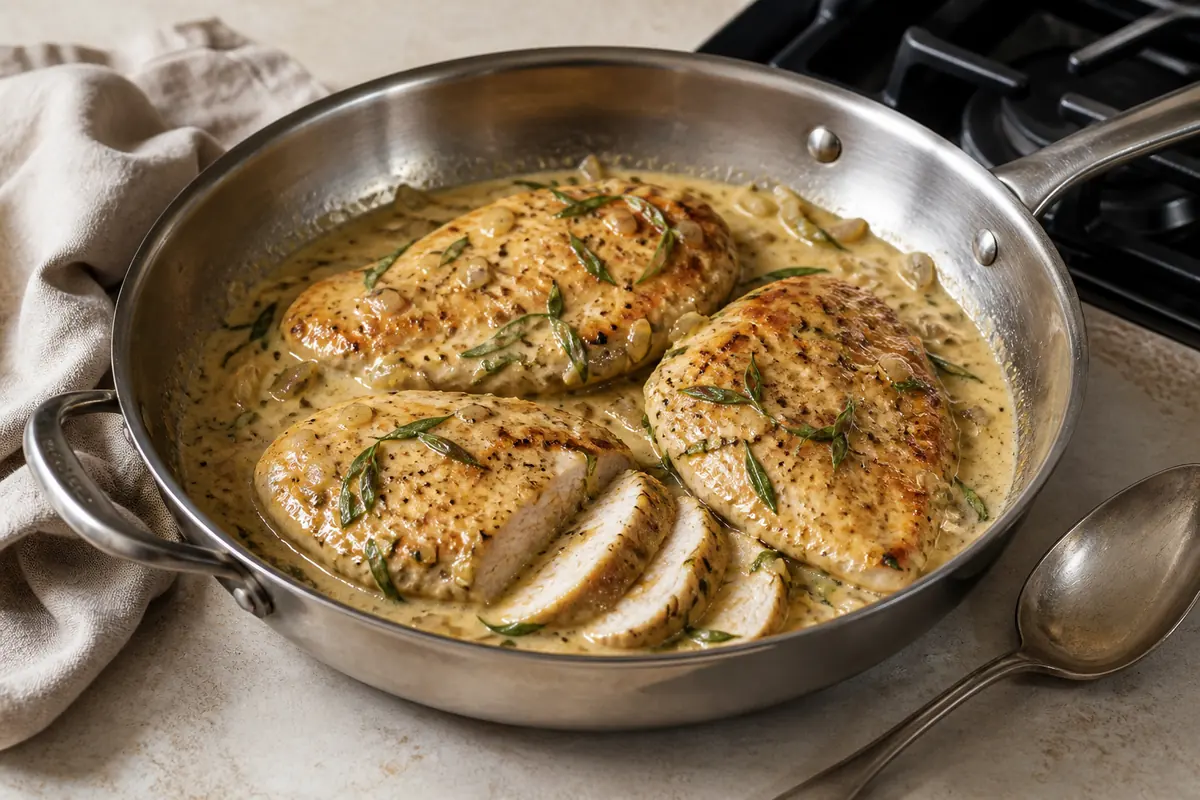
This tarragon chicken uses the same skillet for browned cutlets and a light cream sauce. The herb goes in late because its freshest aroma does not survive a hard boil.
Ingredients
- 1 1/2 pounds boneless skinless chicken breasts, cut into 4 cutlets
- 3/4 teaspoon kosher salt
- 1/2 teaspoon black pepper
- 1 tablespoon olive oil
- 1 small shallot, minced
- 1/2 cup dry white wine
- 1/2 cup low-sodium chicken stock
- 1/2 cup heavy cream
- 1 tablespoon chopped fresh tarragon
- 1 teaspoon lemon juice, optional
Method
- Prepare the cutlets Pound chicken cutlets to an even 1/2-inch thickness and season with salt and pepper.
- Brown the chicken Heat oil in a wide stainless skillet. Brown cutlets for 3 to 4 minutes per side, working in batches, then transfer to a plate.
- Reduce the wine Soften shallot for 1 minute. Add wine, scrape up the fond, and reduce until a thin glossy layer remains.
- Build the cream sauce Add stock and reduce by half. Stir in cream and simmer gently until it lightly coats a spoon.
- Finish with tarragon Stir in fresh tarragon. Return chicken and juices to the pan just until the thickest part reaches 165°F or 74°C.
- Balance the acidity Taste and add lemon only when the sauce needs more acidity.
Choose cutlets, thighs, wine, or stock deliberately
Thin chicken cutlets suit a fast pan sauce because they brown in minutes and return only long enough to finish.
Boneless thighs bring deeper chicken flavor but need a longer, gentler cook than the method written in the recipe block.
| Choice | What it contributes | Timing change |
|---|---|---|
| Half-inch breast cutlets | Fast browning and an even center | Use the written 3 to 4 minutes per side as a guide |
| Boneless thighs | Richer flavor and more forgiving texture | Brown, then simmer gently until 165°F or 74°C |
| Dry white wine | Acidity and fruit that concentrate during reduction | Reduce almost dry before stock |
| Stock plus white wine vinegar | Savory liquid with controlled acidity | Use 1/2 cup stock and add 1 to 2 teaspoons vinegar after reduction |
| Crème fraîche | Tangier, more stable dairy | Stir in gently and do not boil hard |
| Heavy cream | Round, neutral richness | Simmer gently until it coats a spoon |
Stock alone can deglaze the fond, but it will not taste like reduced wine.
For an alcohol-free sauce, build body with stock and add vinegar in small amounts at the end so the acidity does not become harsh during reduction.
This recipe uses breast cutlets and heavy cream because they make the fastest version. Keep the alternative you choose consistent through the timing instead of swapping one ingredient and keeping every other cue unchanged.
Brown cutlets and keep the fond
Pound the chicken to an even half-inch thickness.
Pieces that taper from thin edge to thick center cannot brown and reach temperature at the same moment.
Season just before cooking, then lay the cutlets in a hot stainless skillet with open space around them. Cook in batches when the pieces would touch.
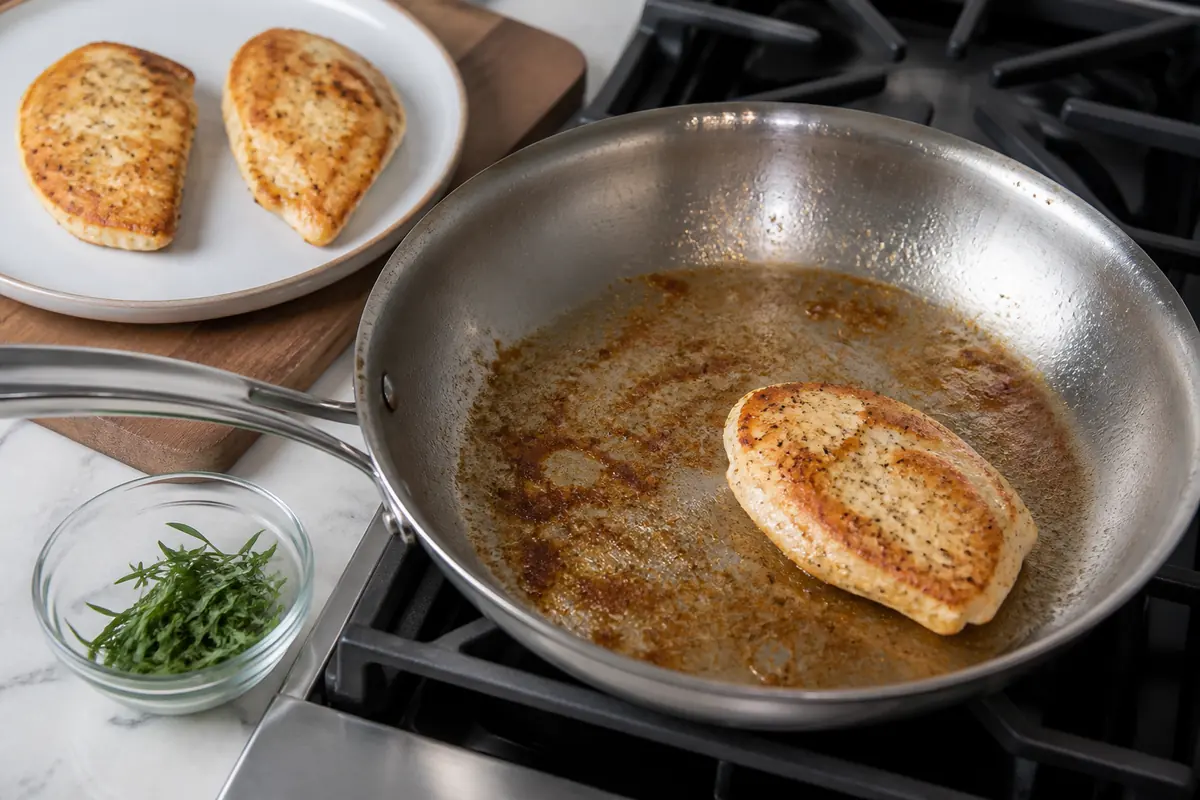
- Chicken: Even golden surface.
- Fond: Amber, not black.
- Tarragon: Held away from the early high heat.
Transfer each cutlet around 160°F or 71°C because carryover heat and the final return to the sauce will take it to 165°F or 74°C.
If a thin piece reaches temperature first, remove it instead of waiting for the rest.
The pan deposits should be amber and smell roasted. Black specks taste bitter in cream, so wipe out burned patches and begin the sauce with a clean film of fat if the heat ran too high.
Reduce in layers before adding cream
Lower the heat and soften the shallot in the pan fat.
- Deglaze with wineScrape up the fond and reduce until only a glossy film remains.
- Add stockReduce by about half, watching the depth on the skillet wall.
- Add creamSimmer gently until the sauce coats a spoon without hard boiling.
Adding cream to a pan full of unreduced wine leaves a loose acidic sauce.
The wine needs to concentrate before the stock creates the second savory layer.
If the sauce looks greasy at the edge, lower the heat and whisk in one tablespoon cool stock. If it is simply thin, continue a quiet simmer rather than adding flour that would change the light pan-sauce texture.
Dijon mustard is optional, but one teaspoon can connect wine, cream, and chicken while adding mild sharpness. Add it after the stock reduction so it disperses without catching on the hot dry pan.
Choose fresh or dried tarragon by timing
Fresh and dried tarragon bring the same herb identity at different strengths and moments.
Use one tablespoon chopped fresh leaf or one teaspoon dried leaf for this four-serving pan.
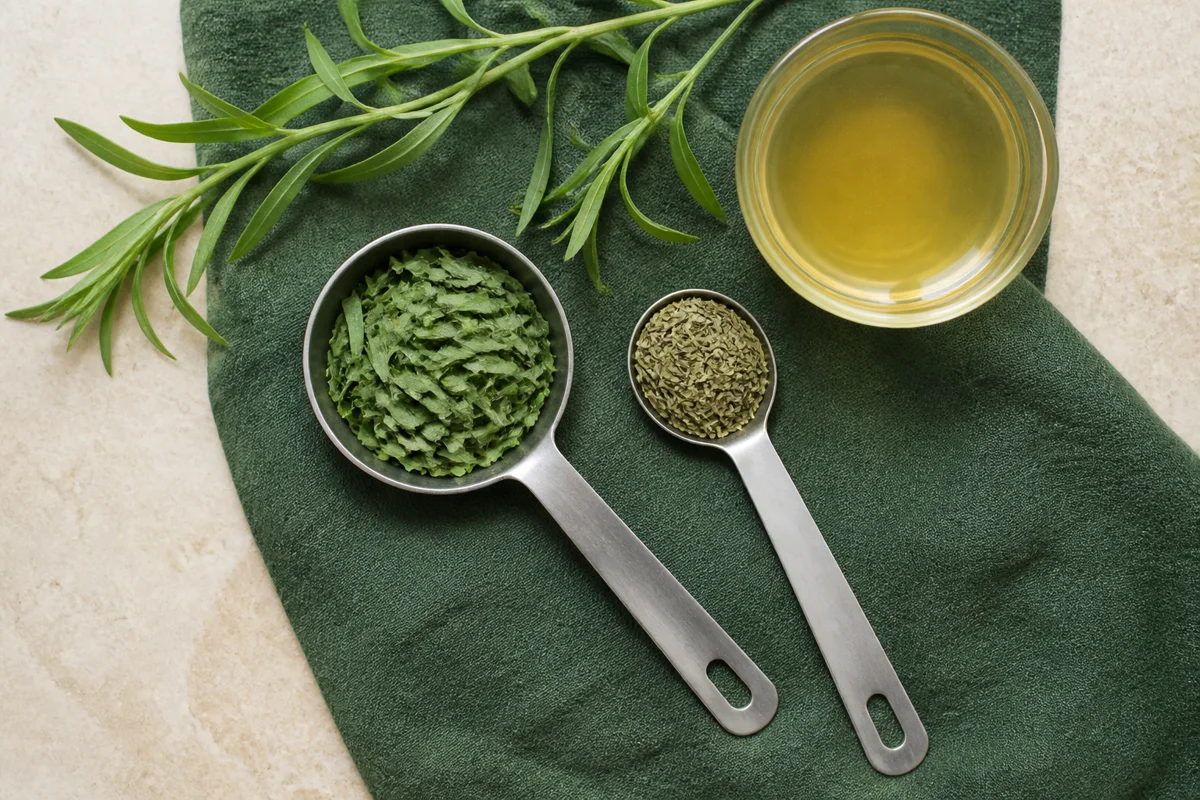
- Fresh leaf: One tablespoon, stirred in during the final minute.
- Dried leaf: One teaspoon, added with the stock to hydrate.
- Warm liquid: Gives dried leaf time to soften and release aroma.
Dried tarragon belongs with the stock because it needs several minutes to hydrate. Fresh tarragon waits until the final minute so its sweet anise aroma does not disappear in a long boil.
Smell dried tarragon before using it. A jar that releases only a dusty hay aroma will not become fresh by doubling the dose, and too much old leaf can make the sauce rough.
The tarragon substitute guide is useful when the herb is missing.
Dill shifts the sauce greener, while parsley with a tiny fennel infusion separates the fresh leaf and anise jobs more cleanly.
Do not use both the full fresh and full dried amounts unless you deliberately want a strong herb sauce. For more depth, use half the dried amount with the stock and half the fresh amount at the end.
Finish by temperature and sauce texture
Return the cutlets and their resting juices to the skillet. Turn them once in the sauce and stop as soon as the thickest part reaches 165°F or 74°C.
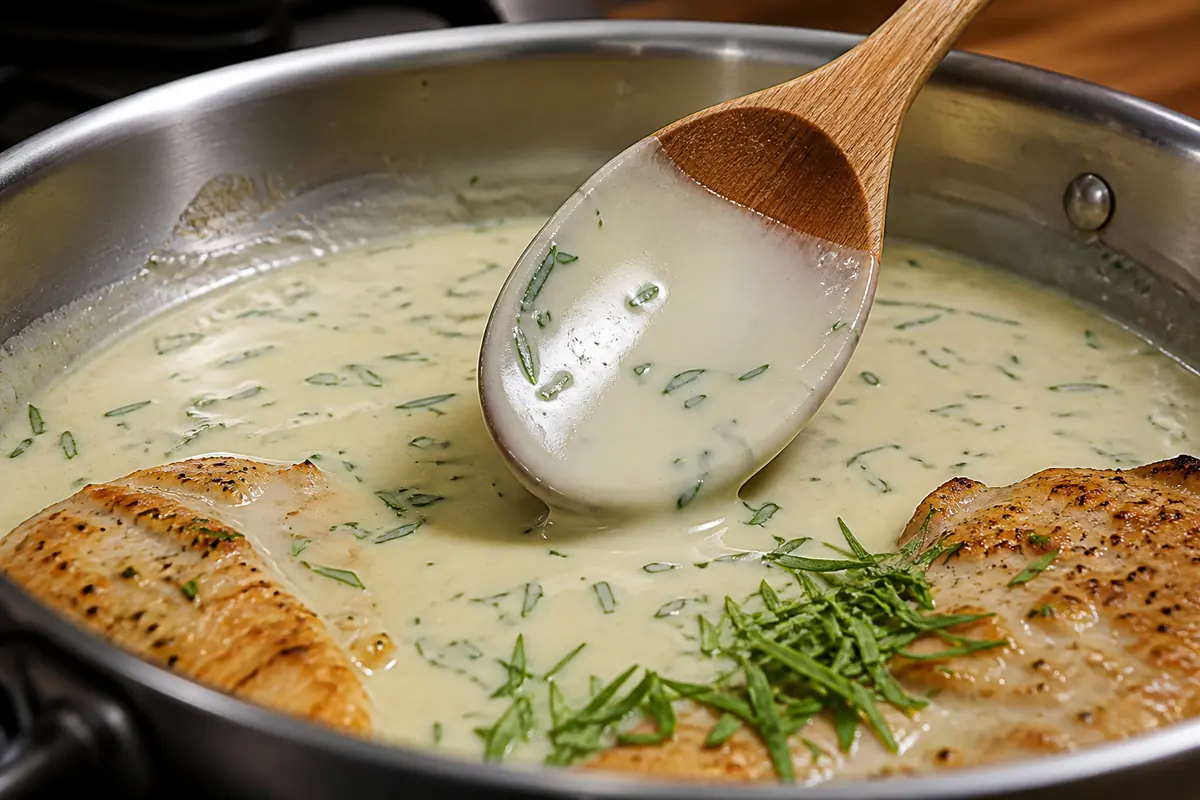
- Nappe: Thin coating on the spoon.
- Fresh herb: Added after the reduction.
- Chicken: Returned only long enough to heat through.
Taste before adding lemon or vinegar because the wine may have supplied enough acidity. A few drops can sharpen a heavy sauce, but a large squeeze masks tarragon and can make the cream seem sour.
Serve the chicken with potatoes, rice, or bread that can carry the sauce, plus a green vegetable with little competing seasoning. A strongly anise-flavored side makes the herb feel louder rather than more complete.
Cool leftovers and refrigerate them within two hours, then use them within three to four days.
Reheat leftovers gently in a covered skillet with one tablespoon stock.
Do not freeze the finished cream sauce when appearance matters because thawing can separate the fat and water even when the flavor remains safe.
If reheated sauce splits, remove it from the heat and whisk in a spoonful of cool cream or stock. Return the chicken only after the sauce comes together so the meat does not overcook during the repair.