
Cardamom Buns Recipe with Crisp Twists and Soft Centers
Freshly grind the seeds, keep the dough tacky, and twist loosely so the buttered layers can expand.
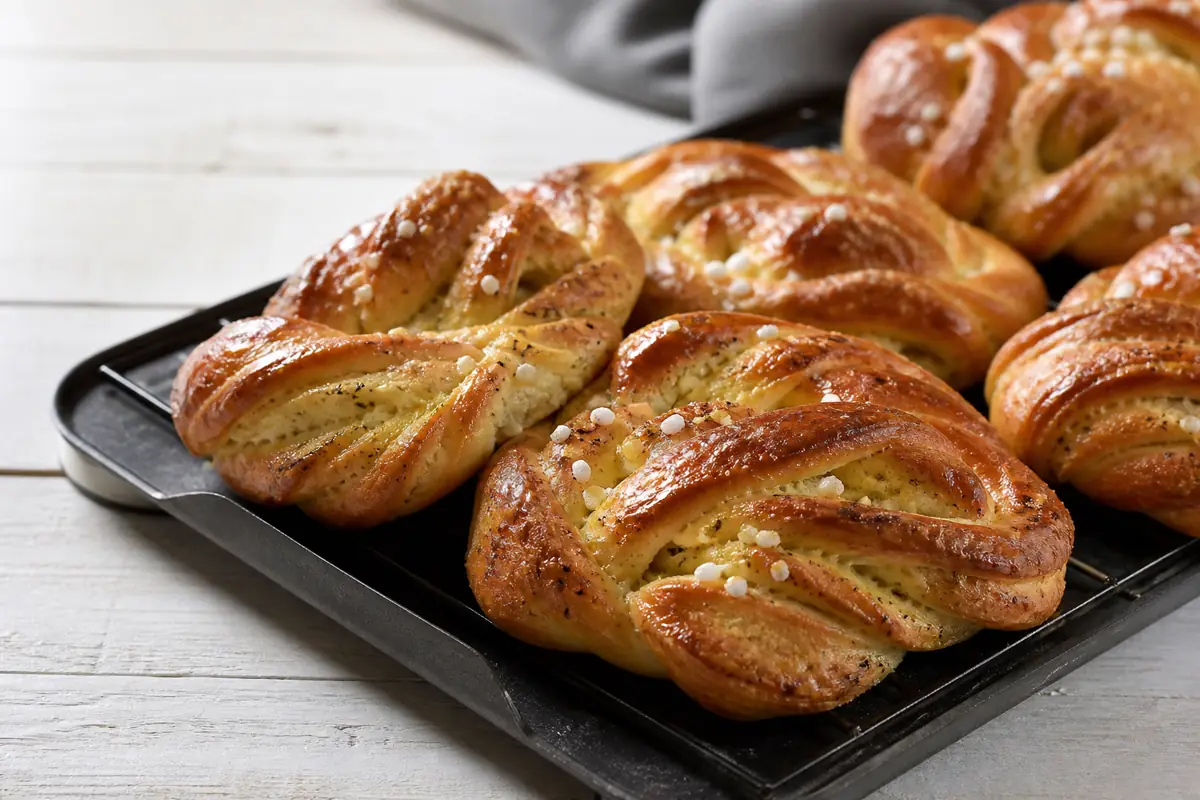
Swedish cardamom buns need strong fresh spice and a loose knot that leaves room for the dough to expand. A dry dough or tight twist can look tidy before baking but produces a compact center.
Ingredients
- 300 ml whole milk, lukewarm
- 7 g instant yeast
- 500 g bread flour
- 75 g granulated sugar
- 1 teaspoon fine salt
- 2 teaspoons freshly ground cardamom seeds, divided
- 1 large egg
- 75 g unsalted butter, softened
- 100 g unsalted butter, softened, for filling
- 90 g light brown sugar
- 1 teaspoon ground cinnamon
- 1 egg beaten with 1 tablespoon water
- 50 g granulated sugar plus 50 g water for syrup
Method
- Mix and knead the dough Mix milk, yeast, flour, granulated sugar, salt, 1 teaspoon cardamom, egg, and 75 g butter. Knead for 7 to 9 minutes until tacky, elastic, and able to form a thin windowpane.
- Complete the first rise Cover and rise until nearly doubled, about 60 to 90 minutes depending on room temperature.
- Fill and fold Mix filling butter, brown sugar, cinnamon, and remaining cardamom. Roll dough to 12 by 18 inches, spread filling, and fold in thirds.
- Twist and proof Cut 12 strips, twist each loosely, coil, and tuck. Proof for 45 to 60 minutes until puffy.
- Bake to deep gold Brush with egg wash and bake at 400°F or 205°C for 13 to 18 minutes until deep gold and 190°F or 88°C inside.
- Glaze the hot buns Boil the syrup ingredients until dissolved. Brush over the hot buns and cool on a rack.
Crack the cardamom just before it meets the flour
Green cardamom pods protect the black seeds from air until you open them.
Split the pods, discard the pale papery shells, and grind only the seeds to a slightly coarse powder.
Use one teaspoon in the dough and one teaspoon in the filling. Coarse flecks release sharp citrus and eucalyptus notes as you chew, while a dusty old jar tends to disappear behind butter and sugar.
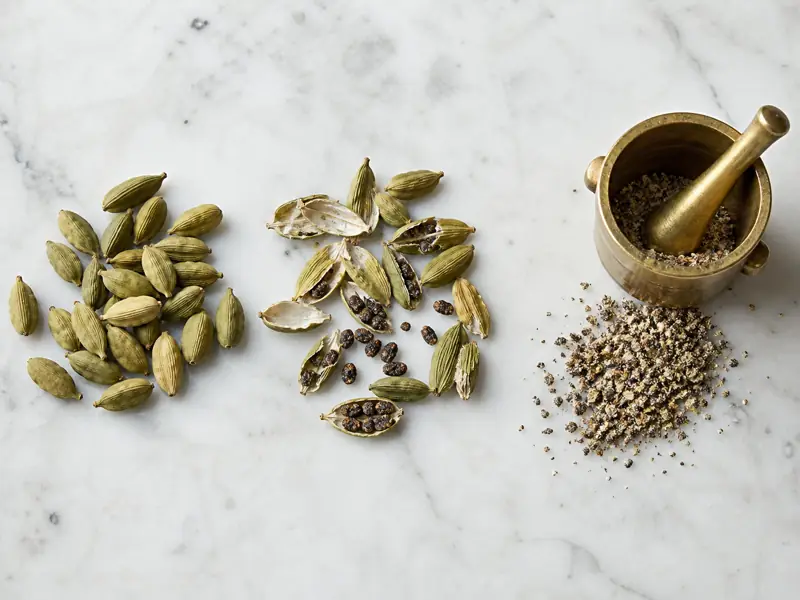
- Green pods: Crack them immediately before mixing.
- Black seeds: Carry the concentrated aroma.
- Coarse grind: Leaves distinct fragrant flecks.
- Pale husk: Discard it rather than grinding it into the dough.
A pinch of granulated sugar gives the mortar more grip without changing the dough formula. Grind until no seed remains whole, since an intact black seed can taste harsh in one bite.
Develop a soft dough before adding more flour
Mix lukewarm milk, yeast, bread flour, sugar, salt, egg, and half the cardamom before working in the softened butter. The dough will smear at first, then become elastic as the butter disperses and gluten develops.
Do not chase a spotless mixer bowl with extra flour.
After seven to nine minutes at medium-low speed, the dough should feel tacky but lift as one mass from the bowl.
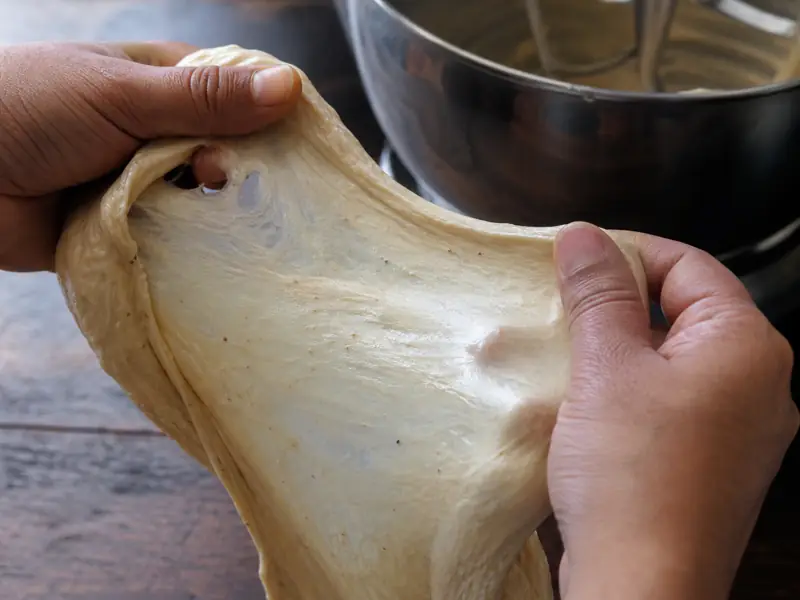
- Tacky surface: Preserves moisture for the bake.
- Elastic mass: Pulls together after kneading.
- Thin window: Confirms developed gluten.
- Immediate ragged tear: Needs another minute of mixing and a retest.
Cover the dough and let it rise until nearly doubled. Room temperature changes the clock, so watch the volume and a fingertip dent that returns slowly instead of forcing the dough into a fixed one-hour schedule.
Twist loosely so the layers can still rise
Roll the dough to a 12 by 18 inch rectangle and spread the cardamom butter filling in a thin layer to the edges. Fold the top third down and the bottom third up like a letter, then roll lightly to even the thickness.
Cut twelve strips. Twist each strip two or three turns, coil it around two fingers, and tuck the end underneath without pulling the knot tight.
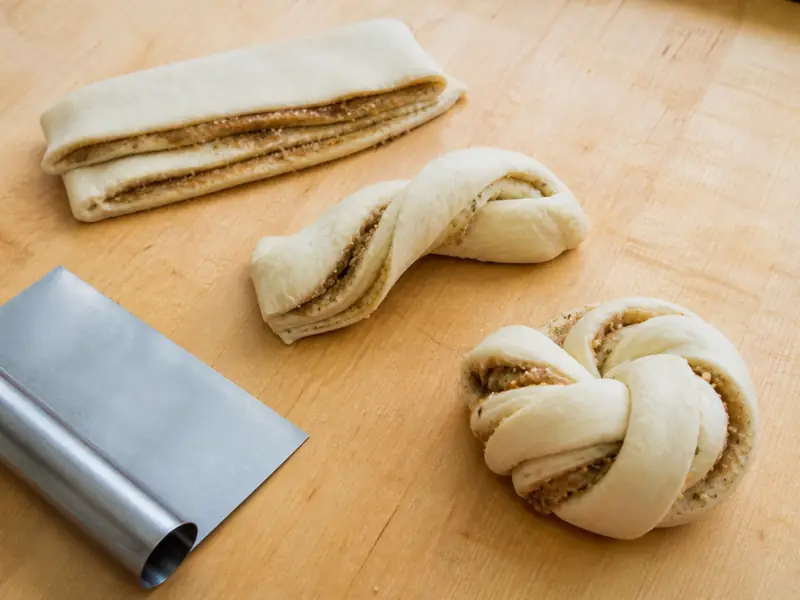
- Flat strip: Shows an even filling layer.
- Two or three turns: Defines the ridges without making a rope.
- Loose coil: Leaves expansion space.
- Tucked end: Holds the shape without compressing the center.
Proof until the knots look puffy and the sharp cut edges have softened.
Brush with egg wash, then bake at 400°F or 205°C until the ridges are deep gold and the center reaches 190°F or 88°C.
Cool for at least 15 minutes so the buttered layers set.
Cool the buns completely before sealing them so condensation does not soften the ridges. Keep them at room temperature for up to two days, or freeze individual buns once cool.
A 350°F or 175°C oven restores the edge better than a microwave. Warm only until the center softens so the syrup coating does not harden.