
Smoked Paprika Roasted Chickpeas
Dry the surface before oiling, roast in one layer, and let the chickpeas cool uncovered so steam does not soften the crust.
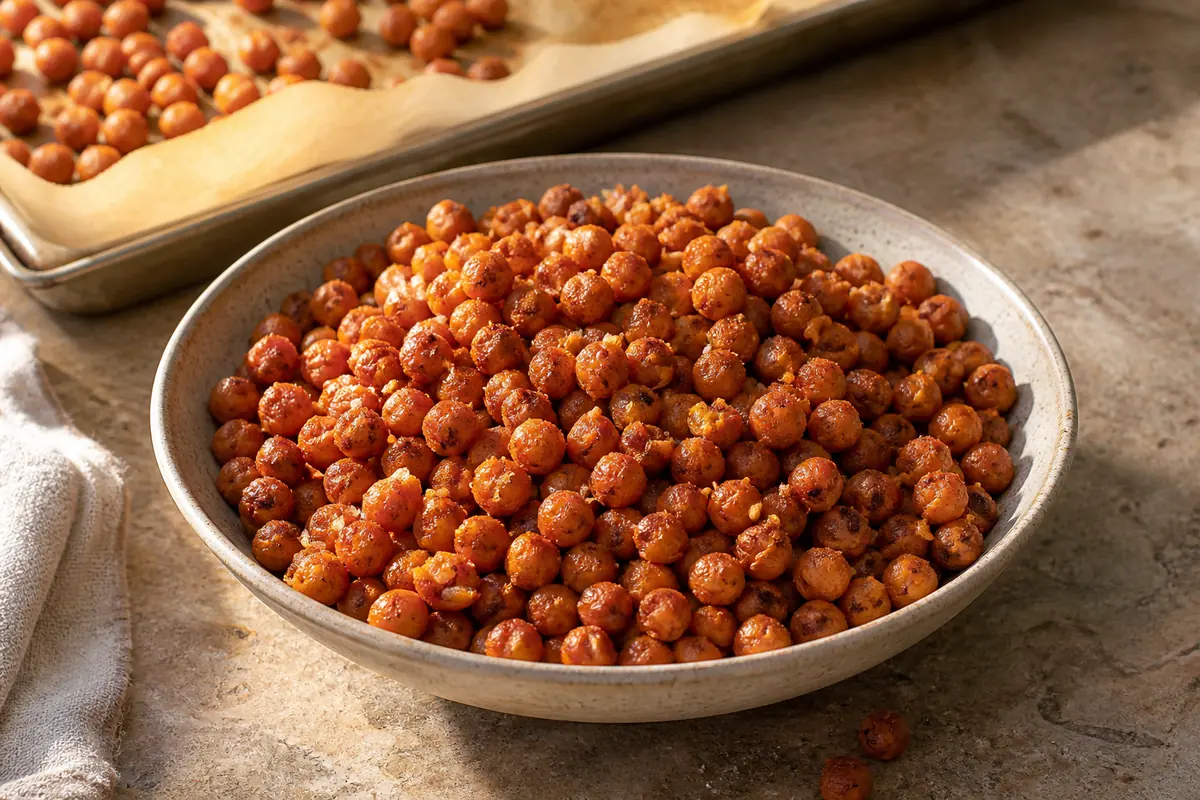
Smoked paprika gives roasted chickpeas a deep red color and a wood-smoke aroma without adding chile heat. Dryness before and after the oven decides whether they stay crisp.
Ingredients
- 2 cans chickpeas, 15 ounces each
- 1 tablespoon olive oil
- 1 1/2 teaspoons smoked paprika
- 1/2 teaspoon ground cumin
- 1/2 teaspoon kosher salt
- 1/4 teaspoon garlic powder
Method
- Heat the oven Heat the oven to 400°F or 205°C and place a rack in the middle.
- Dry the chickpeas Drain and rinse the chickpeas. Dry them thoroughly on a clean towel until the surfaces look matte.
- Add oil and spices Toss chickpeas with oil and salt, then add smoked paprika, cumin, and garlic powder until evenly coated.
- Roast in one layer Spread in one layer on a rimmed sheet pan. Roast for 30 to 38 minutes, shaking the pan twice.
- Cool before testing Remove when the surfaces are dry and several skins have split. Cool uncovered on the tray for at least 10 minutes before judging crispness.
Surface water is the first crispness test
Canned chickpeas arrive cooked and waterlogged, so the first useful work happens before the oven.
Drain and rinse them, roll them gently in a clean towel, then leave them exposed until the skins look matte rather than glossy.
Oil cannot crisp a surface that is still carrying rinse water. A matte chickpea is ready for seasoning, while a shiny one still needs air and towel contact.
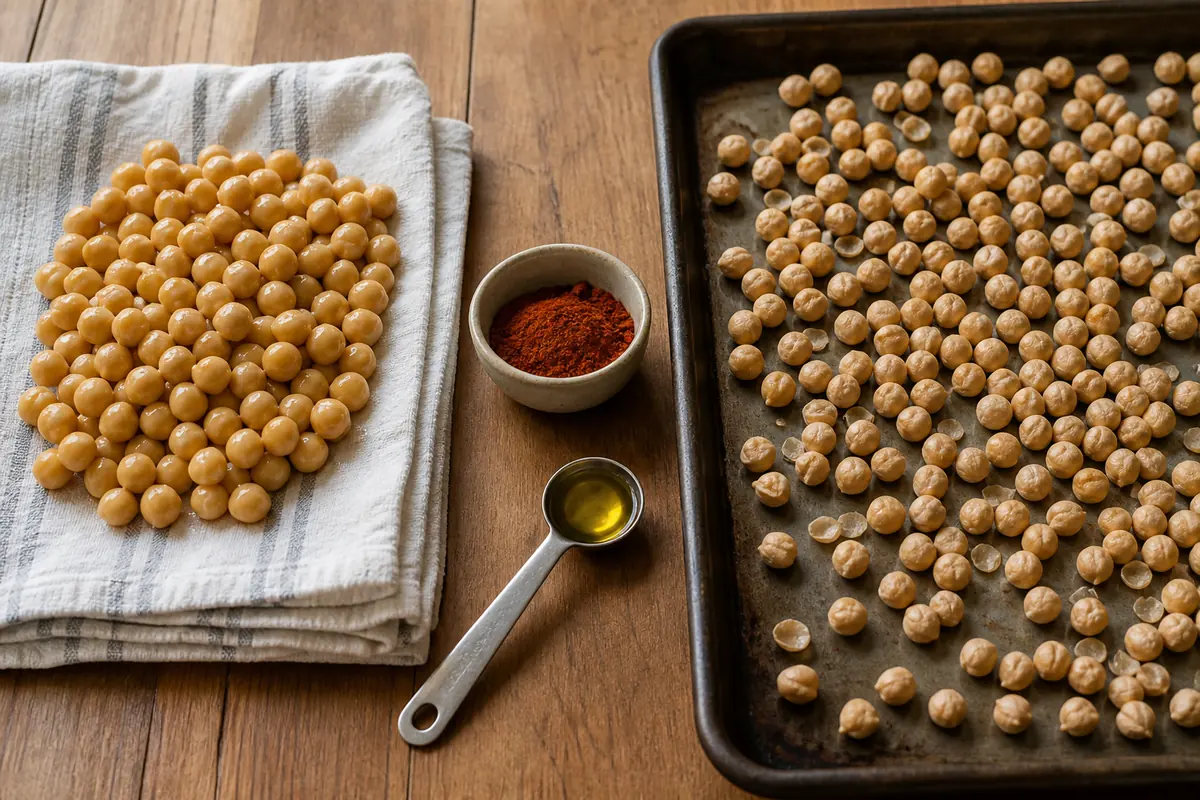
- Wet surface: Shiny and crowded on the towel.
- Dry surface: Matte with a few loosened skins.
- Single layer: Open space lets steam escape.
Remove skins that slip off during drying, but do not peel every chickpea. Loose skins burn sooner than the centers, while intact skins can still become crisp when the whole batch is thoroughly dry.
Home-cooked chickpeas also work if they are tender but not split into soft fragments.
Drain them longer than canned chickpeas and expect the roast time to vary with how much water they absorbed during cooking.
Add smoked paprika after the oil film
Toss the dry chickpeas with oil and salt before adding smoked paprika, cumin, and garlic powder. The thin oil film catches the fine powder on the chickpeas instead of leaving a red layer on the metal where it can scorch.
One tablespoon of oil is enough for two cans in this recipe. More oil makes the hot batch seem crisp at first, but the coating can turn heavy as it cools.
- Coating
- Oil should make the chickpeas look satin-matte, not wet
- Loose powder
- Red dust on bare metal can scorch before the beans crisp
- Heat cue
- Keep the tray on the middle rack and follow dry texture rather than darker color
Roast at 400°F or 205°C on the middle rack. Shake the pan after 15 minutes, then check more frequently after 25 minutes because dry skins change from toasted to bitter faster near the finish.
Paprika color is a poor endpoint.
Dry sound, split skins, and a light-feeling pan tell you more than a darker shade of red.
If your smoked paprika tastes hot as well as smoky, reduce it to one teaspoon and keep the cumin. The smoked paprika substitute guide explains how sweet paprika plus a separate smoke source changes both flavor and burn risk.
Choose oven space before choosing speed
Use the oven for the full two-can batch because a half sheet pan gives the chickpeas room to shed steam. An air fryer can cook a smaller portion quickly, but crowding a compact basket recreates the same soft result as an overloaded tray.
| Method | Useful batch | Starting approach | What to watch |
|---|---|---|---|
| Oven sheet pan | Two 15-ounce cans | 400°F or 205°C, shake twice | Edge chickpeas may finish first |
| Air fryer basket | About one drained can | 380°F or 193°C, shake every 5 minutes | Check early because fans and baskets vary |
| Convection oven | Two cans with strong circulation | Reduce heat by about 25°F | Fine paprika can darken sooner |
| Two crowded trays | Poor choice in a small oven | Roast in batches instead | Trapped steam and uneven browning |
Do not transfer the oven timing directly to an air fryer. Basket depth, fan strength, and chickpea moisture vary enough that the dry exterior cues should decide the finish.
For either appliance, stop and redistribute the chickpeas if they are stacked. Faster hot air does not compensate for surfaces pressed together.
Judge crispness after steam escapes
A chickpea straight from the oven can feel tender inside and still become crisp after several minutes.
Pull the tray when the coating is dry, several skins have split, and the batch makes a light rattling sound when shaken.
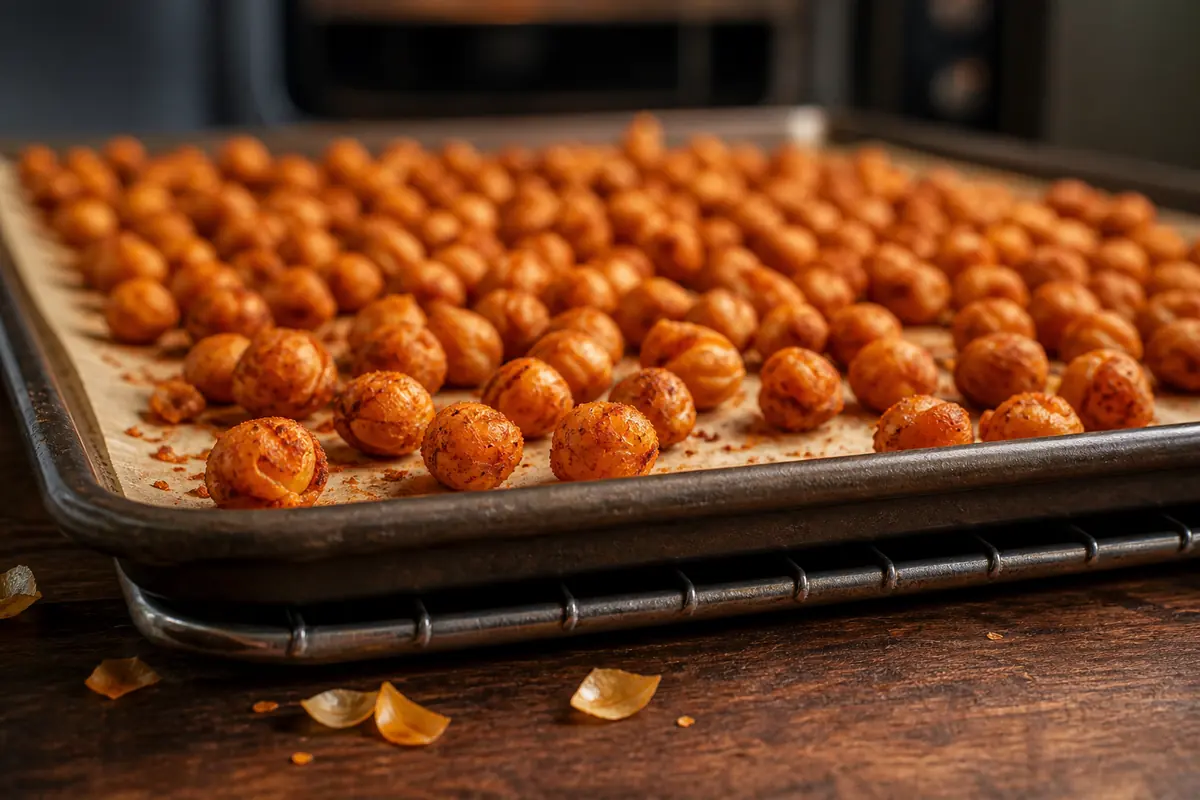
- Dry coating: No glossy oil pools.
- Split skins: A useful doneness cue.
- Cooling: One layer with open airflow.
Leave the chickpeas in one uncovered layer for at least ten minutes. Break one open after cooling and look for a dry, crumbly center rather than a soft bean paste.
If the outside browns while the center remains soft, the chickpeas entered the oven too wet or the temperature ran too high. Lowering the heat slightly helps only after the next batch is dried more thoroughly.
Use them as a snack, salad crunch, soup topping, or texture over hummus. Add them at serving time so dressing, broth, and steam do not undo the crust before the first bite.
Store cool and recover softness with dry heat
Roasted chickpeas are crispest on the day they are made.
Once they reach room temperature, keep them loosely covered at room temperature for up to two days so a little air can escape.
A sealed container traps residual moisture, while a refrigerator adds humidity. Neither storage method preserves the same first-day texture.
Recrisp a soft batch at 350°F or 175°C for 5 to 8 minutes, then cool it uncovered again. Discard chickpeas that smell rancid or show mold rather than trying to rescue them with heat.